


Charlie Ngo
•
Last updated: 7 October, 2026
Shopify Product Configurator: 2D vs 3D, Best Apps & Costs (2026)
Shoppers hesitate to buy a $1,200 sofa or a custom ring when they can’t see the exact version they’re...
26 Black Friday Marketing Ideas to Boost Sales in 2026

Marketing Manager
Summarize this post with AI
Black Friday 2026 falls on November 27, and it is the biggest sales window of the year for Shopify stores. The stores that win do not only cut prices. They plan offers that raise order value, build urgency, and turn one-time buyers into repeat customers. This guide gives you 26 Black Friday marketing ideas, grouped by goal, with real store examples and current data. I’m Charlie Ngo, Marketing Manager at BOGOS, and I wrote this after reviewing the latest BFCM datasets and dozens of real store campaigns.
Black Friday is the single largest sales event for online stores, and the numbers keep climbing. Shopify merchants made a record $14.6 billion over the Black Friday–Cyber Monday weekend in 2025, up 27% year over year, according to Shopify. More than 81 million shoppers bought from Shopify-powered brands during those four days.
The wider market grew too. U.S. shoppers spent a record $11.8 billion online on Black Friday alone, and $44.2 billion across the five-day Cyber Week, according to Adobe Analytics. A record 202.9 million people shopped over the weekend, and they were driven by value, promotions, and free shipping, based on the annual survey from the National Retail Federation and Prosper Insights.
Two facts shape every idea in this guide:
That is why this guide leans on offers that build order value, not only price cuts. If you want the wider picture first, our guide on how to increase sales on Shopify covers the fundamentals these tactics build on.
Your Black Friday results are decided before the weekend starts. The ideas below build your audience and your demand in the weeks leading up to November 27.
Early access rewards your best customers and pulls sales forward before the competition peaks. Send your email and SMS subscribers a private link, a 24-hour head start, or a preview of what will be on sale. This makes loyal shoppers feel valued and locks in orders while your rivals are still quiet.
Klaviyo’s 2024 analysis found that many shoppers buy from brands as early as three weeks before Thanksgiving. Early access lets you reach those buyers first.
List-building in October gives you a direct channel to sell through on Black Friday. Add a signup form or popup that offers a discount or a free gift in exchange for an email or phone number. These contacts cost nothing to reach again, which matters when ad prices spike during the weekend.
Email and SMS are worth building because they are the most cost-effective channels you own. Email returns about $36 for every $1 spent, more than any other channel, according to Litmus. SMS reaches customers directly on their phones, and automated texts earn roughly five times more per message than one-off campaigns, per Omnisend.
Focus on quality, not only volume. Segment new subscribers by what they browse so your Black Friday messages match their interest.
A limited product creates demand without a discount. Release an item, color, or bundle that shoppers can only get during the Black Friday weekend. Scarcity and newness push people to act, and you protect your margin because you are adding value rather than cutting price.
Jones Road Beauty used this idea for three years, releasing a limited product each holiday weekend that sold out on the first day. Klaviyo’s data also suggests steep discounts mattered less than many brands assumed, as shoppers prioritized product quality and brand loyalty.
AI shopping tools now send real traffic, so your store needs to be readable by them. Shoppers increasingly use AI chat and browser tools to find deals and compare products. Traffic to U.S. retail sites from these tools rose about 670% on Cyber Monday 2025, per Adobe.
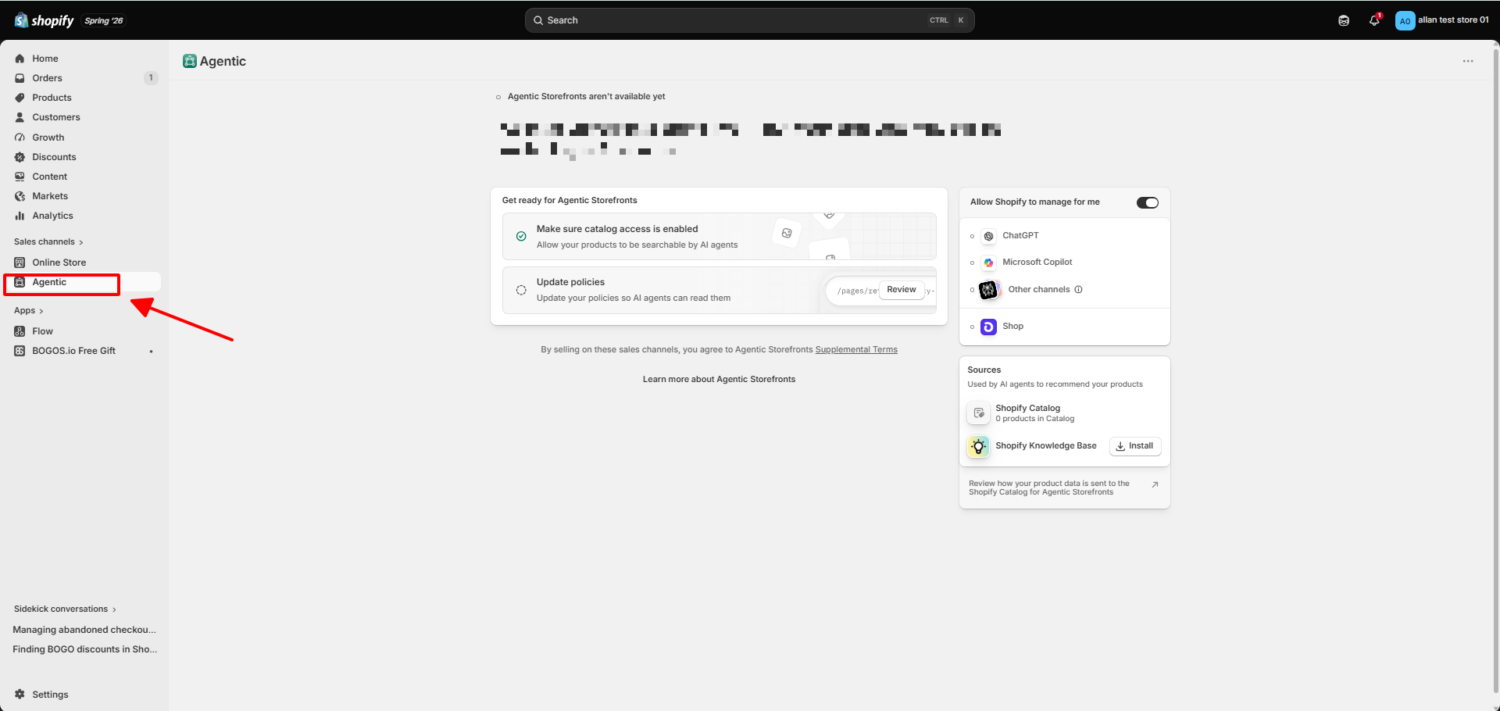
Shopify has already moved on this. Its Spring 2026 Edition introduced agentic commerce and a new AI sales channel, so shoppers can buy through AI assistants without leaving the conversation, per Shopify. Getting your store ready for AI shopping is now a real sales channel, not a side project.
Make your products easy for AI tools to read and cite. Keep product titles and descriptions clear and specific, use structured product data, and collect fresh reviews so AI tools have real detail to pull from. This is a new channel for 2026, and most stores have not caught up.
You do not have to slash prices to win Black Friday. In merchant communities, store owners describe the same trap: they feel forced to run a deep sitewide discount because every competitor runs one, and shoppers actively compare stores for the lowest price. Discounts ran as deep as 25% off apparel and 31% off electronics in 2025, according to Adobe. A cut that deep can erase the margin that makes the sale worth running.
The offers below give you another way to compete. They add value and lift average order value, which protects your profit on a weekend when everyone is discounting. Free shipping is the promotion shoppers want most, chosen by 44% of holiday shoppers, followed by buy-one-get-one and percentage discounts, according to research from Impact.
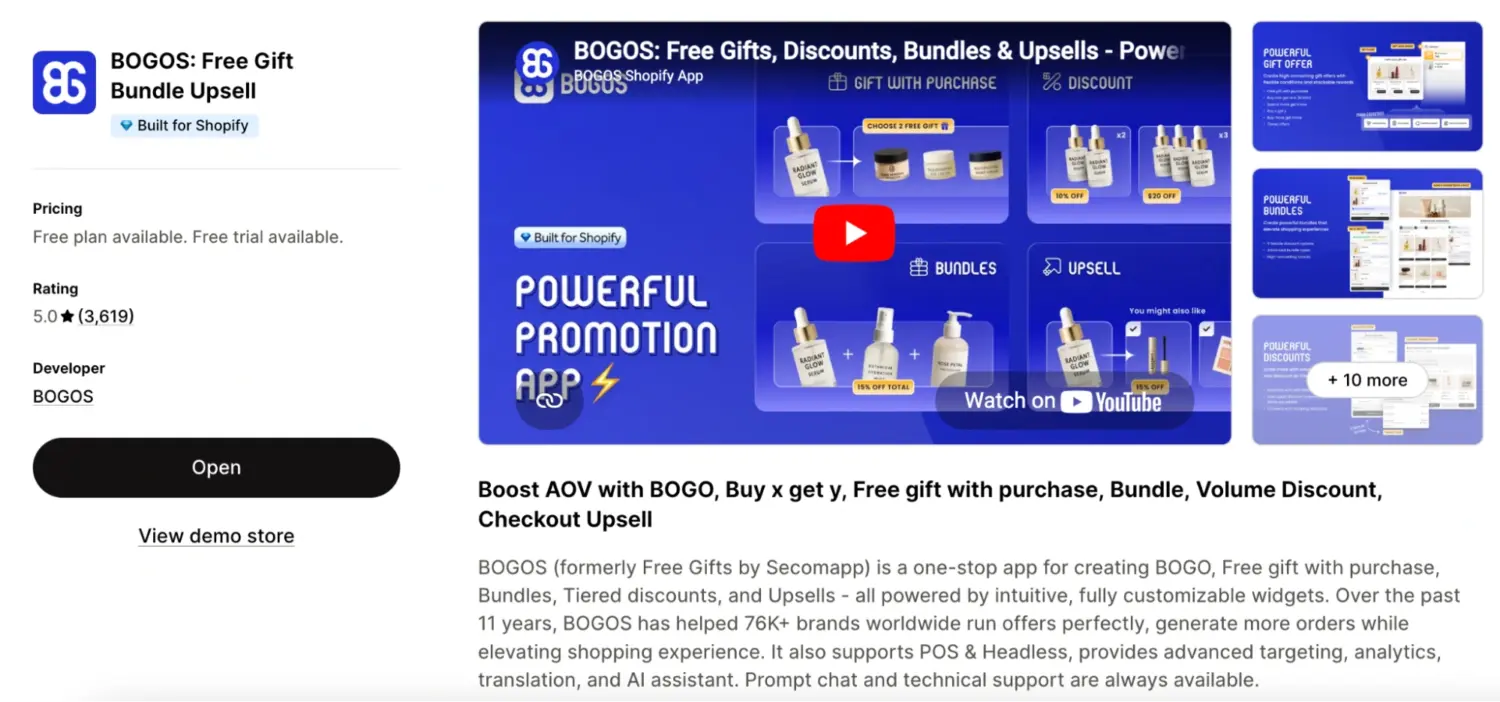
A free gift with purchase adds value without lowering your product price. Set a spend threshold, and add a free item automatically when the cart passes it. Shoppers feel they are getting more, and you keep your headline prices intact. Many stores keep the gift a surprise to build interest, as Our Place did with a mystery gift on orders over a set amount. A free gift with purchase also gives you a reason to set a minimum order value, which nudges carts higher. Tools like BOGOS act as an offer engine that can automate free-gift, BOGO, and BXGY rules, stack discounts, and cap redemptions with usage limits.
Bundles raise order value by grouping related items at a price below the sum of the parts. Shoppers get a ready-made gift or a complete set, and you sell more units per order. Show the bundle price next to the “if bought separately” price so the saving is clear.
You can run three bundle formats during Black Friday:
Nguyen Coffee Supply used bundles priced between $48 and $155 to reach gift buyers with different budgets, according to Shopify. Our full guide on the Shopify product bundle walks through how to price and present each type.
A buy one get one offer moves more units and can protect your margin better than a flat discount. In a buy one get one deal, the second item is free or half price. In a buy X get Y deal, buying set products unlocks a specific reward. Both work best when the products are complementary, so shoppers see the value in adding more.
BOGO often beats a straight percentage off because it requires a second purchase to trigger. That raises units per order instead of simply reducing the price of a single item.
Tiered pricing rewards larger carts with larger savings, which lifts average order value. Set two or three spend thresholds, each unlocking a bigger discount. For example: spend $75 for 10% off, $125 for 15% off, and $200 for 20% off. A shopper with $80 in the cart will often add an item to reach the next tier.
This structure gives shoppers a reason to buy more without a sitewide price cut. It is one of the most reliable ways to raise average order value during a busy sale.
A free-shipping threshold reduces cart abandonment and raises order value at the same time. Extra costs like shipping are the top fixable reason shoppers abandon carts, cited by 39% of them, according to the Baymard Institute, which puts the average cart abandonment rate near 70%. Free shipping above a set spend removes that friction and pushes carts higher.
Add a cart progress bar so shoppers can see how close they are to the reward. A message like “You’re $12 away from free shipping” turns an abstract threshold into a clear next step. BOGOS includes a progress bar that tracks cart value toward a threshold and can trigger free-shipping offers by product or spend, with customer-segment or magic-link targeting.
Traffic is expensive on Black Friday, so your job is to convert more of the visitors you already have. The ideas below turn browsers into buyers on your site. If conversion is your main gap, our guide on Shopify conversion rate covers the full funnel.
Flash sales create urgency by putting a deep discount on a short timer. Instead of one sitewide sale, schedule a sequence of short offers across the weekend, such as a different category every few hours. This brings shoppers back to your site again and again, which adds more chances to buy.
Promote one flash sale at a time. Send a dedicated email and social post an hour before each one starts, and make sure your site can handle the traffic spike.
Countdown timers and stock cues push hesitant shoppers to act. A timer on your homepage banner or product page shows the offer will end, and a “only 8 left at this price” note adds pressure. Flavored water brand Hint used a countdown on its Cyber Monday email to signal buy now or miss out.
Keep these cues honest. A discount framed as time-limited must actually end, since misleading urgency breaks trust and can violate advertising rules.
Reviews and customer photos are what convince shoppers to buy during a high-pressure weekend. A product page with five reviews has a purchase likelihood 270% higher than a page with none, according to Northwestern University’s Spiegel Research Center. Shoppers make fast decisions on Black Friday, and social proof answers their questions before they leave.
Display star ratings, written reviews, and customer photos on your product pages, and run a request campaign in October so your pages are full of fresh reviews before the rush.
User-generated content also feeds the AI-search idea above, because the reviews AI tools cite are the same ones that convince human shoppers. Ask customers to share a photo with a branded hashtag, then feature the best entries on your product pages and social channels.
An exit-intent popup gives you one last chance to convert a shopper who is about to leave. The popup appears when a visitor moves to close the tab, and it can offer a discount code, free shipping, or a reminder of what is in the cart. This matters because roughly seven in ten carts are abandoned, per the Baymard Institute.
Match the offer to the cart. A popup that references the exact item a shopper is viewing feels relevant, not generic.
A fast, simple mobile store is now a requirement, not an option. Mobile made up 56.4% of online holiday sales in 2025, per Adobe. If your pages load slowly or your checkout is hard to use on a phone, you lose most of your potential sales.
Do a mobile check before Thanksgiving week:
Gift guides reduce decision fatigue and point shoppers straight to your products. During the holidays, many people want a good gift and want to be done quickly. A curated guide gives them a shortcut and positions your store as a helpful expert.
Create several guides instead of one. Group products by price (“gifts under $50”), by recipient (“gifts for the home cook”), or by interest, and link them from your homepage and navigation.
A spin wheel or scratch card turns a discount into a small game that also captures contacts. Shoppers spin or scratch to reveal a discount code, free shipping, or a free gift, and many stores require an email or SMS opt-in to play. This builds your list and adds a moment of interest to your store.
Keep the game simple and the rules clear. Offer a mix of small and larger rewards so more shoppers feel they won something.
A cause tie-in adds a reason to buy beyond the deal. Pledge a share of each Black Friday sale to a charity, and promote the partnership before the weekend. This appeals to value-led shoppers and can earn word-of-mouth attention.
Patagonia ran the best-known version of this idea. In 2016, it pledged 100% of its Black Friday sales to grassroots environmental groups, and the campaign brought in a record $10 million, five times its own projection (Source: CNBC)
Be clear about the structure. State the exact percentage or amount you will donate, and link to the organization so customers can verify it.
An anti–Black Friday campaign stands out by rejecting the discount frenzy on purpose. Instead of a sale, you highlight your values, your product quality, or how your products are made. This can earn attention and build trust with shoppers who are tired of price cuts.
Outdoor retailer REI ran the best-known example with its #OptOutside campaign. REI closes its stores on Black Friday and pays its employees to spend the day outside instead, a stance it has repeated for years (Source: Sustainable Brands). This idea suits brands with a strong point of view, and it works best when you repeat it each year.
Reaching shoppers across several channels is how you get your offers seen during a crowded weekend. The ideas below cover the channels that convert. Owned channels like email and SMS are the most cost-effective, because you already have permission to reach those contacts.
Email is your highest-return Black Friday channel, especially automated flows. Automated emails drove 30% of email revenue from only 2% of sends, earning about 16 times more per send than one-off campaigns, according to Omnisend, a vendor dataset.
Set up three flows before the weekend:
Segment your list by spend and purchase history so each group gets a relevant offer.
SMS marketing is best for short, urgent messages that need to be seen right away. Use it for launch alerts and “final hours” reminders, not long product descriptions. A text lands directly on the device where the purchase happens, which makes it strong for last-minute conversions.
Klaviyo found that brands adding SMS to their strategy saw a 20% year-over-year increase in BFCM ecommerce revenue, per Klaviyo, a vendor dataset. Always collect opt-ins before you send.
Creators and social content expand your reach to new shoppers. Social media was the standout channel for driving conversions during Cyber Monday 2025, per Adobe. Give creators a unique discount code, a curated bundle, or early access, and track sales from each partner.
Choose creators whose audience matches yours. Any creator you pay or gift products to must disclose the relationship clearly, per FTC rules.
Ad costs spike on Black Friday, so spend your budget on shoppers who already know you. Focus on three warm audiences:
Warm audiences convert better than broad targeting, which protects your return on ad spend when clicks are expensive.
The real profit comes after the weekend, when you turn new buyers into repeat customers. Black Friday is expensive customer acquisition, so a retention plan is what makes it pay off. Discounts, free shipping, and loyalty programs are the top reasons shoppers stay loyal to a brand after a holiday purchase, according to a survey from Shopify and Sapio Research.
A separate Cyber Monday offer captures shoppers who missed Black Friday or are still buying. Prepare a different deal for Monday, November 30, so the weekend has a second peak. This catches last-minute buyers and gives your existing customers a reason to return.
Promote the Cyber Monday offer to everyone who bought on Black Friday, not only to new visitors.
A post-purchase series increases the value of every new customer. After the sale, send a short welcome flow, recommend complementary products, and remind shoppers to reorder consumable items. This is where an upsell or cross-sell offer does real work, because the buyer already trusts you.
Health brand Happy Way set up flows that triggered 60 to 90 days after purchase to prompt reorders, which extended sales well past the weekend.
A loyalty program gives first-time Black Friday buyers a reason to come back. Invite new customers to join in your post-purchase email, and offer points for their first order. A double or triple points event during the weekend also encourages larger carts, since shoppers earn rewards they can redeem later.
Points are redeemed on a future purchase, which pulls buyers back after the sale ends.
Referrals turn your new Black Friday customers into a source of more customers. Offer existing buyers a reward, like a discount or store credit, when someone they refer makes a purchase. Promote the referral offer in your post-purchase emails while the buyer is still engaged.
Word-of-mouth reaches shoppers who trust a friend’s recommendation, which lowers your acquisition cost on future sales.
Black Friday marketing works best when it runs across four months, not one weekend. Black Friday 2026 is November 27, and the National Retail Federation defines the holiday season as November 1 through December 31. Here is a simple month-by-month plan:
Starting early spreads out your work and reaches shoppers before the weekend competition peaks. If you would rather hand execution to a specialist, our roundup of the best Shopify agencies for BFCM compares six options by strength.
A few common mistakes cost stores sales every year. Avoid these:
Black Friday 2026 rewards stores that plan value-driven offers, not only price cuts. The 26 ideas above move through five stages: build demand before the weekend, use promotions that raise order value, convert more of your traffic, reach shoppers across channels, and keep the new customers you win. Start with the offers that fit your margin, set your timeline now, and treat the weekend as the beginning of a customer relationship rather than a one-time sale. To put these ideas into action, see our Black Friday app stack guide, which matches each job, from offers to SMS to loyalty, to the right tool. Black Friday is November 27, so the time to plan is today.
Start planning in September and begin list-building and teasers in October. Many shoppers buy up to three weeks before Thanksgiving, so early access campaigns in early November reach them before the peak. Waiting until the week of Black Friday means competing for attention when costs are highest.
Compete on value instead of price. Offers like a free gift with purchase, bundles, tiered “spend more, save more” pricing, and a free-shipping threshold add value while protecting your margin. A limited-edition product or a values-led campaign can also set you apart without a price cut.
Both work, but they do different jobs. A percentage discount is simple and clear, while a free gift with purchase can feel more valuable and keeps your product prices intact. If protecting your margin matters, a free gift tied to a spend threshold often works better, because it raises order value instead of lowering price.
Start planning in September and begin list-building and teasers in October. Many shoppers buy up to three weeks before Thanksgiving, so early access campaigns in early November reach them before the peak. Waiting until the week of Black Friday means competing for attention when costs are highest.
Compete on value instead of price. Offers like a free gift with purchase, bundles, tiered “spend more, save more” pricing, and a free-shipping threshold add value while protecting your margin. A limited-edition product or a values-led campaign can also set you apart without a price cut.
Both work, but they do different jobs. A percentage discount is simple and clear, while a free gift with purchase can feel more valuable and keeps your product prices intact. If protecting your margin matters, a free gift tied to a spend threshold often works better, because it raises order value instead of lowering price.

Shoppers hesitate to buy a $1,200 sofa or a custom ring when they can’t see the exact version they’re...
Selling personalized products on Shopify gets hard the moment a shopper needs to type a name or choose a...
The UK is the largest eCommerce market in Europe and the third-largest in the world. For international Shopify stores,...