


Charlie Ngo
•
Last updated: 7 October, 2026
Shopify Product Configurator: 2D vs 3D, Best Apps & Costs (2026)
Shoppers hesitate to buy a $1,200 sofa or a custom ring when they can’t see the exact version they’re...
Shopify Agentic Commerce Explained: A 2026 Guide

Marketing Manager
Summarize this post with AI
Shopify agentic commerce is a new way people shop. AI agents find, compare, and buy products for shoppers inside a conversation, using tools like ChatGPT, Google’s Gemini, and Microsoft Copilot. This guide explains what it is, why it is growing fast, how it works on Shopify, and how to earn more from it. I pulled the numbers here from primary sources like Shopify, McKinsey, and Adobe, not second-hand blogs. I’m Charlie – BOGOS’s Marketing Manager, and I spend my days helping Shopify stores grow their average order value.
Agentic commerce is a way of shopping where an AI agent does the work. The agent searches for products, compares options across stores, and can complete the purchase once the shopper approves. The shopper describes what they want. The agent handles the rest.
Here is a simple example. A shopper asks an AI chat, “Find me a warm rain jacket under $150 that ships by Friday.” The agent searches connected product data, checks price and stock, and shows a short list. The shopper picks one. The agent buys it.
On Shopify, this happens through a product feed called Shopify Catalog and a sales channel called Agentic Storefronts. Both are explained below. You do not build anything to start.
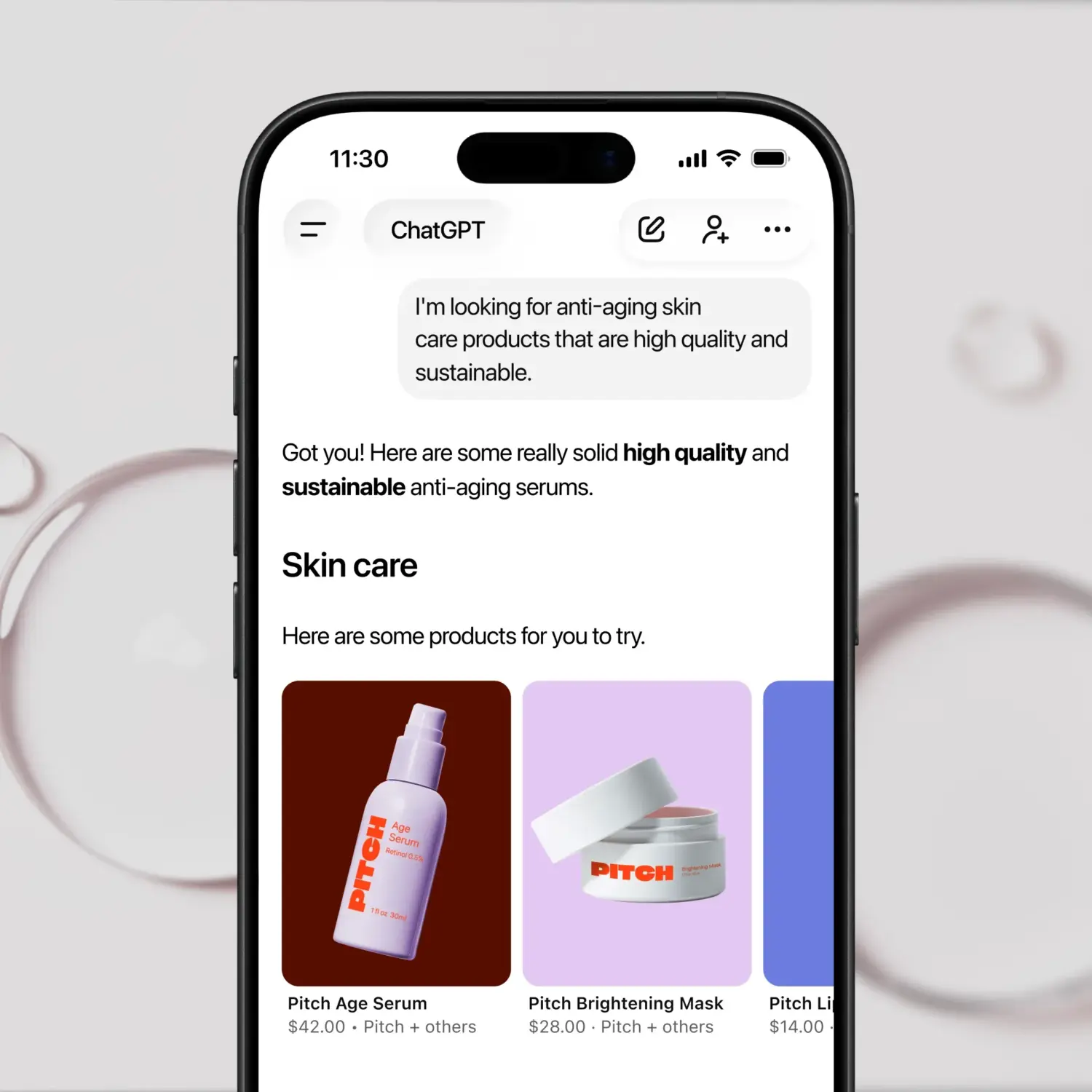
These two terms sound alike but do different jobs. Conversational commerce is chat that helps you decide, but you still do the buying. Agentic commerce is chat that also buys for you.
Here is the easy way to see it. You ask a chat assistant, “Which of these two coffee makers is better for a small kitchen?” It explains the difference and helps you pick. That is conversational commerce. You still add the item to your cart and pay yourself. This can be a chat box on a store’s website, or a tool like ChatGPT giving you suggestions when you ask.
Now imagine you say, “Order the better one and have it here by Friday.” The assistant picks it, checks the price and stock, and buys it for you. That is agentic commerce. The chat did not just advise. It acted.
Agentic commerce is already driving real sales, not just interest. The clearest proof comes from Shopify’s own numbers. In early 2026, AI-driven traffic to Shopify stores grew 8 times year over year, orders from AI searches rose nearly 13 times, and new buyers placed orders through AI channels at almost twice the rate of other channels. (Source: Shopify)
The market forecast is large too. McKinsey estimates AI agents could handle $3 trillion to $5 trillion of global consumer spending by 2030. That is a channel worth preparing for now.
Outside data agrees. Adobe reported that traffic to US retail sites from AI tools jumped 693% over the 2025 holiday season, and those AI referrals converted 31% more than other traffic. So AI shoppers are not just browsing. They are buying.
Demand is coming from shoppers, not just platforms. Shopify’s 2025 holiday report found 64% of shoppers planned to use AI while shopping, rising to 84% of those aged 18 to 24. Younger shoppers expect this. The rest are catching up.
This is a new place to sell, which makes it part of your wider work to grow your Shopify sales.
Big brands are live in AI channels today, and they use them in slightly different ways. The examples below come from Shopify’s own launch announcement.
Keen, Pura Vida, and Kyte Baby sell through Microsoft’s Copilot Checkout. A shopper can buy their products inside a Copilot chat, without opening a separate site. Keen was one of the first Shopify brands to use it.
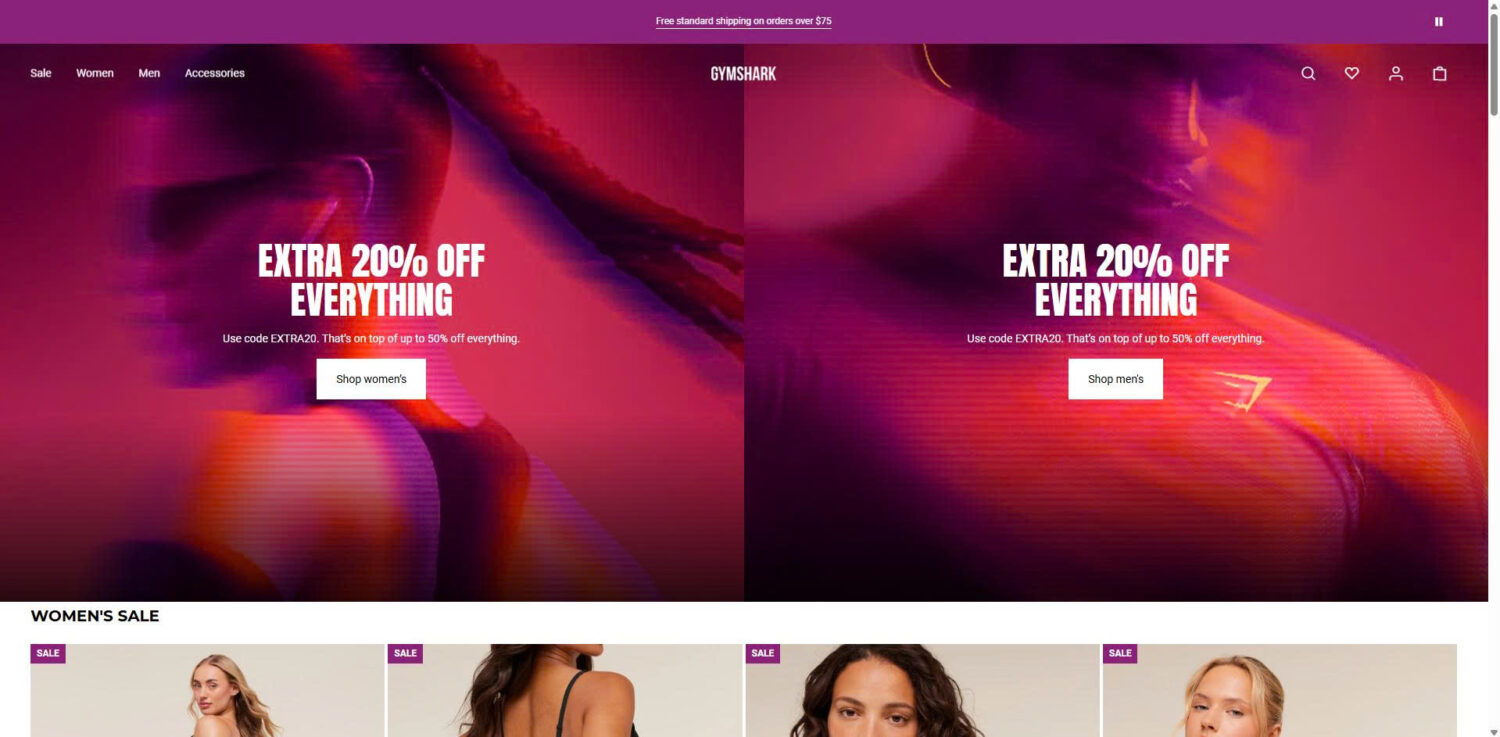
Monos, Gymshark, and Everlane sell inside Google AI Mode and the Gemini app. A shopper can ask for a product, see these brands’ items, and buy in the chat. Monos joined for one clear reason: its product details and brand story now show up at the moment a shopper is asking with real intent.
Fenty and Steve Madden are among the first brands in Google’s new Universal Cart, a single cart that works across many stores at once.
These are not tests. They are open sales channels.
The flow is simple from your side. A shopper asks an AI tool for a product. The agent searches Shopify Catalog. It shows matching products. The shopper approves. The order is placed and lands in your Shopify admin with a label showing which AI channel sent it.
You do not chase each platform one by one. Shopify connects your products to all of them through one setup. The parts below show where the buyer pays, what connects your store, and what happens to your data.
Your products can appear in three main AI channels. Where the buyer checks out is different for each. This matters because it affects fees and control.
| AI channel | Where the buyer pays |
|---|---|
| ChatGPT | On your own store, opened in an in-app browser |
| Microsoft Copilot | Inside the chat, with an embedded checkout |
| Google AI Mode and Gemini | Inside the chat, with an embedded checkout |
In the ChatGPT flow, the shopper taps buy, finishes checkout on your store, and the order shows in your admin with ChatGPT marked as the source. In Copilot and Google, the shopper can finish without leaving the chat.
Your promotions follow the checkout. In the ChatGPT flow, the shopper pays on your store, so your normal discounts, gifts, and loyalty rewards apply just as they do on your own site. In the Copilot and Google flow, the shopper can apply a discount code or loyalty credit inside the chat, but only if your offer is set up in a form the AI can read. More on how to do that below.
A fourth surface is coming. Google is rolling out Universal Cart, a single cart that works across Search, Gemini, YouTube, and Gmail, and hunts for deals and price drops in the background. It starts in the US. For you, it is one more place your products and offers can show up.
Shopify connects your store to these AI tools for you. You do not build the link yourself. Two open standards run in the background. Shopify co-developed the Universal Commerce Protocol (UCP) with Google. OpenAI and Stripe built the Agentic Commerce Protocol (ACP). Both are shared rules that let AI tools and stores work together.
You do not need to learn either one. Shopify handles the setup through Agentic Storefronts, which syndicate your products with no apps to install. The takeaway is that this plumbing is Shopify’s job, not yours.
One point on cost. Today, none of these three channels adds an extra platform fee for Shopify merchants. There was a fee for a short time. When ChatGPT first let shoppers buy inside the chat, OpenAI charged a 4% fee on those in-chat orders, on top of your normal fees. OpenAI pulled that in-chat checkout back for Shopify in early 2026. Now ChatGPT sends buyers to your own store checkout, where you pay only your usual fees, and Copilot and Google add no extra fee either. This area moves fast, so watch for changes.
You keep your customer and their data. The AI tool does not own the buyer. You do. Orders flow into your Shopify admin with a source label, so you can see which channel drove the sale. You stay the seller of record, which means you set the price, own the relationship, and handle fulfillment.
One honest note. Agentic checkouts give you less on-site tracking than a normal store visit. Lean on the order attribution in your admin to measure what each AI channel brings in.
Three Shopify parts make this work. Each is explained in plain terms below.
Shopify Catalog is the product feed that AI agents read. It holds your titles, prices, options, and stock in a clean, machine-readable form. Shopify has structured more than 1 billion products this way, so agents can pull accurate details in seconds. Clean catalog data also converts better than data an agent scrapes from a web page. Accurate data is the base for everything else.
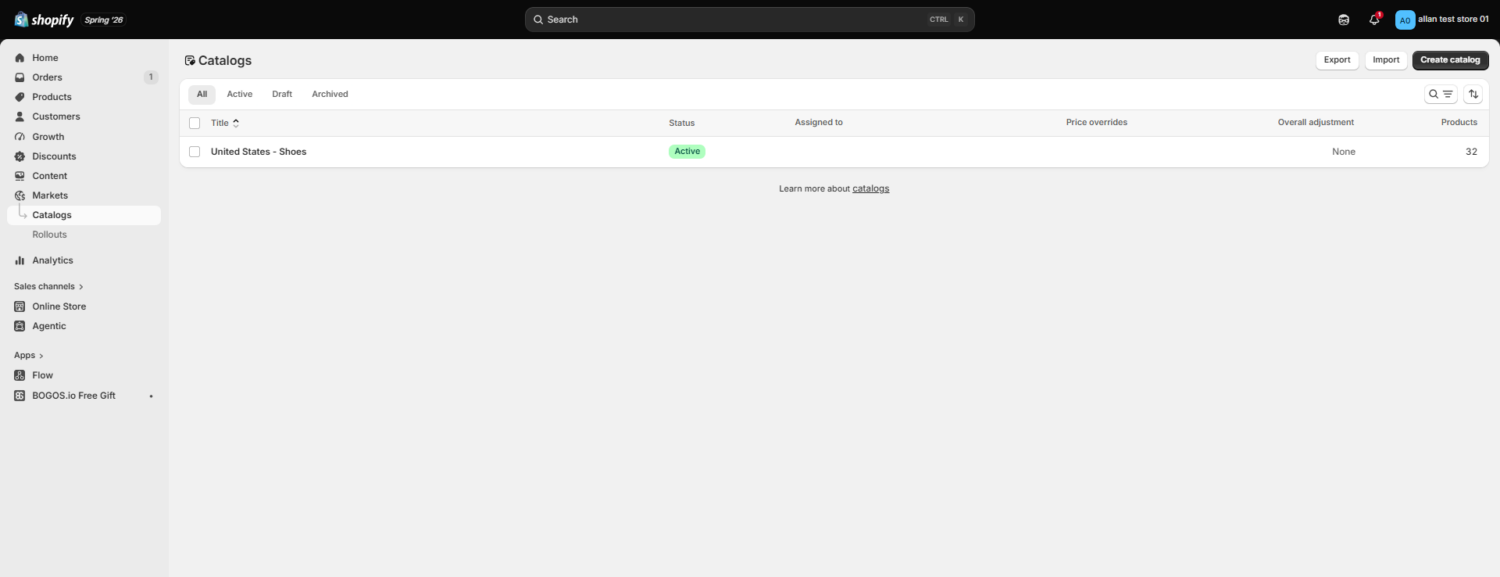
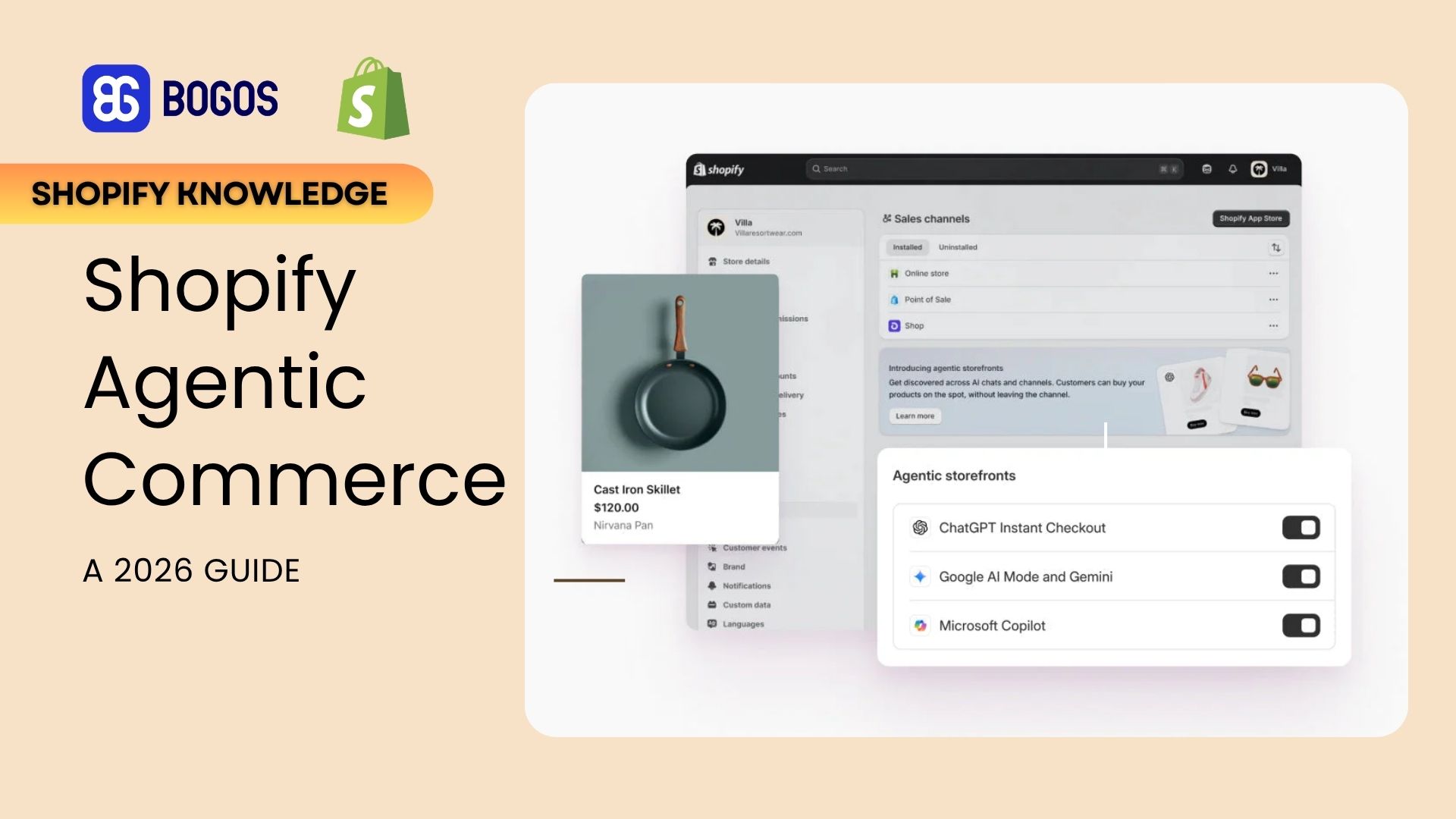
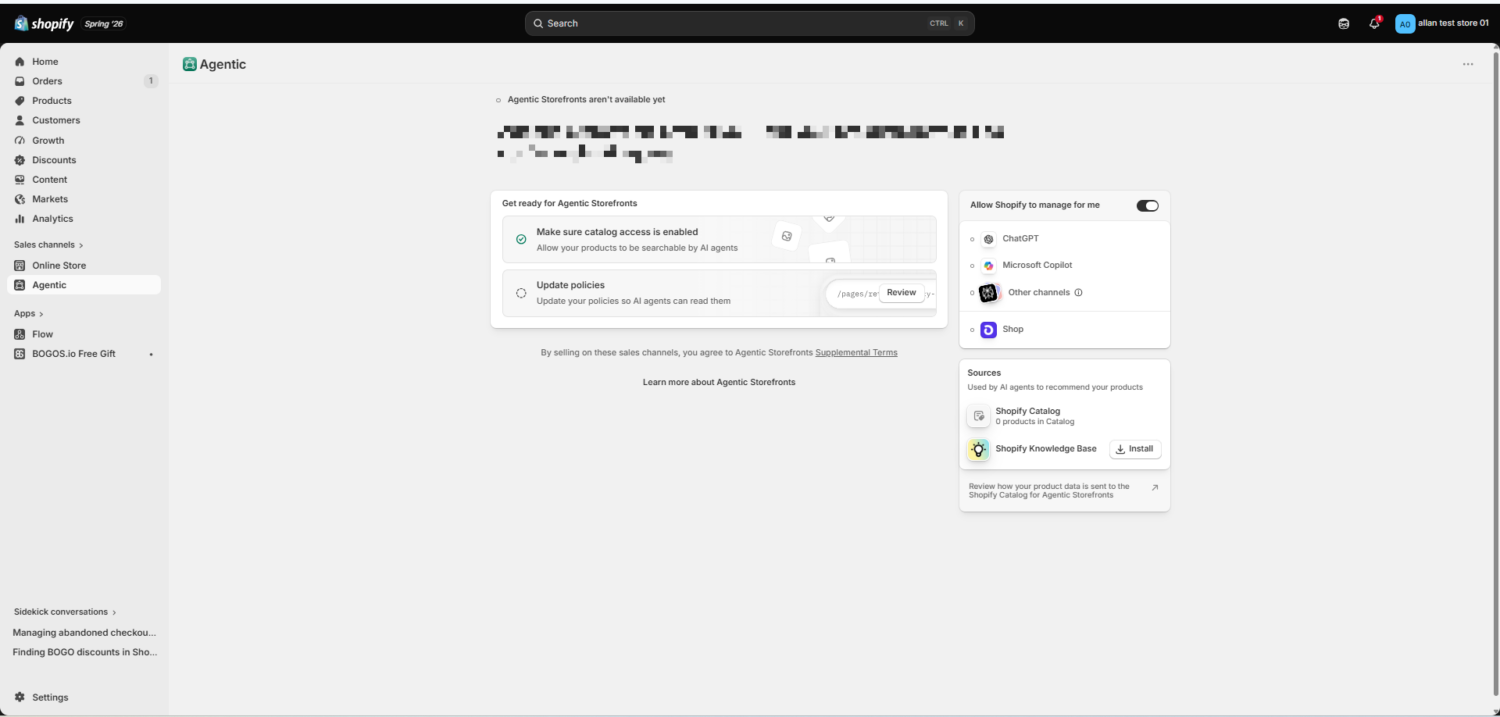
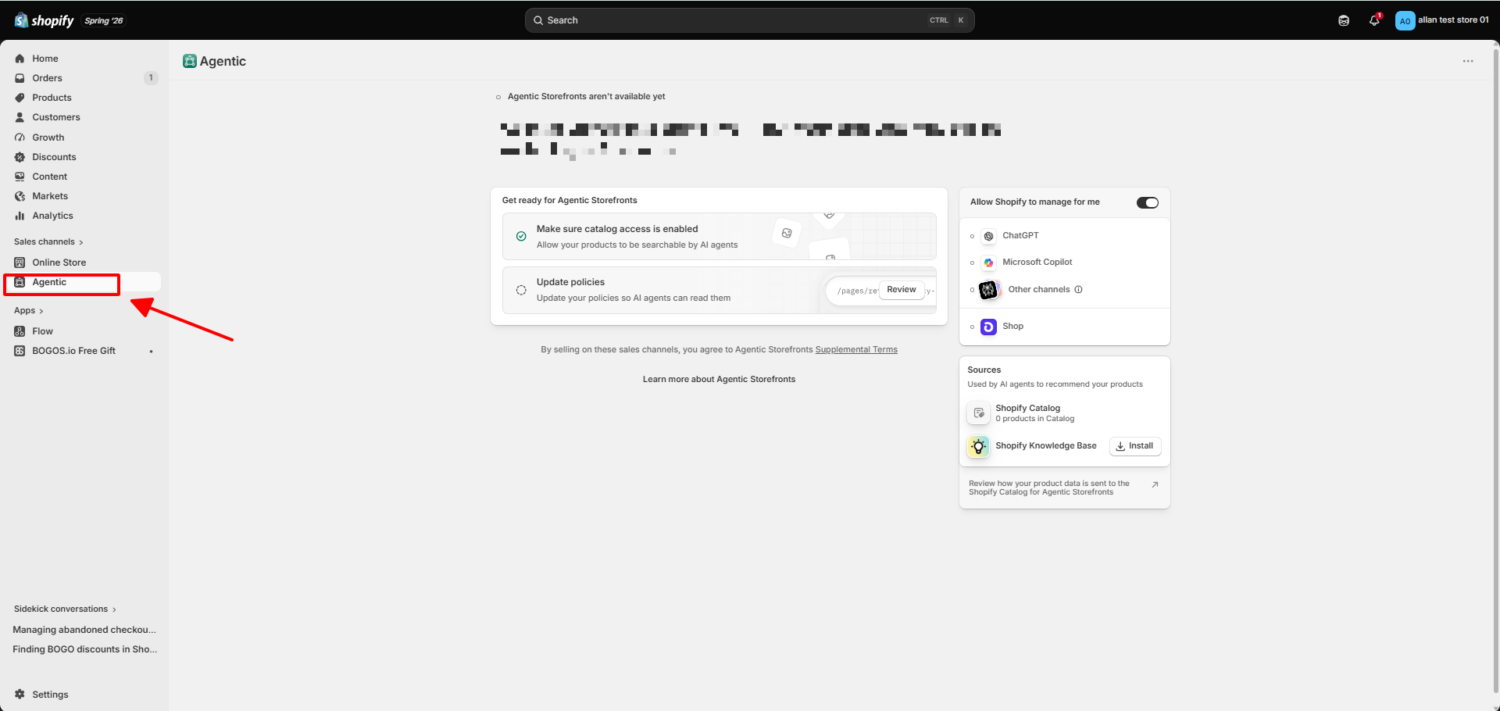
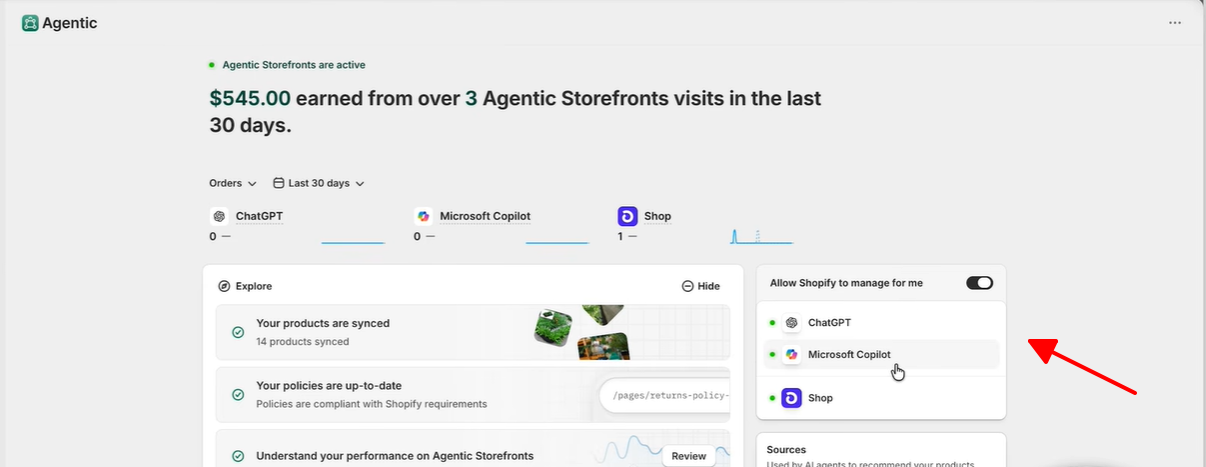
Agentic Storefronts is the sales channel in your Shopify admin. It lets shoppers find and buy your products in AI channels like ChatGPT, Google AI Mode and Gemini, and Microsoft Copilot, and it is on by default for eligible stores. You can pick which channels to sell on. Orders show with channel labels so you can track them.
You can sell in AI channels even if your store is on another platform. Shopify’s Agentic Plan is free and lets non-Shopify merchants add products to Shopify Catalog and sell through AI channels without a Shopify online store. You pay only payment-processing fees. This suits brands on other systems that do not want to replatform yet.
Agentic commerce changes how you grow order value and recover sales. This is the part most guides skip. Showing up matters, but earning more per order matters just as much. This is where your average order value work pays off.
AI agents think in whole goals, not single items. A shopper setting up a home office gets a desk, a chair, a monitor, and cable management suggested together. That is a natural moment for a product bundle or a matching cross-sell offer.
Our app builds these offers for exactly this moment. With BOGOS, you can set bundles and frequently-bought-together deals so the right add-ons travel with your hero product. Bigger, well-matched carts mean more revenue per order.
Your promotions can work inside AI checkout, but only if they are set up to travel. With UCP, shoppers can apply discount codes, use loyalty credentials, and pick subscription options inside the chat. The catch is that your offers must be machine-readable.
Machine-readable means the AI can read your offer as data, not as a picture or words on a page. A banner image that says “free gift over $50” means nothing to an agent. A discount built in Shopify’s system, with clear rules the agent can pull, works. To make your offers machine-readable, build them through Shopify’s own discount and offer tools, or an app that connects to them, instead of theme-only banners or pop-ups. Then the rule travels with the product data the agent reads.
This is where our app helps. With BOGOS, you can run a gift with purchase, set volume discounts that reward bigger carts, and show a progress bar that nudges shoppers toward the next reward. Because these offers live in Shopify’s system, they can carry into AI checkout instead of getting left behind on your page. In-checkout upsells need Shopify Plus, so keep that in mind if you plan to add offers at the payment step.
Promotions like these lift order value in normal stores, and the same logic carries into AI carts. One BOGOS merchant, gift retailer Aotea Gifts, saw about 70% higher average order value over 90 days after adding gift and reward offers. The offer type matters as much as the channel.
Agentic checkout can cut lost sales. The agent buys when the shopper is ready, so there is less gap between wanting and buying. That gap is where checkout gets abandoned. Close the gap, and you keep more of the sale.
Showing up is not enough. The agent picks one product, and you want it to be yours. Getting chosen is a form of conversion rate optimization for a shopper who is not human. Five things decide it.
Agents read structured fields, not marketing copy. Fill in every product field with clear, specific detail: title, price, material, size, and options. Write product descriptions that state real attributes, not vague praise. The payoff is direct, since clean catalog data converts better than scraped data.
Agents match what shoppers ask, so plain answers help you get picked. Shoppers ask full questions, like “a waterproof jacket that packs small for hiking.” Write product content and FAQs that answer real questions in normal words: fit, size, materials, care, and use. Cover what a shopper would want to know before buying. Clear answers give the agent more ways to match you to a request.
Agents lean on reviews and trust signals when choosing between similar products. The shopper never sees your page before buying, so the agent judges your trust for them. Strong social proof and reviews push you up the list. Weak or missing reviews push you off it. Consistent brand details across the web help too, since they tell the agent your brand is real and reliable.
Agents check shipping, returns, and price before they recommend, so make these easy to read. State your shipping speed, your return policy, and your real price in clear, complete fields. If a shopper asks for something that ships by Friday, the agent needs your shipping data to say yes. Vague or missing details get you passed over.
Stale stock or price data gets you skipped. If your numbers are wrong, the agent drops you and picks the next brand. There is no second page to recover on, the way there is in search. Sync your inventory and prices so agents always see the truth.
Here is a clear order to work in. Each step builds on the last.
Agentic commerce has real limits worth knowing. You get less insight into why an agent picked or skipped you. You get thinner on-site analytics, so admin attribution becomes your main measure. Fees and checkout flows are still changing month to month. And you must keep your brand strong when the shopper never sees your page. None of these should stop you. They are reasons to prepare well.
Agentic commerce is a real, fast-growing way to sell, and Shopify handles the hard setup for you. Your job is the part you control: clean product data, strong reviews, and promotions built to work inside AI checkout. Shoppers are already buying this way, and the stores that prepare now will be the ones agents pick first. Start by checking whether your store is already live, then get your data and your offers ready.
Mostly no. Today, none of the three main channels adds an extra platform fee for Shopify merchants. OpenAI briefly charged a 4% fee on purchases completed inside ChatGPT, but it pulled that in-chat checkout back for Shopify in early 2026. ChatGPT now sends buyers to your own store checkout, and Copilot and Google add no extra fee. You still pay your normal payment-processing fees.
No. Shopify’s Agentic Plan is free and lets brands on other platforms list products in Shopify Catalog and sell through AI channels without a Shopify online store. You pay only payment-processing fees.
Yes, if they are set up to travel. AI checkout can apply discount codes, gifts, and loyalty rewards, but only when your offers are machine-readable. Our app lets you build gift, bundle, and discount offers inside Shopify so they carry into AI carts.

Shoppers hesitate to buy a $1,200 sofa or a custom ring when they can’t see the exact version they’re...
Selling personalized products on Shopify gets hard the moment a shopper needs to type a name or choose a...
The UK is the largest eCommerce market in Europe and the third-largest in the world. For international Shopify stores,...