How to Set Up a Free Gift With Purchase on Shopify? (4 Methods)

How to Set Up a Free Gift With Purchase on Shopify? (4 Methods)

22 July, 2024 26 min read

How to Set Up a Free Gift With Purchase on Shopify? (4 Methods)

Charlie Ngo

Charlie Ngo

Marketing Manager

Offering a free gift with purchase is one of the most reliable ways to increase average order value on a Shopify store. Customers spend more to unlock the gift, your conversion rate improves because the offer feels tangible, and you move inventory that might otherwise sit idle.

The problem is that Shopify doesn’t have a dedicated “gift with purchase” feature. There’s no button in your admin that says “add a free gift when someone spends $75.”

So you need a workaround — and you have four options:

  • Shopify’s built-in Buy X Get Y discount
  • A dedicated GWP app
  • Custom theme code using the AJAX cart API
  • Shopify Scripts

This guide walks you through all four methods step by step, plus the most common gift offer types, how to pick a gift that doesn’t eat your margin, and the mistakes that cause most GWP promotions to underperform.

1. What is Gift With Purchase, and How Does It Work?

Gift with purchase (GWP) is a promotional strategy where customers receive a complimentary item or service when they meet specific purchasing conditions. This marketing technique creates added value for shoppers while encouraging larger purchases and brand engagement.

Gift with purchase promotions operate on a simple conditional framework where customers must fulfill certain requirements to unlock their free rewards. Here’s what customers typically need to do and what they can receive:

What Customers Need to Purchase:

  • Minimum Cart Value: Spend a specific dollar amount (e.g., “Spend $75, get a free tote bag”)
  • Minimum Item Quantity: Buy a certain number of products (e.g., “Buy 3 items, get the 4th free”)
  • Specific Product Purchase: Buy particular items to qualify (e.g., “Purchase any skincare set, receive a free travel-size moisturizer”)
  • Category-Based Requirements: Shop from specific collections (e.g., “Buy any two makeup products, get a free lip gloss”)

What Customers Can Receive as Gifts:

  • Branded merchandise (tote bags, water bottles, accessories)
  • Sample or travel-size versions of existing products
  • Exclusive or limited-edition items are not available for regular purchase
  • Digital rewards (discount codes, exclusive content, early access)
  • Service add-ons (free shipping, extended warranties, consultations)

2. Why Shopify Merchants Use GWP Promotions

The reason GWP works better than a flat discount for many stores comes down to perceived value. A 10% discount on a $80 order saves the customer $8. A free gift valued at $8 (that only costs you $3 to fulfill) feels like a much bigger reward (even though your actual cost is lower).

Beyond that, GWP promotions give you a few specific advantages:

  • Higher average order value. Customers add more items to reach the threshold. If your AOV is $65 and you set the gift trigger at $80, you’re pulling orders up by design.
  • Better conversion rates. A visible gift offer (progress bar, popup, banner) gives shoppers a reason to complete checkout instead of abandoning.
  • Inventory clearance. Samples, end-of-line products, or low-cost accessories make effective gifts and help you move stock without discounting your core catalog.
  • Stronger customer experience. A surprise or earned gift creates a positive unboxing moment, which supports repeat purchases and word-of-mouth.

The trade-off is margin. Every gift has a cost: product cost, packaging, and sometimes extra shipping weight. That’s why the threshold and gift selection matter as much as the offer itself (more on that later).

If you’re comparing GWP to other promotional tactics like BOGO or percentage-off discounts, the key difference is that GWP adds perceived value without reducing the price of anything already in the cart. Your products stay full price. The gift is the incentive.

3. Common Types of Gift With Purchase You Can Create on Shopify

Before setting anything up, it helps to know what kinds of gift offers are possible. The “right” type depends on your goal — whether you want to push AOV higher, promote a specific product, or let customers feel like they’re choosing their reward.

Here are the 5 most common GWP offer types Shopify merchants use.

Spend Threshold Gift

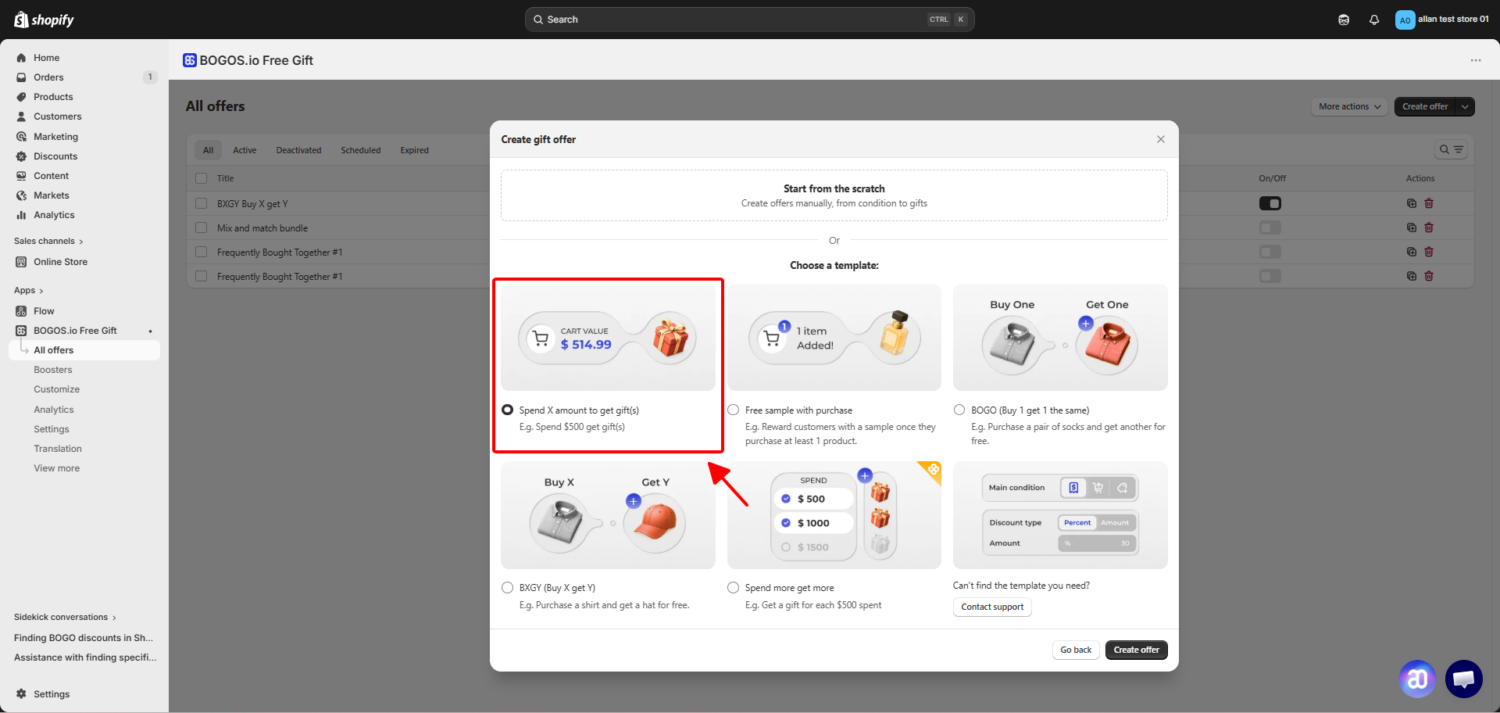
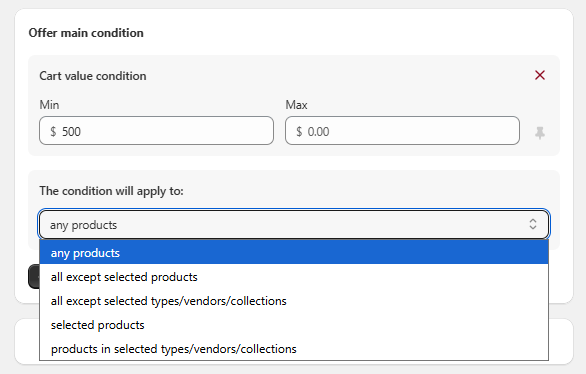
This is the most popular GWP format. The customer’s cart subtotal must reach a minimum amount before the gift unlocks.

It works well because the mechanic is simple for shoppers to understand, and it directly targets AOV. You set the threshold above your current average order value, so customers naturally add more items to qualify.

Spend threshold gift

Example: “Spend $75, get a free travel-size moisturizer.” If your current AOV is $60, the $75 threshold pulls most orders up by at least one extra product.

One thing to watch: set the threshold too high and redemption drops sharply. A good starting point is 20–30% above your current AOV. You can test from there.

👉 Set up guide: How to Set Up Shopify Free Gift With Purchase Based On Cart Value?

Product-Specific Gift

Instead of a cart total, the trigger is a specific product or collection. When a customer adds the qualifying item, the gift becomes available.

This type is useful for product launches, hero SKU promotions, or moving paired inventory. It’s also effective when you want to reward customers for buying higher-margin items specifically, rather than just spending more overall.

Product-specific gift
Buy a Moisturizer to get gift

Example: “Buy any full-size serum → get a free sample kit.” The gift is tied to the serum purchase, not the cart value.

The limitation is that it doesn’t push AOV the way a threshold does. It’s better suited to conversion goals or product awareness.

👉 Set up guide: How to offer GWP for specific product purchase on Shopify

Quantity-Based Gift

The trigger here is how many items the customer adds — either from a specific collection or store-wide. Once they hit the required quantity, the gift unlocks.

This works well for consumables, accessories, or collections where you want to encourage multi-unit purchases. It’s a natural fit for stores selling items customers buy in multiples (skincare, supplements, socks, candles).

Quantity-based gift
Buy 2 Eye Cream to get a Mask for free

Example: “Buy 3 candles, get a free matchbox set.”

Keep in mind that quantity-based triggers can create edge cases with product variants. Make sure your setup counts variants correctly — three different scents of the same candle should still qualify.

👉 Set up guide: How to offer GWP on Shopify with multiple purchase criteria

Tiered Gifts

Tiered GWP offers set multiple thresholds, each unlocking a better gift. The higher the customer spends, the more valuable the reward.

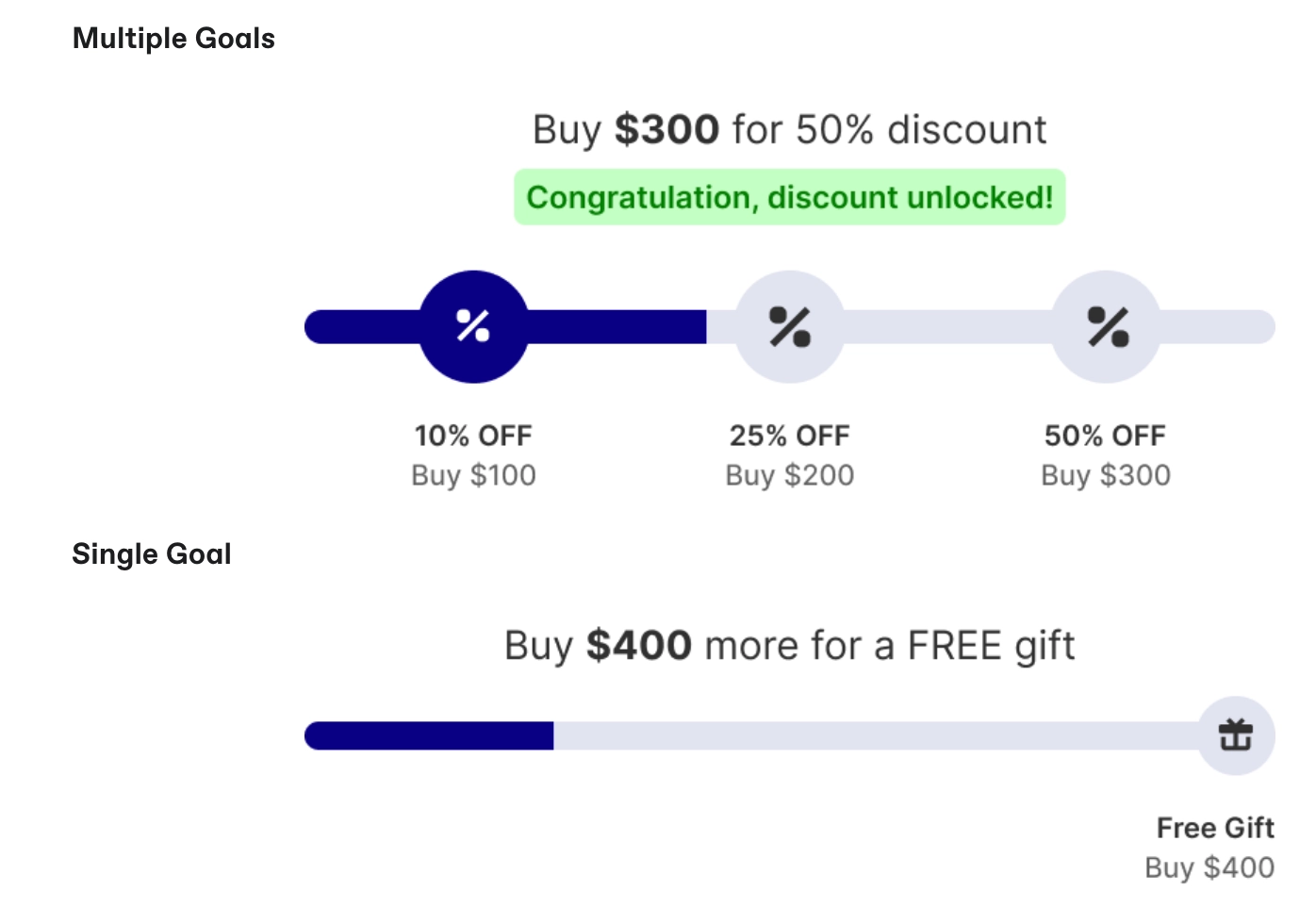
This is the strongest AOV driver because it gives customers a reason to keep adding items even after they’ve passed the first threshold. It also creates a “gamified” feeling — shoppers can see what they’ll unlock next.

Tiered Gifts
Spend more to unlock bigger gifts

Example: Spend $50 → free sample. Spend $100 → full-size product. Spend $150 → full-size product + branded pouch.

The trade-off is complexity. You need enough gift inventory at each tier, and the setup requires an app — Shopify’s native discount system doesn’t support multiple gift levels in a single promotion.

Customer-Pick Gift

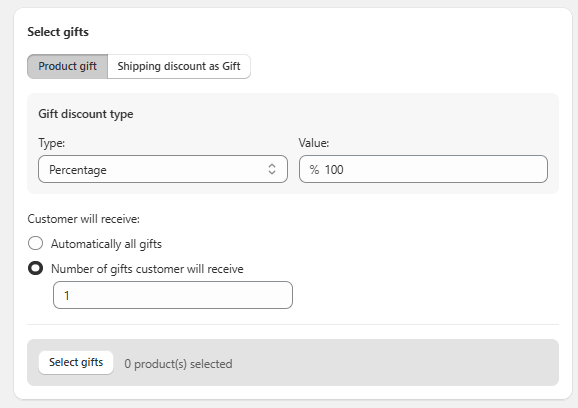
Instead of auto-adding a single predetermined gift, you let the customer choose from two or three options. This requires an app with a gift picker UI (usually a gift pop-up).

Letting customers choose increases perceived value because they feel in control. It also reduces the risk of the gift feeling irrelevant — a problem when you auto-add a single item that not every customer wants.

Gift selection popup
Choose a free gift from the list with your BHA Liquid purchase

Example: “Spend $80 → pick 1 of 3 free accessories (phone grip, tote bag, or sticker pack).”

This approach needs more planning: you’re managing inventory across multiple gift SKUs, and you need an app that handles the selection interface cleanly in your theme’s cart drawer or cart page.

👉 Set up guide: How to Enable Free Gift Selection on Shopify

4. 4 Ways to Add a Free Gift With Purchase on Shopify

There are four ways to set up a gift with purchase on Shopify. They range from a free, no-code option that takes five minutes to a developer-level script that runs at checkout.

Before walking through each one, here’s a quick comparison so you can jump to the method that fits your store:

Best forAuto-add to cart?CostSetup complexity
Buy X Get Y discountSimple, single-gift offersNo — customer adds the gift manuallyFree (built-in)Low
GWP appMost stores — flexible offers, multiple tiersYesFree – ~$30/moLow–Medium
Theme code (AJAX cart) + discountStores with a developer who want full control, no app feesYesFree (dev time required)Medium–High
Shopify ScriptsPlus stores with existing script setups (being deprecated)Yes (at checkout)Shopify Plus planHigh

Most Shopify merchants will get the best results from Method 1 (for simple offers) or Method 2 (for anything more flexible). Methods 3 and 4 are developer-dependent alternatives for stores that want custom control or are already on Shopify Plus.


Method 1: Use Shopify’s Built-in “Buy X Get Y” Discount

Shopify’s automatic discount system includes a “Buy X Get Y” option that you can repurpose as a basic gift with purchase. It’s free, built into every Shopify plan, and doesn’t require any app.

Here’s how to set it up:

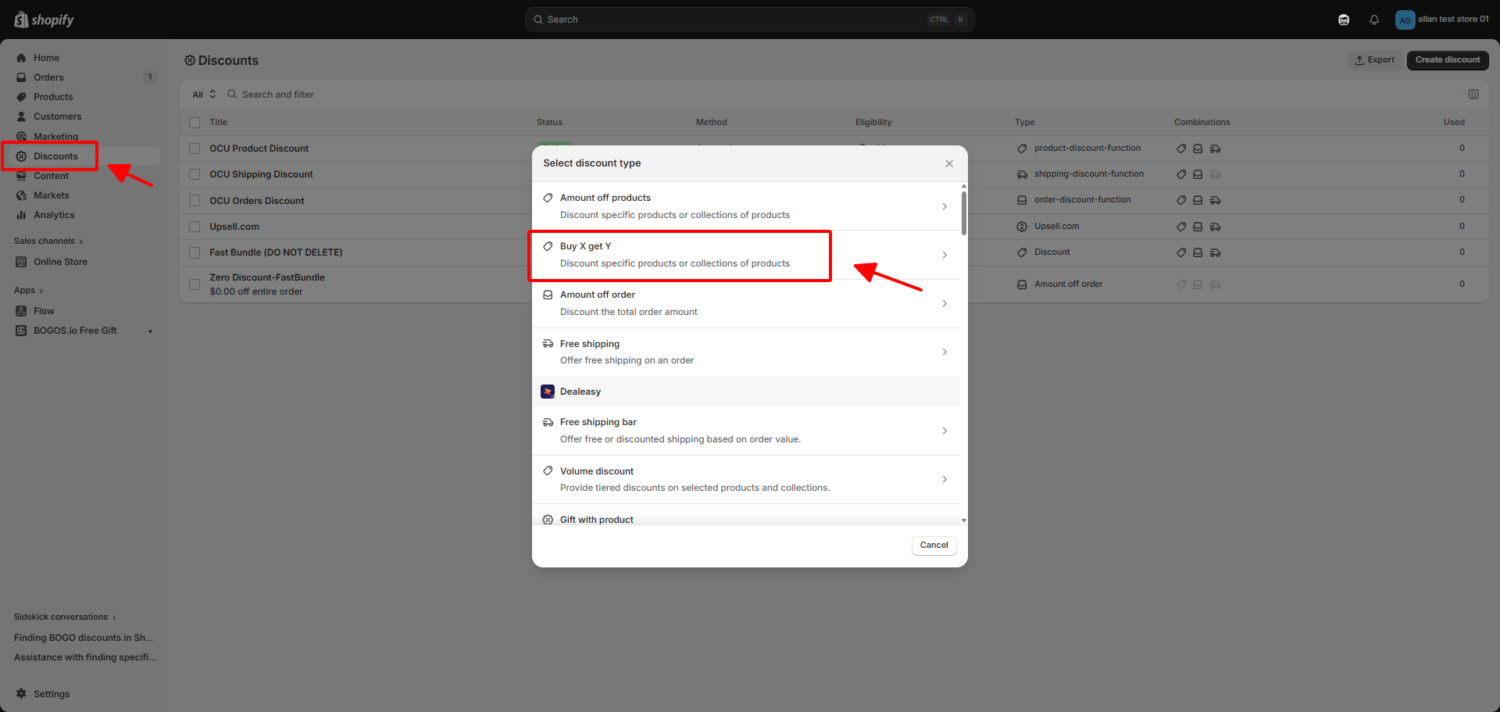
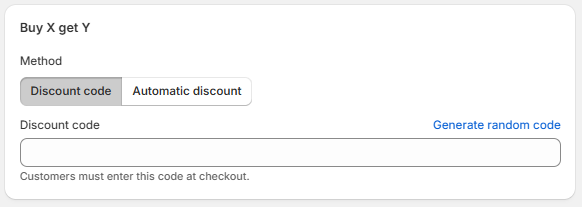
  1. In your Shopify admin, go to Discounts → Create discount.
  2. Select Buy X Get Y.
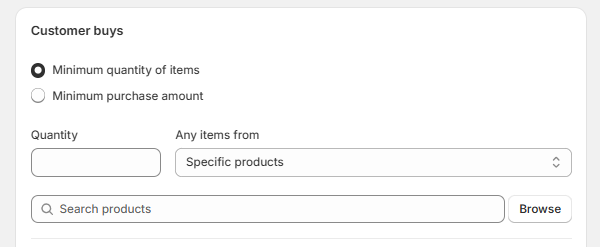
  3. Under “Customer buys,” set the condition: either a minimum quantity of specific products or a minimum purchase amount (this is your threshold).
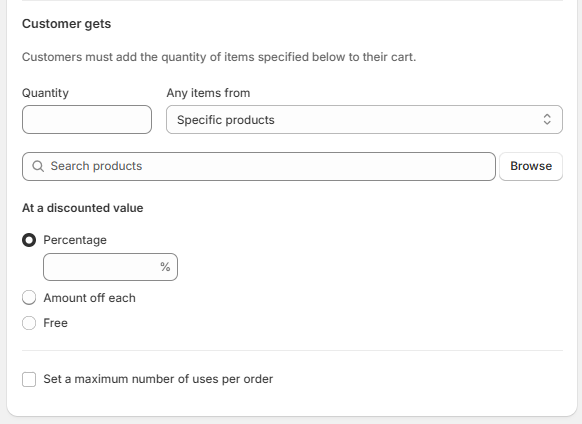
  4. Under “Customer gets,” choose the gift product and set the discount to 100% off (making it free).
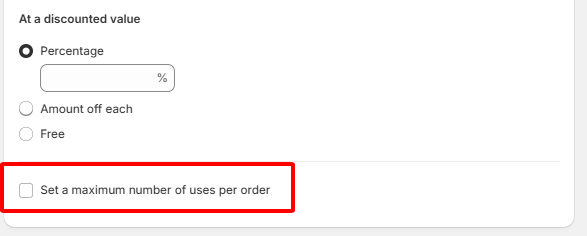
  5. Set the maximum number of uses per order — typically 1, so customers can’t claim multiple gifts.
  6. Under “Discount type,” choose Automatic, so it applies without a code.
  7. Save the discount and test it in your storefront.

That’s the full setup. A customer who meets the condition and adds the gift product to their cart will see it discounted to $0 at checkout.

Shopify's built-in discount
Log-in to your Shopify admin dashboard then navigate to ‘Discounts’ tab.

When this method works well:

This is a solid choice if you’re running a straightforward, single-gift offer and don’t need auto-add functionality. It costs nothing, takes a few minutes to configure, and works on every Shopify plan.

Key limitations to know before you commit:

  • The gift doesn’t auto-add to the cart. The customer has to find and add the gift product themselves. If they don’t know the gift exists or can’t locate it, they’ll check out without it. You can work around this with banners or product page callouts, but it adds friction compared to an app that drops the gift into the cart automatically.
  • No gift picker, no popup, no progress bar. The native discount has no storefront UI. There’s no visual indicator showing the customer how close they are to unlocking the gift, and no way to let them choose between multiple gift options.
  • Limited gift conditions. You can set a minimum quantity or minimum purchase amount, but you can’t build tiered gifts (spend $50 → gift A, spend $100 → gift B) or restrict the offer to first-time customers only using this method alone.

If those limitations don’t matter for your current promotion, this method works fine. If they do — especially the stacking conflicts or the lack of auto-add — move to Method 2.


Method 2: Use a Shopify Gift With Purchase App

A dedicated GWP app is the most common way Shopify merchants run gift-with-purchase promotions. Apps handle the parts that Shopify’s native system can’t: auto-adding the gift to the cart, showing a progress bar, supporting multiple gift tiers, and letting customers choose their gift.

Key features to look for when choosing a GWP app:

Not all gift with purchase apps are equal. These are the features that matter most for a smooth promotion:

  • Auto-add to cart. The gift should appear in the cart automatically when the customer qualifies — no manual action needed. This is the primary reason to use an app over Shopify’s native discount.
  • Auto-remove from cart. Equally important: if the customer removes items and drops below the threshold, the gift should disappear. Without this, customers can game the offer.
  • Multiple gift tiers. If you want to run tiered promotions (spend $50 → gift A, spend $100 → gift B), make sure the app supports it. Not all do.
  • Gift picker UI. For “choose your gift” offers, the app needs a clean selection interface — typically a popup or in-cart widget — that works with your theme’s cart drawer and cart page.
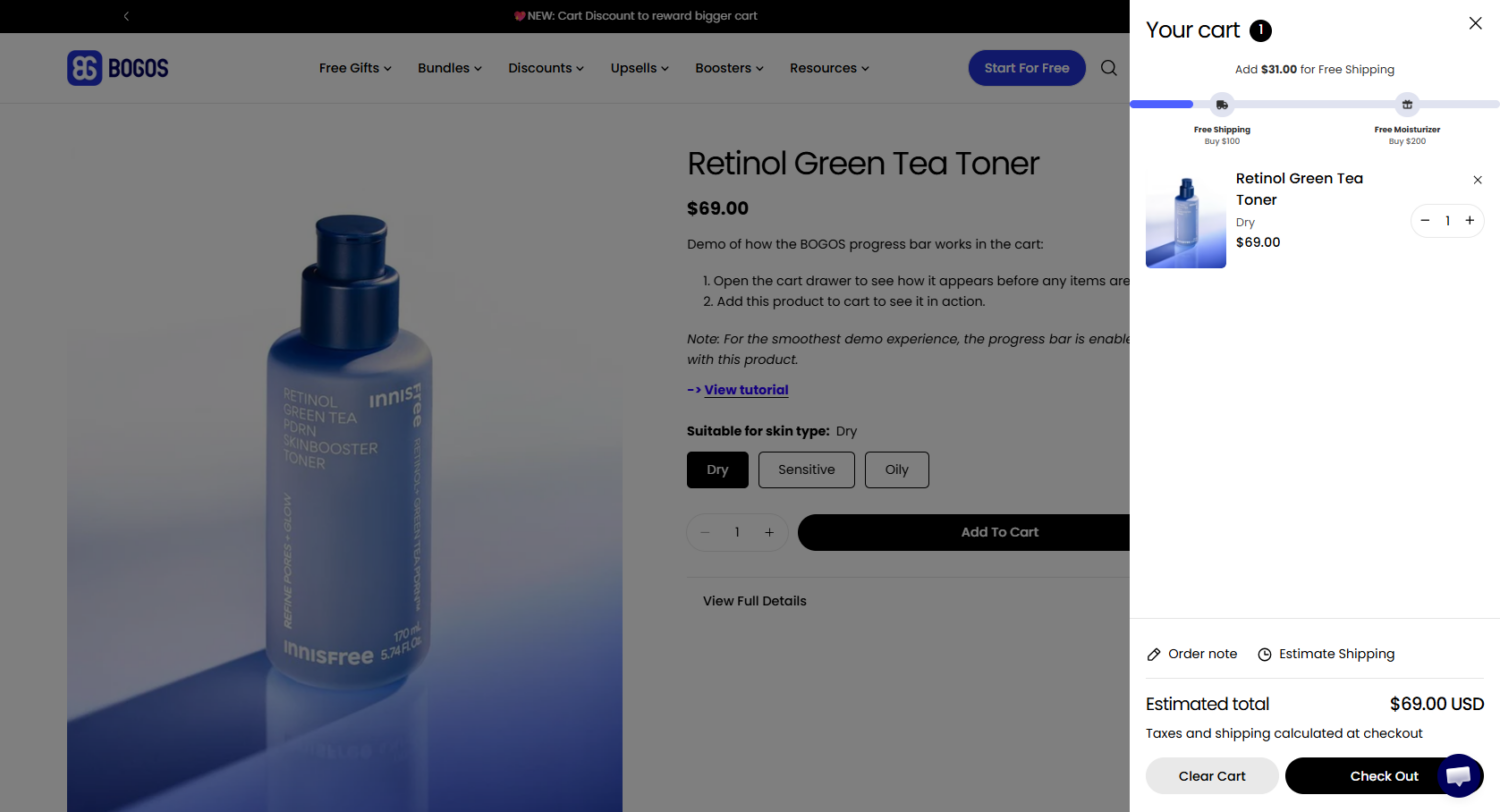
  • Progress bar or threshold indicator. A visual indicator showing “You’re $15 away from a free gift” is one of the strongest conversion drivers in a GWP campaign. It encourages customers to add more items.
  • Theme compatibility. The app’s widgets need to render correctly in your theme, especially in the cart drawer (which is where most modern themes handle the cart). Check if the app supports your specific theme before installing.
  • Discount stacking behavior. Understand how the app interacts with your existing discount codes and automatic discounts. Some apps use Shopify’s discount system under the hood (meaning the gift is subject to Shopify’s Buy X Get Y stacking rules — discount codes can override it). Other apps use their own mechanism and avoid these conflicts entirely.
  • Inventory sync for gift products. The app should track inventory on the gift variant so you don’t oversell. If your gift product has 200 units and the app doesn’t decrement stock, you’ll run into fulfillment issues.

Top Shopify GWP apps worth evaluating:

Here’s a quick comparison of three well-established gift with purchase apps:

FeaturesBOGOS Free Gift, Bundles & UpsellsEG Auto Add To CartGift Box
Rating & Reviews5.0 ⭐- 3,300 + reviews5.0 ⭐- 700 + reviews4.8 ⭐- 175 + reviews
Pricing– Basic: 29.99$
– Professional: 49.99$
– Unlimited: 69.99$
– Plus: 109.99$
– Standard: 14.99$
– Unlimited: 29.99$
– Entry: 29.99$
– Starter: 49.99$
– Growth: 69.99$
Free Plan Available
Built for Shopify
Auto Gift Addition
Gift rules customizationAdvancedBasicBasic
Free Shipping
Custom PopupsAdvancedEnterprise stores need comprehensive promotion management with advanced features
AnalyticsAdvancedBasicBasic
Customer SegmentationsAdvancedBasicBasic
Bundle Support
Upsell Support
Support Channel– Live Chat
– Email
– Live Call
– Youtube
– Help Docs
– Live Chat
– Email
– Live Chat
– Email
Integration with other top Shopify appsEnterprise stores need comprehensive promotion management with advanced features
Work with POS
Work with Headless
Multi-Language Support
Best ForEnterprise stores needing comprehensive promotion management with advanced featuresSmall to medium stores seeking simple, affordable gift automationMedium stores want reliable gift promotions with multi-language support
BOGOS Free Gift Bundle & Upsell

BOGOS – The Enterprise Solution
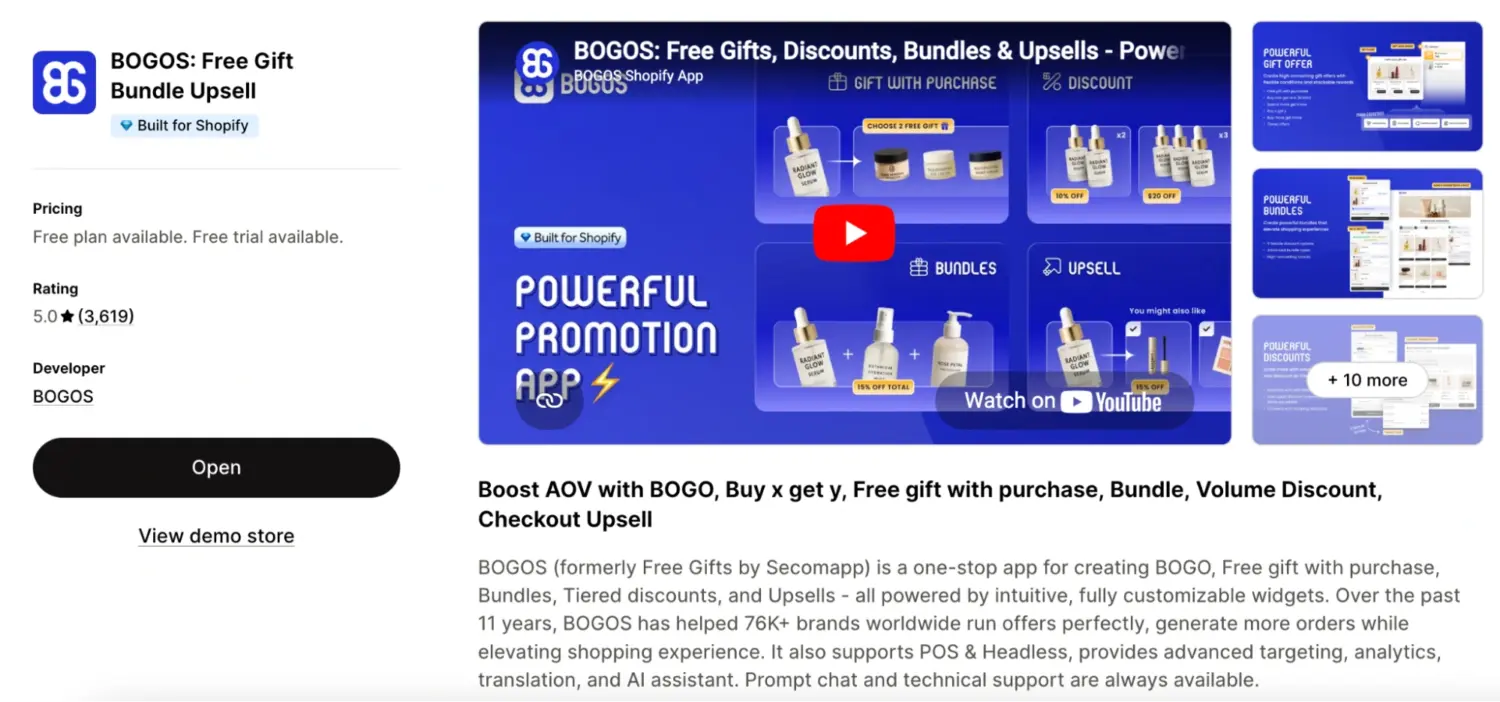
BOGOS stands out as the most comprehensive gift-with-purchase solution with advanced customization, deep integrations, POS, and headless commerce support. Its strong analytics, segmentation, and upsell tools make it ideal for large or growing businesses seeking powerful promotion management.

EG Auto add to cart

EG Auto Add To Cart – The Budget-Friendly Choice
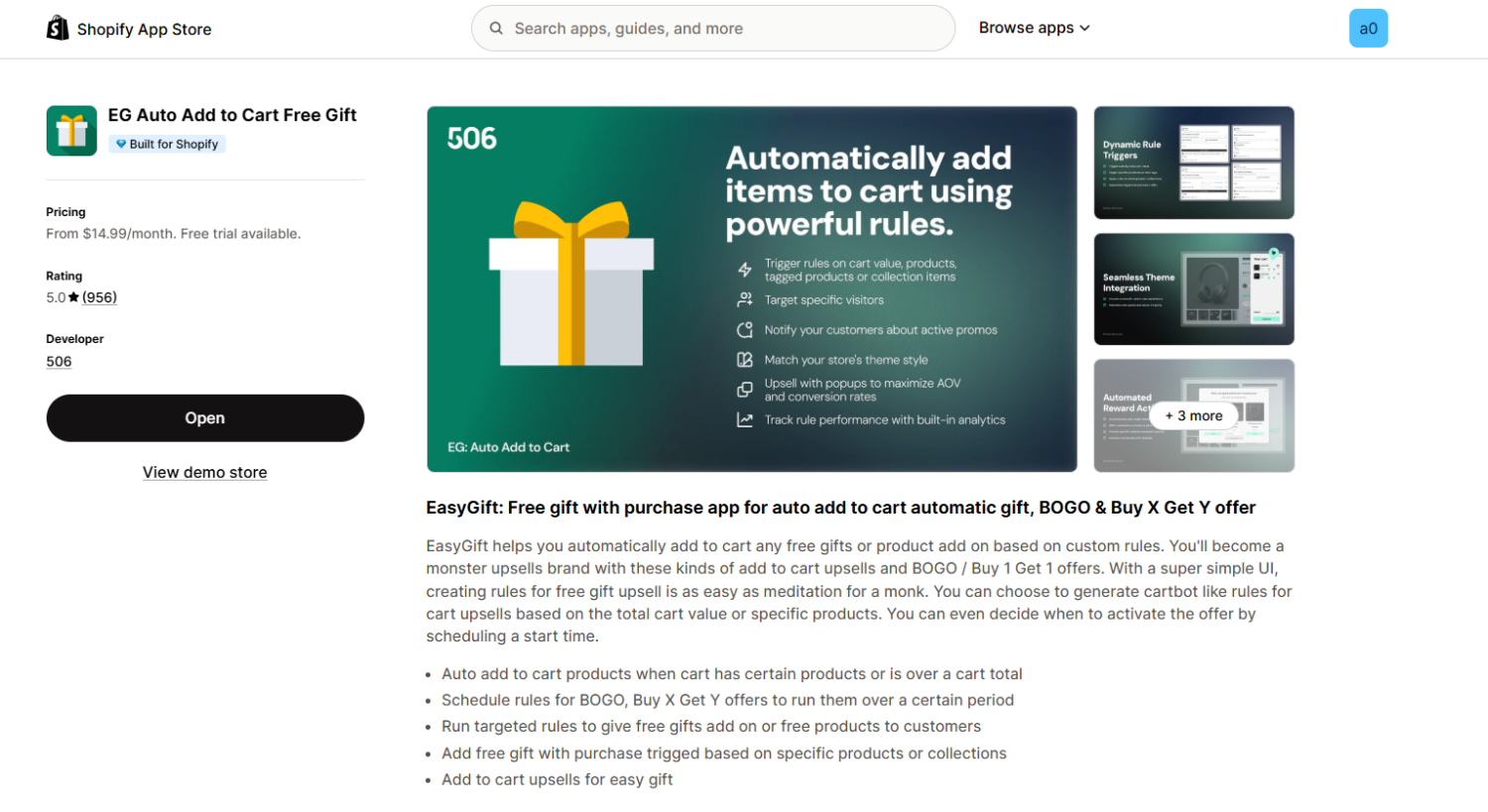
FG Auto Add To Cart offers excellent value with its perfect 5.0-star rating and affordable pricing starting at $14.99. While it lacks advanced features, it delivers reliable automatic gift addition with solid basic functionality. This app is perfect for small to medium-sized stores that want simple, cost-effective gift automation without complex customization needs.

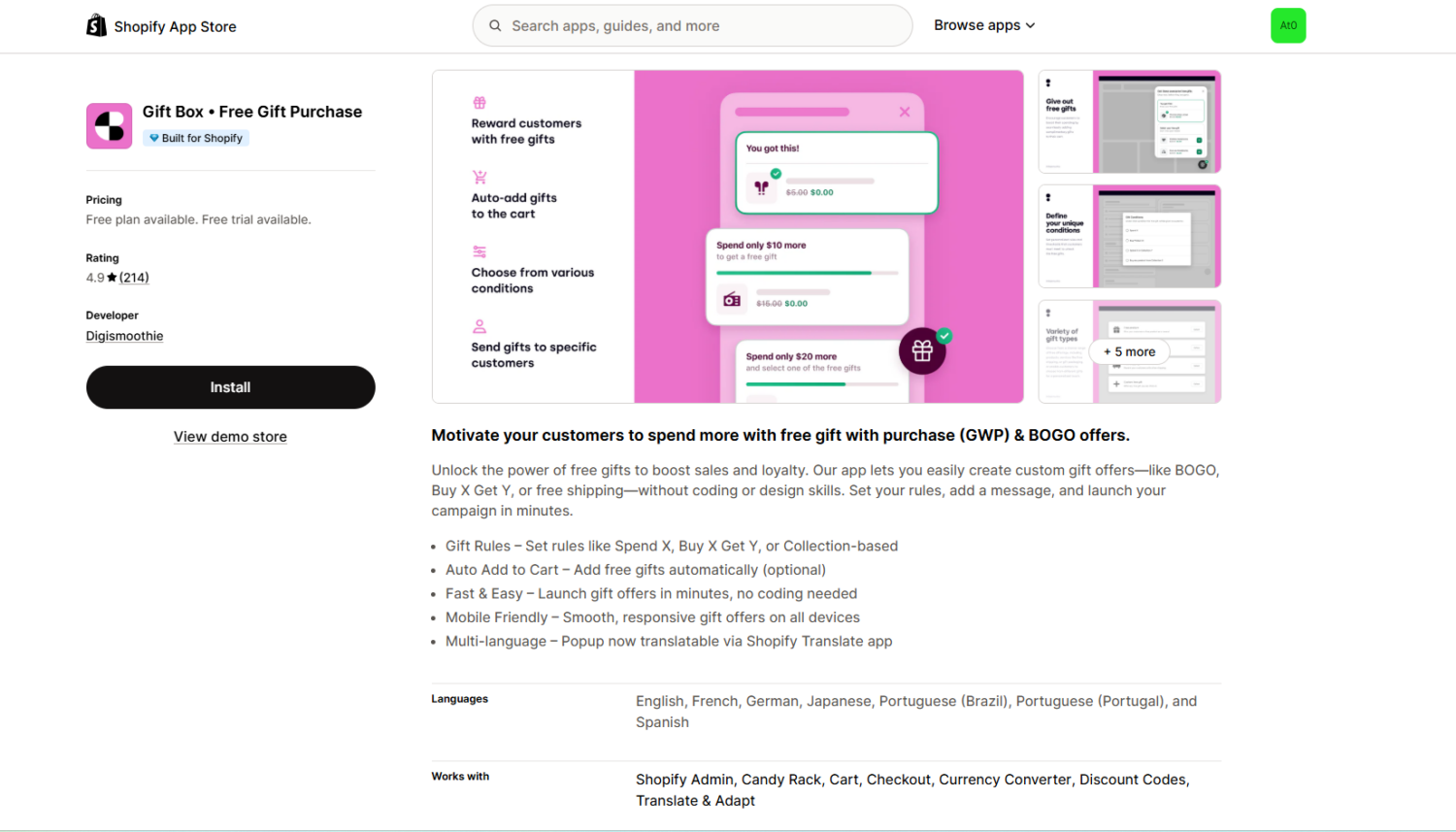
Gift Box

Gift Box – The Balanced Option
Gift Box is a reliable mid-range solution with multi-language support and solid performance. It’s ideal for medium-sized international stores needing dependable gift promotions with basic customization.

👉 For more reviews of Shopify Gift-with-purchase apps, check out this blog: Top 8 Must-Have Shopify Free Gift With Purchase App To Boost AOV

When this method works well:

For most Shopify stores, a GWP app is the best balance of flexibility, ease of setup, and customer experience. It’s the right choice if any of the following apply: you need auto-add functionality, you want tiered or customer-pick gifts, you’re already running another automatic discount, or you want a progress bar in your cart.

The main trade-off is cost. Free-tier apps usually come with limitations (fewer active offers, limited customization, branding). Paid plans typically run $10–$30/month, which is easy to justify if the promotion is lifting your AOV — but it’s still a recurring expense to factor in.


Method 3: Use Theme Code (AJAX Cart) + Shopify’s Native Discount

This method combines two pieces that work together to create a GWP experience without any app:

  1. Custom JavaScript in your theme uses Shopify’s AJAX Cart API (/cart/add.js, /cart/change.js) to auto-add the gift when the cart meets your conditions and auto-remove it when it doesn’t.
  2. A Shopify automatic discount (Buy X Get Y at 100% off) makes the gift free at checkout — same setup as Method 1, but now the cart behavior is handled by code instead of the customer.

The result is the same auto-add experience customers get from an app — built entirely with theme code and Shopify’s native discount system. It works on every Shopify plan, costs nothing beyond developer time, and gives you full design control over the cart experience (progress bars, banners, gift notifications).

This method is a good fit if you have developer resources and want a straightforward, single-gift offer with auto-add — without a recurring app cost.

To learn how to automatically add a product to the cart using Shopify’s AJAX Cart API, watch this tutorial:


Method 4: Use Shopify Scripts (Shopify Plus Only)

Shopify Scripts takes a different approach from the AJAX cart method. Instead of adding the gift on the storefront, Scripts run at the checkout level and modify line item prices directly. A typical GWP script checks the cart when the customer reaches checkout, identifies the gift product, and sets its price to $0 — no automatic discount needed.

The key difference from Method 3 is where the logic runs. AJAX cart code runs in the browser and handles the storefront experience (adding, removing, showing the gift). Scripts run on Shopify’s servers at checkout and handle pricing. Some Plus merchants combine both: AJAX cart for the auto-add UX, Scripts for the price modification, which avoids the Buy X Get Y stacking constraints since Scripts set the price directly without using Shopify’s discount system.

Key limitations:

  • Shopify Plus only. Scripts require a Plus plan, so this isn’t an option for most stores.
  • No storefront UI. Scripts have no visual presence in the cart. You’d still need theme code or an app for progress bars, popups, or gift pickers.
  • Requires a developer. Scripts are written in Ruby and managed through the Script Editor or a custom app. Every change to the gift, threshold, or conditions means editing code.
  • Scripts are being deprecated. Shopify has announced that Scripts will stop working after June 30, 2026. The replacement is Shopify Functions, a newer app-based framework. If you’re building something new on Plus, build it with Functions instead. If you already have Scripts running, plan to migrate before the deadline.

Scripts made sense as a powerful checkout tool for Plus stores, but given the deprecation timeline, they’re no longer a good starting point for new GWP setups.


Which Method Should You Use?

If you’ve read through all four options and aren’t sure where to start, here’s a simple decision path:

Start with Method 1 (Buy X Get Y) if you just need a basic, single-gift offer and you don’t have another automatic discount running. It’s free, fast, and good enough for a first test.

Move to Method 2 (GWP app) when you need auto-add to cart, tiered gifts, a progress bar, or you’re already using an automatic discount for something else. This is where most merchants land.

Use Method 3 (AJAX cart + discount) if you have a developer and want full control over the experience without recurring app fees — best for straightforward, single-gift offers.

Consider Method 4 (Scripts) only if you’re already on Shopify Plus with existing scripts. For new setups, look at Shopify Functions instead, or stick with a GWP app.

For most stores, an app is the right answer. It gives you the best customer experience with the least setup friction. The native discount is a good starting point to validate the concept, and custom theme code is there when you want more control without the monthly cost.


5. How to Choose the Right Gift and Set Conditions That Protect Your Margins

The offer mechanics only matter if the gift itself is worth claiming and the economics work for your store. A poorly chosen gift wastes inventory. A poorly set threshold either erodes the margin or goes unclaimed. This section covers how to get both right.

👉 If you’re looking for a more in-depth guide on how to choose gifts and set conditions to protect your margin for GWP, check out our detailed guide here: Shopify Gift With Purchase: Choose the Right Gift & Set Conditions That Protect Your Margins

Picking a Gift Product That Customers Actually Want

The best GWP gifts share two traits: they cost you relatively little to fulfill, and they feel valuable to the customer. That gap between your cost and the customer’s perceived value is where the margin lives.

Products that tend to work well as gifts:

  • Samples or travel sizes. Low unit cost, high perceived value — especially in beauty, skincare, and food/beverage. Customers treat them as a bonus discovery.
  • Low-cost accessories. Items that complement what’s already in the cart: a phone grip with a phone case, a brush cleaner with a makeup order, a tote bag with apparel.
  • Slow-moving inventory. Products that aren’t selling well on their own can find a second life as gifts. You clear dead stock and the customer gets something “free.”
  • Branded merchandise. Stickers, pouches, small branded items. The cost per unit is low, and they double as marketing when the customer uses them.

What to avoid: don’t use your best-selling, full-margin product as a gift. If customers already buy it at full price, giving it away cannibalizes revenue instead of creating incremental spend.

Setting the Right Threshold

The threshold is the condition the customer needs to meet — usually a cart subtotal. Set it too low and every order qualifies (you’re just giving away margin on orders that would have happened anyway). Set it too high and almost no one reaches it.

A practical starting point: set the threshold 20–30% above your current average order value. If your AOV is $60, try a threshold between $72 and $78. This ensures most customers need to add at least one extra item to qualify, which is the whole point — the gift incentivizes incremental spend.

Then check the math. The extra revenue from the higher cart value should comfortably cover the cost of the gift. If your threshold lifts the average order by $15 and the gift costs you $4 to fulfill (product + packaging), you’re netting $11 in incremental gross profit per qualifying order. That’s a healthy trade-off.

If the gift cost is close to or exceeds the incremental revenue, either raise the threshold, switch to a cheaper gift, or run the promotion only during high-margin periods.


6. How to Display Your Free Gift Offer (So Customers Actually See It)

Configuring the offer is half the job. Making it visible is the other half.

A free gift promotion that customers can’t see is a free gift promotion that doesn’t work. The most common reason GWP campaigns underperform isn’t the gift or the threshold — it’s that the offer is invisible. If you skip this part, expect low redemption regardless of how well the back-end is set up.

Here are the key touchpoints where your offer should appear:

  • Announcement bar. This is the first thing visitors see when they land on your store. Run a site-wide message during the campaign: “Spend $75+, get a FREE [product]!” Keep it short, benefit-first, and visible on every page.
  • Product pages. Add an inline message below the Add to Cart button — something like “Add $20 more to unlock a free gift.” This is especially important for product-specific triggers, where the gift is tied to buying a particular item. Customers need to see the offer at the moment they’re deciding whether to buy.
  • Cart page / cart drawer. This is the critical conversion point. A progress bar showing “You’re $12 away from a free [gift]!” combined with a gift thumbnail gives customers a visual goal to work toward. Dynamic messaging that updates in real time as items are added or removed is what turns a passive offer into an active motivator.
  • Popup. Use popups for customer-choice campaigns (where the shopper picks their gift from 2–3 options) or as a celebration moment when the customer qualifies. A well-timed popup that says “You’ve earned a free gift — choose yours!” feels rewarding, not intrusive.
  • Today’s Offer widget. A small floating element visible site-wide that displays all currently active offers. This catches customers who might not see the announcement bar or who land on pages without product-specific messaging. It’s a low-friction way to keep the offer present without dominating the layout.
  • Offer page. A dedicated landing page that lists all active offers in one place. Useful for stores running multiple promotions simultaneously — you can link to it from your navigation, email campaigns, or social ads.

Not every touchpoint is required for every campaign. At a minimum, you need the announcement bar and the cart progress bar. Everything beyond that increases visibility and redemption rate.


7. What to Do After Your First Campaign

Setting up your first GWP offer is the starting point, not the finish line. The merchants who see the biggest long-term impact treat each campaign as a learning opportunity and build from there.

  • Track your results — beyond just revenue. Don’t just check whether sales went up. Measure AOV lift (before vs. during), gift redemption rate (what percentage of qualifying orders actually claimed the gift), and whether the campaign was profitable after gift COGS. A campaign that lifts AOV by $15 but costs you $12 per gift in product and shipping isn’t doing much for your bottom line.

Related: How to Track GWP Campaign Performance

  • Test different gifts. Your first gift might not be the best performer. Run a second campaign with a different gift at the same threshold and compare redemption rates and AOV impact. Sometimes a $3 sample outperforms a $6 accessory because it’s more relevant to the audience. You won’t know until you test.
  • Use GWP to fight cart abandonment. The progress bar and gift offer don’t just increase AOV — they give hesitant customers a reason to add one more item instead of leaving. A customer who sees “You’re $8 away from a free gift” is more likely to browse for another product than to abandon the cart. Position GWP as a retention tool, not just a revenue tool.
  • Plan for BFCM. Your biggest GWP opportunity is during Black Friday / Cyber Monday, when customers are already spending more and cart values are naturally higher. A well-placed GWP offer stands out when every competitor is running percentage-off sales — it adds value without discounting your products. Plan the gift, set the threshold, and build the display assets at least two weeks before the event.

8. Common Setup Mistakes (And How to Avoid Them)

These are the issues that trip up merchants most often. Each one is preventable with a few minutes of planning.

  • Setting the threshold too high. If your AOV is $65 and you set the threshold at $120, most customers can’t reach it. The offer looks good on paper but almost no one qualifies. Rule of thumb: AOV + 15–25%. Start achievable, then test higher thresholds once you have baseline data.
  • Choosing a gift nobody wants. A random clearance item doesn’t motivate spending. The gift should feel intentional and complementary to what your customers are already buying. If you sell skincare, a branded travel pouch works. A leftover phone case from a discontinued line does not.
  • Skipping the display setup. The offer is configured correctly in the back-end, but there’s no progress bar, no banner, no popup on the storefront. Customers don’t know the offer exists. This is the single most common GWP mistake — and the easiest to fix.
  • Not testing on mobile. Most Shopify traffic is mobile. If the progress bar doesn’t render in the mobile cart drawer, or the gift popup is cut off on small screens, most customers will never see the offer. Test the full flow — from product page to checkout — on a phone before launching.
  • Running the offer without measuring. If you don’t track AOV lift and redemption rate, you have no idea whether the gift is increasing revenue or just increasing costs. Set up tracking before the campaign starts, not after.
  • Forgetting about gift inventory. Your gift product runs out on day three of a two-week campaign. Now qualified customers see a broken offer — or worse, you oversell and can’t fulfill. Track inventory on the gift variant, set a low-stock alert, and have a backup gift ready to swap in.
  • Stacking conflicts. Your GWP app and a Shopify automatic discount both try to apply at checkout — one overrides the other, and the customer either loses the gift or gets an unintended double discount. Test every active promotion combination before going live.

7. Start Simple, Then Scale

A free gift with purchase doesn’t need to be complicated to work. Start with a single gift, a clear threshold, and one setup method. Test it for a week or two, track AOV and redemption rate, and adjust from there.

If you’re just getting started, Shopify’s native Buy X Get Y discount is enough to validate whether your audience responds to a GWP offer. Once you see traction, move to an app for auto-add, progress bars, and tiered gifts – that’s where most of the conversion lift comes from.

The merchants who get the most out of GWP aren’t the ones with the most complex setups. They’re the ones who pick the right gift, set a threshold that nudges customers to spend a little more, and make the offer impossible to miss. Everything else is optimization.

8. FAQs

How does Shopify free gift with purchase work?

A free gift with purchase works by rewarding customers with a complimentary item when they meet specific purchase conditions, such as buying a certain number of products or reaching a minimum cart value.

How to automatically add a gift with purchase on Shopify without using apps?

Currently, Shopify does not provide a solution to automatically add a gift with purchase to the customer’s cart. Unless you have coding knowledge, the only way to solve this issue is to use a third-party app.

How to set up a free gift with purchase on Shopify?

To set up a free gift with purchase offer on Shopify, you can use Shopify’s native discount feature for free or pay an additional fee for a third-party app. Third-party apps also offer additional features such as auto-adding a free gift to the cart, real-time analytics, tiered promotions, quantity discounts, and more. We highly recommend BOGOS Free Gift for its stability and functionality.

Can I limit Free Gifts with Purchase to certain products?

Yes, both Shopify’s native discounts and many third-party apps allow you to set specific products or collections as qualifiers for the gift promotion.

Is there a way to offer multiple free gifts based on cart value?

Yes, third-party apps like BOGOS allow you to set up tiered promotions, where customers can receive different gifts based on their cart value or item quantity.

Like what you see? Share with a friend.

Try Bogos For Free

Related Articles

Background Form

Subscribe to our email list
to receive news and discounts.