



Charlie Ngo
•
Last updated: 7 October, 2026
Shopify Product Configurator: 2D vs 3D, Best Apps & Costs (2026)
Shoppers hesitate to buy a $1,200 sofa or a custom ring when they can’t see the exact version they’re...
Shopify Refund Policy: How To Write One That Builds Trust

Marketing Manager
Summarize this post with AI
Ever watch shoppers fill a cart and then vanish before checkout? Often the reason is buried in your store policies, or missing from them. A clear Shopify refund policy tells buyers what happens if an order goes wrong, and that reassurance can be the difference between a sale and an empty cart.
In this guide, I will walk through what a refund policy is, what to include, whether one is legally required, and seven ways to write one customers actually trust. I am Charlie Ngo, an eCommerce expert and BOGOS’s Marketing Manager, and I help Shopify merchants turn plain store policies into a real sales lever.
Most merchants file the refund policy under customer support. That is a mistake. A refund policy deserves real attention, because refunds are a routine part of selling online, not a rare edge case.
Returns are a huge part of e-commerce. In 2025, US shoppers returned about $849.9 billion in merchandise, roughly 15.8% of all retail sales, and the online return rate ran higher still at 19.3%, according to the NRF 2025 Retail Returns Landscape. Behind almost every return sits a refund. At that scale, your refund policy is worth optimizing, not copying and forgetting.
A clear, visible policy also works in your favor before the sale. It tells hesitant shoppers they can get their money back if something goes wrong, which makes the first purchase easier. Handled well, your refund policy becomes a quiet driver of conversion rate optimization and a direct answer to cart abandonment.
A refund policy is the set of rules that explains how and when customers can get their money back. It sets expectations up front: what qualifies, how long buyers have, and what they receive in return.
People often blur three terms, so let me separate them. A return is the item coming back to you. A refund is the money going back to the customer. An exchange swaps the original item for a different size, color, or product. Your policy should be clear about all three.
On Shopify, you have room to choose how money goes back. You can refund to the original payment method, to store credit, or to both, according to the Shopify Help Center. Store credit and exchanges keep revenue in your business, so they belong in your policy alongside cash refunds. If you also want a full walkthrough of returns handling, pair this with a complete return policy.
Use this as your checklist. Each element removes a question a customer might otherwise ask before buying.
| Element | What to cover |
|---|---|
| Refund window | The number of days customers have to request a refund. Example: 30 days from the delivery date |
| Item condition | The state an item must be in to qualify. Example: unworn, unwashed, with tags on and in the original packaging |
| Refund amount | Whether you return the whole order or part of it: A full refund returns the entire order. A partial refund returns part of it, which suits a damaged item, a missing accessory, or a small defect the customer keeps |
| Refund method | You can refund to the original payment method, to store credit, or to both, and you can offer an exchange instead of money back |
| Non-refundable items | Products that cannot be returned. Example: final-sale items, personalized goods, and hygiene products like swimwear or underwear |
| How to request a refund | The exact steps and where to send the request. Example: email [email protected] with the order number, or use the returns portal |
| Refund processing time | How long the refund takes once approved. Example: 3 business days back to the original payment method after we receive the item |
No single law requires every online store to offer refunds. However, you must clearly explain your terms. And in some markets, customers have automatic rights to cancel an order or receive a refund. A clear refund policy helps you meet legal requirements and tells customers what to expect. Because the rules vary by country and state, check the laws that apply to each market you sell in.
No federal law requires you to offer refunds. The catch is that federal law bars deceptive practices. The FTC, for example, prohibits sellers from misrepresenting the terms of a refund, cancellation, or exchange policy. Once you publish a policy, you have to honor it as written.
Some states have their own refund policy rules. Under California Civil Code Section 1723, retailers that do not offer a full cash or credit refund, or an equal exchange, for at least seven days must clearly display their refund policy at visible placements where customers can easily see it.
If a store does not display this information properly, it may have to refund the full purchase price when a customer returns or attempts to return the goods within 30 days. The store may also face further legal consequences under the California Consumers Legal Remedies Act.
States such as New York and Florida have similar disclosure requirements.
Consumer protection rules are stricter in the EU and UK. Under the EU right of withdrawal, online shoppers can cancel most purchases within 14 days without giving a reason. Merchants must then issue the refund within 14 days of the cancellation. The UK follows a similar 14-day cancellation rule under the Consumer Contracts Regulations.
If you sell to customers in these markets, your refund policy must include these legal rights rather than relying only on your store’s own terms.
A clear refund policy is worth getting right, but you do not need to write one from scratch. Shopify refund policy generator can create a useful first draft in minutes.
However, treat that draft as a starting point rather than a finished policy. Your refund policy is an important touchpoint between your store and your customers, so it should match your brand’s voice and build trust, not read like a generic template. If you don’t know how to issue a refund on Shopify, read our detailed guide here: How To Refund An Order On Shopify.
Here are seven ways to turn that draft into a policy customers believe, each with a realistic example.
Open with the promise, not the restrictions. The first line sets the tone for everything that follows.
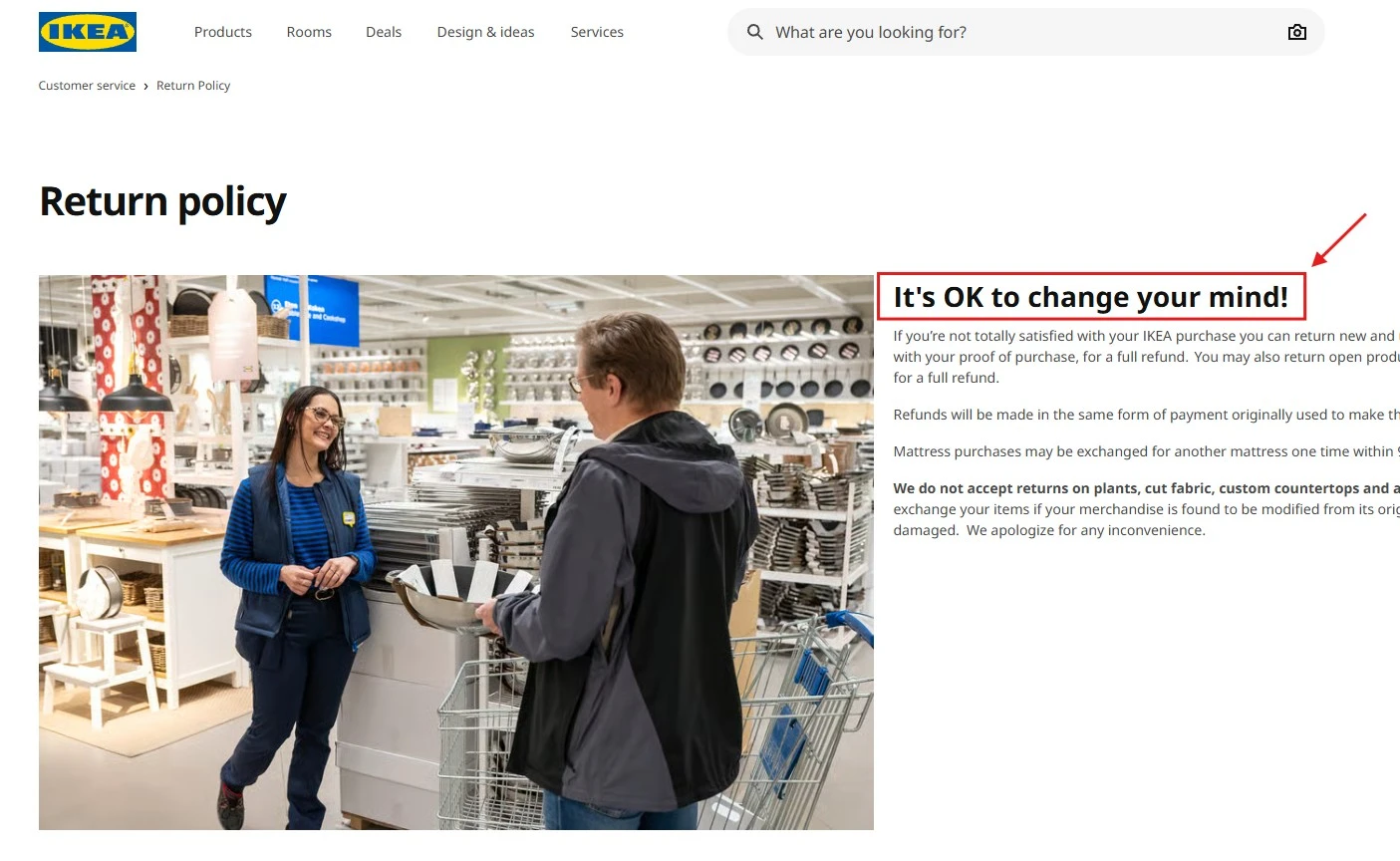
IKEA does this well. Its return policy opens with the line “It’s OK to change your mind!” before it lists any conditions. It even pairs that line with a photo of a smiling employee helping a shopper. The page feels warm, not defensive. That reassurance reaches two customers at once: the buyer who is unhappy and wants a refund, and the one still deciding, quietly wondering, “Is it OK if I change my mind?” So the shopper feels welcome first and informed second.
Bring the same warmth to your own policy by opening with a human promise, such as “Not happy? We will make it right,” then placing the conditions below it. A small shift like this can streamline the buying experience and ease hesitation before it turns into a lost sale.
Use plain language and one idea per line. A refund policy is not the place for legal jargon.
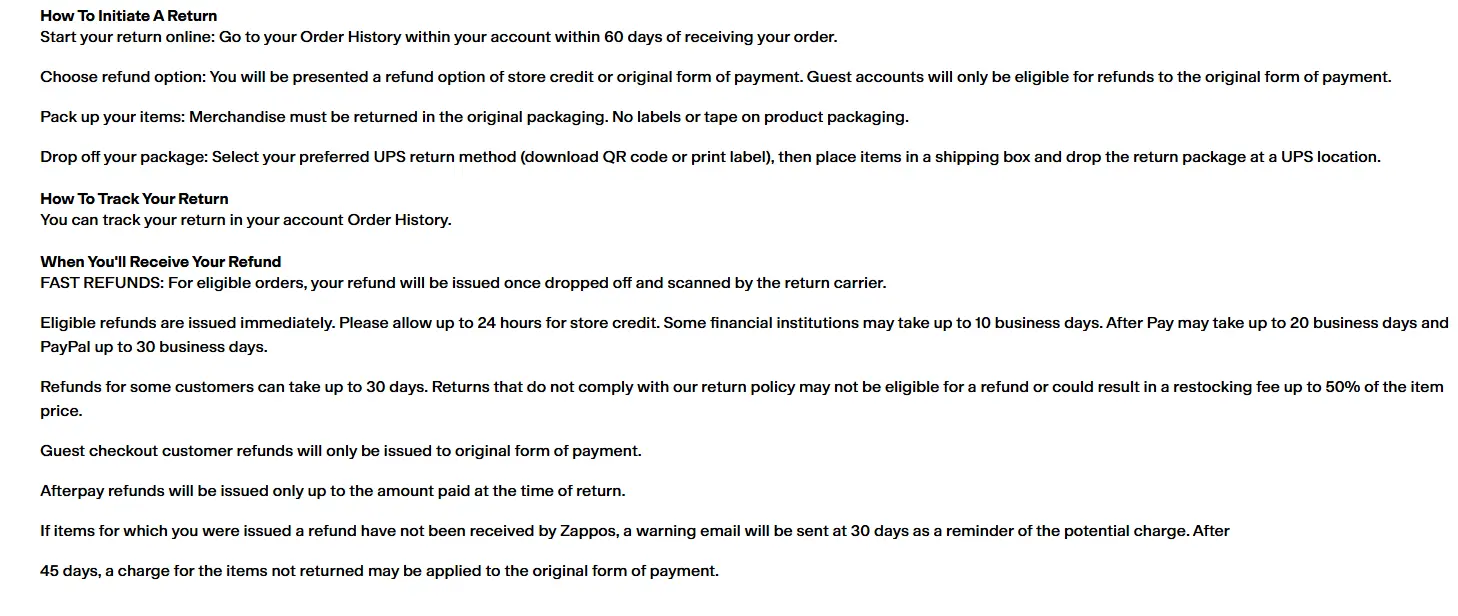
Zappos splits its policy into short, scannable sections with plain headers like “How to initiate a return” and “When you’ll receive your refund.” A shopper finds the answer in seconds. Turn your own key rules into a short FAQ, written the way customers actually ask:
This format answers real questions at a glance, and it doubles as content that can surface in search.
A longer refund window can lift sales and lower returns at the same time. A meta-analysis in the Journal of Retailing found that longer return deadlines reduce return rates, an effect linked to the endowment effect: the longer people keep an item, the more they treat it as their own.
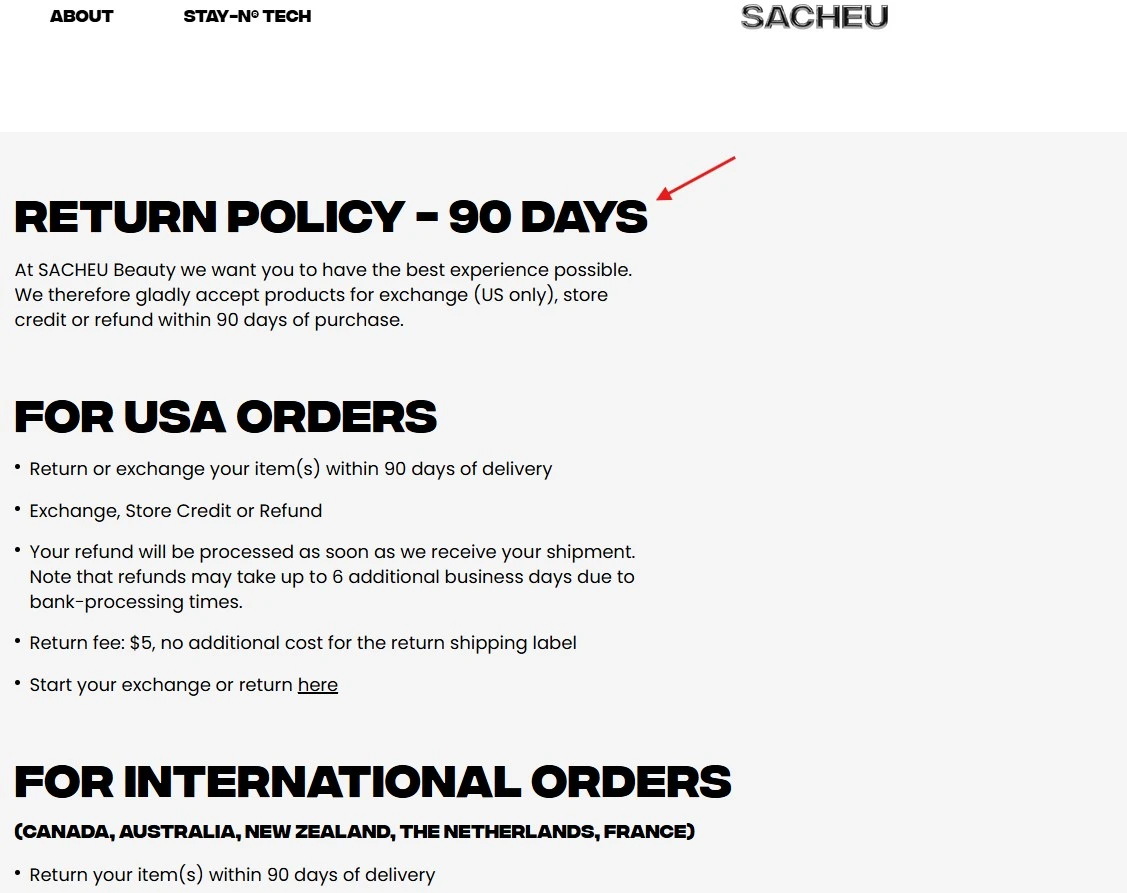
SACHEU, a Shopify beauty brand, states its window plainly on its returns page: 90 days for a refund, store credit, or exchange. Ninety days fits how people shop for cosmetics. Buyers need time to test a shade, watch for skin reactions, and use a product across several wears before they know it suits them. A short window would punish that normal trial behavior and scare off first-time buyers.
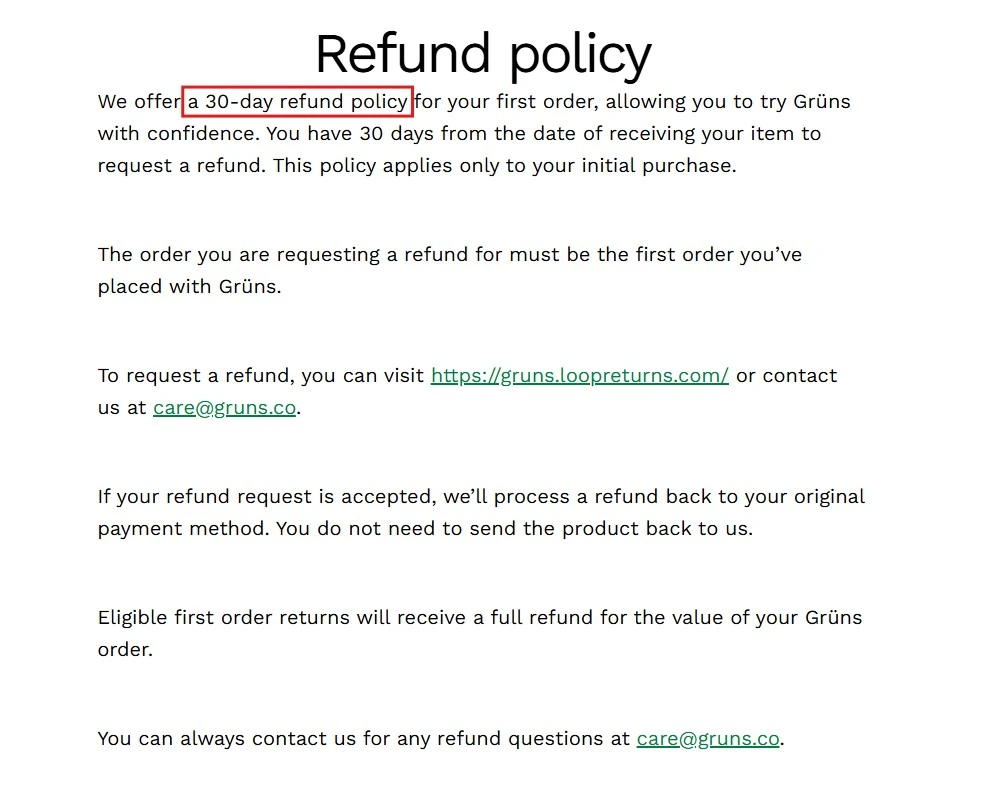
Compare this with Grüns, a supplements brand that offers a 30-day refund on a customer’s first order. The shorter window makes sense for a consumable product, while the first-order guarantee reduces the risk for new customers and gives them more confidence to try it.
The takeaway is to match the window to your category, not to copy a number. Beauty and skincare reward longer windows because customers need testing time. Fast fashion or seasonal products may call for a tighter window.
Study how your own customers judge your products, then set a window that gives them enough room to decide without stretching your costs.
Tell customers when you will process their refund and how long it may take to appear in their account. When customers hear nothing after returning an item, they may become worried, contact support, or file a chargeback.
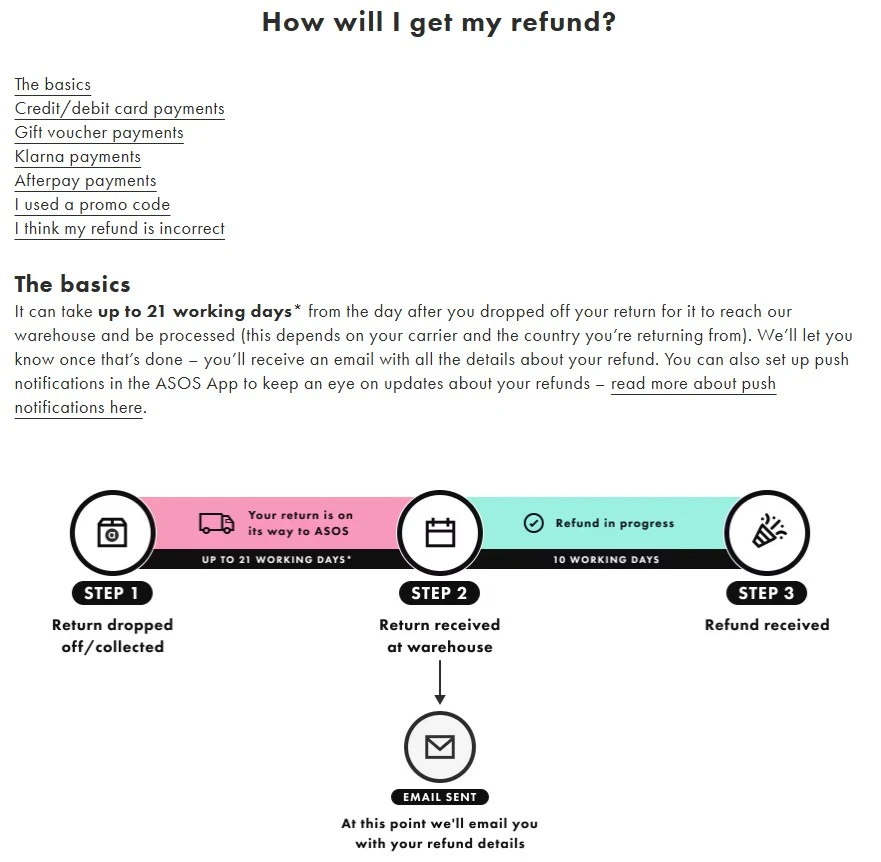
ASOS makes this timeline clear. They explain that a returned parcel can take up to 21 working days to reach its warehouse and be processed. After that, the refund may take another 10 working days to appear in the customer’s account, depending on their bank or payment provider. They even turn it into an infographic with clear illustrations to help customers understand the difference between return processing time and bank processing time.
Speed also matters. According to the NRF’s 2025 Retail Returns Landscape, 76% of shoppers are more likely to choose a return option that offers an instant refund or exchange. Even if you cannot issue refunds immediately, give customers a clear timeline and regular updates so they always know what to expect.
Start by understanding why customers return. Most refunds come down to a few reasons: a damaged item, the wrong size or color, or a simple change of mind. A policy that names these reasons and handles them fairly keeps shoppers on your side.
Then weigh that fairness against your margins. Shoppers expect returns to be easy, so offer at least one low-friction option, such as free return shipping. You do not have to give it to everyone. Use your returns data to decide who earns the perk, based on return rates, subscriptions, and lifetime value, and focus it on your most profitable, repeat customers.
A refund also does not have to be cash back. Store credit keeps revenue in your business, and a small reward can turn a refund into a reason to come back. This is where our own app, BOGOS, fits in.
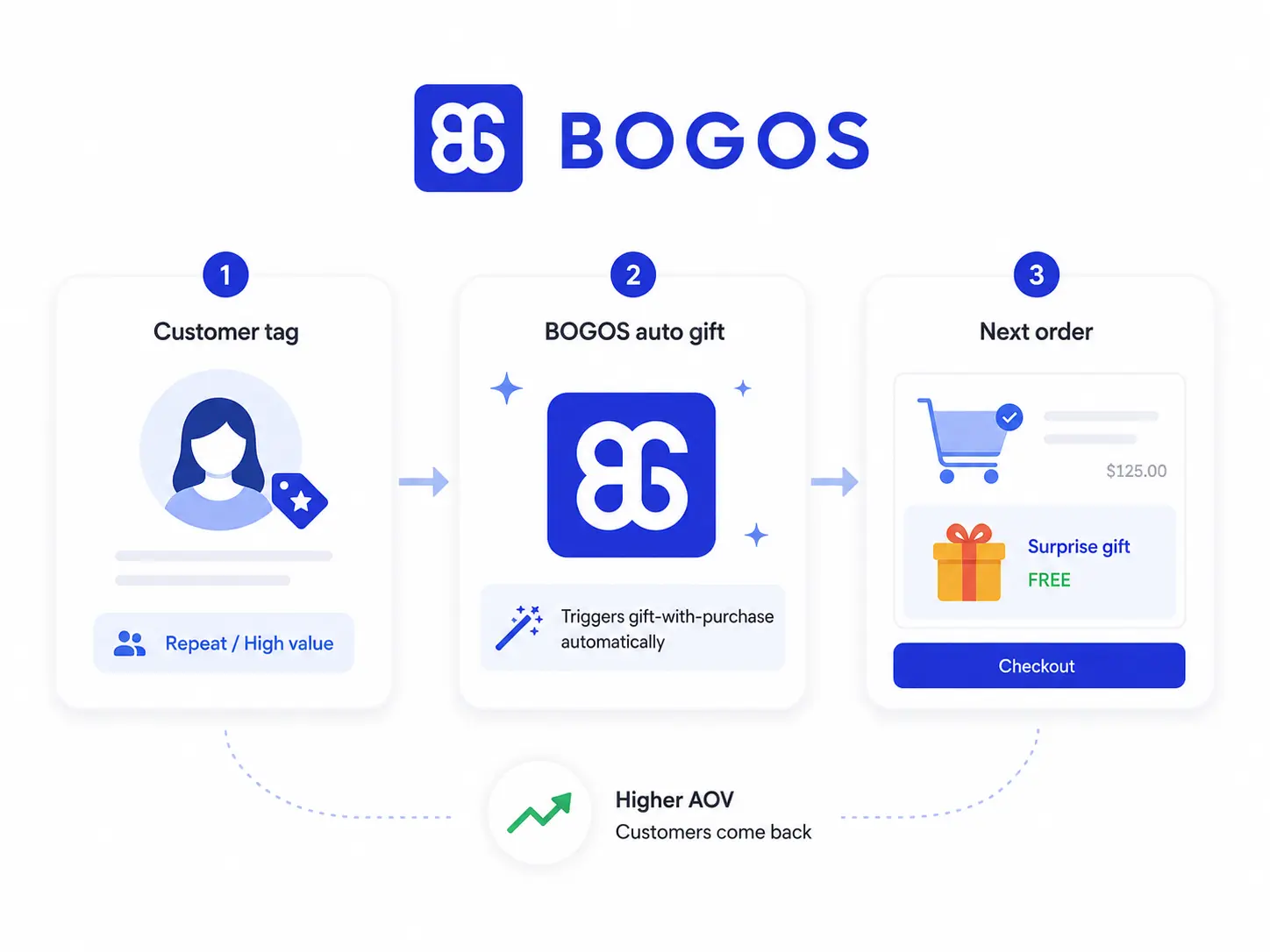
You can tag repeat or high-value customers and trigger an automatic surprise gift on their next order. Incentives like these lift average order value and make a gift with purchase feel personal rather than promotional, and boost their brand loyalty.
A refund policy nobody can find is the same as no policy at all. Put it everywhere a customer might look:
Once your Shopify refund policy is written, publish it in Settings > Policies, so it appears automatically in your checkout footer. Your policy also gets a direct link at “yourstore.com/policies/refund-policy” so you can drop it into chat replies and FAQ answers.
Customers dislike emailing support and waiting for a reply. A self-serve option lets them start a refund on their own, which feels faster and puts them in control.
The good news is that Shopify supports self-serve returns natively. You can turn it on in Settings > Customer accounts, then set your return rules to control who qualifies and to mark final-sale items. Customers can then request a refund straight from their account, as explained in the Shopify Help Center. Add that portal link inside your refund policy so it is easy to find.
If you need a more automated return process, consider using a third-party returns app. These apps can automate return requests, encourage exchanges, help prevent return fraud, and create a return experience that better matches your brand.
You have the strategy, so here is a starting point you can use today. The template below turns the seven tips into a ready-to-edit refund policy. It opens with reassurance, keeps the language plain, leaves clear slots for your window and timelines, and points customers to a self-serve request.
Copy it, replace each bracketed prompt with your own details, and delete anything that does not apply. Set the refund window to match your category, as we covered above.
Prefer to edit in Google Docs? Open the free template and make your own copy.
A refund policy is not a formality. It is one of the clearest trust signals in your store, and it works before the sale as much as after it. Write it in plain language, lead with reassurance, match the window to your products, and make it easy to find.
Do that, and your refund policy stops being a cost center and starts helping you boost your Shopify sales. Start with the template above, then refine it as you learn how your customers shop.
Shopify does not force you to have one, but you should. No US federal law requires refunds, yet the FTC requires honest terms, and states like California and regions like the EU grant customers refund rights by default. A clear policy keeps you compliant and builds trust.
Yes. Shopify lets you refund to the original payment method, to store credit, or to both. Store credit can be issued as soon as you approve the return, and it keeps revenue in your store.
Once the store issues your refund, the money usually appears within a few business days, though your bank can take up to 10 business days. Store credit is issued instantly once the return is approved. The exact timing depends on your payment provider.
A full refund returns the entire order amount. A partial refund returns only part of it, which fits a damaged item, a missing accessory, or a price adjustment when the customer keeps the product.

Shoppers hesitate to buy a $1,200 sofa or a custom ring when they can’t see the exact version they’re...
Selling personalized products on Shopify gets hard the moment a shopper needs to type a name or choose a...

The UK is the largest eCommerce market in Europe and the third-largest in the world. For international Shopify stores,...