

Charlie Ngo
•
Last updated: 14 October, 2026
How To Add a Shopify Announcement Bar (Free Themes & Apps)
A Shopify announcement bar is the thin strip at the top of your store that tells shoppers about shipping,...
Shopify Fulfillment: A Comprehensive Guide (2026)

Digital Marketing Specialist
Summarize this post with AI
US ecommerce sales grew 12.2% year over year in Q2 2026, but behind every one of those sales is a physical product that needs to get from a warehouse to a customer’s door. For Shopify merchants, how well that happens determines whether the business is actually profitable.
Most store owners spend the majority of their time on marketing, finding the right product, running the right ads, and optimizing their store. Fulfillment is often an afterthought. But the data tells a different story about what actually drives long-term revenue and customer loyalty.
This guide covers everything Shopify merchants need to understand about fulfillment, from the different models available to choosing the right partner, managing returns and scaling operations when promotions drive order volume spikes.
Fulfillment is the process of receiving a customer’s order and delivering it to their door. It covers inventory management, picking and packing, carrier selection, shipping and returns processing. Understanding what a warehouse does helps merchants see how these behind-the-scenes operations work together to keep orders moving smoothly.
For Shopify merchants, fulfillment is not just a logistics function. It is a direct driver of revenue. Free delivery affects 94% of US shoppers’ purchase decisions, and more than 85% say a poor delivery experience reduces their willingness to purchase from that retailer again. More than half would stop shopping with a retailer after only one or two failed deliveries.
76% of shoppers say a positive delivery experience influenced their decision to repurchase. That means the product you sell and the ad that sold it only gets you halfway there. The delivery experience determines whether that customer ever comes back.
84% of customers say having clear delivery timelines influences their purchase decision. In 2026, customers are not just evaluating the product. They are evaluating the entire experience from checkout to doorstep.
Not all fulfillment models are equal, and the right one depends on your store’s size, product type and growth stage.
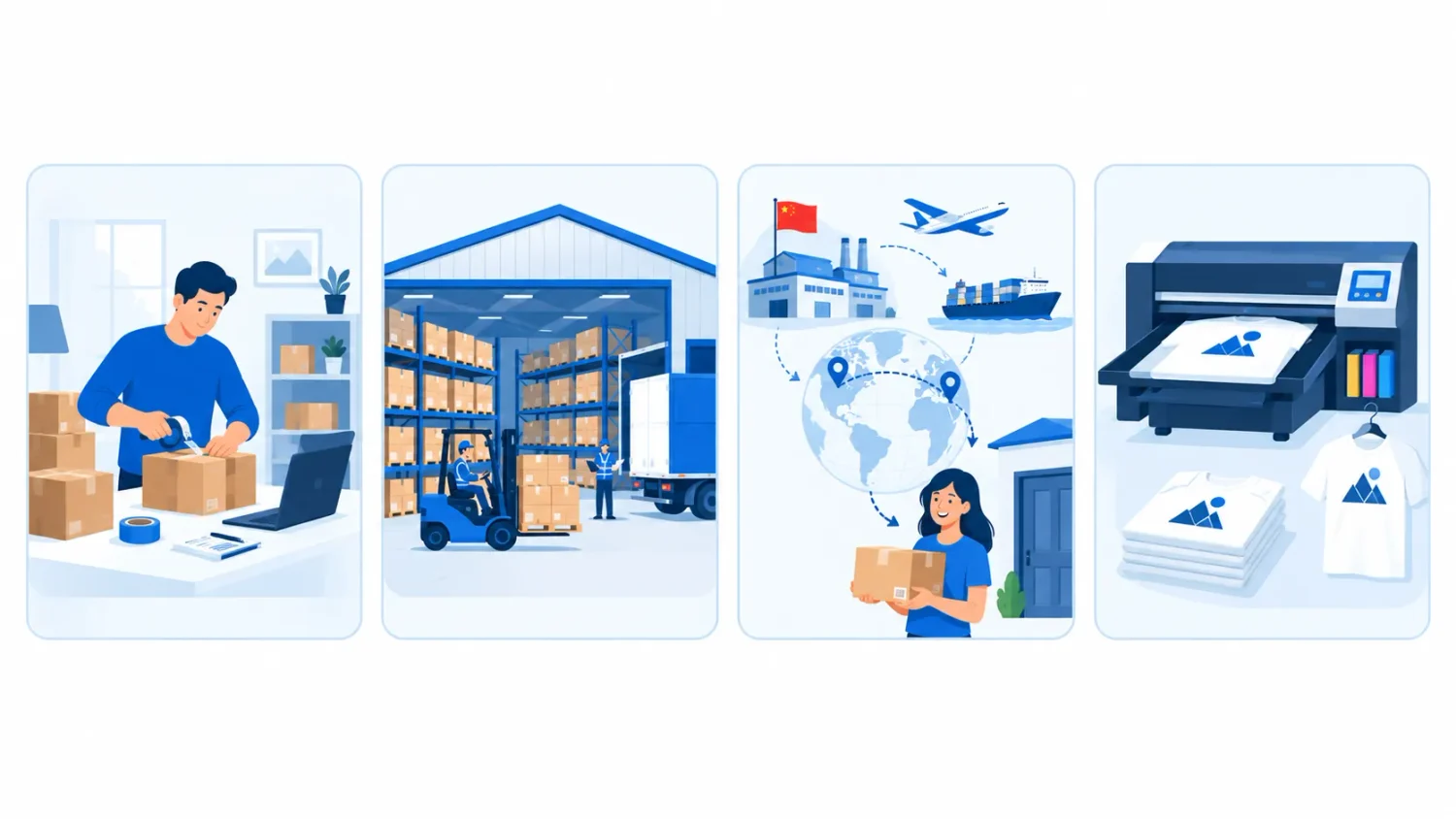
Self-fulfillment means you store, pick, pack and ship every order yourself. The per-order cost is zero but the real costs are your time, storage space, packaging materials, shipping rates without volume discounts and the opportunity cost of not building the business.
Most brands outgrow self-fulfillment around 100 to 300 orders a month. Past that point, packing orders yourself takes time you should spend growing the business. Self-fulfillment works at very low volume and breaks down fast as orders climb.
A third-party logistics provider stores your inventory and ships your orders, usually with per-order pricing plus storage fees. In 2026, 3PL providers charge $3.50 to $8.00 per order for complete pick, pack and handling, with storage at $0.35 to $0.60 per cubic foot per month.
ShipBob’s 2026 State of Ecommerce Fulfillment research found 84% of ecommerce brands use a third-party fulfillment company for at least some orders. 3PLs give you more control over quality and shipping speed than dropshipping, but require upfront inventory investment.
With dropshipping, a supplier ships directly to the customer and you never handle the product. When the store sells a product, the order is forwarded to the supplier who ships it directly. The seller earns the margin between what the customer pays and what the supplier charges.
Dropshipping eliminates inventory risk and upfront capital requirements, making it the most accessible model for new Shopify merchants. The tradeoff is less control over quality, packaging and delivery times, which is why choosing the right fulfillment partner is critical.
Print-on-demand works like dropshipping but specifically for custom-printed products such as clothing, accessories and home goods. Products are printed and shipped only when ordered, eliminating inventory entirely. This model suits merchants selling branded or personalized products but has higher per-unit costs and less flexibility on product range.
The fulfillment partner you choose directly affects your customer experience, your return rate and your profitability. Here is what to evaluate before committing.
For merchants sourcing from China or overseas suppliers, quality inspection is one of the most overlooked factors. Products that arrive damaged, defective or different from what was shown in your store generate returns, disputes and negative reviews, all of which erode your margins and hurt your ad performance.
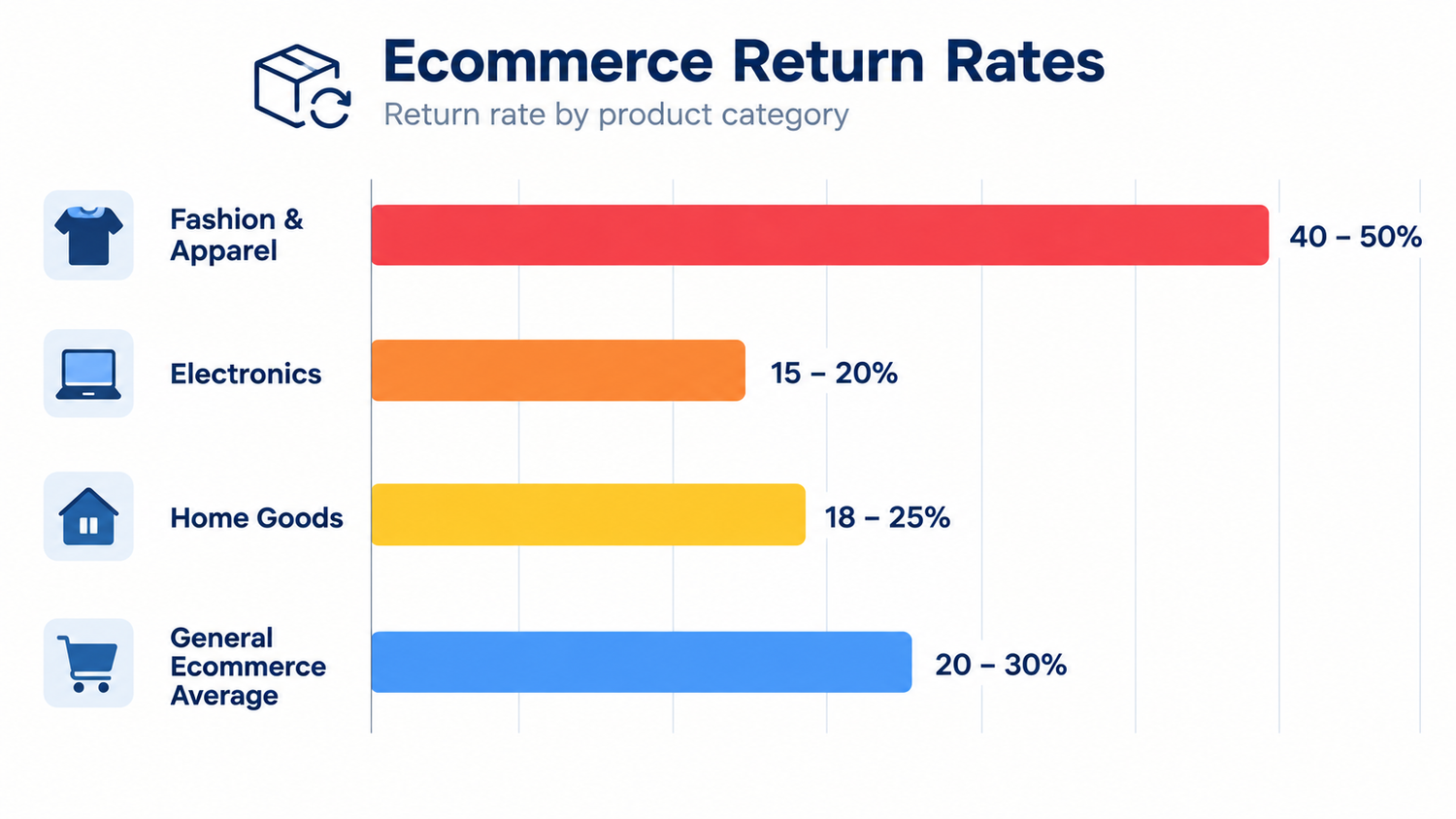
The average ecommerce return rate sits between 20 and 30% across industries. Fashion and apparel categories suffer the worst, with returns reaching 40 to 50% for some product lines. A significant portion of these returns are driven by product quality issues, not customer preference. Ask any potential fulfillment partner specifically what their quality inspection process looks like before a product ships.
In 2026, customers expect 2 to 5 day delivery for standard shipping and next-day or same-day for express. Amazon has set these expectations, and even small Shopify stores are measured against them.
For merchants sourcing from China, delivery times to the US typically run 5 to 15 days and to Europe 5 to 12 days, depending on the logistics partner. Communicating realistic delivery windows clearly at checkout is as important as the delivery time itself. 84% of customers say having clear delivery timelines influences their purchase.
Your fulfillment partner should integrate natively with Shopify so orders sync automatically and tracking updates flow back to your store without manual processing. Disconnected systems create errors, delays and unnecessary operational work as order volume grows.
All-in fulfillment through a 3PL generally runs about $4 to $8 per order for a standard single-item shipment before the carrier charge in 2026, though the real figure depends on order volume, product size and weight. Understand the full cost structure, not just the headline per-order fee. Storage fees, receiving fees, packaging costs and return processing fees all affect your actual margin per order.
When fulfillment problems happen, and they will, how quickly and transparently your fulfillment partner communicates determines how much damage reaches your customer. Look for a partner with dedicated support, clear escalation processes and proactive communication about delays or quality issues.
Fulfillment is not just an operational function. It is a direct part of your customer experience and your brand.
In 2026, 81% of consumers review return policies before completing a purchase, up from 67% in 2024. Retailers displaying return terms prominently on product pages saw a 14.6% higher checkout completion rate compared to those who buried the policy in footer links.
Your return rate has a direct financial impact that goes beyond the refunded purchase price. With a 20% return rate on $500,000 in annual revenue, you are looking at $100,000 in returned merchandise, and that is before the handling, restocking and processing costs on top of the lost sale.
Branded packaging is one of the most underused levers in ecommerce. When a customer receives an order in professional, branded packaging, it reinforces that they made the right purchase decision. That feeling drives reviews, repeat purchases and referrals, all outcomes that reduce your customer acquisition cost over time.
The cheapest supplier is rarely the best supplier. Low prices often signal low quality control standards, and the cost of returns, disputes and negative reviews far outweighs any per-unit savings on product cost.
Without a quality inspection process before shipment, product defects reach your customer before you know they exist. By the time you discover the problem, you already have negative reviews, open disputes and a damaged ad account.
Promotions, particularly BOGO and free gift campaigns, drive sudden order volume spikes. Fulfillment teams should be notified ahead of promotions so they can handle sudden order increases without problems. Monitoring real-time sales and redemption data is critical to managing stock and fulfillment capacity during high-volume promotional periods.
Running a BOGO or free gift promotion without confirming your fulfillment partner can handle the volume increase is one of the most common and most expensive mistakes Shopify merchants make. Orders pile up, shipping slows down, customers complain and what should have been a profitable campaign becomes a customer service crisis.
For merchants running dropshipping fulfillment, this means confirming with your China supplier or fulfillment platform that they have the capacity and inventory to handle the expected volume before your promotion goes live. Platforms like USAdrop offer dedicated agent support specifically designed to handle volume coordination and stock confirmation for Shopify merchants running large-scale promotional campaigns.
Return volumes spike after promotions, particularly free gift and BOGO campaigns where customers receive products they did not specifically select. Having a clear, pre-built returns process before your promotion launches prevents the post-campaign customer service backlog that typically follows high-volume sales events.
As order volume grows, your fulfillment operation needs to grow with it. Here are the signs your current setup can no longer support your scale.
92% of ecommerce brands grew year over year according to ShipBob’s 2026 data, and 86% of them now sell on multiple channels. Multi-channel selling adds fulfillment complexity. Orders from Shopify, TikTok Shop, Amazon and wholesale all need to be coordinated through the same inventory and fulfillment system.
A practical checklist before scaling your ad spend or running a major promotion.
Fulfillment is not a back-office function. For Shopify merchants, it is one of the primary drivers of customer loyalty, repeat purchases and long-term profitability.
The merchants who build sustainable Shopify businesses are the ones who treat fulfillment as seriously as they treat marketing. They choose their fulfillment partner carefully, build quality inspection into their supply chain, communicate clearly with customers about delivery expectations and plan their fulfillment capacity before running promotions, not after.
Get the product right, deliver it professionally and do it consistently. That is the foundation every profitable Shopify store is built on.
Shopify fulfillment can include inventory receiving and storage, order routing, picking and packing, carrier selection, tracking updates, delivery exception management, and returns processing.
The right model depends on order volume, cash available for inventory, product customization, target markets, delivery requirements, and the merchant’s ability to manage operations. Compare self-fulfillment, 3PL, dropshipping, and print-on-demand against those needs.
Forecast both orders and units per order, reserve the qualifying and gift SKUs, confirm packing rules, test order synchronization, publish return terms, and brief the fulfillment team on campaign dates and expected volume.
Consider a change when dispatch times, order accuracy, stock visibility, support response, or total cost repeatedly falls outside the store’s targets and the current provider cannot present a credible improvement plan.

A Shopify announcement bar is the thin strip at the top of your store that tells shoppers about shipping,...
Australia is one of the first markets many Shopify stores expand into. It is large, English-speaking, and home to...
Canada is a promising international market for Shopify merchants, especially those shipping from the US. But reaching Canadian shoppers...