

Charlie Ngo
•
Last updated: 7 October, 2026
Shopify Product Configurator: 2D vs 3D, Best Apps & Costs (2026)
Shoppers hesitate to buy a $1,200 sofa or a custom ring when they can’t see the exact version they’re...
15 Tips for Using Product Bundles Effectively to Boost AOV

Digital Marketing Specialist
Summarize this post with AI
Bundles are one of the most direct ways to increase average order value (AOV) on Shopify. The logic is simple: when customers buy more items in a single order, the order total goes up.
But many bundles don’t actually increase AOV. They just discount what customers were already going to buy — and sometimes lower the average instead of raising it.
The difference between a bundle that lifts AOV and one that doesn’t usually comes down to how it’s structured: which products are included, how it’s priced, where it’s placed, and whether the merchant is tracking the right metrics.
This article covers 15 practical tips across all of those areas. Each tip is self-contained, so you can read them all for a complete strategy or jump to the ones most relevant to your store right now.
👉 If you’re new to Shopify bundles or want a broader overview of bundle strategies, start with our Shopify Product Bundle Completed Guide. This article assumes you have the basics and goes deeper on one goal: increasing AOV.
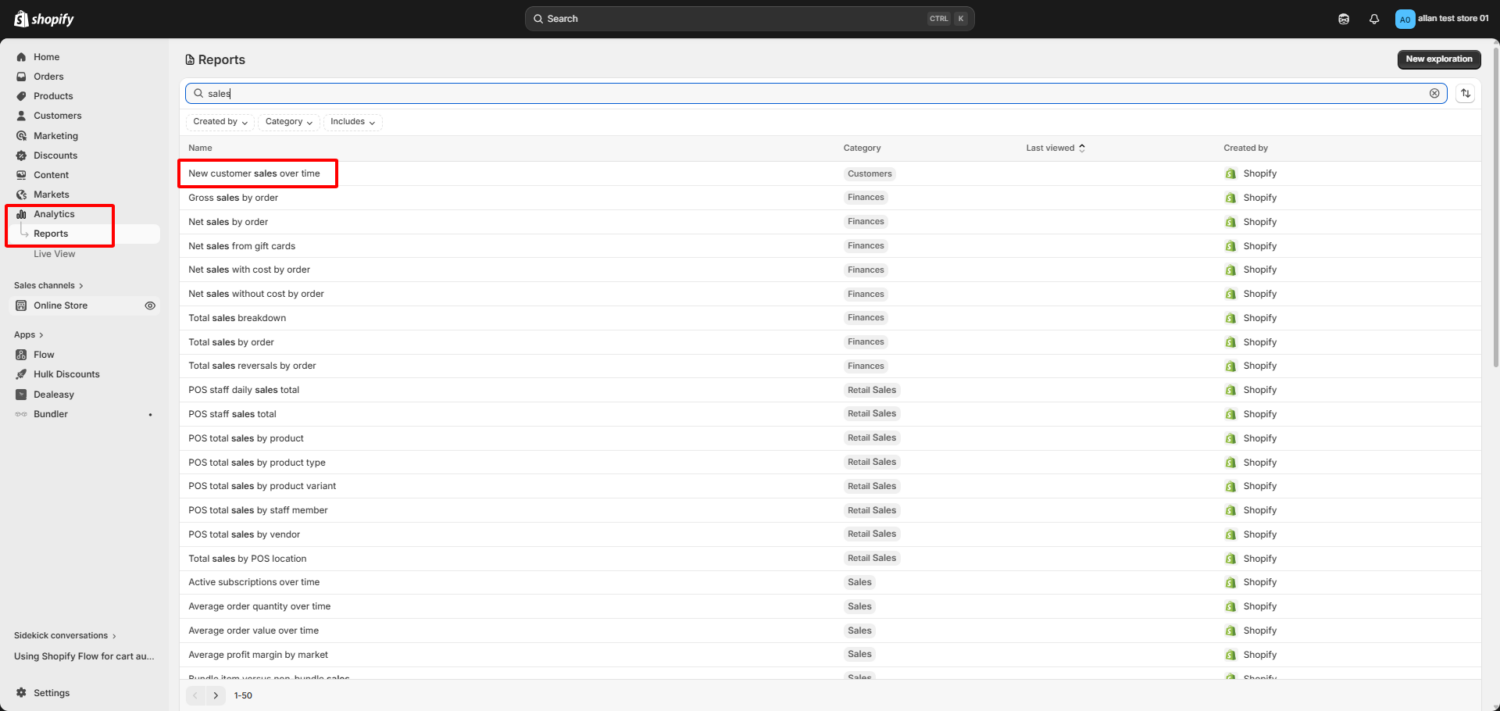
Before you create a single bundle, check your current AOV in Shopify Analytics (Reports → Sales over time). That number is your pricing floor so every bundle you create should be priced above it.
This sounds obvious, but it’s the most common mistake merchants make with AOV-focused bundles. If your AOV is $45 and you create a bundle priced at $38, more customers might buy it, but your average order value drops.
The bundle price needs to pull the average up, not down. A $45 AOV means your bundles should target the $55–$75 range, depending on your catalog and margins.
💡 Tip: Write your current AOV on a sticky note and put it next to your screen before building any bundle. Every pricing decision should start with that number.
👉 Read more: Shopify AOV: What It Is, 2026 Benchmarks, and 10 Ways to Increase It
The products you include in a bundle determine whether it increases AOV or just rearranges the cart.
Complementary products add incremental value to a purchase. A skincare store bundling a cleanser, toner, and moisturizer is offering three products that work together so a customer buying one genuinely benefits from all three.
Substitutes, on the other hand, are products a customer would choose between. Bundling two similar t-shirts in different colors doesn’t encourage higher spend. The customer picks one or the other; they don’t need both in the same order.
The test is simple: would a customer realistically want all of these items in the same order? If yes, it’s complementary. If they’d pick one, it’s a substitute.
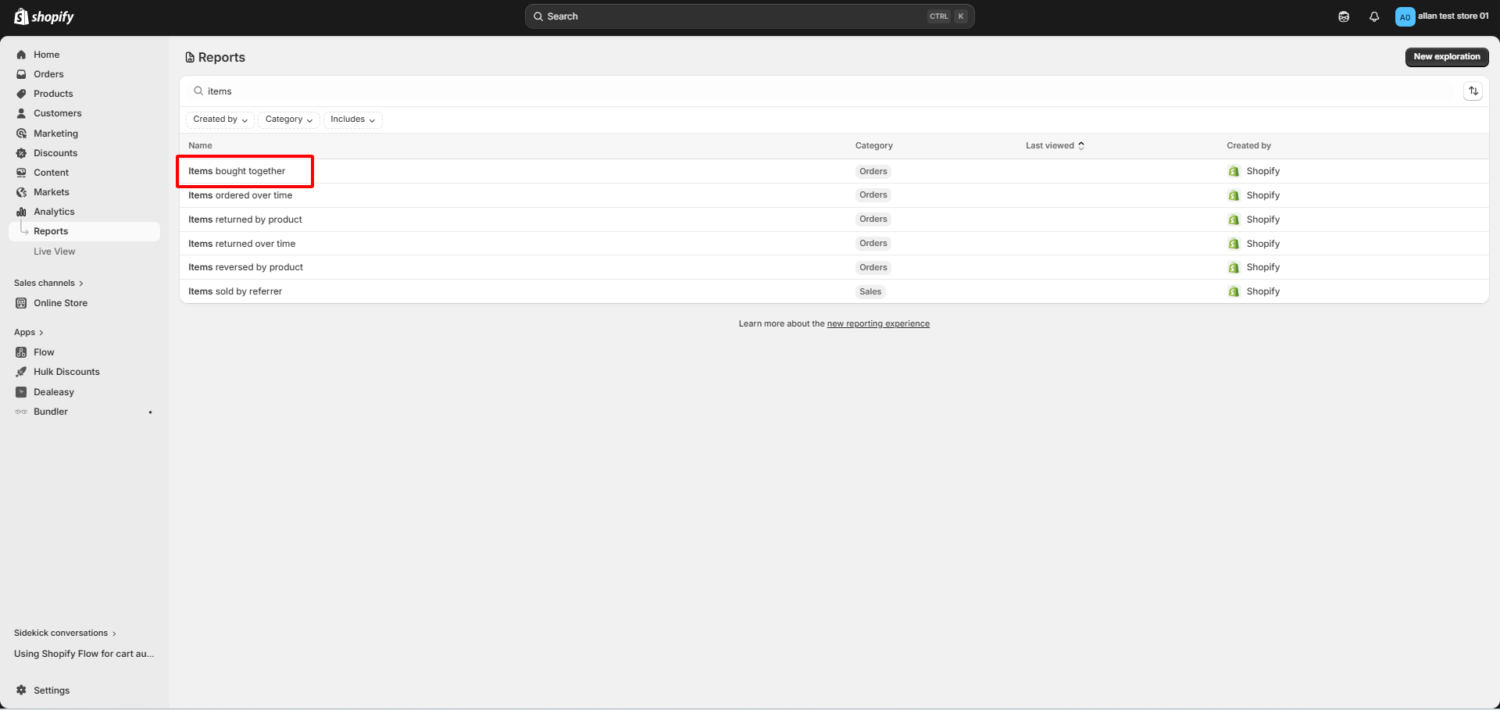
To find natural complement pairs, use Shopify’s product analytics (Reports → Items Bought Together). Look at which products appear together in orders most frequently. These are your strongest candidates for bundling.
Example: A fitness store bundles a yoga mat ($35) with a carrying strap ($12) and cleaning spray ($8). A customer buying the mat benefits from all three. Bundling two different yoga mats (a substitute pairing) offers far less AOV upside because most customers only need one.
Strong bundles start with one product that draws customer interest. This is the hero product – the item a customer came to your store to buy. The other products in the bundle extend that purchase into a larger order.
Your hero product should be one of your best sellers or most-searched items. Check Shopify Analytics for top products by sessions and top products by units sold. Products that rank high on both lists are strong anchor candidates.
Once you’ve identified the hero, pair it with 1–3 items that logically extend the purchase. Ask: “What else does someone buying this product need?“
The hero product provides the draw. The add-ons provide the AOV lift.
Example: A coffee store uses its most popular coffee bag ($18) as the anchor. They pair it with a ceramic mug ($14) and a sample pack of three other roasts ($6) for a bundle priced at $32. The customer came for the coffee. The bundle turns an $18 order into a $32 order without requiring the customer to go searching for those additional items.
Not all bundle types lift AOV the same way. The right format depends on your product catalog, your price range, and how your customers typically shop.
Here’s how each type serves the AOV goal specifically:
| Bundle Type | AOV Impact | Best Product Fit | Margin Risk |
|---|---|---|---|
| Fixed Bundle | High | Curated kits, product pairings | Low — price is controlled |
| Mix & Match | High | Wide catalog in one category | Low to Moderate |
| Frequently Bought Together | Moderate | Products with natural accessories | Low |
| Volume Discount | High | Consumables, replenishable products | Moderate — tiered discounts add up |
| Build Your Own Bundle | High | Diverse, cross-category catalogs | Low to Moderate |
| BOGO | Moderate | New products, inventory clearance | High — free item impacts margin |
If you’re unsure where to start, Fixed Bundles and Frequently Bought Together are the most straightforward for a first AOV experiment. Fixed Bundles give you full control over pricing, and Frequently Bought Together requires minimal setup while generating consistent incremental lift.
The pricing sweet spot for AOV-focused bundles is a 10–25% discount off the combined regular prices of the individual items.
Here’s why this range works:
Under 10% often feels insignificant to customers. The perceived savings aren’t enough to motivate them to buy the bundle instead of a single product. Over 25% usually sacrifice too much margin for an AOV play because you’re giving away profit without a proportional increase in order value.
To set your bundle price, follow this process:
Example: Three items priced at $20 + $15 + $10 = $45 combined. A 20% bundle discount puts the price at $36. If your AOV is $30, this works — it lifts AOV by $6 while offering $9 in visible savings.
Use Shopify’s compare-at pricing to display the math visually. Customers need to see the original combined price next to the bundle price to feel the value.
AOV can increase while profit per order decreases if the bundle discount eats too much margin. Always run the margin check before launching.
The calculation is straightforward:
If margin is too thin, you have three options: reduce the discount percentage, swap in a lower-cost item that still complements the hero product, or remove one item from the bundle and adjust the pricing accordingly.
Example: A bundle priced at $36 with total COGS of $18 gives you a 50% gross margin. If your minimum target is 45%, you have room. If COGS is $22, your margin drops to 39% — below target. In that case, swap the $10 item for a $6 item with a lower cost, or reduce the discount from 20% to 15%.
This check takes five minutes and prevents bundles that look good on the top line but hurt profitability.
👉 To learn how to set up bundle pricing without killing your margin, read our guide here: How to Calculate Bundle Pricing to Protect Your Margin
Tiered bundle pricing gives customers a reason to add one more item. Instead of a single bundle option, you offer escalating discounts based on quantity or the number of items selected.
A typical structure: “Buy 2, save 10% — Buy 3, save 15% — Buy 4, save 20%.”
The psychology behind this is straightforward. Once a customer qualifies for one tier, the next tier feels close so the incremental savings feel like a bonus for a small additional effort. This encourages upward movement through the tiers, which directly increases AOV.
This approach works best with Volume Discount and Mix & Match bundle types, and with product categories where buying multiples is natural: consumables, basics, skincare, supplements, or pet supplies.
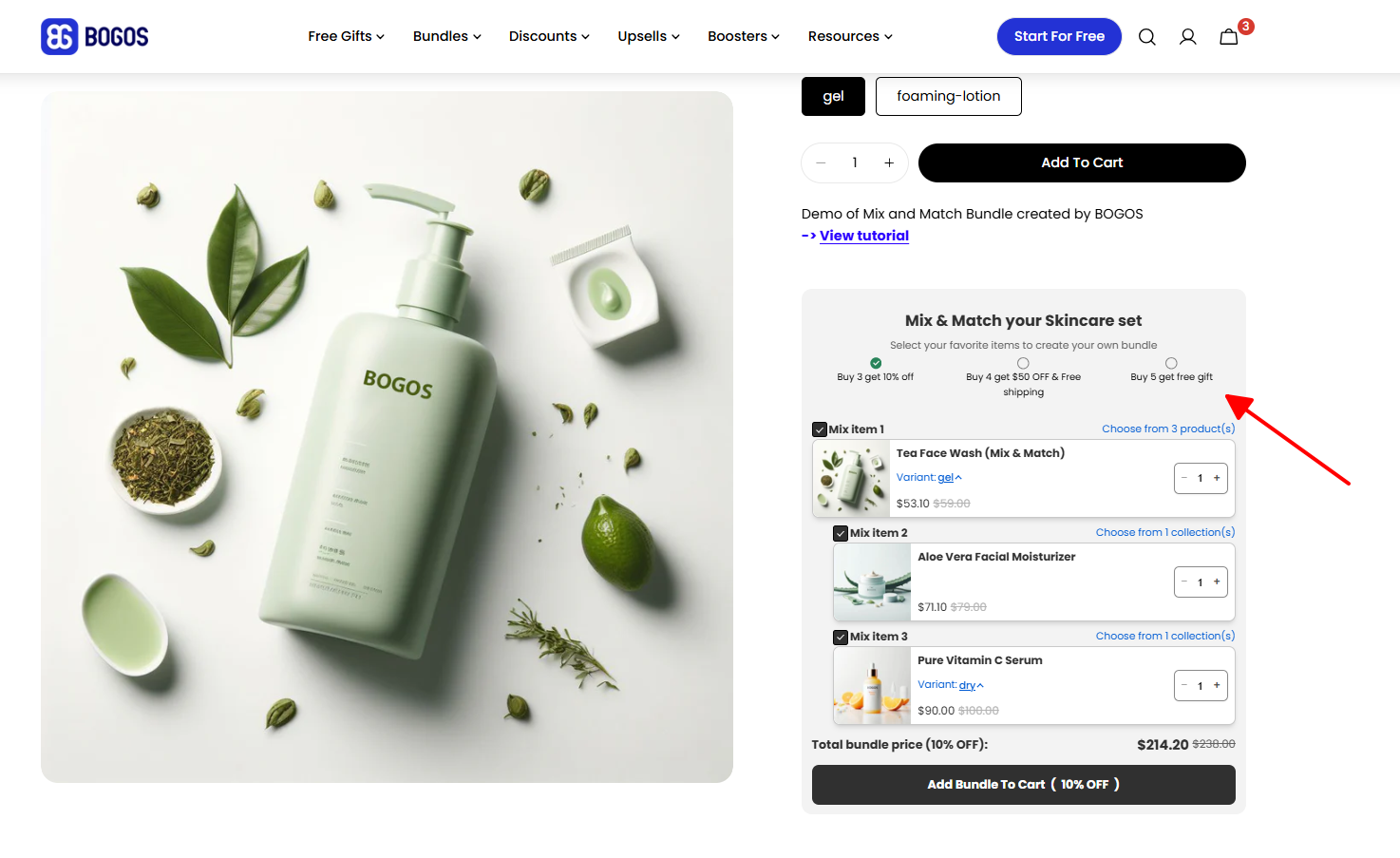
When setting tiers, place the middle tier at or slightly above your AOV target. Most customers will land there, and a percentage will stretch to the top tier.
Example: A skincare store offers serums at $30 each. Their tiered pricing: “Buy 2, save 10% ($54) — Buy 3, save 15% ($76.50) — Buy 4, save 20% ($96).” If the store’s current AOV is $40, even the lowest tier lifts it by $14. Customers who reach the top tier nearly triple it.
Even well-designed bundles won’t lift AOV if customers don’t see them at the right moment. Placement determines whether the offer reaches shoppers when they’re most likely to act.
Two locations consistently produce the strongest AOV impact:
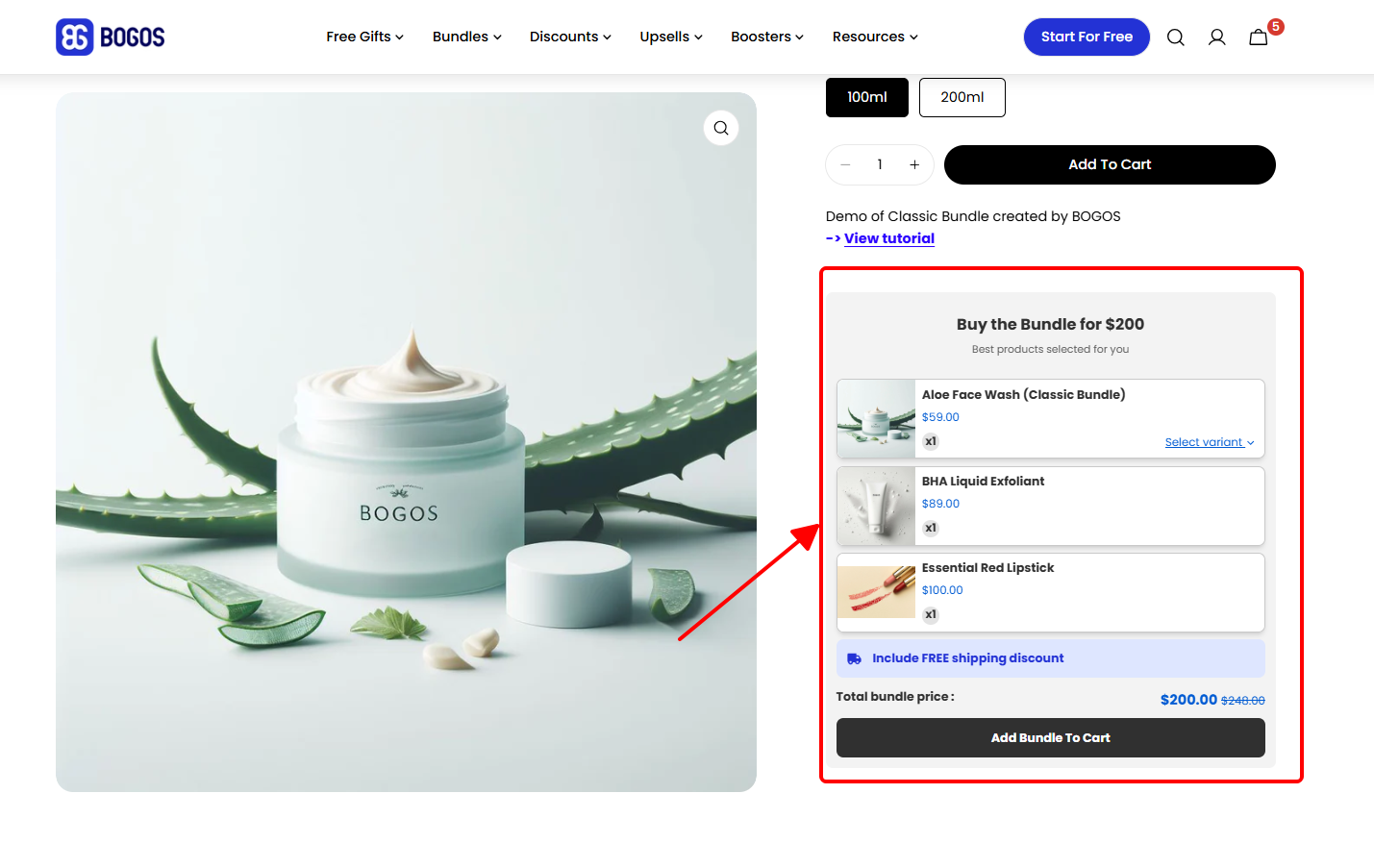
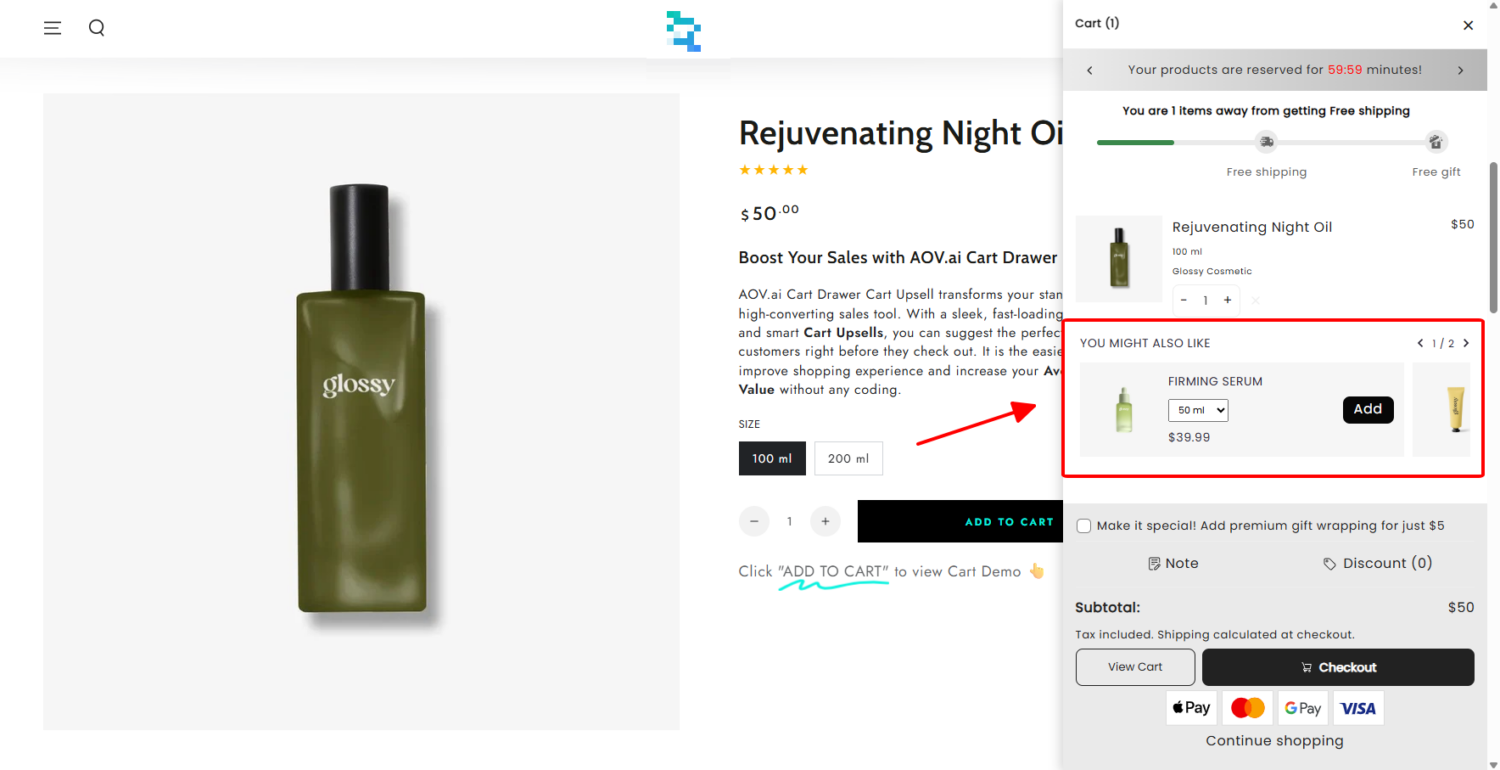
These two placements work because they target customers who are actively shopping and making purchase decisions. Homepage features and collection pages can drive bundle discovery, but they require more steps before conversion, so their AOV impact tends to be more indirect.
Shopify note: Most bundle apps allow you to configure which pages show the bundle widget. Test both product page and cart page placements and monitor which drives more bundle purchases and higher AOV.
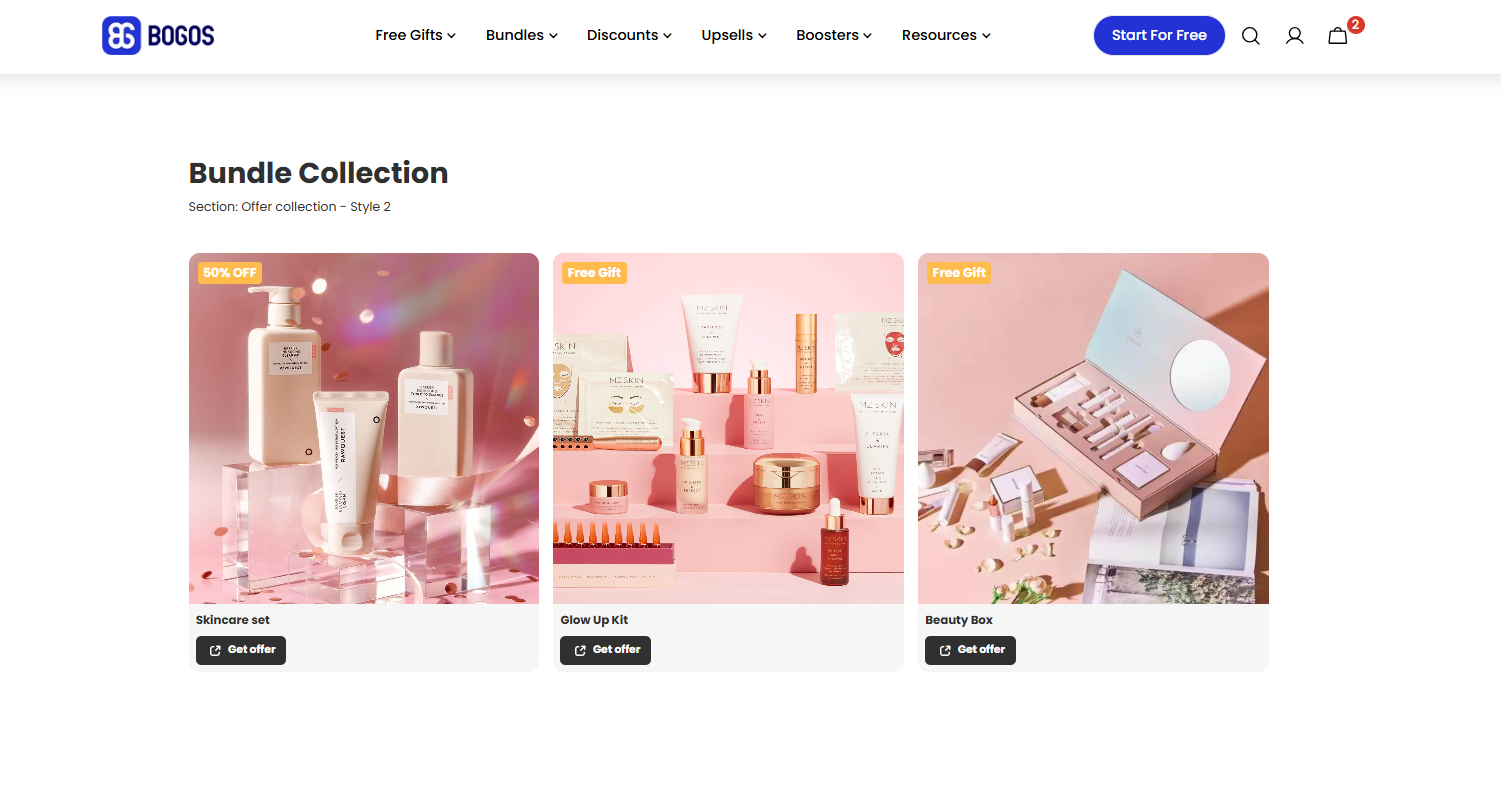
Beyond product page and cart page placements, a standalone collection page for bundles gives customers a single destination to browse all bundle options.
This is especially useful if your store has multiple bundle configurations. Instead of relying on customers to discover each bundle individually, the collection page presents everything in one place.
Link to it from your main navigation, homepage banners, and relevant product category pages. You can also use it as a landing page for email campaigns or ads promoting your bundles.
This placement works particularly well for Fixed Bundles and Build Your Own Bundles (bundle types that have strong visual appeal and benefit from side-by-side comparison)
Think of it this way: product page and cart page placements (Tip 8) drive conversion at the moment of purchase. The collection page drives discovery for customers who are browsing and considering options. Use both together for the broadest impact.
Perceived value drives bundle purchases more than the actual discount percentage. If customers can’t instantly see how much they’re saving, many won’t bother to calculate it themselves, and conversion drops.
Every bundle display should include three elements:
Use Shopify’s compare-at price field to automate the crossed-out pricing. Most bundle apps also support a savings badge or line that displays the discount amount.
Example: “Individually: $55 → Bundle price: $42 — You save $13” is significantly more effective than just showing “$42” with no reference point. The savings become tangible when the customer sees the comparison without doing any math.
Apply this consistently across every placement — product page, cart page, collection page. Each touchpoint should reinforce the value with the same clear format.
This is a subtle but costly mistake. If your customers naturally buy shampoo and conditioner in the same order without any prompt, bundling those two items at a discount doesn’t increase AOV. Instead, it just offers a discount on behavior that was already occurring.
Before building a bundle, check your order data. If two products already appear together in a high percentage of orders at full price, bundling them at a discount gives away margin without any AOV lift.
The distinction matters: “frequently bought together” data is useful for identifying complementary products, but the bundle should include at least one item that customers aren’t already adding on their own. That new addition is what generates the incremental AOV.
Example: If 70% of orders containing Product A already include Product B, those two are a natural pair — and customers are already paying full price for both. A bundle of A + B + C, where C is a product customers don’t currently add, is a much better AOV play. The A + B pairing acts as the anchor. Product C provides the lift.
Watch out: This doesn’t mean you should never bundle naturally paired products. It means you should be aware that the AOV benefit comes from the additional items, not from discounting the pair that customers already buy.
The first bundle you create is rarely the highest-performing option. Before committing resources to promotion and placement, test different product combinations and compare results.
Here’s how to structure the test:
The variant with the highest combination of AOV lift and attach rate is your winner. Scale that one by giving it better placement, featuring it in email campaigns, and using it as the model for future bundles.
Don’t skip this step. Small differences in product selection can produce significant differences in AOV impact.
👉 To learn how to A/B test product bundles, including which elements to test, the rules to follow, and the tools to use, read our guide here: How to Run A/B Tests on Product Bundles
Overall, AOV alone doesn’t tell you whether bundles are working. A store-wide average can be influenced by dozens of factors — marketing campaigns, product launches, seasonal shifts — making it difficult to isolate the bundle’s contribution.
To measure bundle performance accurately, you need to segment the data.
Track these metrics consistently:
The comparison that matters most: if bundle orders consistently have a higher AOV than non-bundle orders, and the overall store AOV is trending upward since launch, the bundle is pulling the average in the right direction.
Use Shopify Reports or your bundle app’s built-in analytics to segment this data. Most apps provide dashboards that break out bundle-specific revenue and order metrics.
Important: Give bundles at least 2–4 weeks of data before making major changes. Short-term fluctuations — especially in the first week — can be misleading.
Cannibalization happens when bundle sales increase but non-bundle sales drop by the same amount. The total picture stays flat, or gets worse — because you’re now applying a discount to purchases that would have happened anyway.
This is different from bundles simply being popular. Healthy bundle performance means overall orders and AOV are growing, not just shifting from one category to another.
Signs of cannibalization:
If you see these patterns, the fix usually involves adjusting the product mix. Add at least one item to the bundle that customers weren’t buying before (Tip 11). Or reduce the discount so the bundle price is closer to what customers would have spent buying items individually.
Cannibalization doesn’t mean your bundle idea is wrong. It means the current configuration is capturing existing demand rather than creating new demand. A product or pricing adjustment can usually correct it.
A bundle that performs well in Q4 may underperform in Q1. Customer buying behavior shifts with seasons, new product launches, and changes in your catalog — and your bundles need to keep up.
Review bundle performance at least once per quarter. Look for three signals:
When any of these occur, refresh the bundle. Swap in new products, update the hero item if your bestseller list has shifted, or adjust pricing based on current margins.
Seasonal bundles — holiday gift sets, summer essentials, back-to-school packs — also create urgency that can drive higher short-term AOV. These work especially well as Fixed Bundles with a clear theme and limited availability.
Build bundle review into your quarterly planning. Just like you refresh your homepage and email campaigns, your bundles need regular updates to stay effective.
👉 Read more: 8 Seasonal & Holiday Bundle Ideas for Shopify Stores (With Real Brand Examples)
Bundles increase AOV when they’re intentionally designed, not just thrown together. The tips above cover every lever that matters: product selection, pricing, bundle type, placement, and measurement.
If you’re starting from scratch, focus on these steps first:
From there, use the remaining tips to refine: test product combinations, add tiered pricing, watch for cannibalization, and refresh bundles as your catalog evolves.
The merchants who get the most AOV lift from bundles aren’t the ones who create the most bundles. They’re the ones who build each bundle around a clear pricing target, measure the results, and iterate.

Shoppers hesitate to buy a $1,200 sofa or a custom ring when they can’t see the exact version they’re...
Selling personalized products on Shopify gets hard the moment a shopper needs to type a name or choose a...

The UK is the largest eCommerce market in Europe and the third-largest in the world. For international Shopify stores,...