

Charlie Ngo
•
Last updated: 7 October, 2026
Shopify Product Configurator: 2D vs 3D, Best Apps & Costs (2026)
Shoppers hesitate to buy a $1,200 sofa or a custom ring when they can’t see the exact version they’re...
Seasonal & Holiday Bundle Ideas for Shopify Stores (With Real Brand Examples)

Digital Marketing Specialist
Summarize this post with AI
Seasonal events are built-in sales triggers. Customers already plan to spend during Valentine’s Day, Black Friday, and the holiday season. The question is whether your store captures that spend at a higher order value, or loses it to a competitor who prepared earlier.
Product bundles are one of the most effective ways to increase average order value (AOV) during seasonal peaks. They simplify buying decisions, create urgency through limited availability, and let you package products in ways that feel gift-ready or occasion-specific.
This article gives you concrete bundle ideas for eight major seasonal events, each with a real brand example you can study. You’ll also get a planning timeline to make sure your bundles are live before the traffic arrives, not after.
👉 If you are new to Shopify and looking for a complete guide to product bundles, read our guide here: Shopify Product Bundle Completed Guide: Strategies, Best Apps & Tips
Bundles you run year-round can increase AOV. But seasonal bundles have structural advantages that make them convert even better.
The key difference: evergreen bundles rely on your store to generate urgency. Seasonal bundles arrive with urgency already attached.
So, what types of bundles can you run on Shopify? In this article, “6 Types of Shopify Bundles,” we break down six common bundle types that Shopify merchants use in their stores.
The ideas below are organized by seasonal event. Each section covers what shoppers are looking for during that period, specific bundle ideas you can adapt to your catalog, and a real brand example with a link to their store so you can see the execution firsthand.
What shoppers want: Gifts for a partner, friend, or themselves. Presentation matters because shoppers want something that looks and feels like a thoughtful gift, not a product order. Speed and convenience are priorities because many buyers are shopping last-minute.
Bundle ideas to try:
💡 Tip: Valentine’s Day shoppers value gift-ready packaging more than discount depth. If you can include a gift wrap option, a greeting card, or even a “gift box” image on the product page, you’ll convert better than a competitor offering a deeper discount on an unwrapped product.
Real brand example, LVLY:
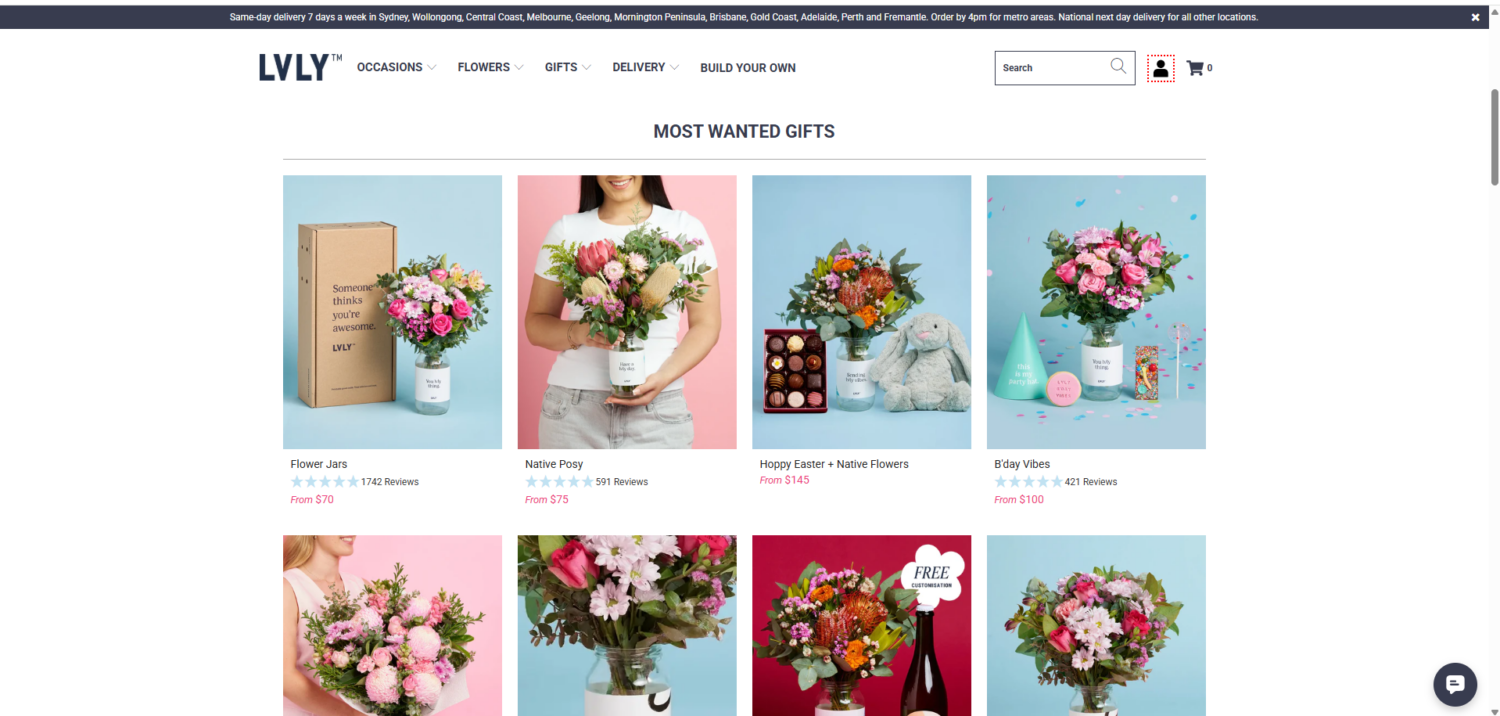
LVLY is an Australian flower and gifting brand running on Shopify Plus. For Valentine’s Day, they offer both pre-curated gift bundles (flowers paired with chocolates, candles, or alcohol) and a “Build Your Own Bundle” option where shoppers select a posy size, then add individual gifts like body care, treats, and a greeting card to create a fully customized gift package.
After migrating to Shopify Plus, LVLY expanded from 30 to over 150 bundle SKUs and had their biggest-ever Valentine’s Day sale. The key insight: offering both a curated option (for shoppers who want it fast) and a BYOB option (for shoppers who want control) captures two different buyer types within the same holiday.
Source: Shopify Case Study, LVLY
What shoppers want: A gift for a parent, someone they love but may not know exactly what to buy. Buyers lean heavily on curated sets because they reduce the risk of choosing the wrong thing. “Safe but thoughtful” is the sweet spot.
Bundle ideas to try:
💡 Tip: Mother’s Day and Father’s Day shoppers often don’t know what to buy. That’s why they’re searching in the first place. The more decision-making you remove, the higher your conversion rate. Pre-built bundles with clear naming (“For the Mom Who Needs a Break”) outperform generic product collections.
Real brand example, Lush:
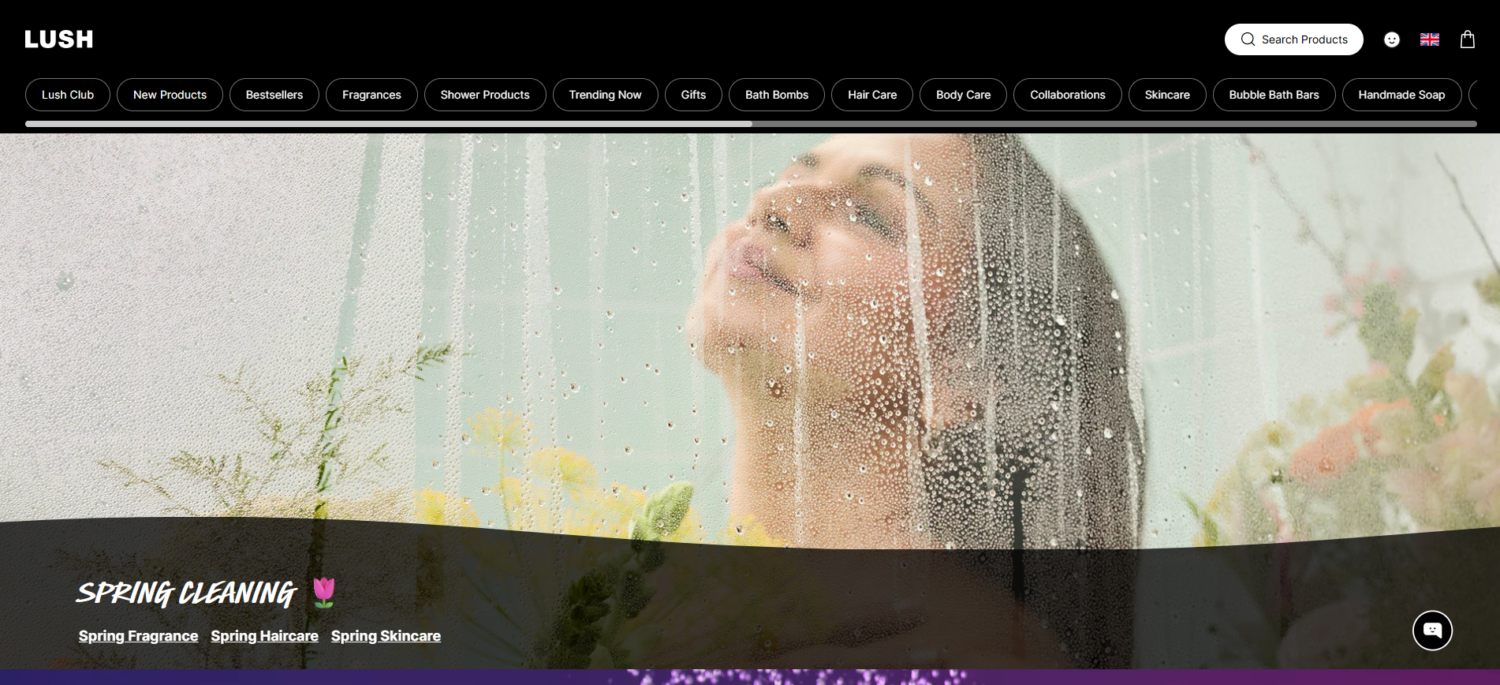
Lush releases a dedicated Mother’s Day collection each year with pre-wrapped, themed gift sets at multiple price points. Their 2025 range included 22 products (15 new), six gift sets, reusable Knot Wraps, and a premium musical tin inspired by their in-store spa treatment. The sets are organized by theme (relaxation, self-care, floral) so buyers can match a set to their mom’s personality rather than evaluating individual products.
What makes this work: every bundle is pre-wrapped and gift-ready. The buyer doesn’t need to think about presentation at all. They pick a set, checkout, and the product arrives looking like a gift, not like a product order that still needs wrapping.
Source: Lush 2025 Mother’s Day Press Release
What shoppers want: Practical items, often bought in bulk. Parents are shopping for kids across multiple categories and are highly price-sensitive. Convenience and value-for-money drive purchasing decisions more than novelty or aesthetics.
Bundle ideas to try:
💡 Tip: Back-to-school bundles are often purchased by parents, but used by students. Segment your bundles by age group or school level (elementary, high school, college) to make the shopper’s job easier. A parent buying for a 7-year-old and a parent buying for an 18-year-old have completely different needs.
Real brand example, ULTA Beauty:
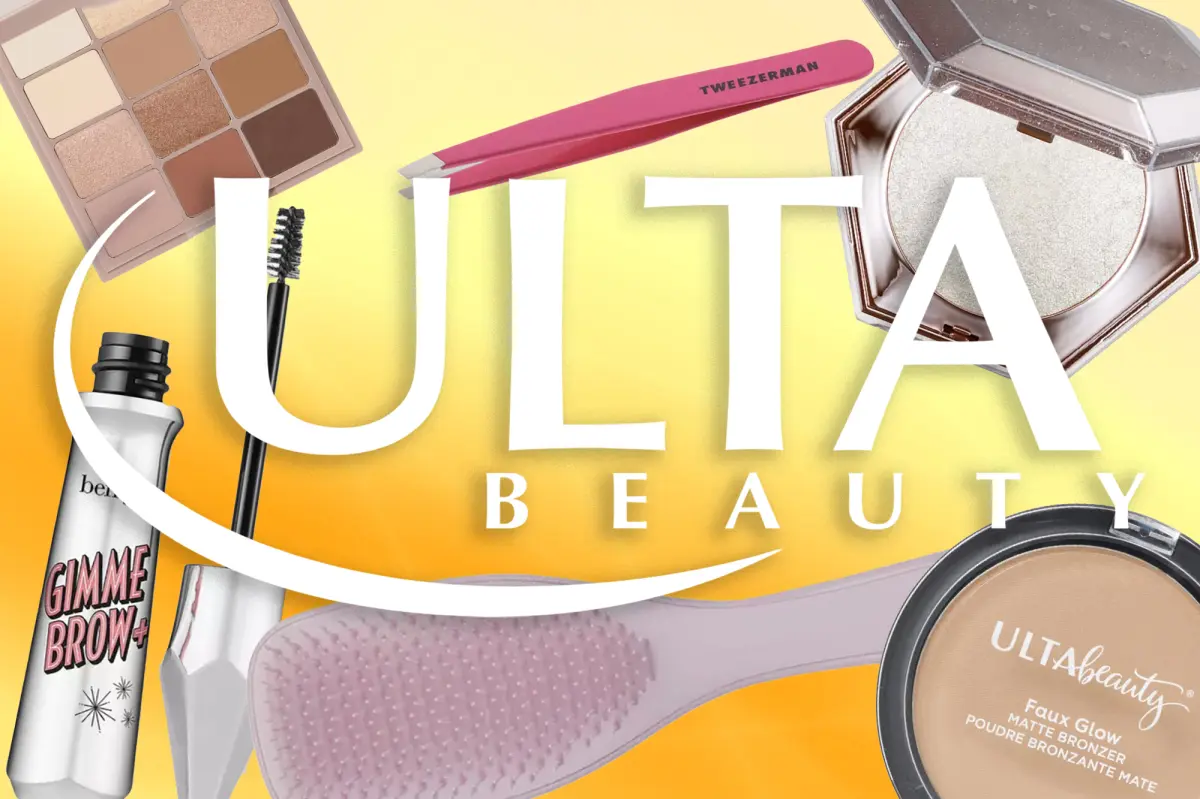
ULTA Beauty runs a dedicated “Set for School” sale event and releases back-to-school sampler kits each year. Their “Back to School Beauty Basics Sampler Kit” bundled 16 mini-sized skincare and beauty products from brands like Bubble Skincare, Hero Cosmetics, Good Molecules, and e.l.f., priced at $24.99 with a retail value of $147. They also launched “Campus Chic: Back-To-School Beauty Essentials” ($29, valued at $86) and “Top of Class: Skincare Essentials.”
Beyond the kits, ULTA builds a full back-to-school content hub with curated guides segmented by audience: college students (dorm essentials, shower caddy musts), high schoolers, tweens, elementary kids, and even parents and teachers. Each audience segment sees different products and bundles, which means the shopping experience feels personalized even though the bundles are pre-built.
The takeaway: segment your bundles by who’s buying and who’s using the products. A $25 sampler kit aimed at Gen Z college students serves a completely different purpose than a $50 self-care bundle aimed at exhausted parents.
Source: ULTA Back to School Hub
What shoppers want: Themed, fun, and often impulse-driven purchases. Novelty matters more here than during other holidays. Shoppers are looking for products that feel specific to the event. Generic products with a “Halloween” label won’t cut it.
Bundle ideas to try:
💡 Watch out: Halloween bundles must sell within a tight window, typically 3–4 weeks. If you overbuild inventory for Halloween bundles, you’ll be stuck with themed products that have no value after October 31. Start with conservative quantities and reorder if demand is strong.
Real brand example, BarkBox:
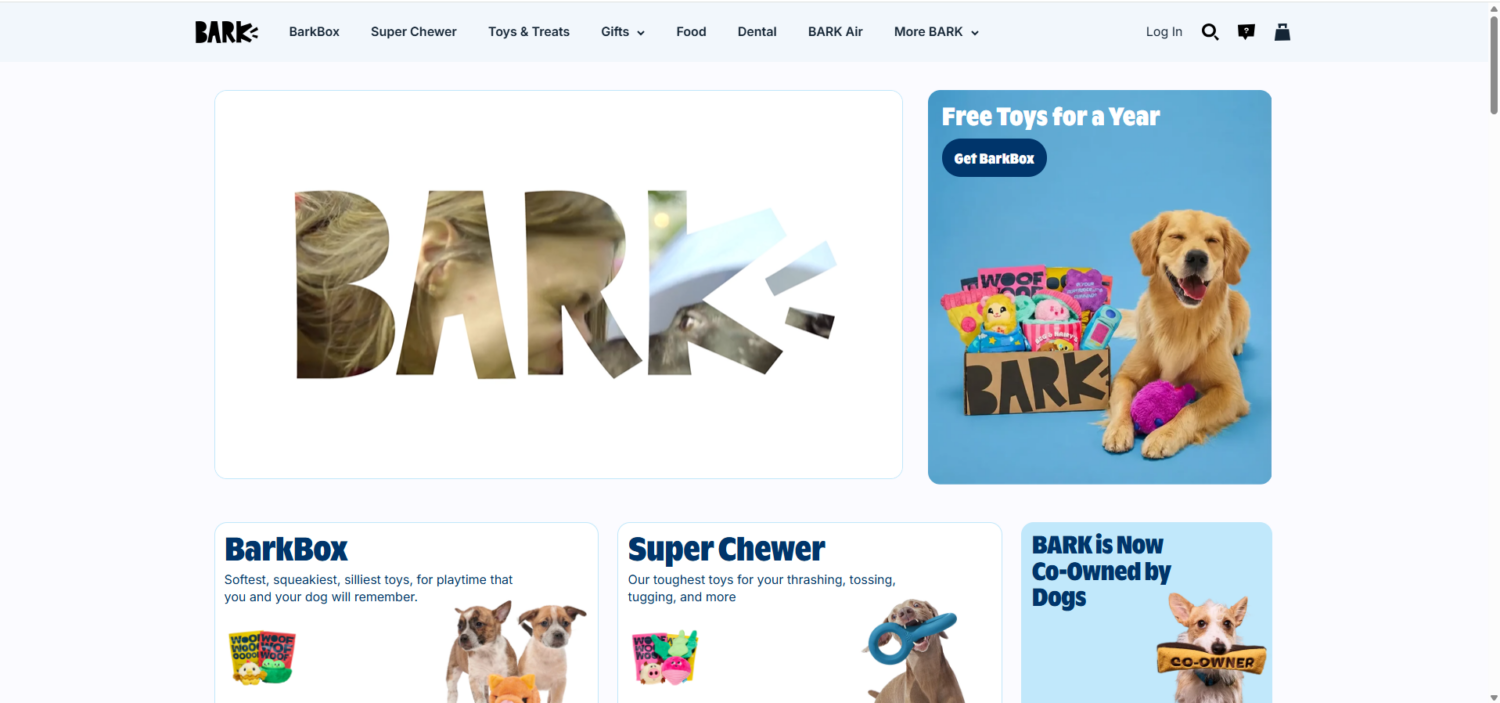
BarkBox delivers monthly themed subscription bundles (2 toys, 2 treat bags, and a chew) that rotate with seasonal themes throughout the year. Halloween boxes feature spooky-shaped toys like toy hatchets and bat-themed chews. Holiday boxes include pie-shaped and turkey bone toys. Summer boxes get lake or beach themes. They’ve also done brand collaborations like a Wicked-themed holiday box.
What makes this approach powerful: themes never repeat, which gives subscribers a reason to stay engaged through every seasonal moment. And because each box is subscription-based, the seasonal inventory is essentially pre-sold. BarkBox doesn’t need to scramble for holiday orders because subscribers are already committed.
Even if you don’t run a subscription model, the takeaway applies: a limited-edition seasonal bundle with themed products creates a “collect it before it’s gone” dynamic that drives urgency without discounting.
Source: SheKnows, BarkBox Review
What shoppers want: The best deals of the year. BFCM shoppers are primed to spend because they’ve been waiting for this moment. But they also comparison-shop aggressively. Your bundles need to feel like genuine value, not a repackaged everyday offer. Bundles are only one piece of a BFCM plan; our Shopify Black Friday checklist covers the store, offers, and marketing prep around them.
Bundle ideas to try:
💡 Tip: BFCM shoppers expect deeper discounts than any other time of year. If your Valentine’s Day bundle offers 10% off and your BFCM bundle also offers 10% off, the BFCM offer will feel underwhelming. Scale your discount depth to match the competitive intensity of the event.
Real brand example, SendAFriend:
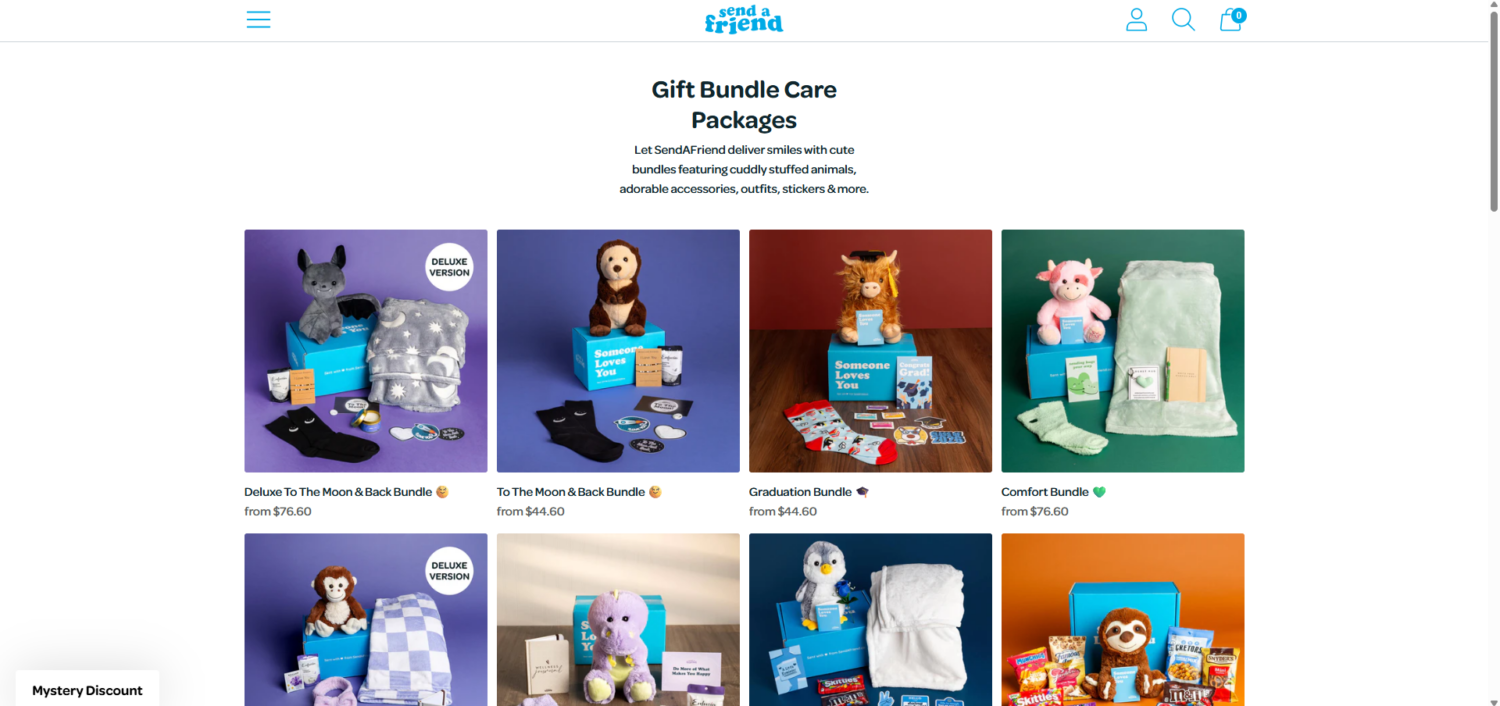
SendAFriend is a Shopify-based stuffed animal care package brand that runs tiered BFCM promotions across their bundles. Their 2024 BFCM offer used tiered discounting: 10% off orders $40+, 15% off orders $50+, and 20% off orders $60+. Their bundle structure layers a core product (a stuffed animal) with themed add-on bundles like the Self-Care Bundle ($50 add-on), Thinking of You Bundle ($18 add-on), and Cozy Gift Box ($50 add-on), which naturally pushes shoppers into higher discount tiers.
The tiered structure is smart because it rewards bigger carts without discounting individual products. A shopper who came for a $30 stuffed animal sees that adding an $18 bundle gets them past the $40 threshold for 10% off. Adding a $50 bundle gets them to 20% off. The discount incentivizes bundling behavior, which increases AOV.
For context on the impact of bundling during high-traffic events: Shopify’s bundling guide reports that Coconu (coconu.com) saw a 20% AOV increase and Maev (meetmaev.com) saw a 15% AOV increase plus a 20% lift in units per transaction after implementing bundles.
Source: SendAFriend Bundles
What shoppers want: Gifts for multiple people on a list, at various budgets. Convenience and “gift-readiness” are the top priorities. Shoppers don’t want to wrap, assemble, or customize. They want to click buy and know the recipient will be delighted.
Bundle ideas to try:
💡 Tip: Holiday gift bundles should look like gifts on the product page. Use lifestyle photography that shows the bundle packaged and presented, not individual product shots on white backgrounds. The shopper needs to see what the recipient will see when they open the box.
Real brand example, Westman Atelier:
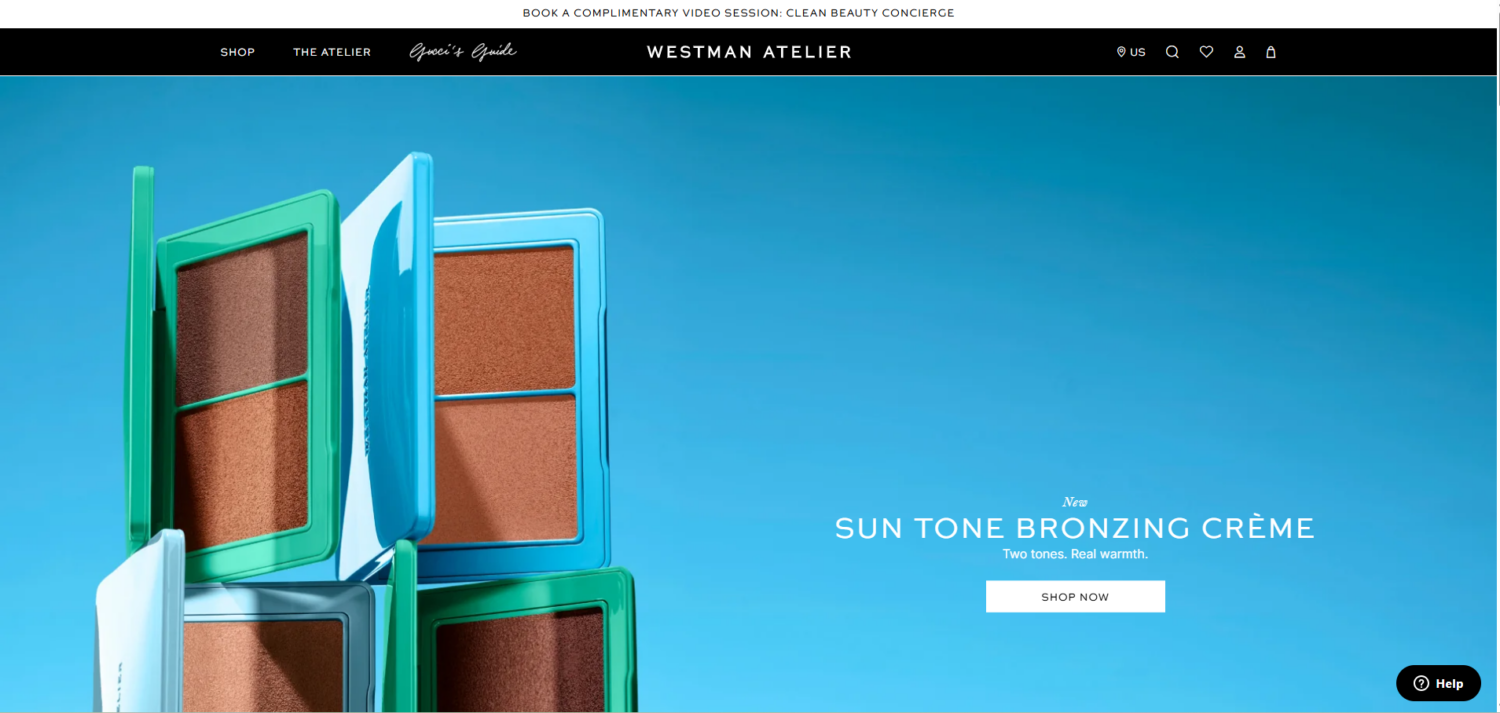
Westman Atelier is a luxury clean beauty brand on Shopify that releases a full holiday collection each year with multiple curated gift sets at different price points. Their 2025 collection, inspired by Lapland and packaged in pale ice blue boxes, includes a mini Baby Cheeks blush trio, a Lip Suede Matte Lipstick trio with two exclusive new shades, a “Petite Fête Edition” with a limited-edition blush and mascara, and a full 9-piece petite brush collection handmade in Japan.
What makes this work: the sets span multiple price tiers (from approximately €68 to €615), and several include exclusive items that aren’t available for individual purchase. The limited-edition Lip Suede Matte Lipstick Trio, for example, contains two shades (Dash and Fluffy) that can only be bought as part of the set. This eliminates the “I’ll just buy the one product I want” problem that undermines many bundle strategies.
The holiday-themed packaging also matters. Each set slides open to reveal a curated presentation, with no wrapping needed. For a holiday shopper buying a gift, this eliminates a step and makes the purchase feel premium from the moment it arrives.
Sources: Westman Atelier 2025 Holiday Guide
What shoppers want: Products that support resolutions and fresh starts. Shoppers are buying for themselves, not for others. The purchase psychology shifts from “what would they like?” to “what do I need to become the person I want to be this year?” Health, wellness, organization, and self-improvement categories see strong demand.
Bundle ideas to try:
💡 Tip: New Year bundles should feel aspirational, not transactional. “Your 2026 Wellness Stack” sounds like a lifestyle upgrade. “Buy 3 supplements, save 15%” sounds like a clearance sale. The products can be the same. The framing makes the difference.
Real brand example, Three Ships:
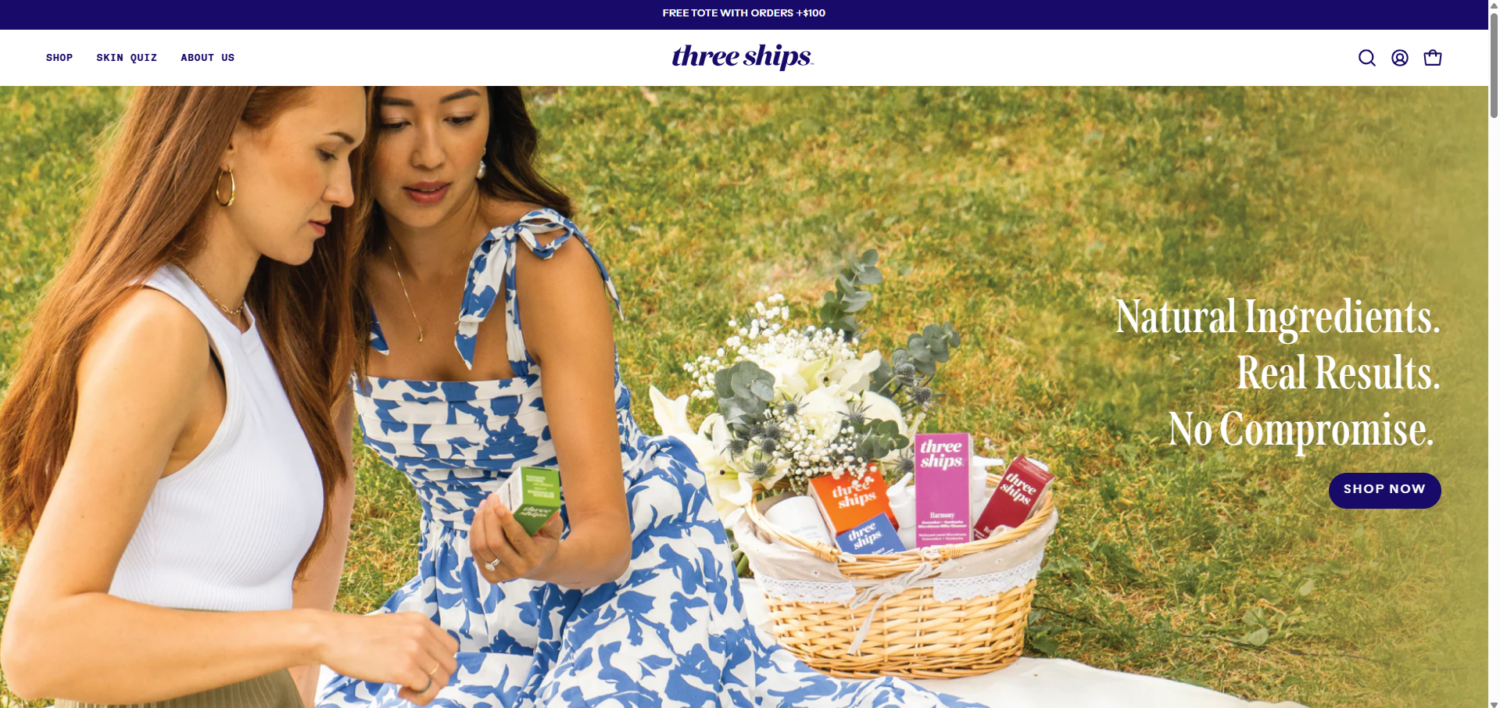
Three Ships is a natural skincare brand on Shopify that organizes its bundles around skin concerns and routines. Their product line includes the “Hydration Morning Duo,” “Skin Barrier Reset Routine,” “Under-Eye Brightening Routine,” and a “Best Sellers Discovery Kit” with travel-size versions of their top products.
While these bundles run year-round, they align naturally with New Year shopping behavior. The routine-based naming (“reset,” “brightening routine”) maps directly to resolution-driven purchases in January. A shopper who just decided “this is the year I take skincare seriously” can pick up a complete routine in one click.
The discovery kit serves a second purpose: it’s a low-risk way for new customers to try the brand. In January, when many shoppers are experimenting with new routines and products, a trial-size bundle removes the financial barrier to trying something new.
The lesson: you don’t always need to create a brand-new seasonal bundle. Sometimes the right move is to reposition an existing bundle with seasonal messaging. During New Year, the same “Skin Barrier Reset Routine” becomes “Start 2026 with a fresh routine.” The product stays the same. The framing changes.
Source: Three Ships, Bundles & Kits
What shoppers want: Products tied to warm-weather activities, travel, and lifestyle. Shopping is less urgent than during holidays because there’s no single “event” driving purchases. Instead, summer buying is spread across occasions: vacations, outdoor activities, festivals, and general seasonal transitions.
Bundle ideas to try:
💡 Tip: Summer bundles lack the built-in urgency of holiday bundles. To compensate, make the offer genuinely seasonal with limited-edition products, summer-only packaging, or bundles that are available only through Labor Day. Without some form of scarcity, summer bundles risk feeling like everyday offers with a sun emoji on the banner.
Real brand example, Rhode Skin “The Summer Kit”:
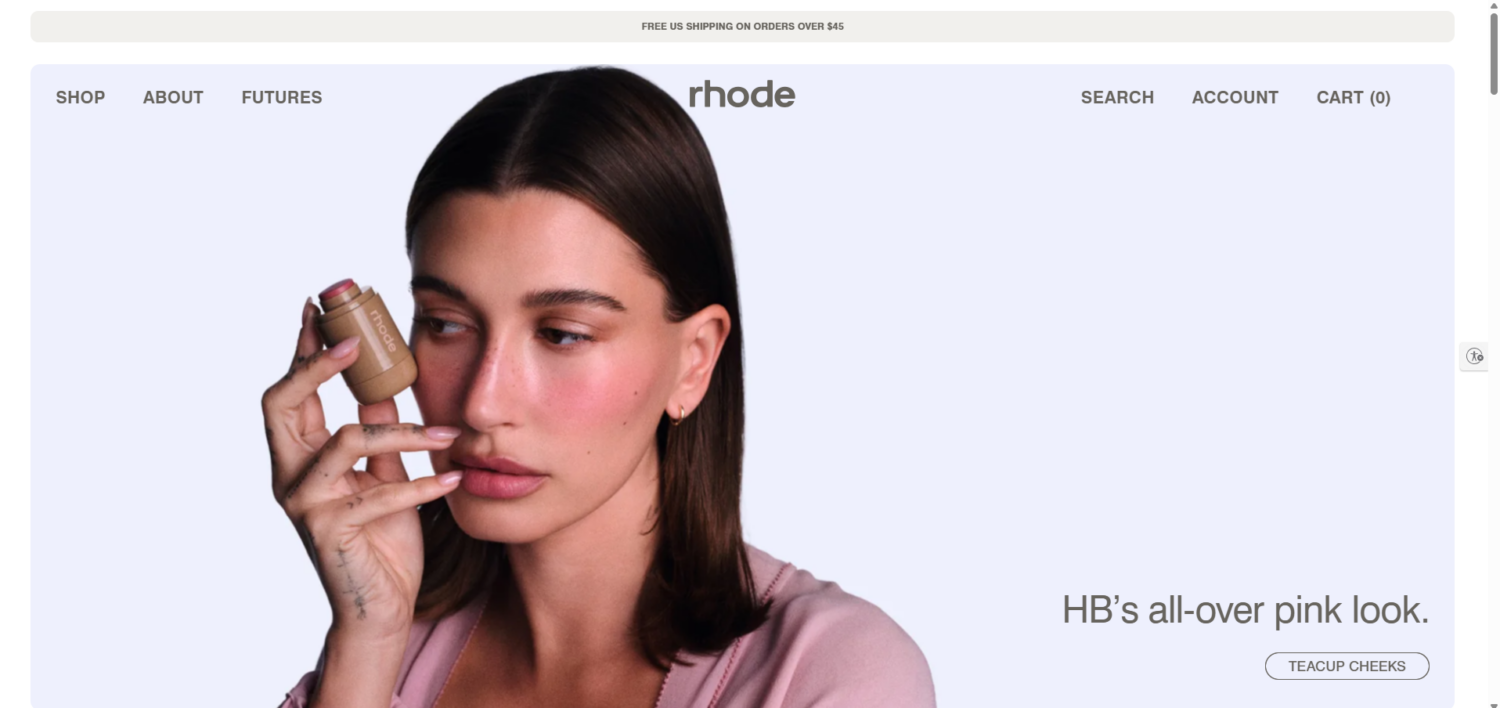
Rhode launched a limited-edition Summer Kit in July 2025, priced at $74 (valued at $102). The bundle included a Glazing Mist (for hydration in heat), a new Peptide Lip Tint in “Lemontini” (a summer-exclusive shade with a citrus scent), and a Pocket Blush in a choice of two warm-weather shades (Tan Line or Sun Soak). All items came in limited-edition lemon-yellow packaging.
What makes this a strong seasonal bundle: every element is tailored to summer. The product selection (mist instead of cream, citrus instead of vanilla, warm blush tones instead of cool) makes the kit feel genuinely seasonal, not a winter bundle with the label swapped. The limited-edition packaging and exclusive shade create scarcity: once summer ends, the yellow packaging and Lemontini shade disappear.
Rhode also offered a blush shade choice within the fixed bundle, adding light personalization without complicating inventory management. It’s a small touch, but it lets the shopper feel like the bundle was built for them.
Source: Beauty Scene, Rhode Summer Kit Launch
The biggest reason seasonal bundles underperform isn’t bad product selection or wrong pricing. It’s starting too late. By the time most merchants think about seasonal bundles, competitors already have offers live and ads running.
Here’s a general timeline that works for most seasonal events. Adjust based on the scale of the event. BFCM and Christmas need more lead time than a summer bundle.
Finalize which products go into each bundle. Confirm inventory levels can support projected bundle volume. Set bundle pricing and margin targets. If you’re creating limited-edition products or packaging, this is the deadline to place orders.
Build the bundles in your Shopify store using BOGOS or your bundle app. Create product images, descriptions, and any themed landing pages. Set up email sequences and social media content. Write the promotional copy.
Start teasing the bundle via email, social media, and on-site banners. For major events like BFCM and Christmas, consider offering early access for loyalty program members or email subscribers. This creates a sense of exclusivity and generates initial sales momentum.
Track bundle conversion rate and AOV daily. If a bundle isn’t moving, adjust its placement on the site, add urgency messaging, or increase visibility through email or social. Watch inventory levels. Selling out of a promoted bundle during the event damages trust.
👉 Learn how Shopify handles bundle inventory management here: Shopify Bundle Inventory: How to Track Component Stock and Avoid Overselling
Remove or hide seasonal bundles promptly. A “Christmas Gift Set” still visible in February signals a store that isn’t actively managed. Review performance: which bundles sold, at what margin, and what was the AOV impact? Document what worked and what didn’t so you have a head start on next year’s planning.
👉 Read more: 15 Tips for Using Product Bundles Effectively to Boost AOV
Checklist, Sample Q4 Timeline (for BFCM + Christmas):
Seasonal bundles work because they align product offers with moments when shoppers already intend to buy. The products in the bundle create value. The seasonal timing creates urgency. And the curated presentation removes friction that would otherwise slow the purchase decision.
You don’t need to build bundles for every event on this list right away. Start with the next seasonal event on your calendar and build one or two bundles using the ideas above. Track AOV, conversion rate, and units per transaction. Then iterate: adjust your product selection, test different bundle types, and expand to additional events as you learn what your customers respond to.
The merchants who consistently win during seasonal peaks aren’t the ones with the biggest budgets or the best products. They’re the ones who planned early, built bundles that matched the shopping occasion, and had their offers live before the traffic arrived.

Shoppers hesitate to buy a $1,200 sofa or a custom ring when they can’t see the exact version they’re...
Selling personalized products on Shopify gets hard the moment a shopper needs to type a name or choose a...
The UK is the largest eCommerce market in Europe and the third-largest in the world. For international Shopify stores,...