

Charlie Ngo
•
Last updated: 9 October, 2026
Shopify Shipping To Australia: The Complete 2026 Guide
Australia is one of the first markets many Shopify stores expand into. It is large, English-speaking, and home to...
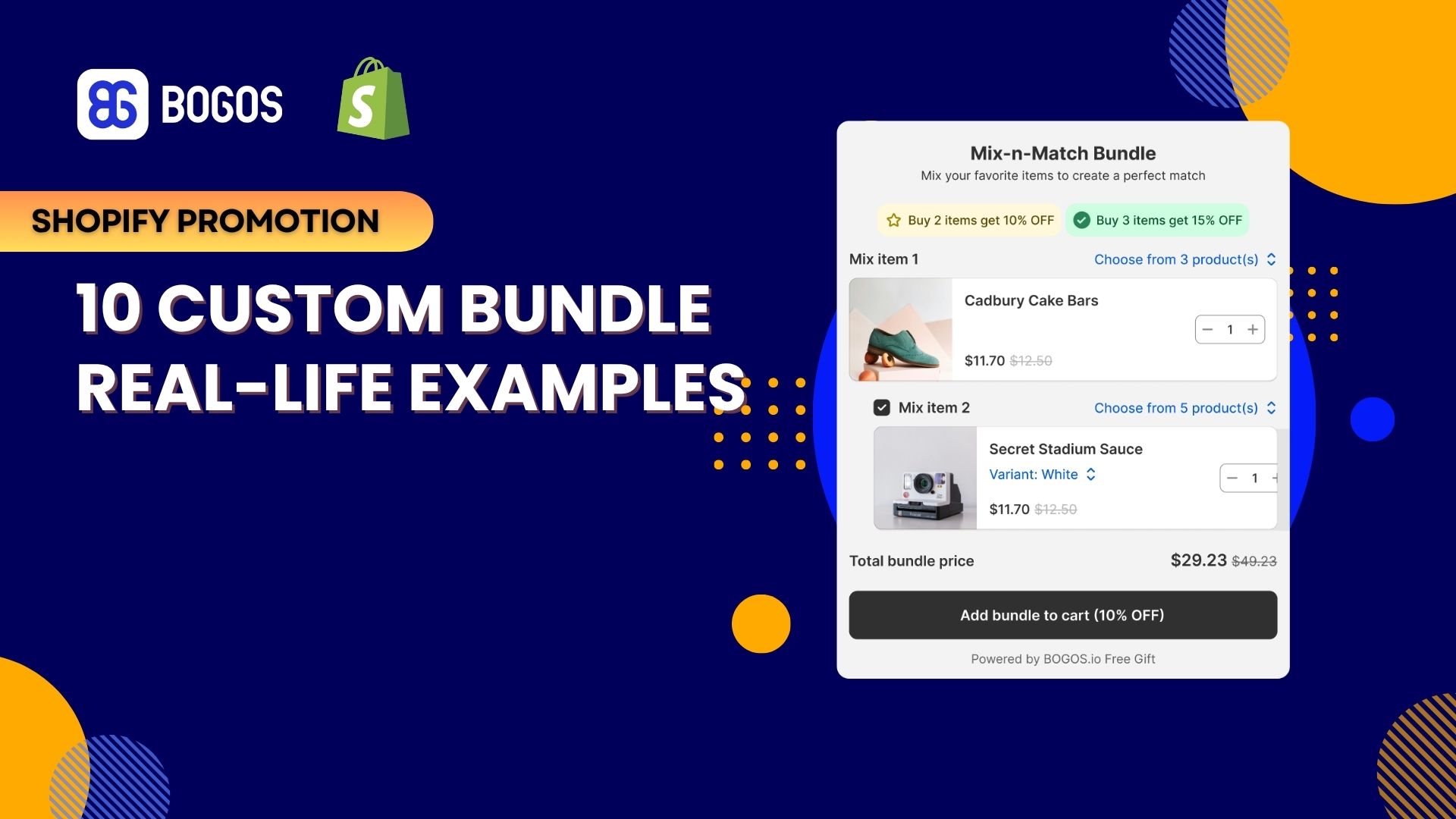
10 Custom Bundle Real-Life Examples: How Shopify Brands Let Shoppers Build Their Own Offers

Digital Marketing Specialist
Summarize this post with AI
We all know the struggle of trying to increase Average Order Value when customers only want to buy a single item. It is tempting to run another huge sale, but heavy discounts ultimately hurt your profitability.
A much better approach is to introduce custom bundles to your store. When you let shoppers build their own unique product combinations, they feel in control and are far more likely to add extra items to their carts.
To help you master this strategy, this article explains what custom bundles are, outlines their top benefits, and dives into 10 inspiring examples from real Shopify brands. Let’s check them out!
👉 If you are new to Shopify and looking for a comprehensive guide of doing product bundles on Shopify, read our detailed guide here: Shopify Product Bundle Completed Guide: Strategies, Best Apps & Tips
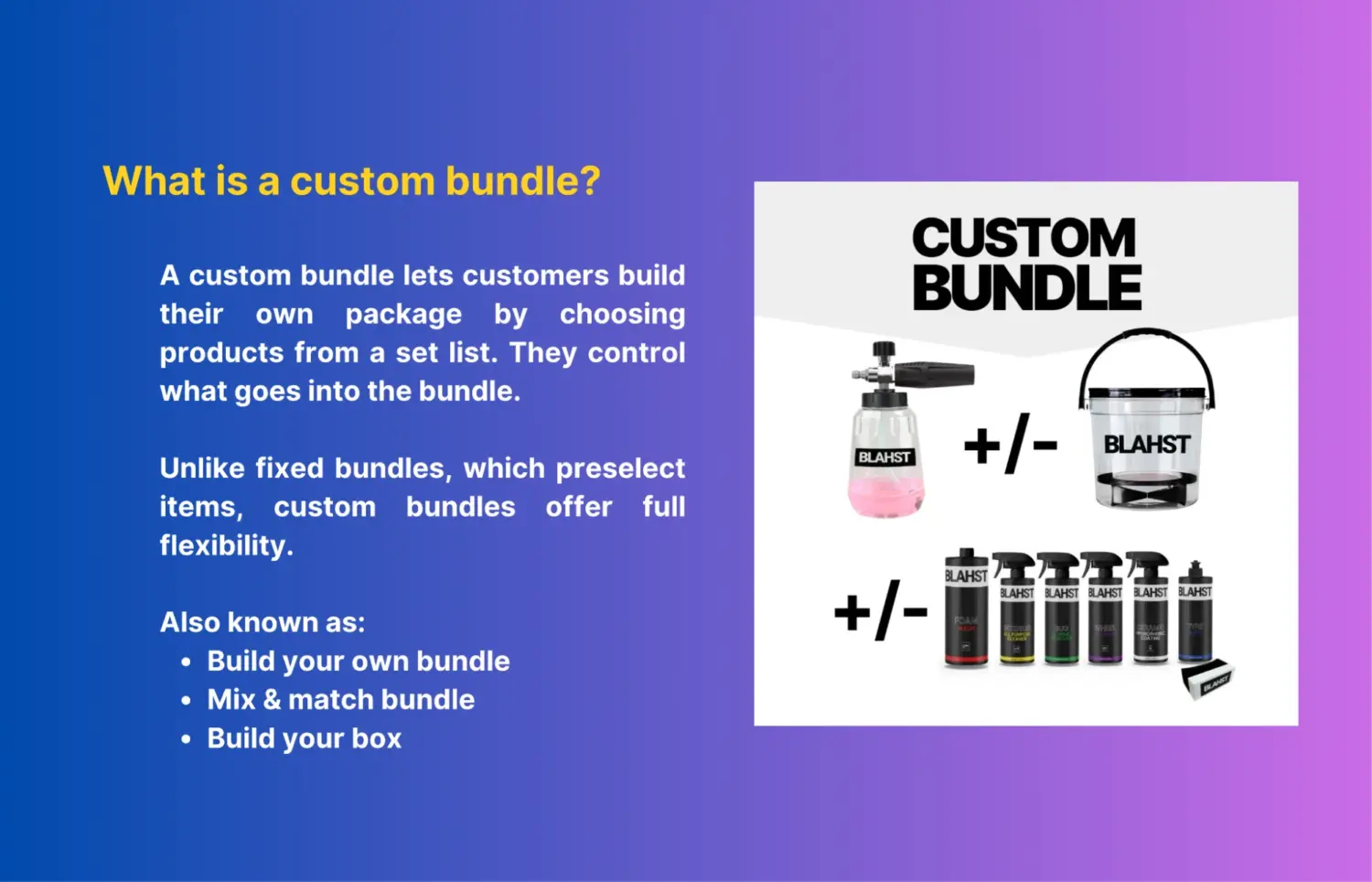
A custom bundle allows customers to build their own unique package. Shoppers do this by selecting products from a predefined list or specific category set by the merchant. This approach gives the buyer complete control over their final order.
This is quite different from a traditional fixed bundle. In a fixed bundle, the merchant strictly preselects every single item. The customer gets exactly what is in the box and cannot change out any products. Custom bundles remove this restriction and offer total flexibility.
In the Shopify ecosystem, you will often hear merchants refer to custom bundles by a few different names:
Benefits of custom bundles:
Looking at successful brands is the best way to get inspired for your own store. Here are 10 excellent Shopify merchants who use custom bundles to drive sales and thrill their customers.
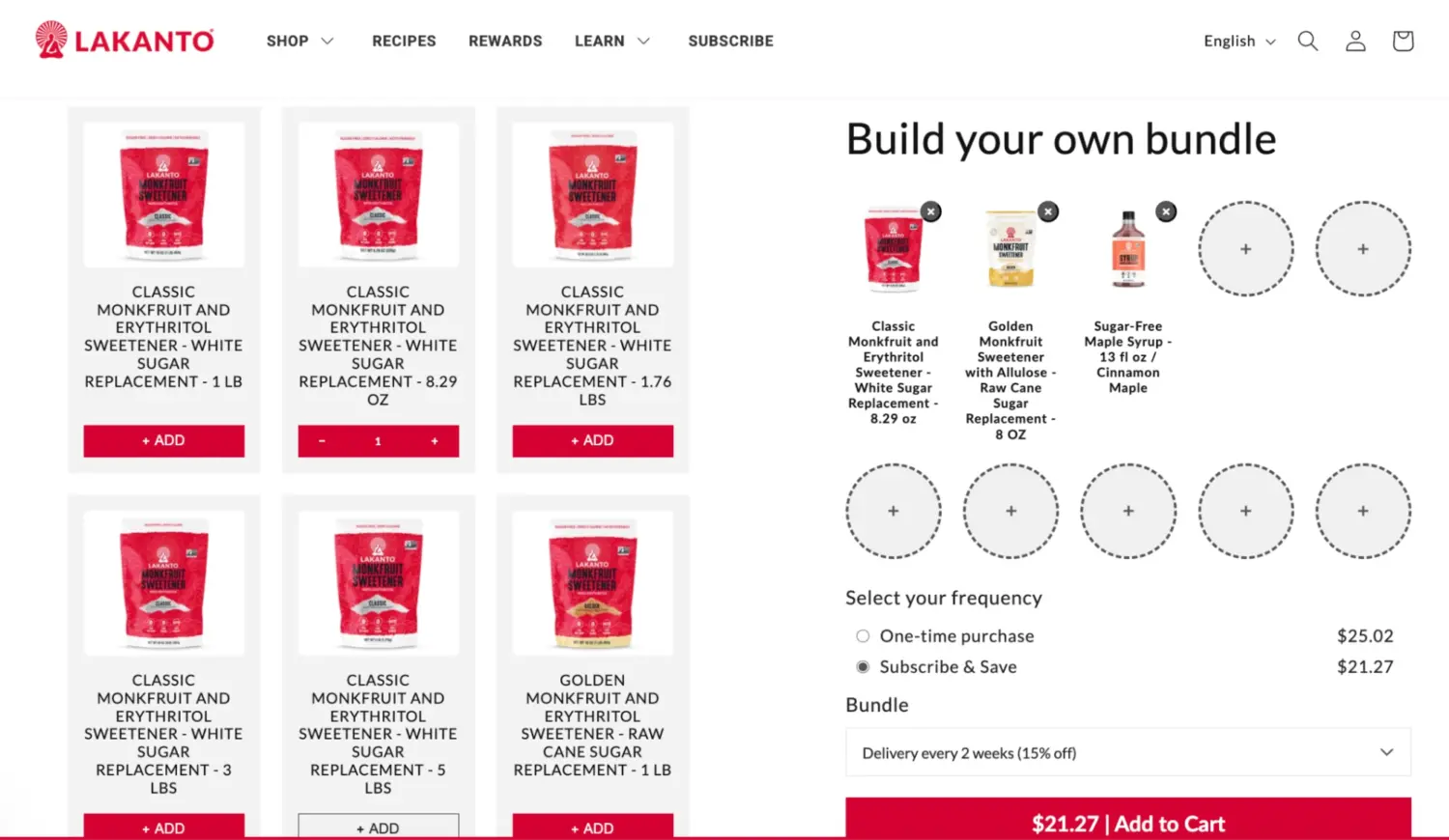
Lakanto sells a wide variety of sugar-free products that go far beyond just monk fruit sweeteners. Shoppers can find baking mixes, flavored syrups, chocolate chips, peanut butter, granola, and even healthy cookies.
The Lakanto bundle page features a clear visual grid of their products, with 10 empty circular slots. Customers click the add button under any item to watch it fill a slot on the screen. Once the box is full, they can choose between a one-time purchase and a subscribe-and-save option.
This setup is highly effective because the empty circle slots serve as a psychological push for customers to complete the set. The absolute best part of this custom bundle is how it smoothly turns a fun mixing experience into a recurring subscription. This encourages buyers to try new snacks while securing predictable long-term revenue for the brand.
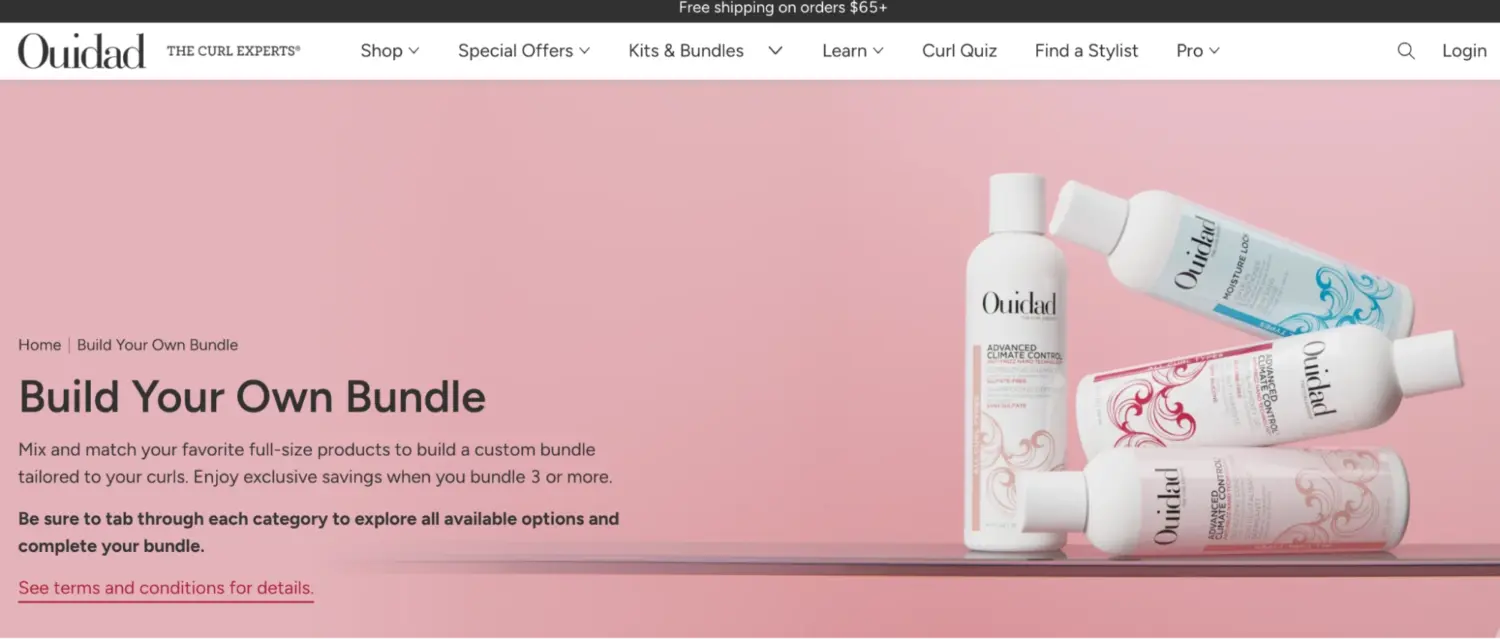
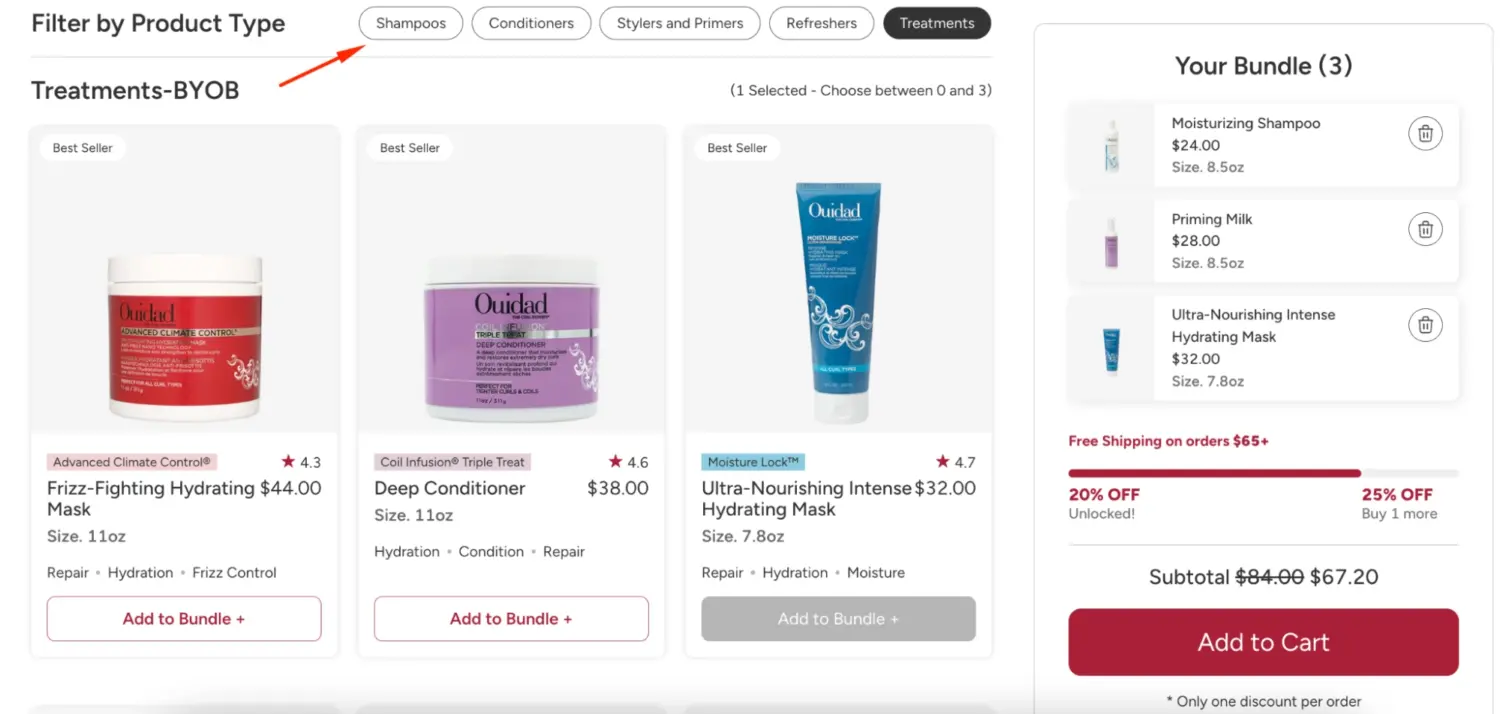
Ouidad specializes in professional haircare products formulated for curly hair. Their bundle builder lets customers mix and match their favorite full-size products across categories such as shampoos, conditioners, stylers, and treatments.
The shopping interface is very organized, with tabs at the top that let customers easily filter by product type. As shoppers add items to their bundle on the left, a floating sidebar on the right neatly tracks their selections and displays a dynamic progress bar. This bar clearly shows that buying three items unlocks a twenty percent discount. It also nudges the customer to buy just one more item to reach the next tier and unlock a 25% discount.
This strategy is incredibly effective because it gamifies the checkout process. The visual progress bar makes customers feel like they are earning a reward, which naturally increases the average order value as they add extra products to reach the final discount tier.
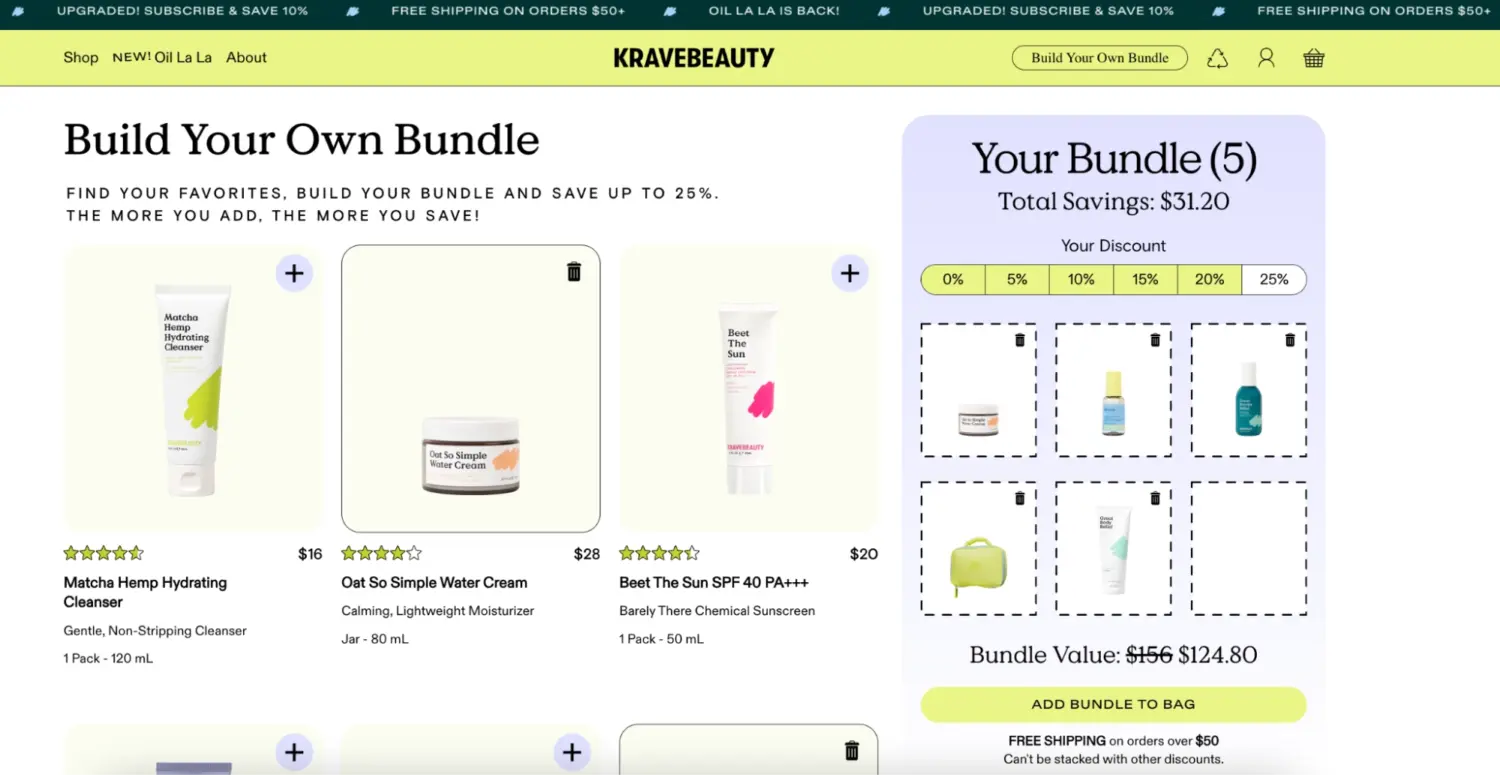
KraveBeauty keeps its bundle very focused. The page only features a small set of core products like cleanser, moisturizer, sunscreen, and a few treatments, plus a pouch as an extra. Each item clearly maps to a step in a basic skincare routine. Instead of overwhelming shoppers with options, it subtly guides them to build a complete routine.
The experience is simple and very visual. You click a “+” button, and the product appears in a bundle panel on the right. This panel shows your items, total savings, and a clear discount ladder that increases up to 25%. There are also empty slots, so you can literally see that your bundle is not “full” yet.
The key insight is that KraveBeauty is not really selling bundles. They are selling a routine. Because the brand already promotes a minimal, intentional approach to skincare, adding more items feels like completing your routine rather than spending more money. That is why customers are more willing to add 1-2 extra products without resistance.
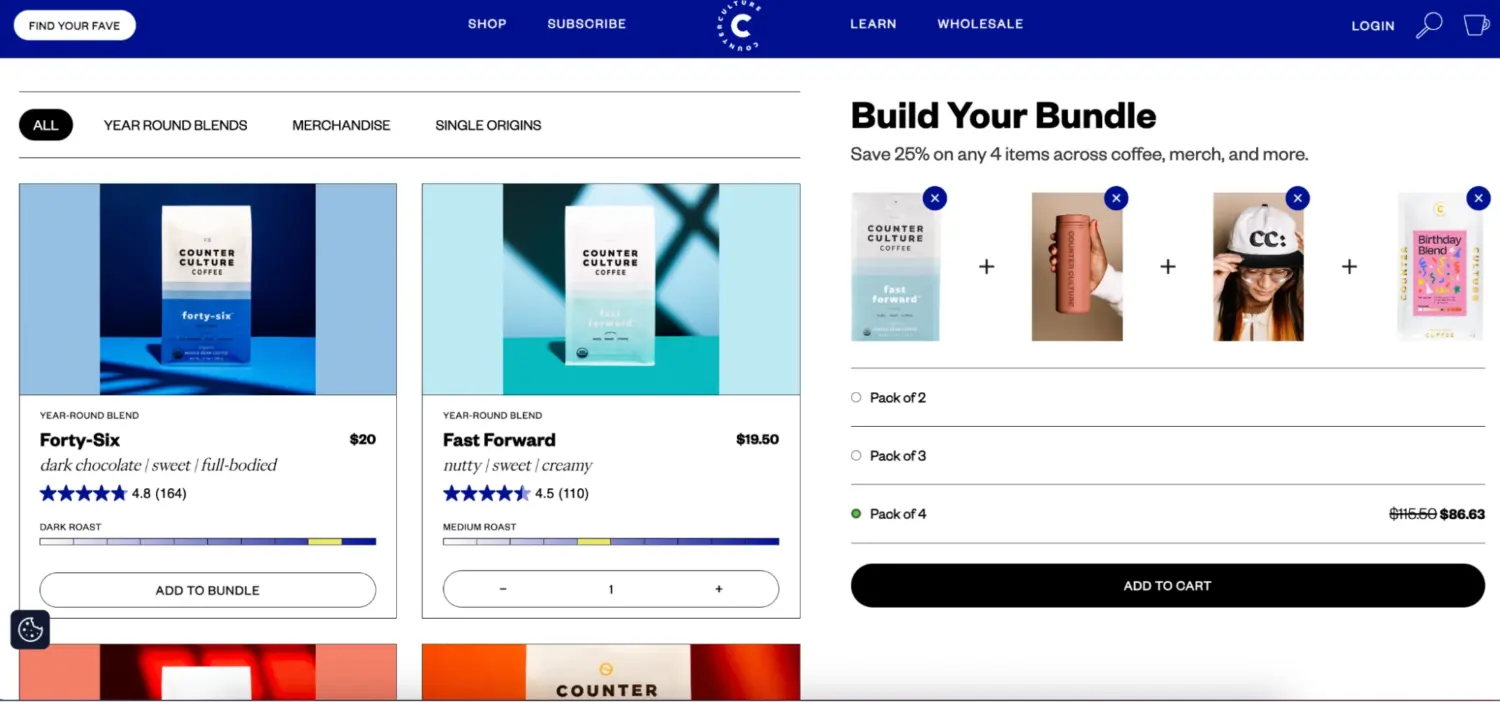
Counter Culture Coffee takes a broader approach to bundling. Instead of just coffee, the page mixes everything together. You can add single-origin beans, blends, and even merch like mugs or hats into one bundle. This creates a more lifestyle-driven mix, where the bundle is not just about consumption but also identity and brand expression.
The structure is very controlled. You are not filling unlimited slots. You choose a fixed pack size, like 2, 3, or 4 items, and each tier unlocks a specific discount. The jump is clear:
The UI reinforces this by showing your selected items in a row, almost like assembling a set combination rather than freely stacking products.
The interesting insight here is the role of constraints as drivers. Unlike KraveBeauty, which nudges you with empty space, Counter Culture sets a clear target upfront. “Pick 4, and you’re done.” That removes decision fatigue and turns the bundle into a simple optimization game.
You are not exploring endlessly. You are just trying to hit the best value as efficiently as possible. This works especially well for coffee, where customers are already accustomed to buying in bulk.
Deeper Roots Coffee frames its bundle as a subscription-first experience rather than a one-time, mix-and-match offering. The page pushes you to build a recurring coffee box, where you can select up to 5–6 bags from their current lineup of blends and single origins.
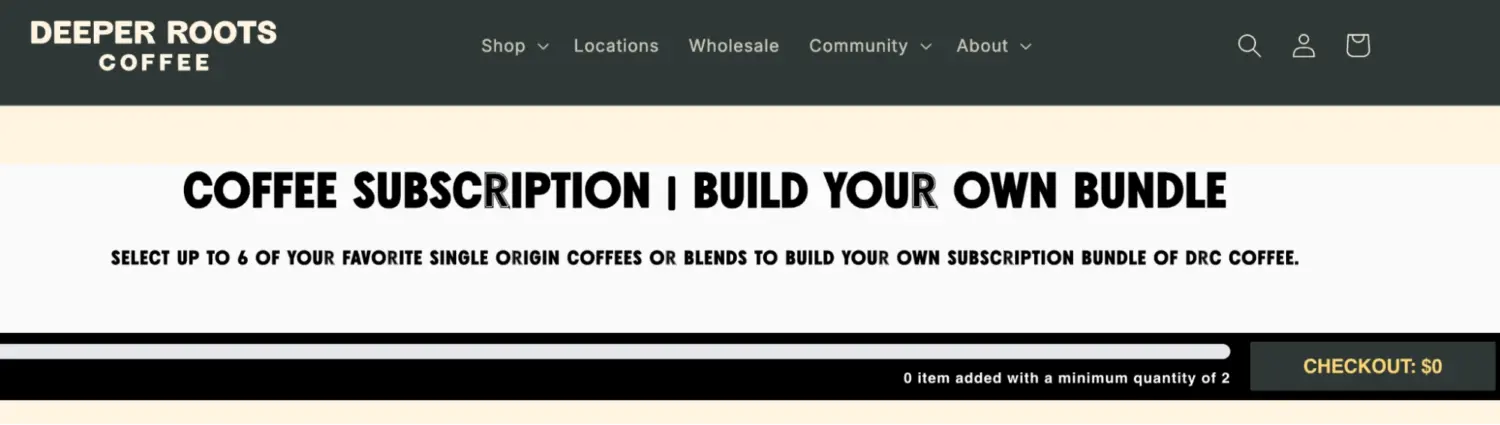
What stands out is the level of control. You are not just picking products; you are choosing size, grind type, and even delivery frequency. It feels closer to configuring your personal coffee system than building a simple bundle.
The interface is slightly more complex but also more functional. Each product card includes detailed tasting notes, grind options, and size selectors before you even add it to your cart. As you add items, a progress bar at the top updates your bundle status and total price in real time.
There is also a minimum quantity requirement, which forces you to commit to at least a basic setup before checkout. Compared to other brands, this is less about visual play and more about utility and customization.
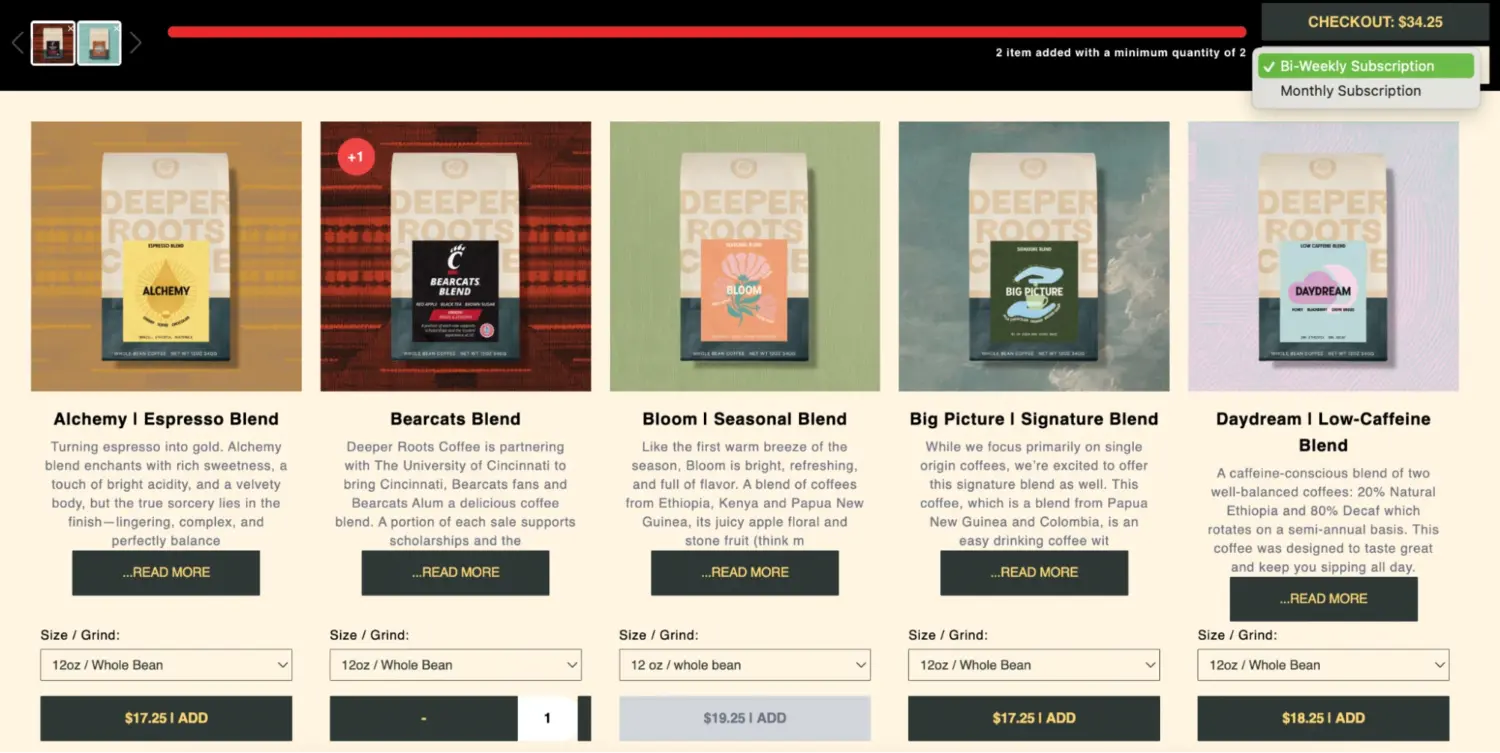
The key insight here is depth over simplicity. Deeper Roots is targeting customers who already care about coffee details, not casual buyers. By letting users control grind size, bag count, and subscription cadence, they are reinforcing a sense of expertise and ownership. The bundle becomes part of a routine, almost like setting up your personal coffee supply chain, which makes the subscription feel justified rather than forced.
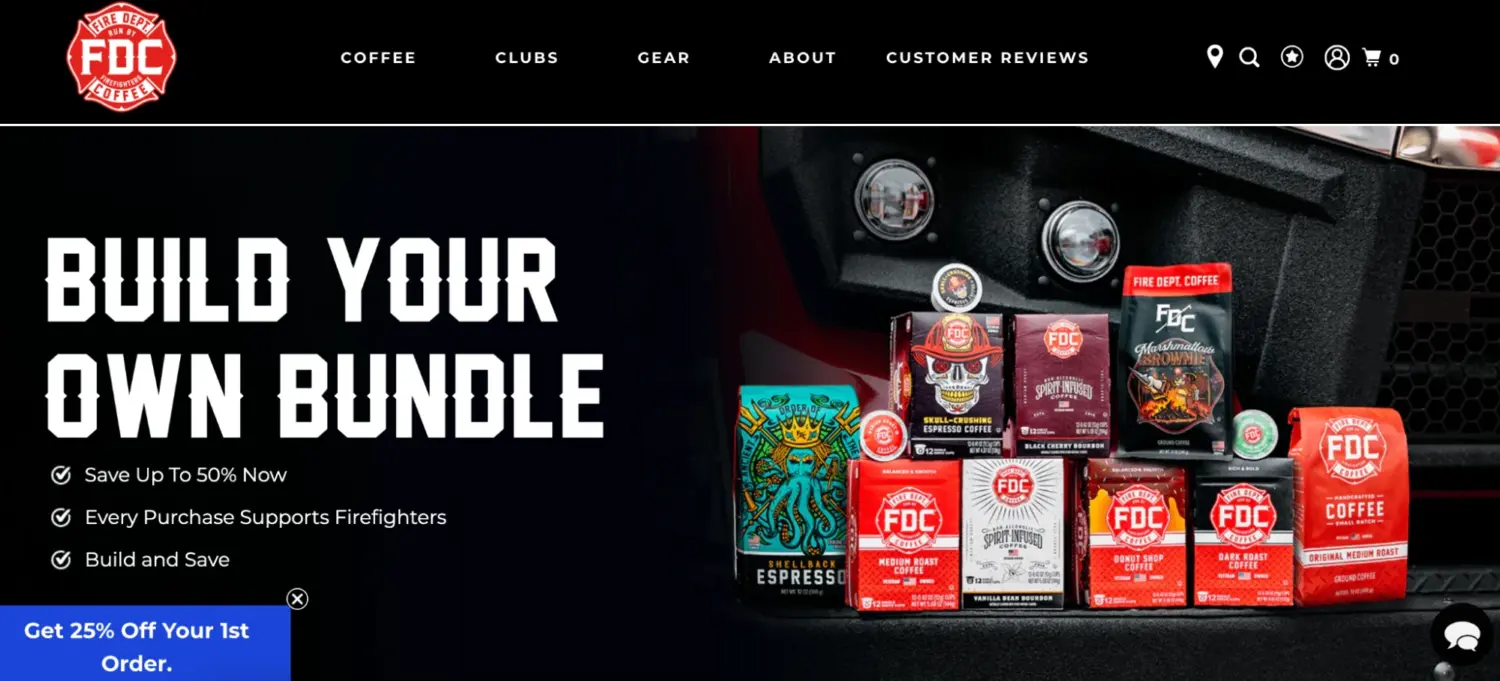
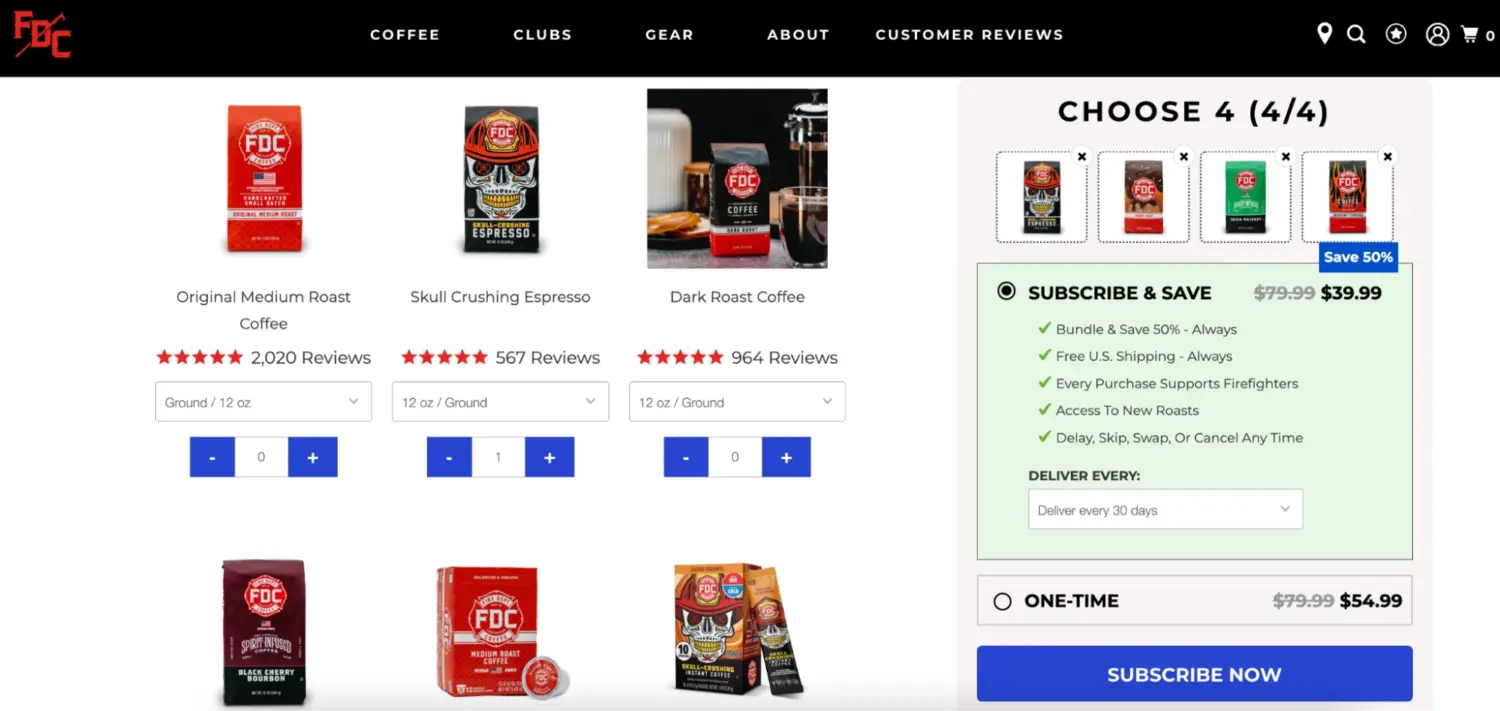
Fire Department Coffee keeps the bundle very punchy and straightforward. You build a fixed 4-pack by choosing any four coffees, from classic roasts to flavored and even bourbon-infused options. The assortment feels bold and indulgent, clearly targeting people who want variety and strong flavors, not a carefully curated routine.
The flow is highly structured. You are told to “choose 4” and simply fill the slots. As you add items, the bundle locks into place, while the right panel pushes pricing hard with a clear discount and a side-by-side comparison between one-time and subscription pricing. The “Subscribe & Save” option is impossible to miss, making the upgrade feel like the default choice.
The insight here is value stacking with zero subtlety. Big discounts, strong visual branding, and a clear social mission all work together to remove hesitation. Instead of guiding you gently, it makes the purchase feel like a no-brainer you shouldn’t overthink.
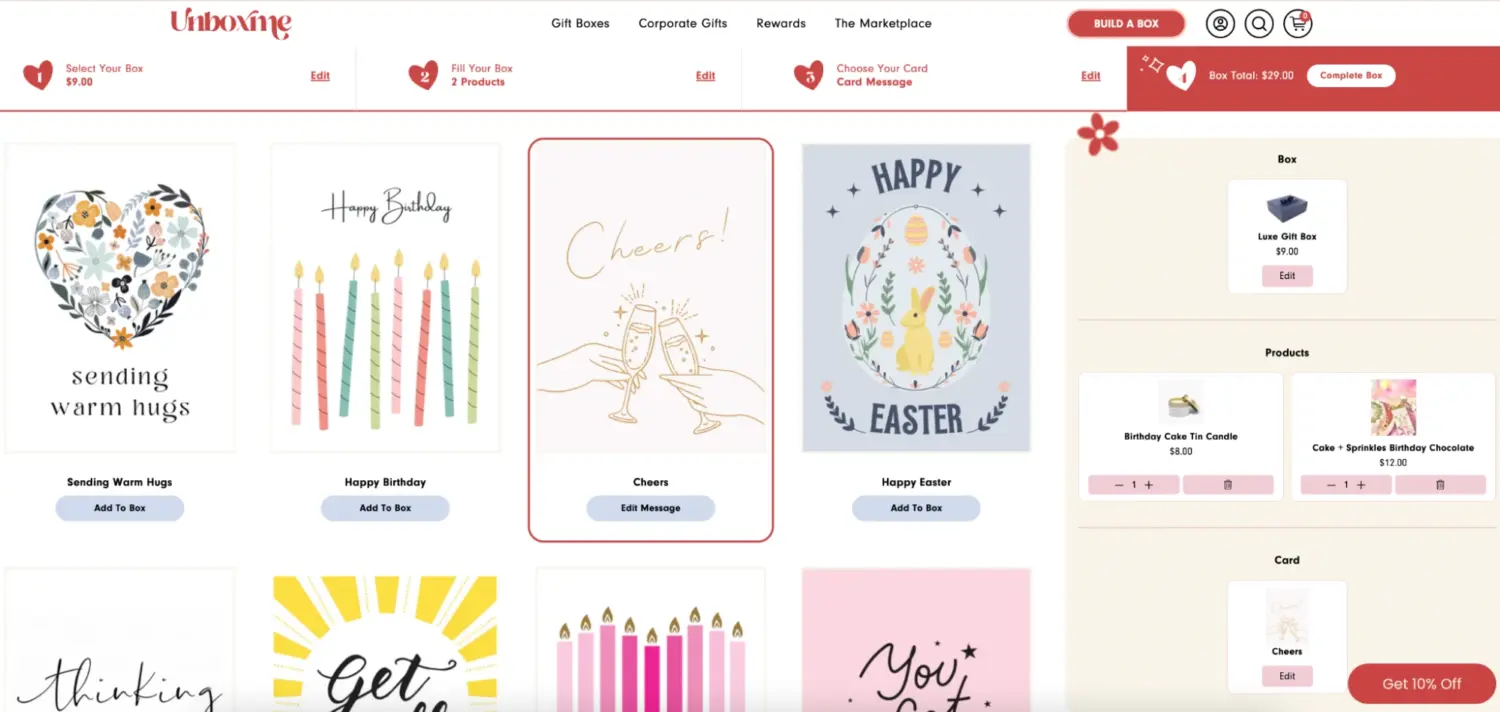
Unboxme feels very different from typical bundles. You are not just picking products, you are building a gift from scratch. It starts with choosing a box, then adding items like candles, snacks or tea, and ends with picking a card and writing a message. Everything is designed around common gifting moments, so it feels easy to put something together without overthinking.
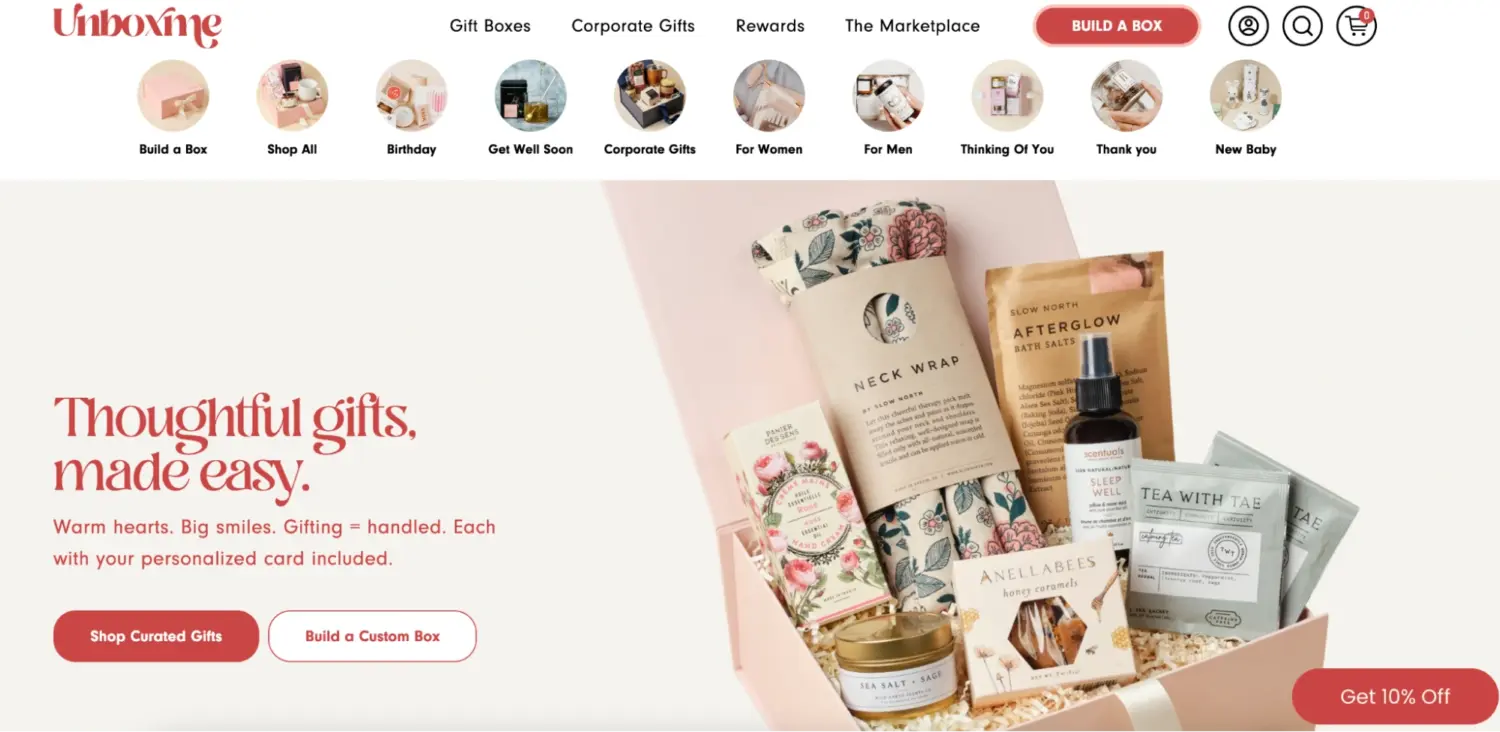
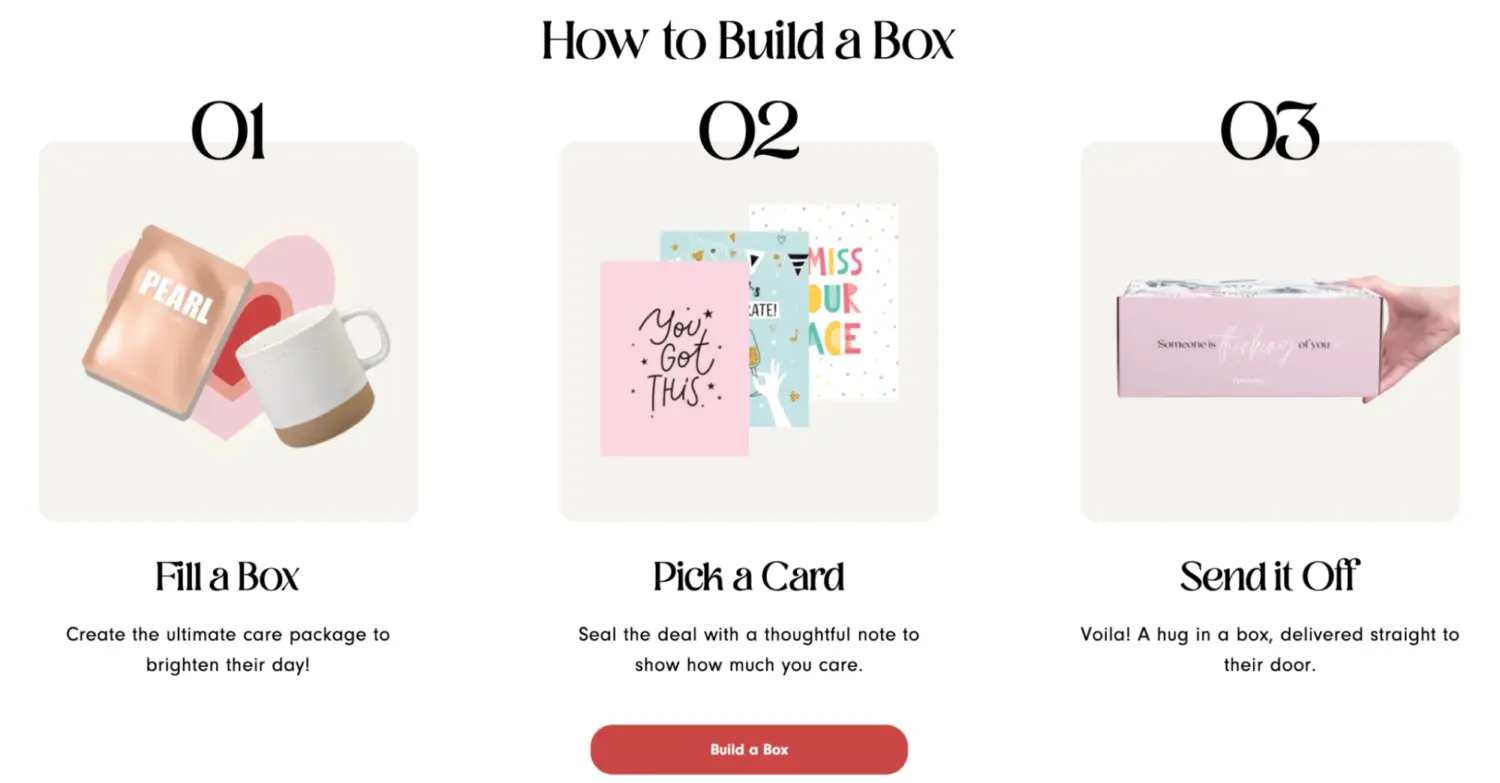
The flow is super guided. You go step by step, almost like a checklist. Fill the box, choose a card, and you are done. On the right side, you always see what is inside your box and the total price. There is no pressure to add more items for a better deal, which makes the whole experience feel calm and intentional.
What makes this work is the shift in mindset. You are not trying to optimize value or get a discount, but to create something thoughtful.
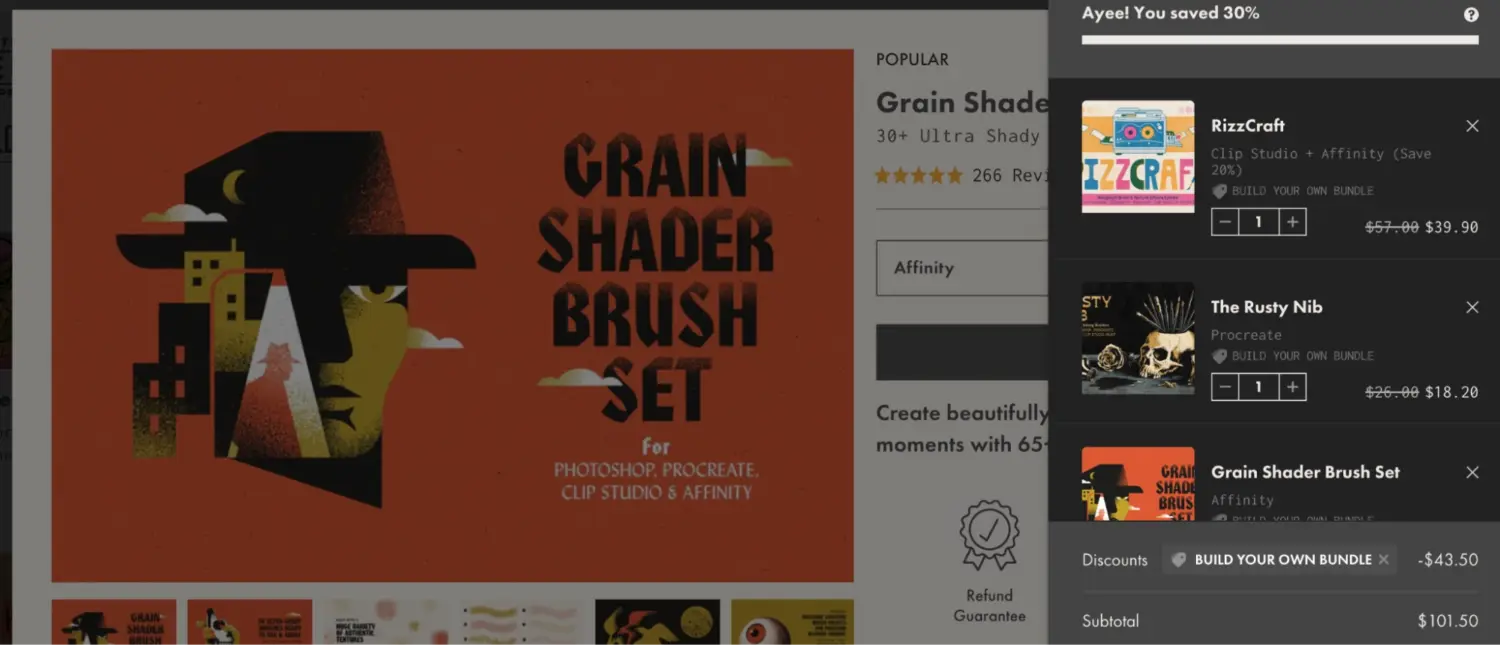
True Grit Texture Supply bundles directly within the shopping flow. The rule is clear: add 4 or more digital products and get 30% off. It applies across their full library of brushes, textures, and design tools, so customers can freely pick anything they need.
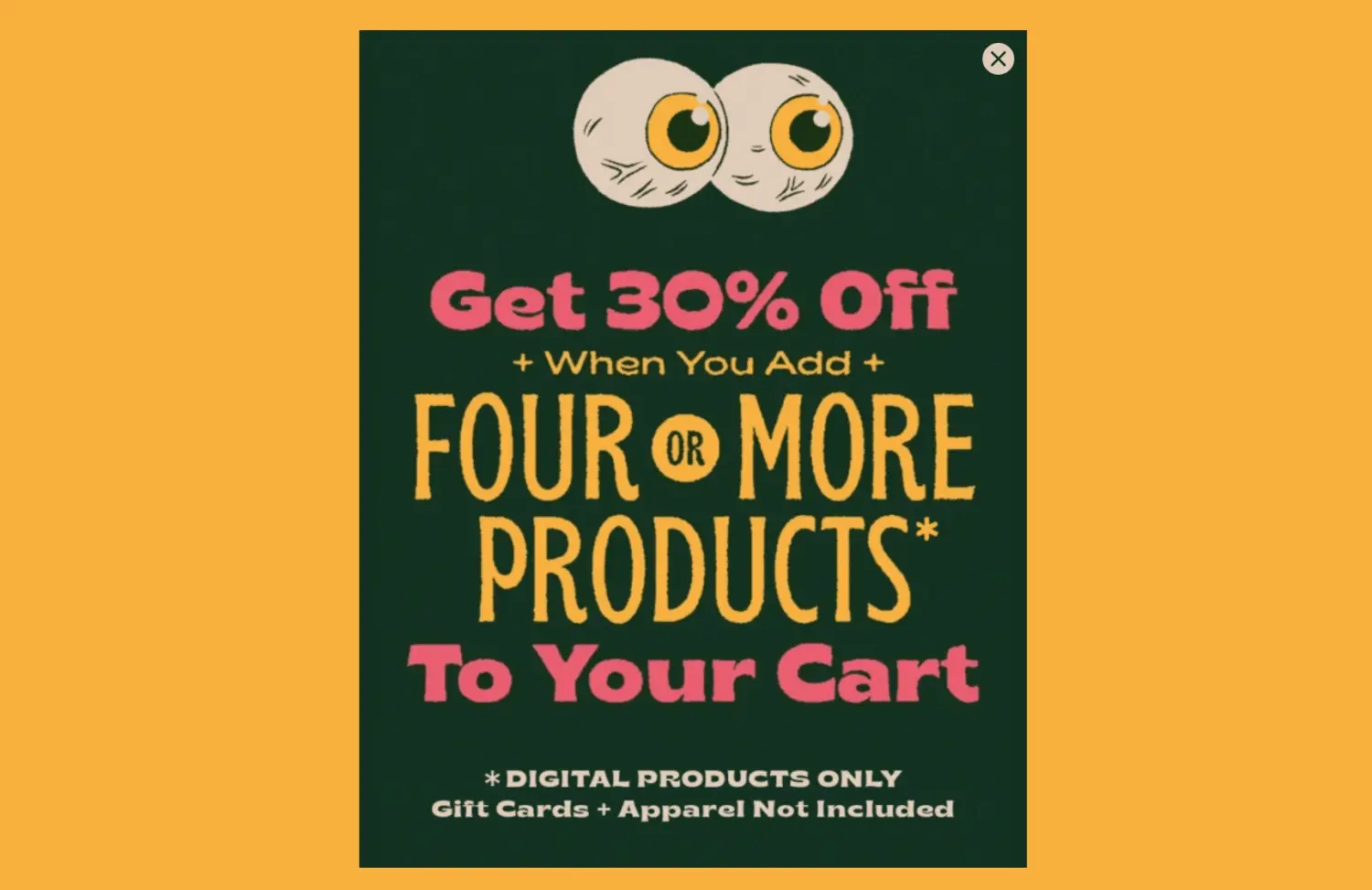
The experience stays very close to a normal product page. You browse, add items, and the cart updates on the side. As more products are added, the discount appears automatically, and the total price drops in real time. There is no separate bundle builder or extra step.
The mix-and-match flexibility is a big part of it. Customers can combine assets across tools such as Photoshop, Procreate, or Affinity without restrictions. This makes the bundle feel like assembling a personal toolkit based on actual workflow needs.
What makes this work is its seamless nature. The bundle does not interrupt the buying process. Customers explore products as usual, and the discount scales with their behavior. This keeps the experience fast, flexible, and easy to commit to.
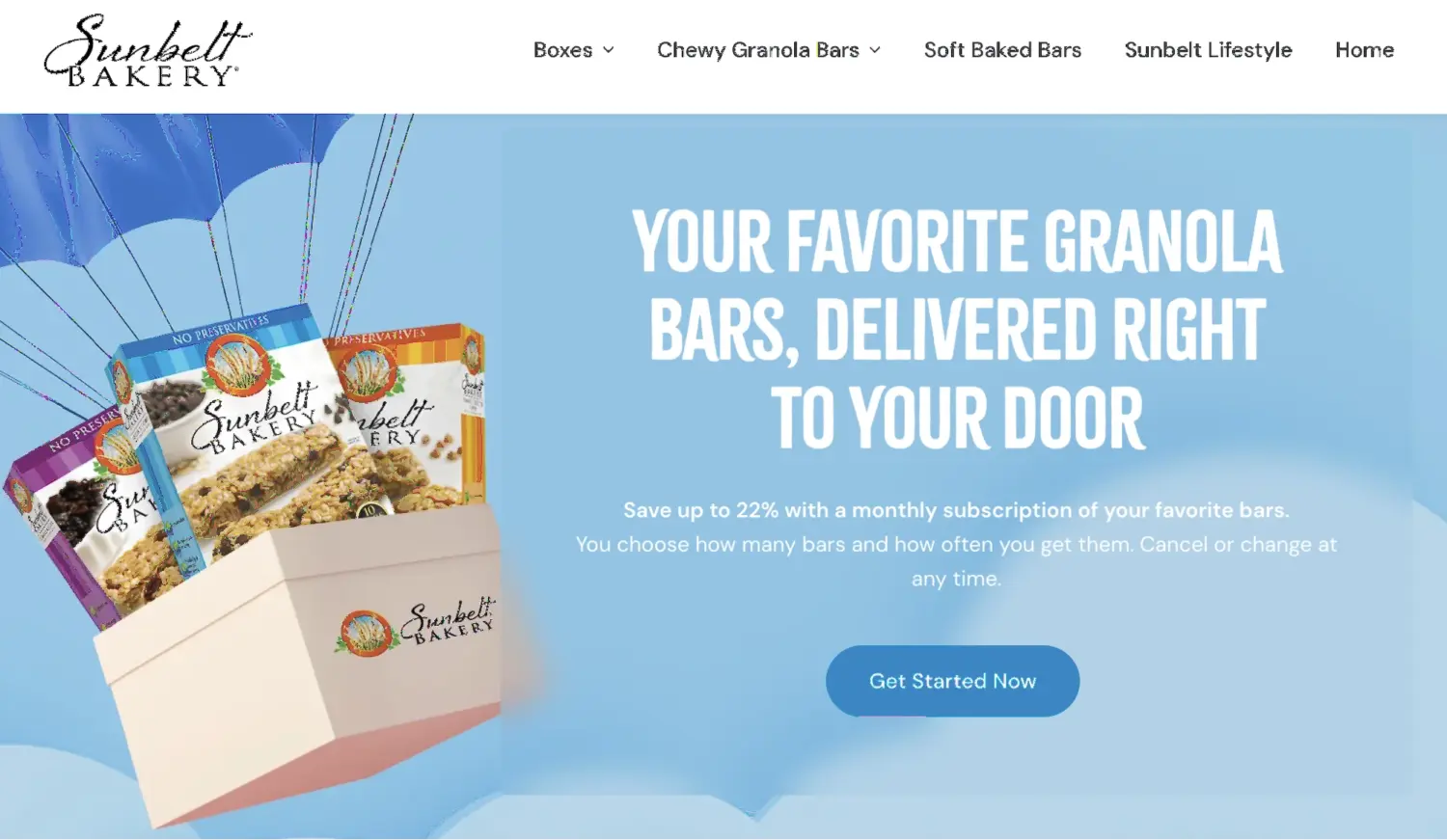
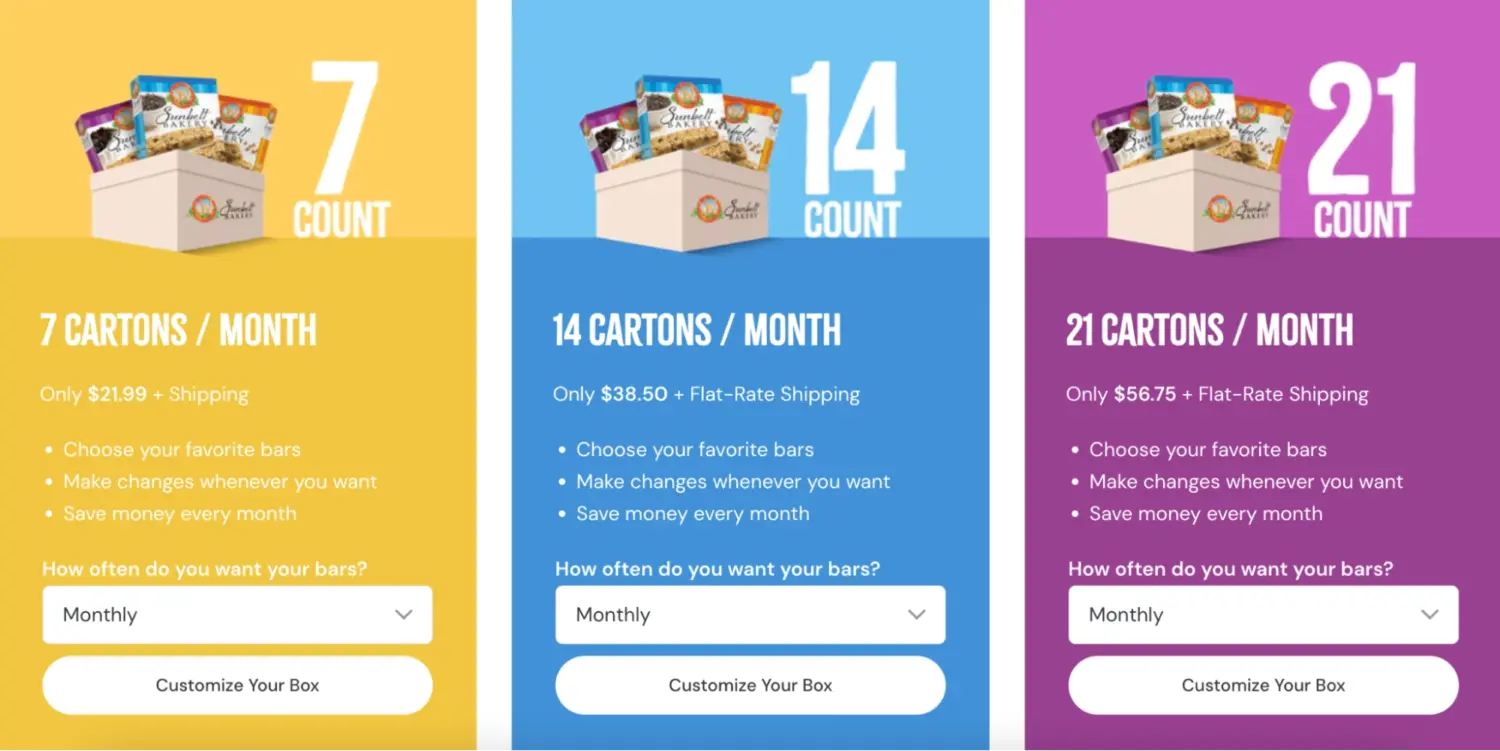
Sunbelt Bakery flips the usual bundle logic. Instead of starting with products, it starts with commitment. You pick how many cartons you want every month: 7, 14, or 21. That choice already locks in your price and savings, so the decision happens before you even see the flavors.
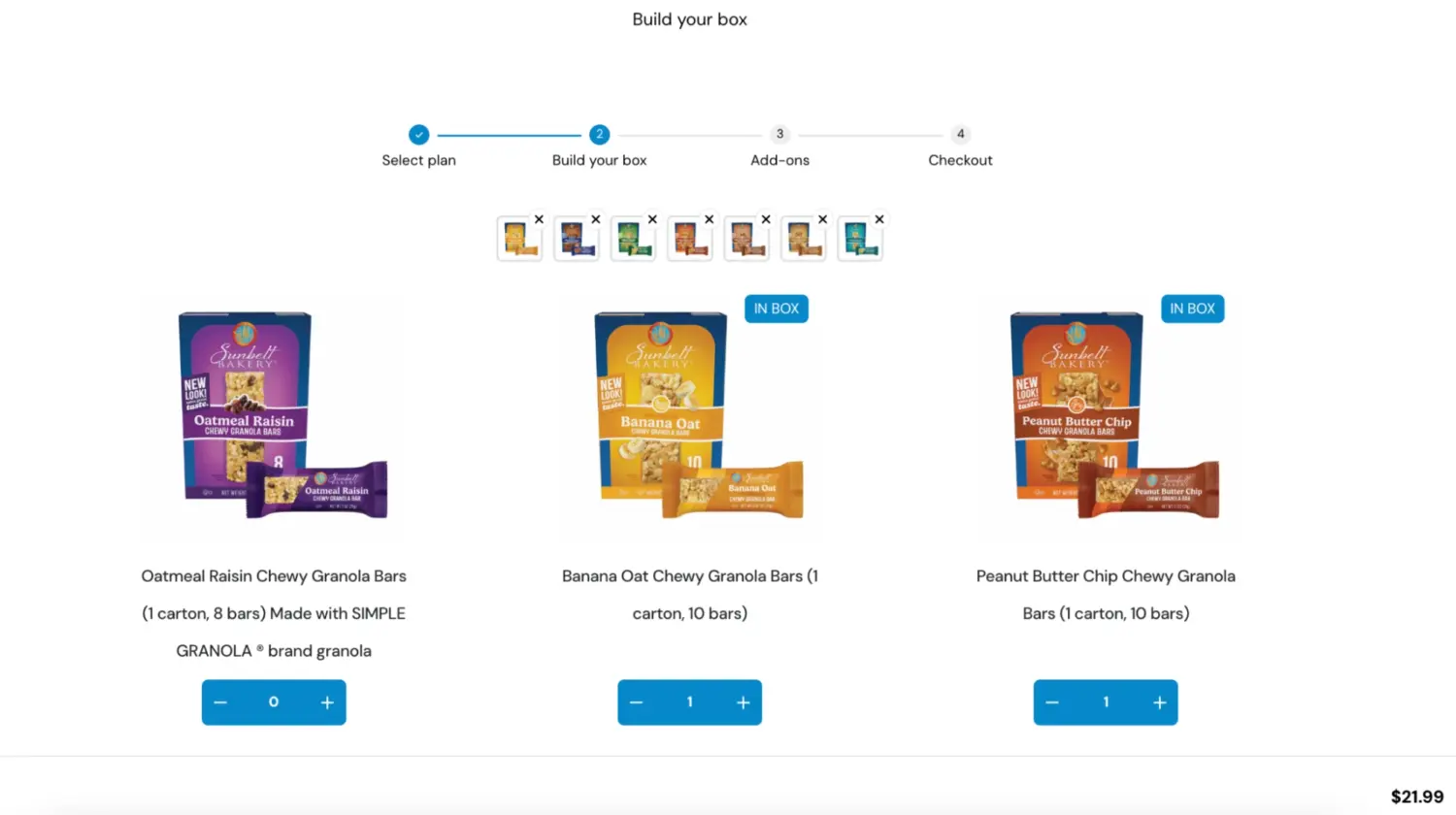
Then comes the easy part. You fill the box with whatever bars you like. The interface is clean, almost mechanical. Add, remove, adjust. There is no pressure, no upsell tricks, just a clear view of what is going into your monthly stash.
What stands out is how predictable everything feels. You are not exploring or discovering. You are setting up your snack supply and moving on. The step-by-step flow keeps it quick, and once it is done, you do not really need to think about it again.
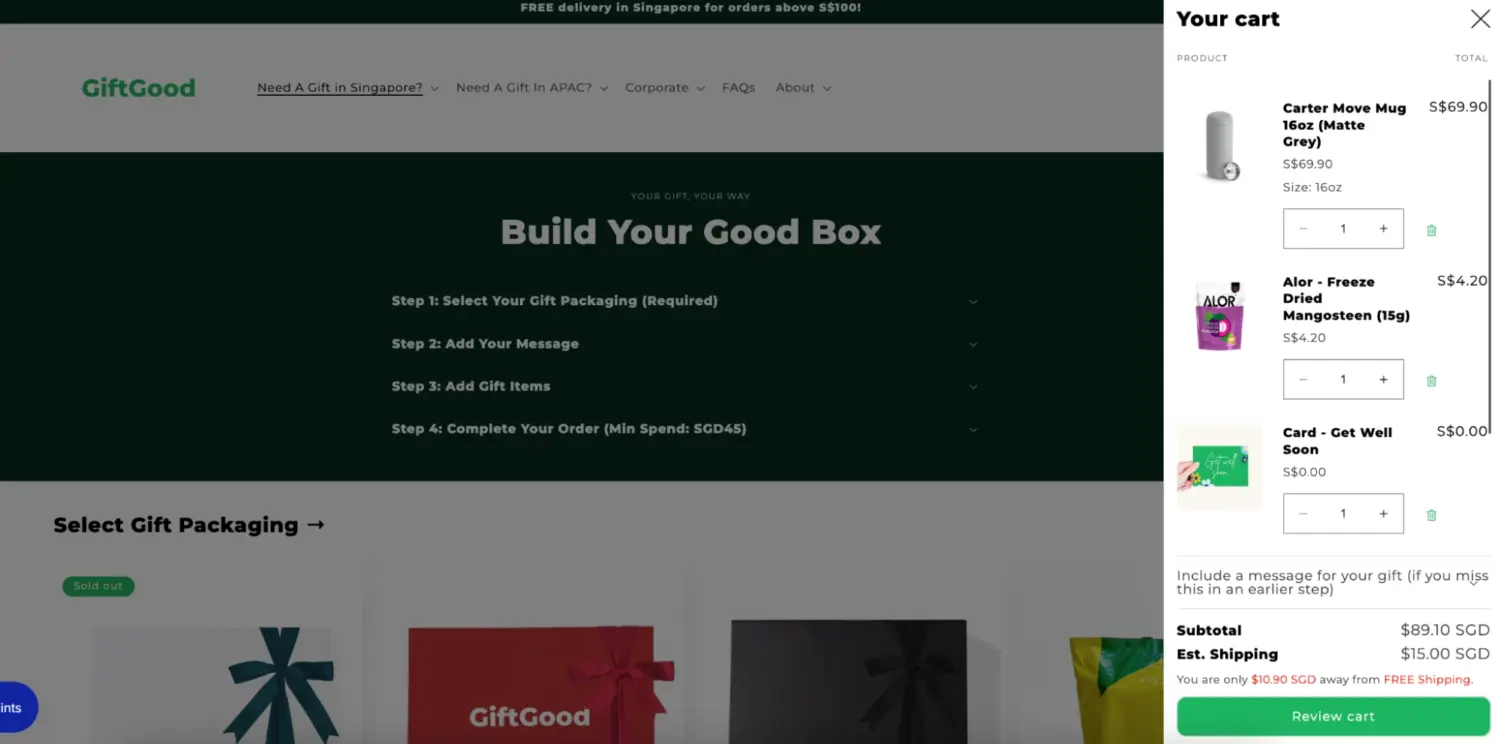
GiftGood sells curated gift items like snacks, self-care products, drinkware, and lifestyle goods, all designed for gifting occasions. Instead of fixed sets, they let you build a custom gift box filled with items your recipient will actually like.
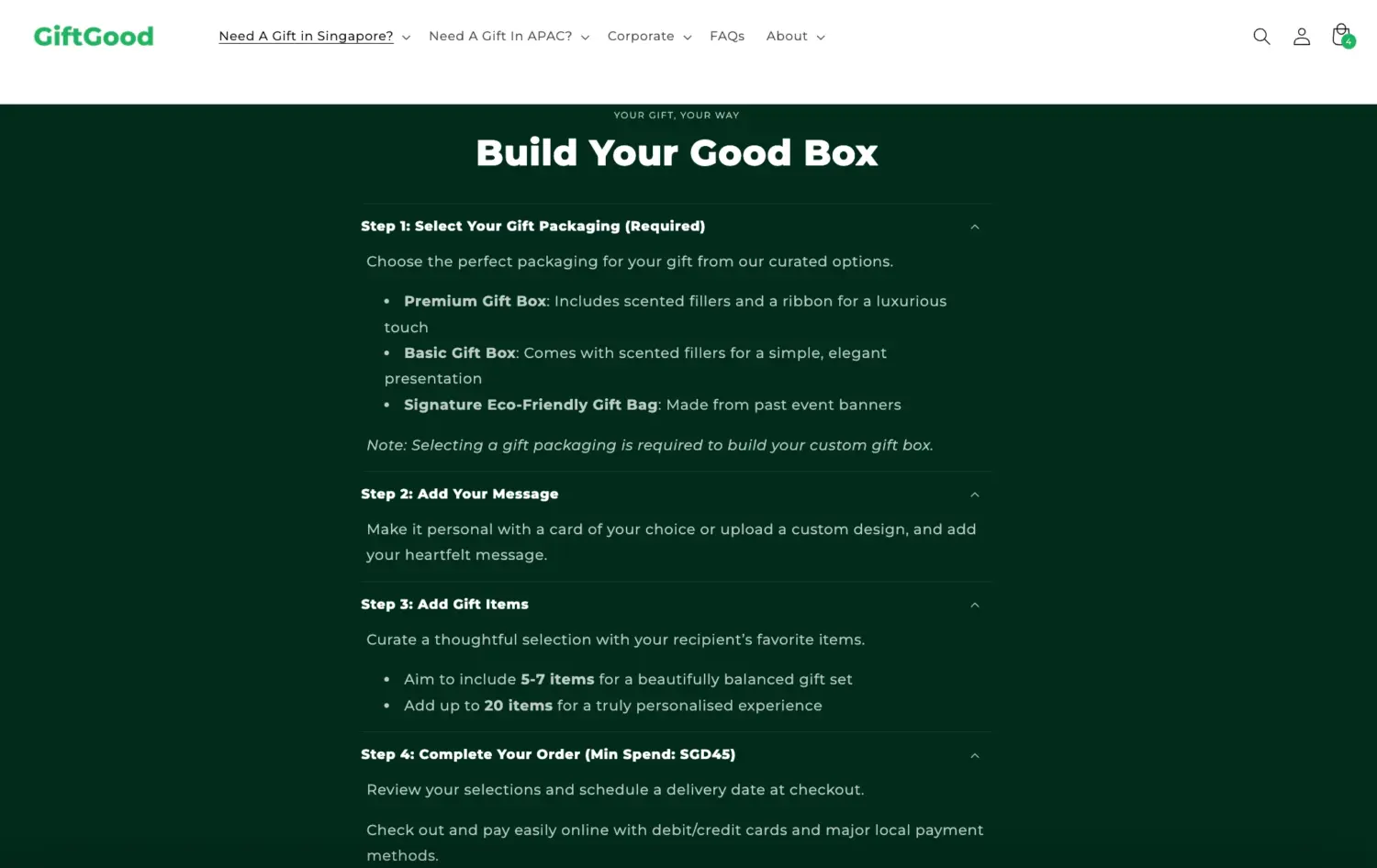
Their bundle builder is very step-based. You start by choosing the packaging and card, then add products, and finally review everything before checkout. There is also a minimum spend and a soft guideline on how many items to include, so the box feels complete by the end.
What makes it effective is how guided it feels. You are not left guessing what to do next. Each step answers a small question for you, so by the end, you have a polished gift without overthinking.
Before you build any custom bundle, start with what your customers are already doing. Your Shopify analytics can show which products are frequently purchased together, which categories tend to drive larger carts, and where customers naturally build their own routines or product combinations. That gives you a much stronger starting point than guessing which items should go into a bundle.
Look for patterns such as:
This step matters because the best custom bundles usually do not invent new demand. They package existing buying behavior into a cleaner, more intentional shopping experience. If customers are already pairing certain items on their own, your job is to make that behavior easier, faster, and more valuable.
A custom bundle works best when the pricing logic is easy to understand at a glance. If shoppers need to stop and calculate the value themselves, the bundle loses momentum. The goal is to make the offer feel obvious, whether you are using a fixed bundle price, a percentage discount, or tiered pricing that rewards larger selections.
A few practical pricing models work especially well:
Whatever model you choose, keep the rule visible throughout the selection flow. Show shoppers what they need to do, how close they are to unlocking the offer, and what they gain by adding one more item. Clear pricing rules reduce friction and make the bundle feel easier to complete.
For simple bundles, native Shopify may be enough. But once you want a true mix-and-match experience with flexible steps, tiered discounts, variant selection, or advanced targeting, the native setup starts to feel limited. That is where a dedicated bundle app becomes much more useful, because it provides the structure to build a custom storefront experience rather than forcing shoppers to use a workaround.
The BOGOS app is especially useful when you want more control over how the bundle is built and promoted. Instead of offering a static discount, you can create a guided bundle flow that feels clear for the customer and flexible for your team.
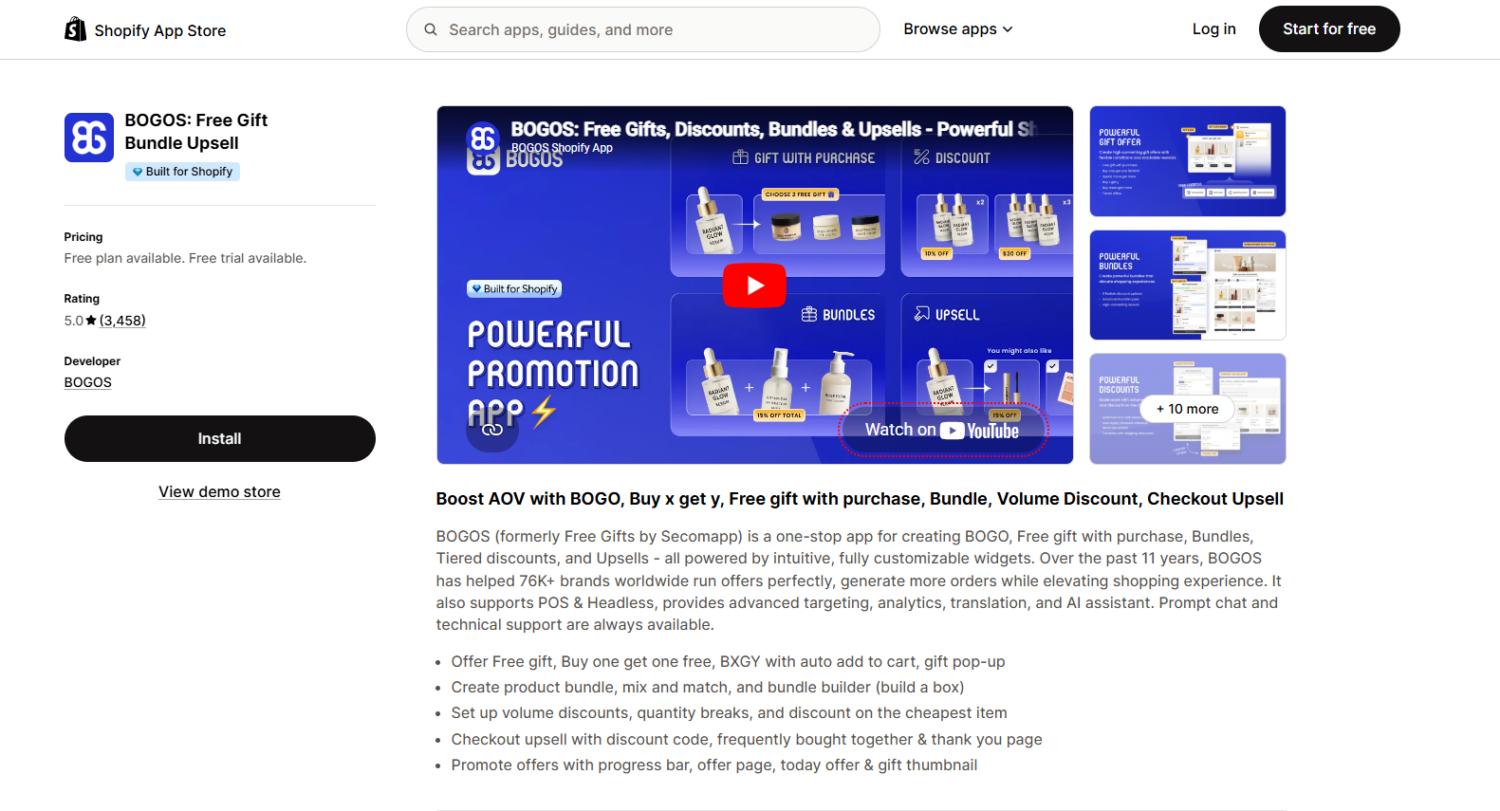
With BOGOS, you can build better custom bundles through features like:
It also goes beyond standard custom bundles. You can use automated free gifts with pop-up selection screens, mix-and-match packs, frequently bought together widgets, native checkout, and post-purchase upsells, and smart discount logic, such as making the cheapest item free. That makes it easier to run multiple bundle strategies simultaneously without turning the storefront into a confusing mess.
In conclusion, custom bundles work because they shift the experience from selling to choosing. That is what makes them feel more engaging for customers and more profitable for brands. Add clear visuals, strong bundle logic, and BOGOS behind the scenes, and you are in a much better position to make the campaign succeed. Good luck!
No. Native bundle support works better for simpler setups, while more advanced experiences usually require additional validation and a dedicated storefront UI.
No. Shopify says bundles can’t be sold with selling plans, so merchants should check this early if subscription revenue is part of the campaign.
Yes. Shopify recommends using order or POS data to find products customers already buy together, because that gives you a stronger starting point than guessing.
Yes. Custom bundles need clear UI components to help shoppers manage selections smoothly, so unclear layouts can create friction before checkout.

Australia is one of the first markets many Shopify stores expand into. It is large, English-speaking, and home to...
Canada is a promising international market for Shopify merchants, especially those shipping from the US. But reaching Canadian shoppers...
![[2026] Shopify Testimonials: 3 Ways To Add Them + Best Apps](https://bogos.io/wp-content/uploads/2026/10/Shopify-Testimonials-400x225.jpg)
Shopify testimonials help new visitors trust a store they have never bought from. Most guides stop at “install an...