

Charlie Ngo
•
Last updated: 12 August, 2026
Shopify Exit Intent Popup: Setup, Apps & Best Practices (2026)
A Shopify exit intent popup is a message that appears the moment a visitor moves to leave your store,...
How to Set Up Shopify Buy 2 Get 1 Free? (Best apps)

Digital Marketing Specialist
Summarize this post with AI
Shopify buy 2 get 1 free promotions succeed when the rules are instantly clear and claiming the reward feels effortless. While Shopify’s native tools handle the basic discount logic, they often lack the visual polish and auto-add features that today’s shoppers expect.
In this guide, we will break down the most effective promo structures, walk through the native setup process, and explore the apps that deliver a smoother gifting experience. Let’s dive in.
A Shopify buy 2 get 1 free promotion is simple on the surface: the customer adds items to the cart, and the third item becomes free of charge once they hit the rule. The “free” item can be the same product they’re buying, or a different free gift you set upfront.
What matters is the qualification logic. Shopify (or a promo app) checks two things:
Below are the most common scenarios merchants run with Shopify buy 2 get 1 free. Each one is a little different, so pick the structure that matches how people shop on your store.
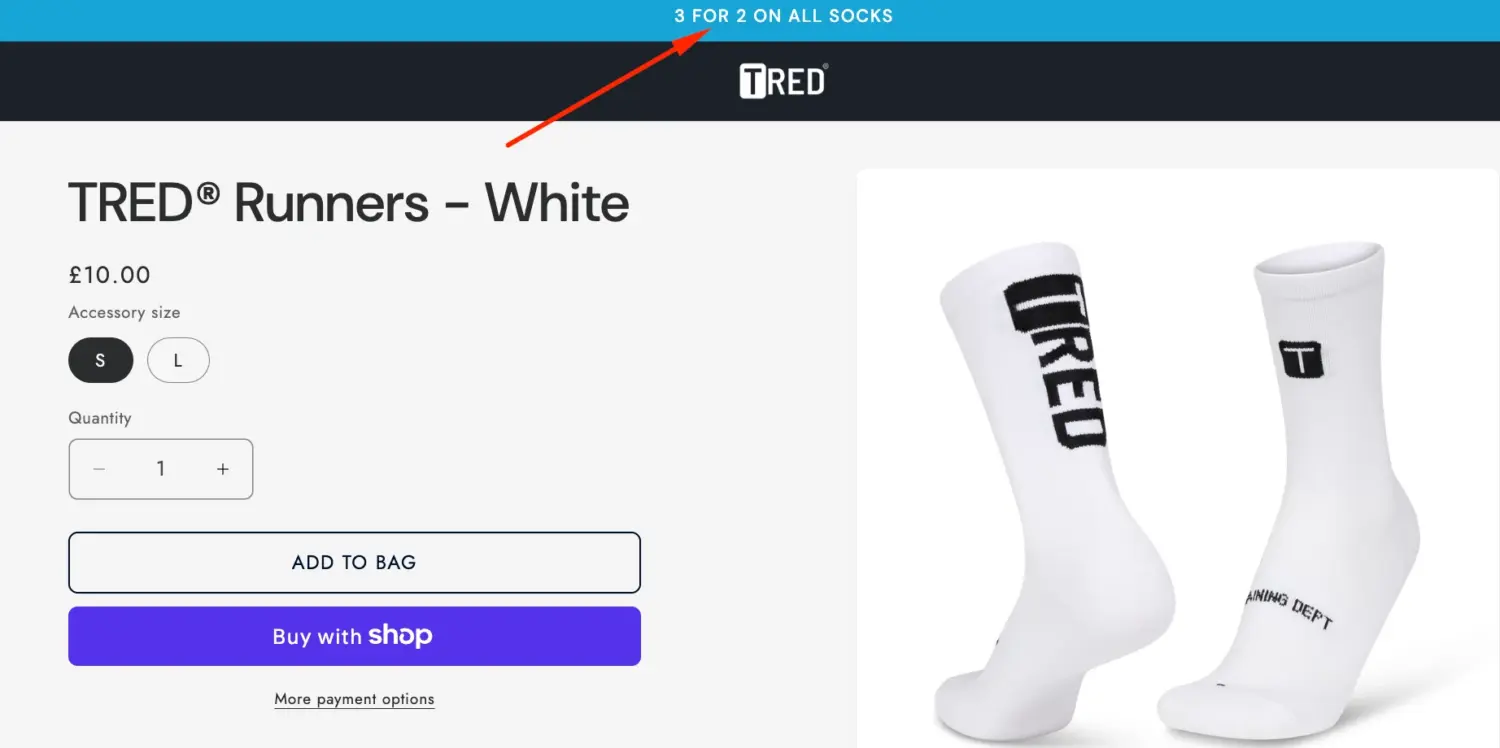
This is the go-to for “buy-in-bulk” products where customers already expect multi-buys.
Example: buy 2 pairs of socks, get 1 pair free.
What this usually looks like in real stores:
Variant detail (important on Shopify):
This offer works because it feels like a no-brainer deal. Shoppers don’t need to think it through. They just add one more to seal the deal.
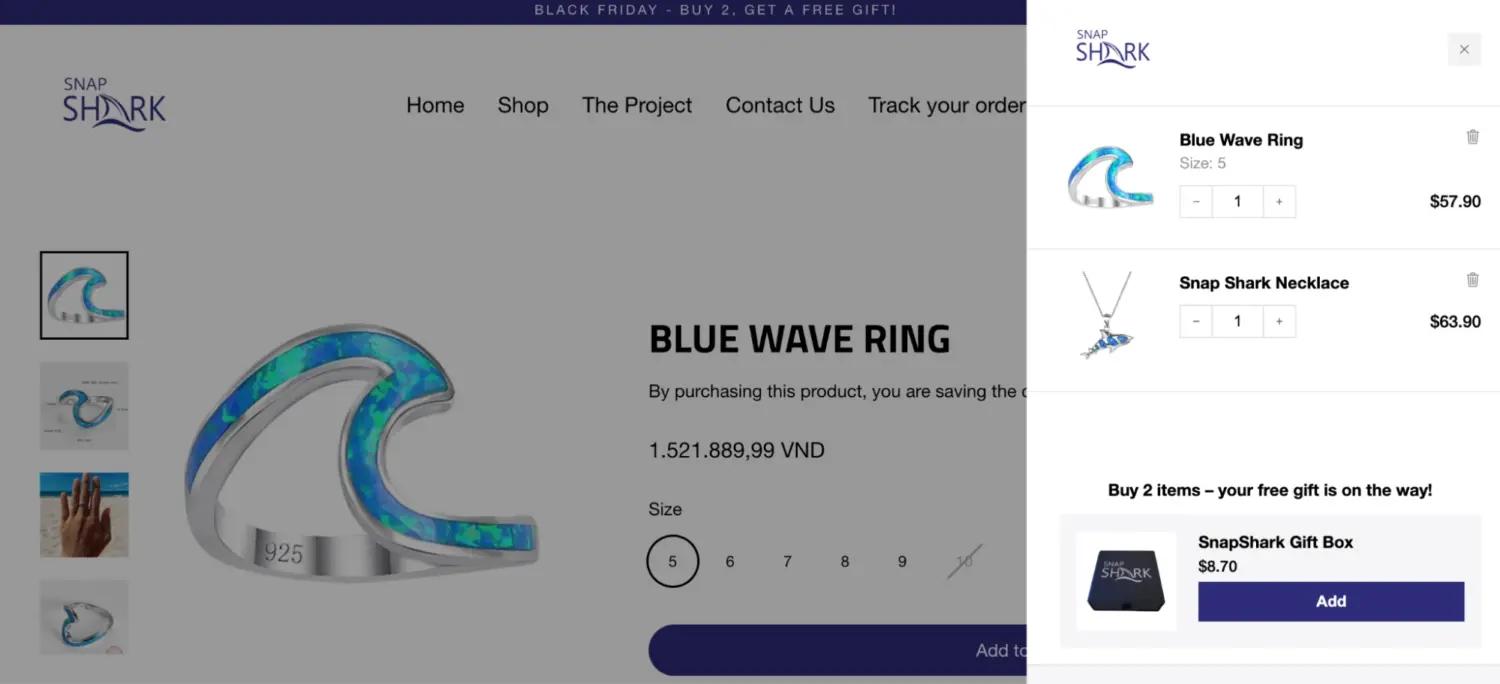
Here, the customer buys any 2 qualifying items, and you give them a freebie that can be totally different. Example: buy any 2 skincare items, get a free travel-size cleanser.
Common ways merchants set the “buy 2” condition:
Two common gift approaches:
This format is great when you want to raise the perceived value without discounting your hero products.
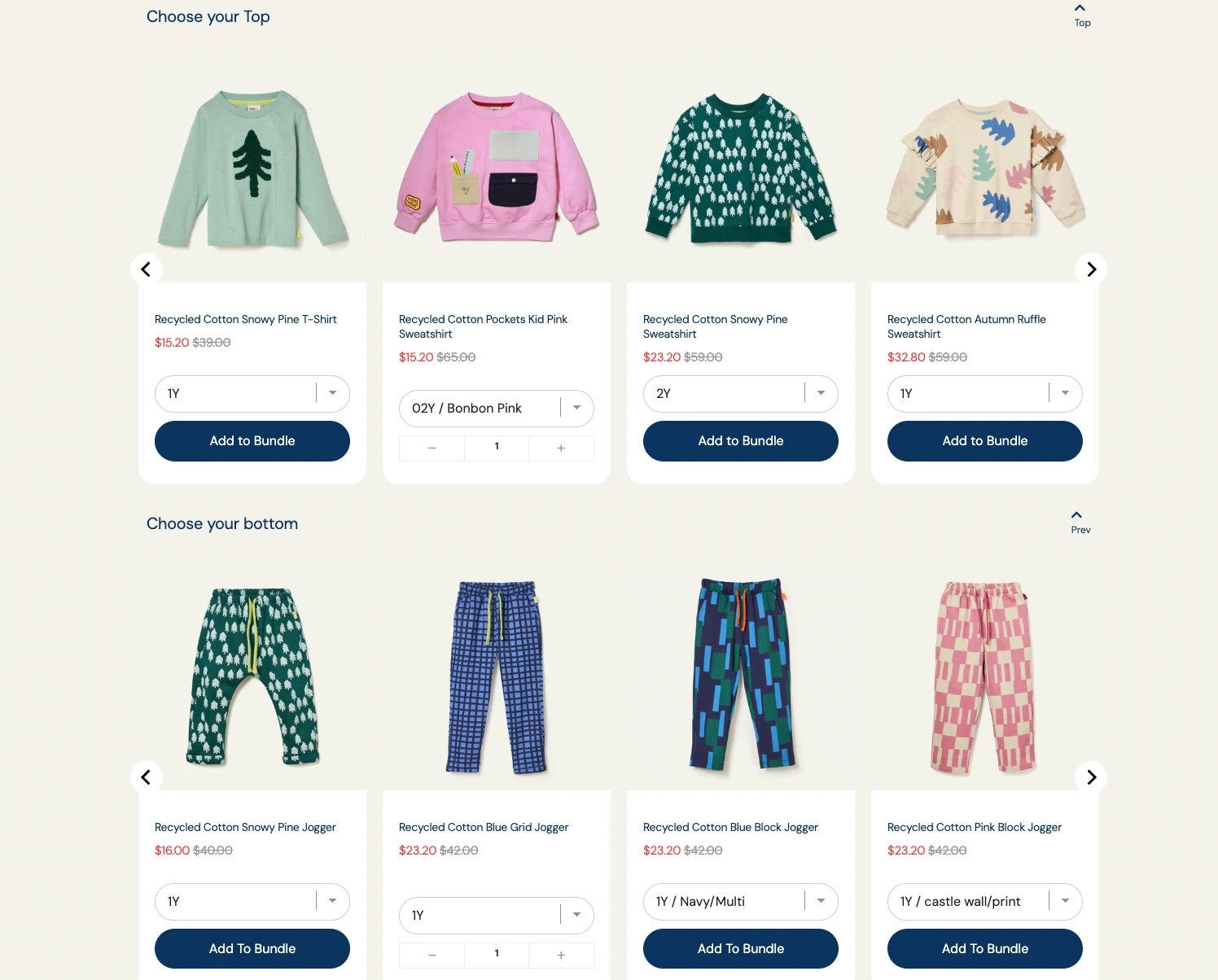
This requires the customer to add 1 item from Collection A and 1 item from Collection B. Once both are in the cart, they unlock 1 free gift.
Example: buy 1 pair of pants from the Pants collection plus 1 top from the Tops collection, get free socks.
Merchants use this to push complete-set shopping and cross-category add-ons without sounding salesy. It feels like a curated offer because the rule is clear and the reward is immediate. This works well for combos people already buy together, like bottoms plus tops, cleanser plus moisturizer, or shampoo plus conditioner.
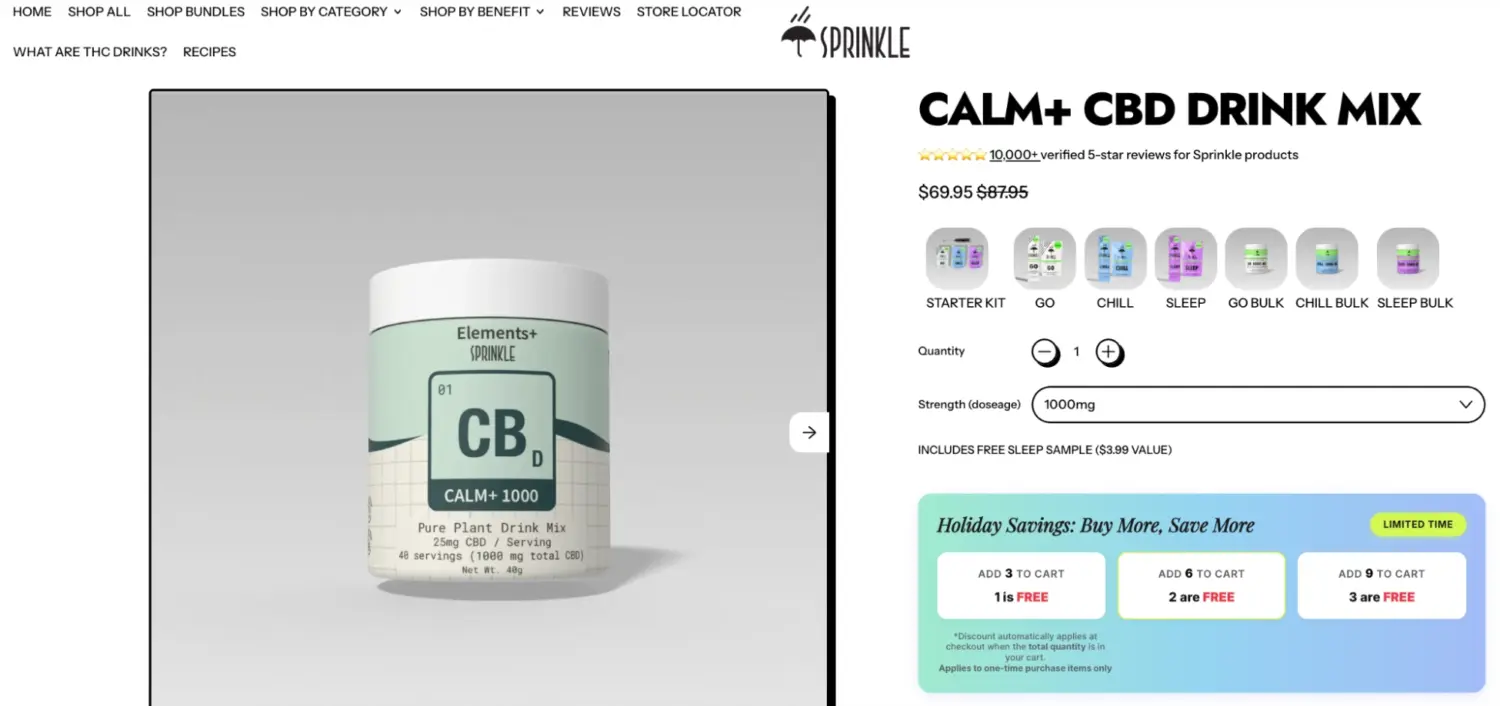
This is the “scales with quantity” version. The rule repeats in a steady pattern. Example:
In plain terms, every set of 3 items includes 1 free item. Customers can keep adding and the promo keeps stacking up in a predictable way. This works best when customers often buy in larger quantities, like snacks, supplements, or family packs.
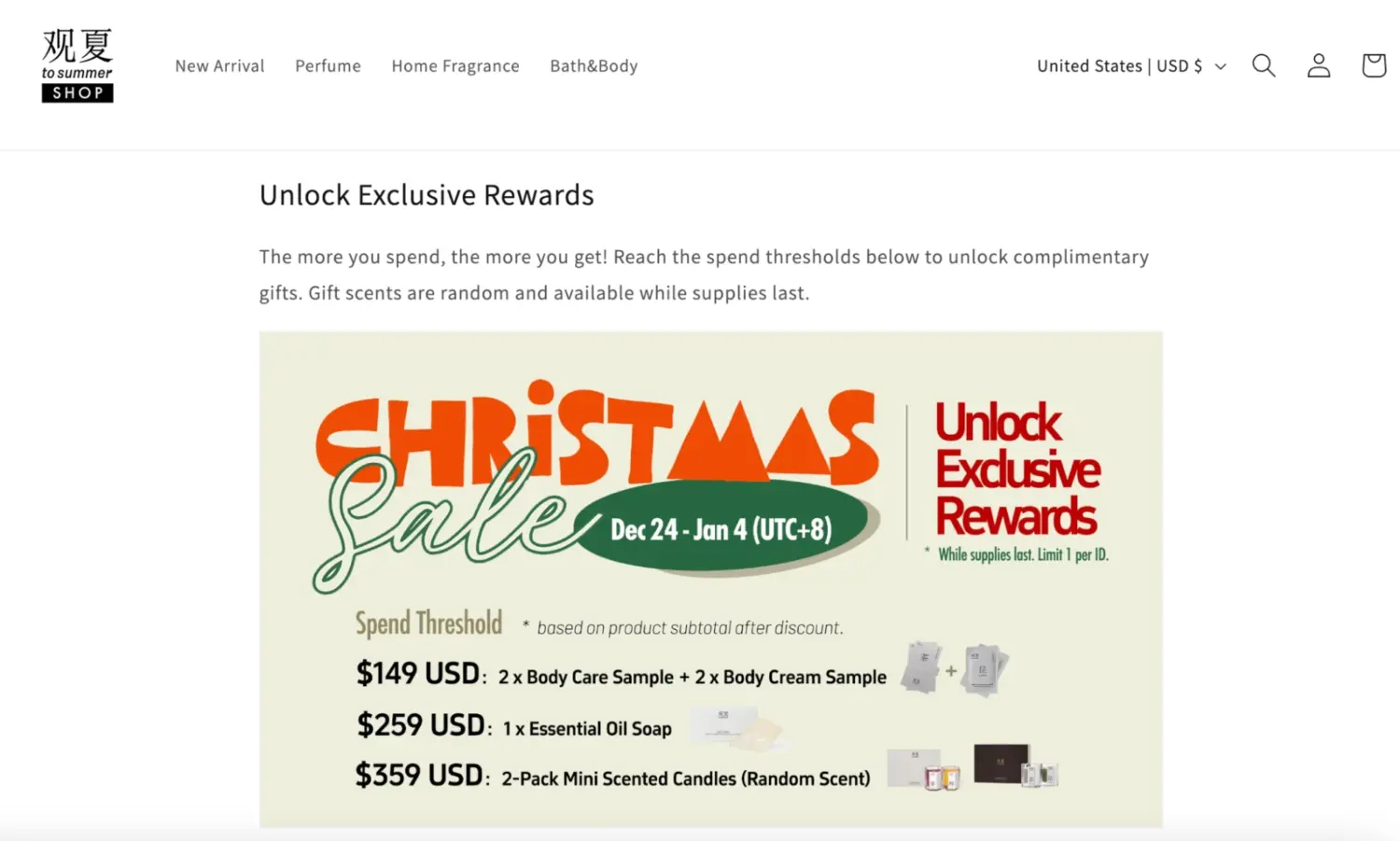
Tiered doesn’t repeat the same ratio. Instead, the reward steps up when the customer reaches the next purchase threshold. Example:
This is useful when you want to push cart size beyond the typical “just add one more” behavior. It creates a clear reason to go from 2 items to 3 items in one shot.
A quick way to explain tiered vs multiplied:
Shopify’s native Buy X get Y discount is the fastest way to run a Shopify buy 2 get 1 free deal without installing an app. It’s clean, it’s reliable, and it lives inside the Shopify admin. However, there are also limitations:
Here’s how to set one up (Buy X Get Y):
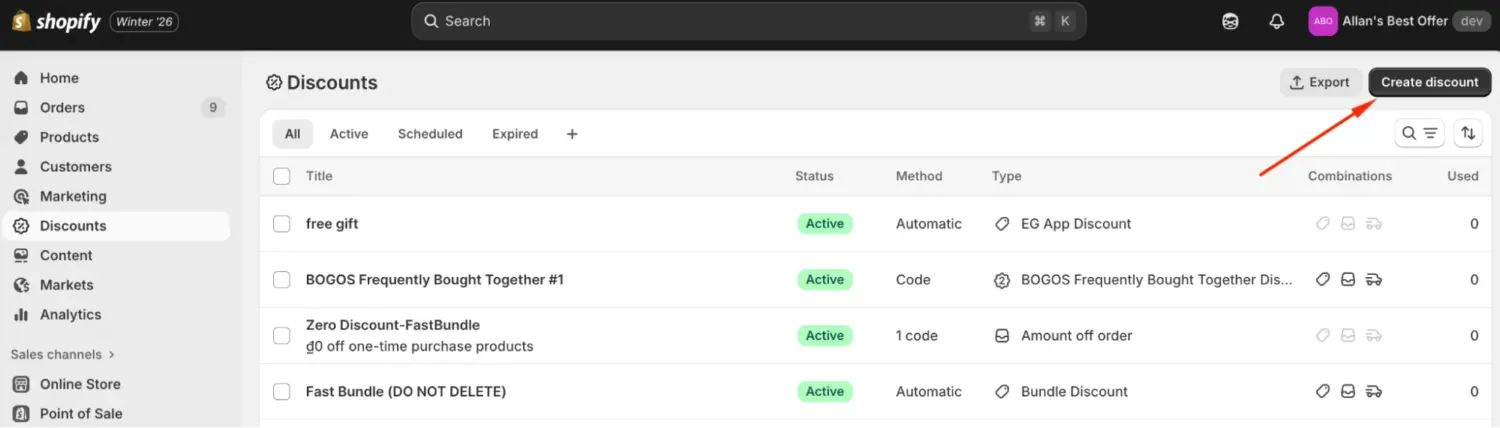
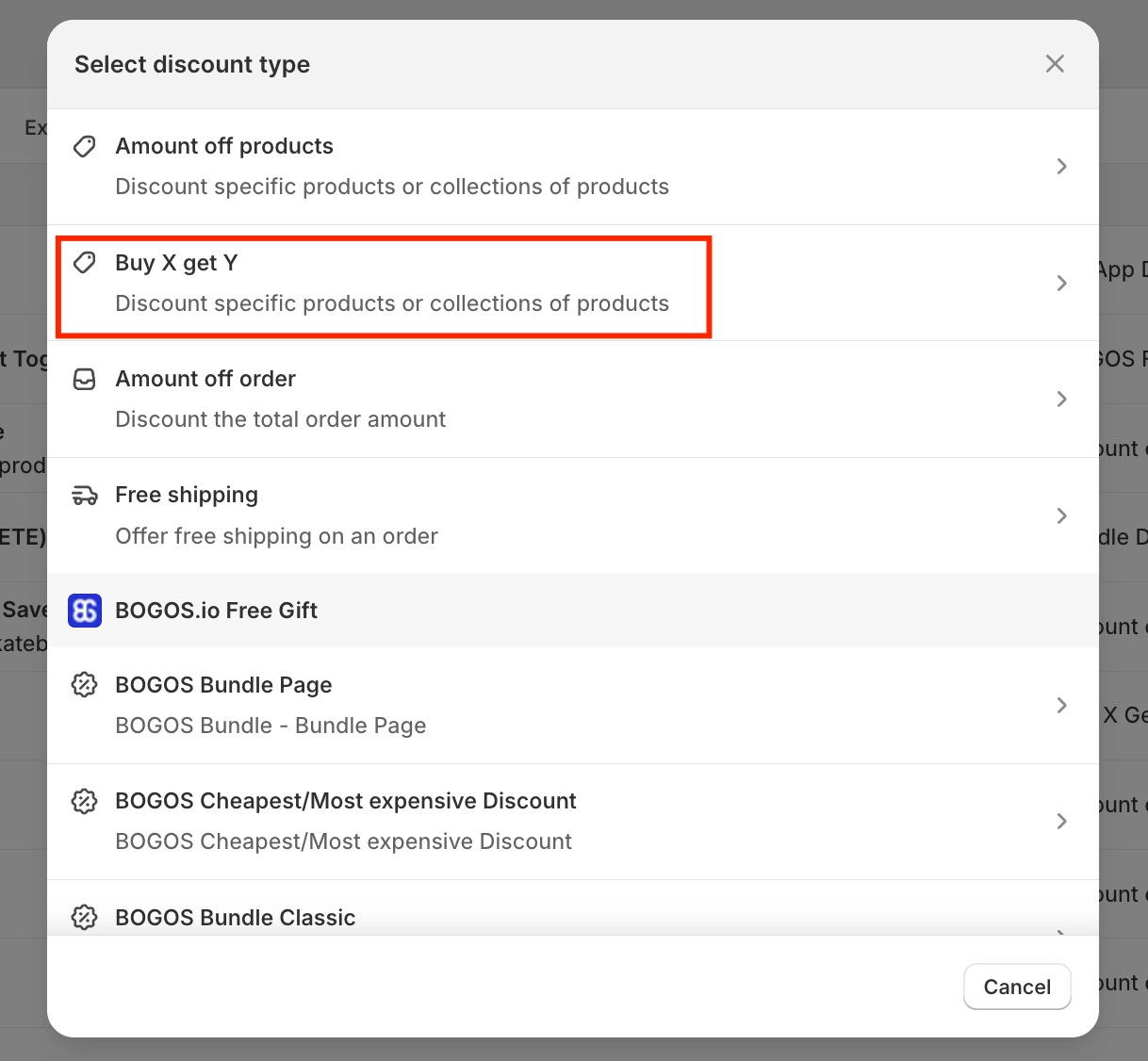
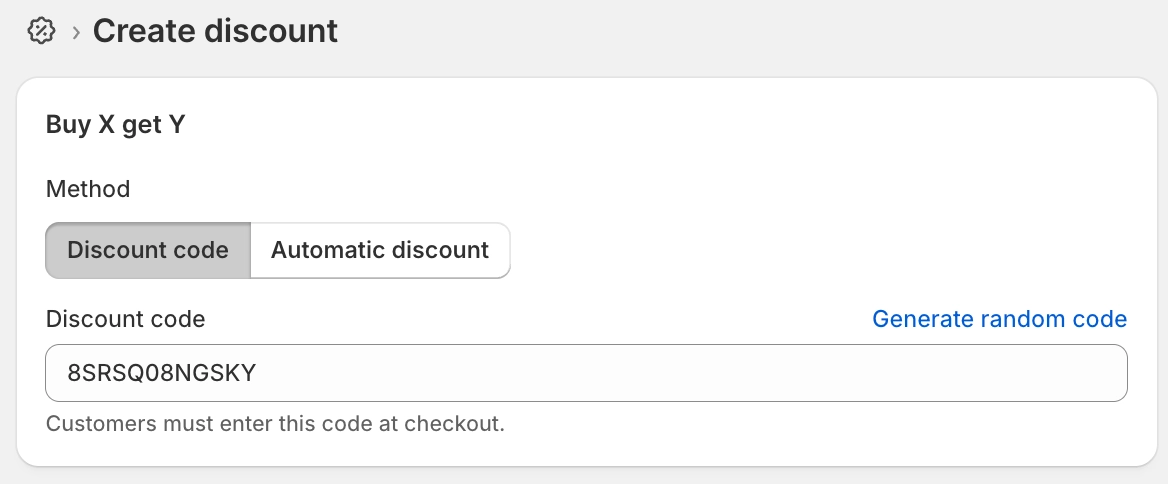
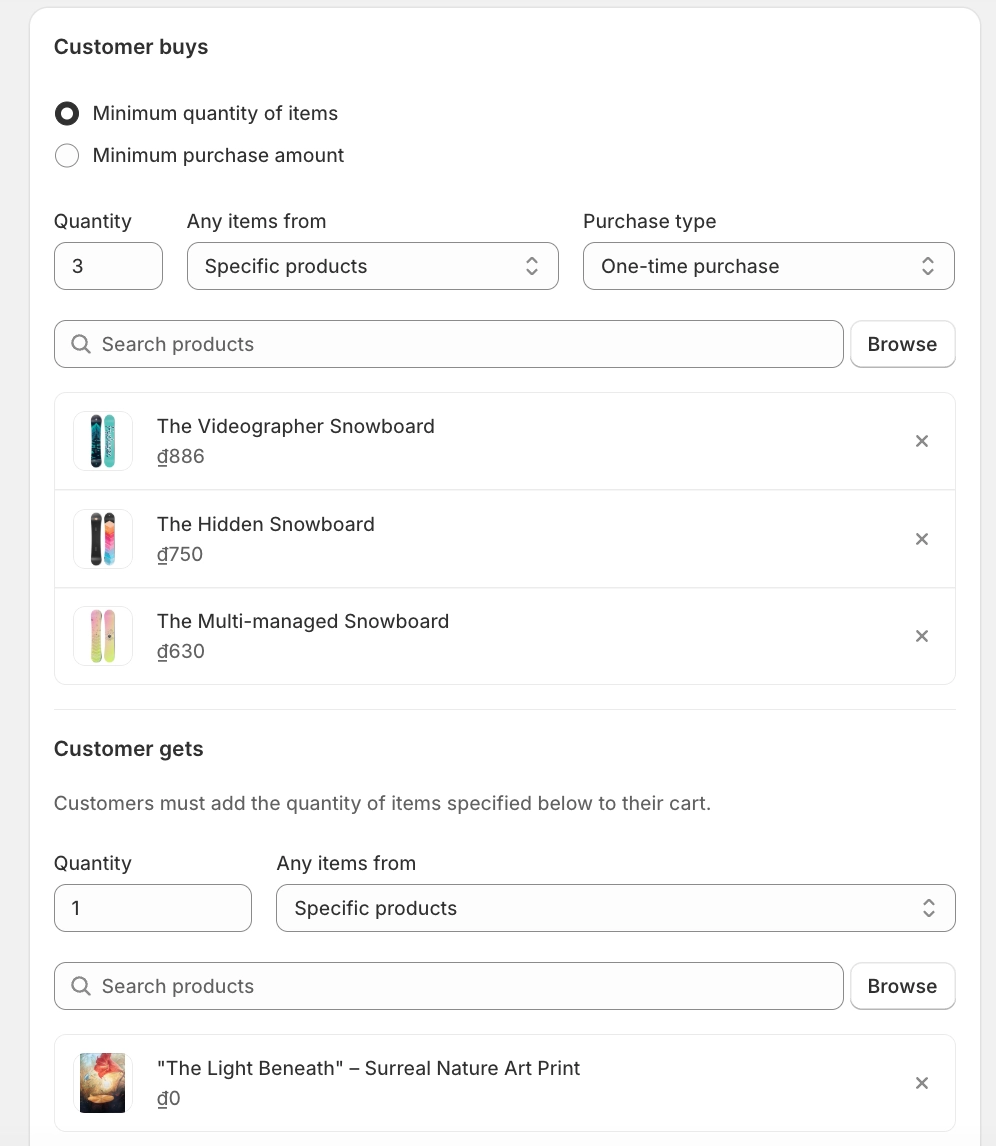
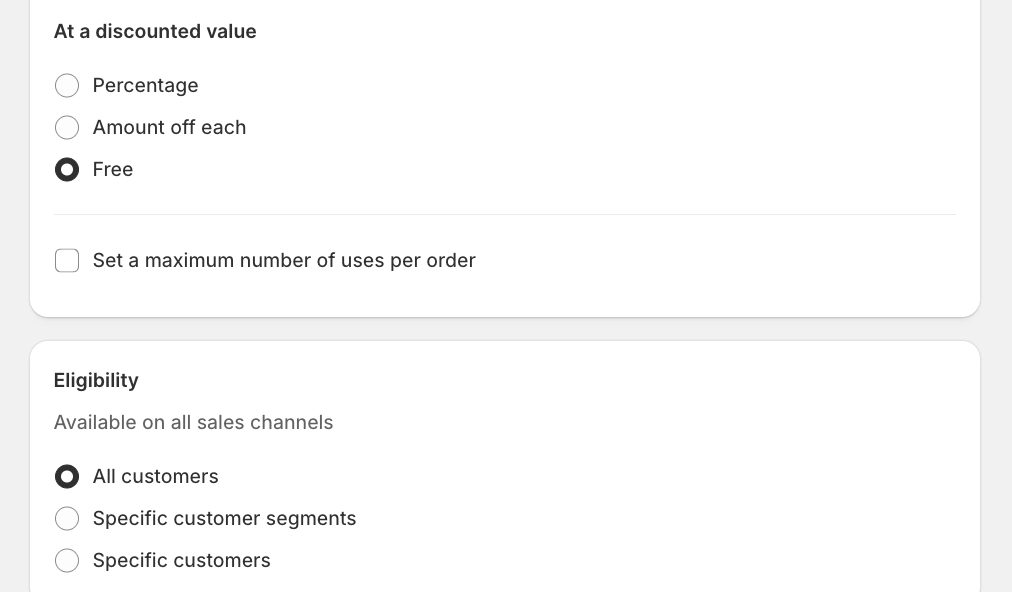
Because Shopify’s native BXGY has two significant gaps (the gift won’t auto-add, and the on-site presentation is barebones), we usually recommend a buy 2 get 1 free Shopify app, so you can auto-add the gift, display clear cart messaging, and manage more complex rules without messy workarounds.
Below is an overview table for quickly comparing the top options.
| BOGOS Free Gift, Bundles & Upsells | Qikify | BOGO+ | |
|---|---|---|---|
| Rating & Reviews | 4.9 ⭐- 3,000 + reviews | 4.8 ⭐- 600 + reviews | 4.6 ⭐- 160 + reviews |
| Pricing | – Free – Basic: 29.99$ – Professional: 49.99$ – Unlimited: 69.99$ – Plus: 99.99$ | – Free – Basic: 9.99$ – Grow: 24.99$ – Advanced: 49.99$ | – Free – Basic: 17.99$ – Shopify: 27.99$ – Advanced: 47.99$ |
| Free Plan Available | ✅ | ✅ | ✅ |
| Built for Shopify | ✅ | ✅ | ✅ |
| Auto Add Gift To Cart | ✅ | ✅ | ✅ |
| Gift Selection Popup | ✅ | ✅ | ✅ |
| Multiplied B2G1 | ✅ | ✅ | ✅ |
| Tiered Gift | ✅ | ❌ | ❌ |
| Customer Segmentations | Advanced | Basic | Advanced |
| Analytics | Advanced | Basic | Basic |
| Work with POS | ✅ | ❌ | ✅ |
| Work with Headless | ✅ | ❌ | ❌ |
| Multi-Language Support | Advanced | Basic | Advanced |
| Best For | High-volume merchants & Enterprise stores. | Small businesses & Budget-conscious startups. | Omnichannel (Online + Retail) merchants. |
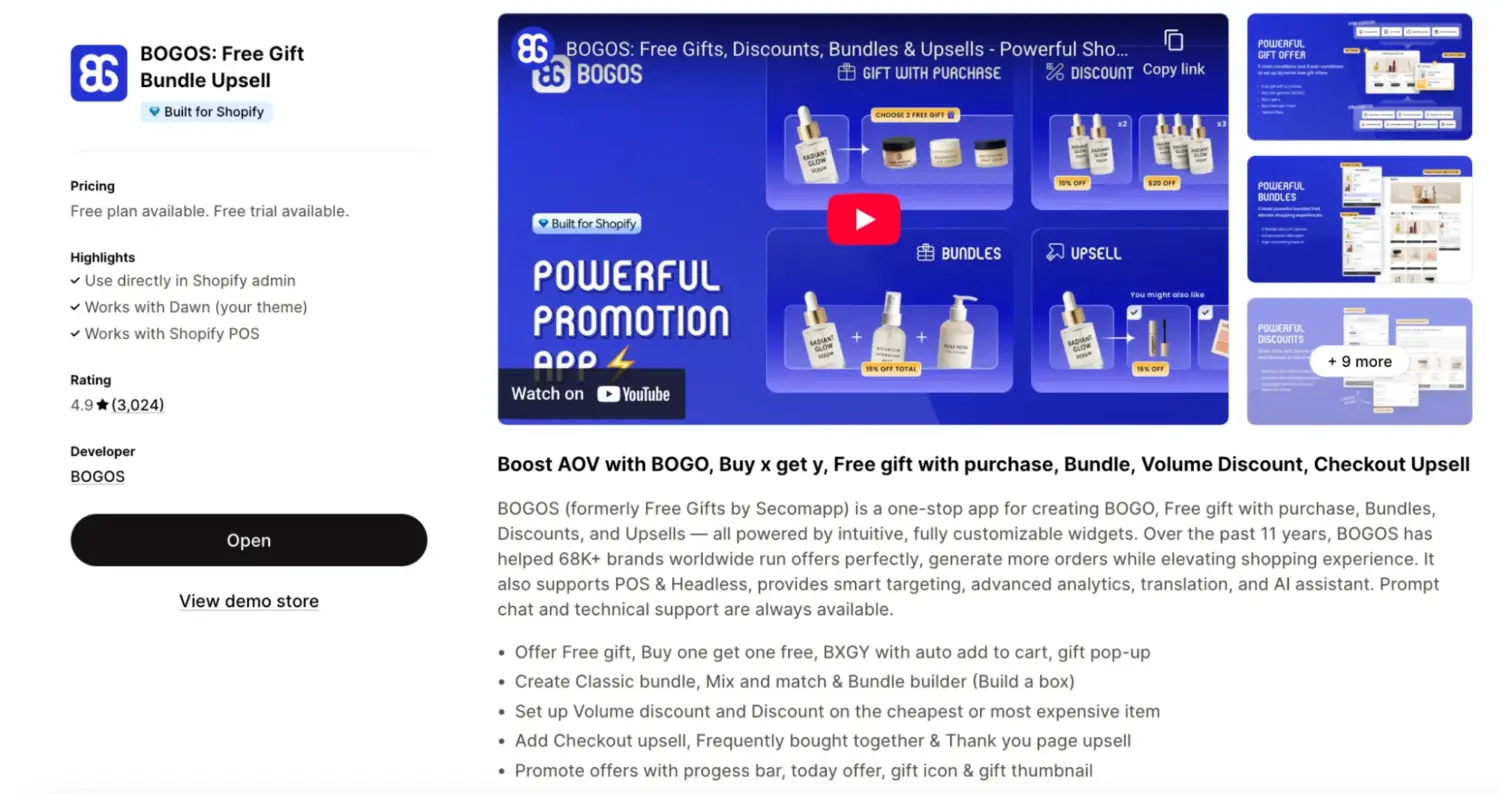
BOGOS supports all common buy 2 get 1 free scenarios, including same-product gifts, different gifts, cross-collection rules, multiplied, and tiered structures. It also supports extra sub-conditions, so the deal only triggers when the cart matches tighter rules, which helps protect margin.
BOGOS is also stronger on measurement and promotion. It includes real-time analytics broken down by each offer, so it’s easy to track which B2G1 campaign is driving revenue and which one is underperforming.
On the merchandising side, the Booster tab helps promote offers with elements like Today’s offer, a progress bar, and visual cues such as a gift icon and gift thumbnail.
Other BOGOS feature coverage:
Discounts: volume discounts, discount the cheapest or most expensive item
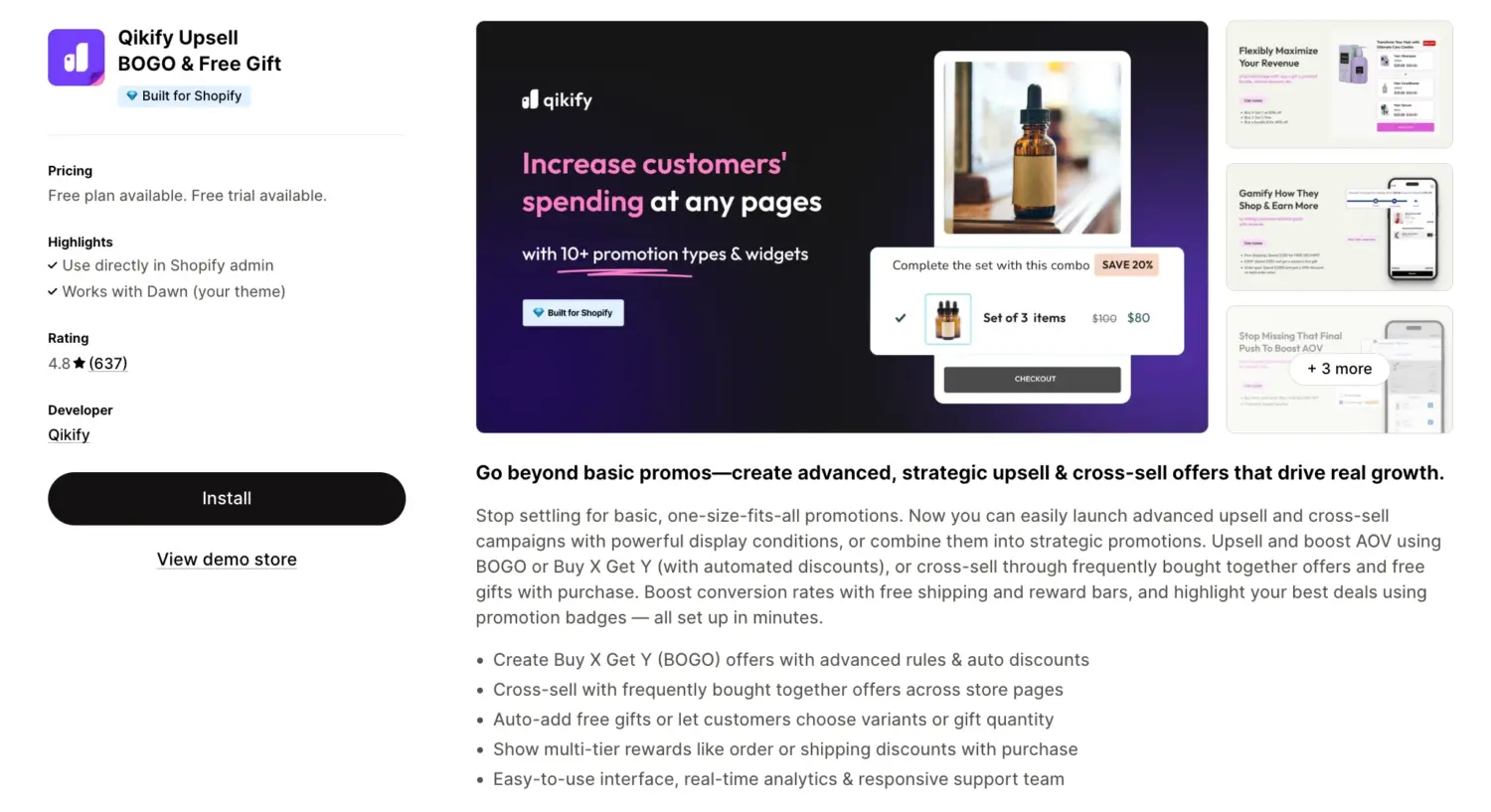
Qikify supports most B2G1 variations and offers flexible conditions plus upsell placements. The main friction shows up when the gift is the same as the products being purchased.
Instead of a more streamlined “same SKU” logic, merchants often need to set up separate offers manually for each product. If the store has many products that should all run B2G1, this becomes time-consuming.
Qikify has sub-conditions similar to BOGOS, but it typically doesn’t include targeting based on customer spending history. That matters if the goal is to reserve stronger gifts for high-value shoppers.
Other Qikify feature coverage:
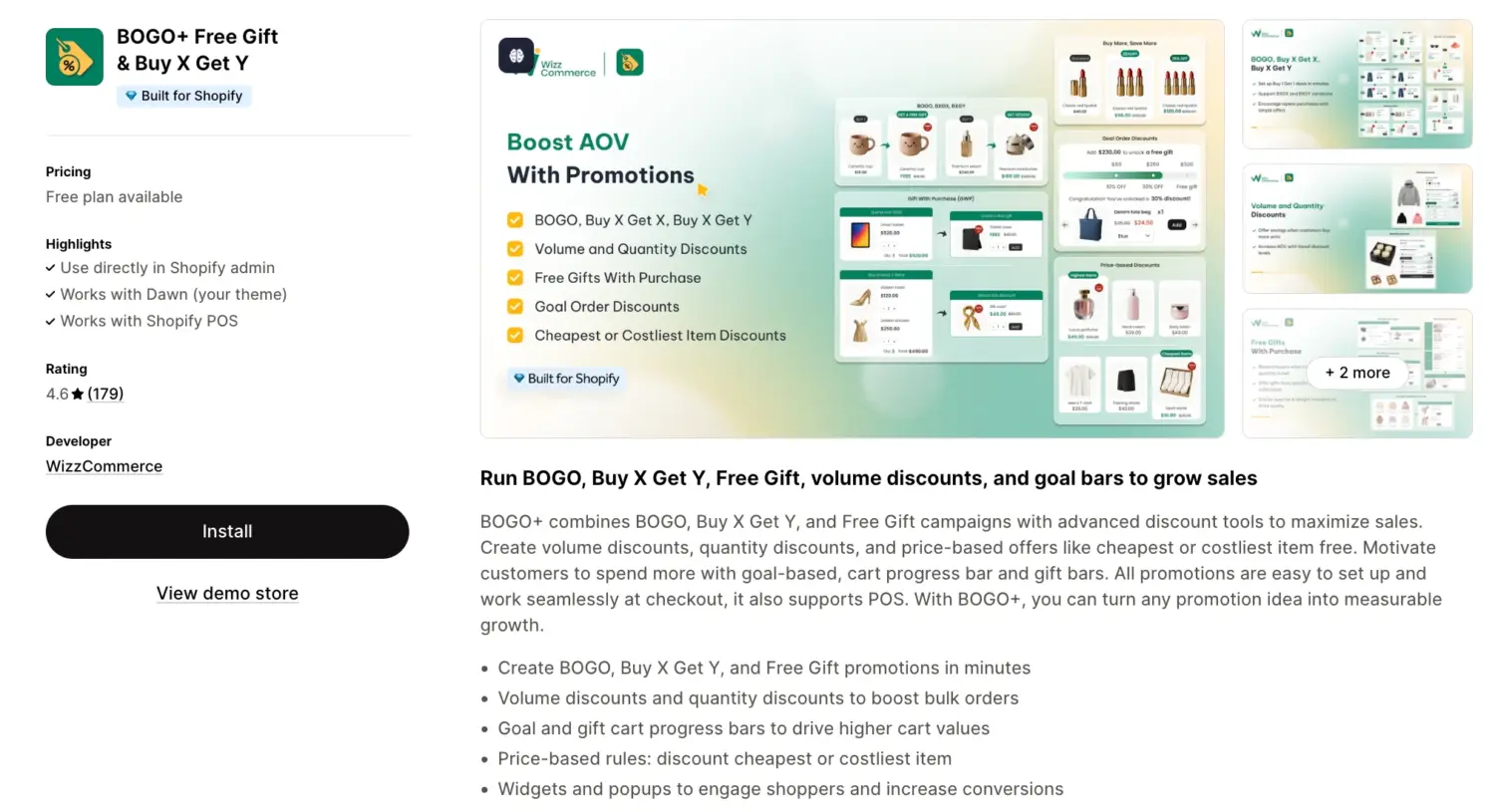
BOGO+ covers the core B2G1 patterns and includes promotional bars that help push shoppers to qualify. Sub-conditions exist, but like Qikify, there’s usually no customer spending history targeting.
Two disadvantages to expect:
So, which app fits which merchant?
You now have a clear roadmap for launching a Shopify buy 2 get 1 campaign, whether you use native discounts or a dedicated app. We always recommend starting simple with one product or collection, then expanding once you see solid results. The stores that win with B2G1 are the ones that make the offer obvious and the redemption effortless.
To create a “Buy 2, Get 1 Free” promotion on Shopify, you can use Shopify’s native discount tools or a third-party app like BOGOS for more advanced customization.
BOGOS is a strong option when you want the gift to auto-add, plus promo widgets like a progress bar and clearer gift visibility in the cart. It’s also useful when you need multiplied or tiered variations without manual workarounds.
Shopify admin has a native Buy X get Y discount. It covers the core rule, but the gift usually won’t auto-add, and the on-site messaging is limited.

A Shopify exit intent popup is a message that appears the moment a visitor moves to leave your store,...
A Shopify newsletter popup turns one-time visitors into an email list you own. This guide explains what it is,...
We tested 9 Shopify product customization apps against live App Store data. Compare free plans, live preview, pricing, and...