Charlie Ngo is an eCommerce expert with 7 years of experience in the marketing field, specializing in SaaS and digital growth. A graduate in Marketing Communication, Charlie currently serves as the Marketing Manager of the BOGOS Shopify App, where he leads strategic initiatives to drive user acquisition, engagement, and brand positioning.
Summary
Section 1: Explain what tiered pricing is.
Section 2: Show 10 tiered pricing examples across e-commerce, SaaS, and service, specifying the type of tiered pricing model used and listing their pros and cons.
Section 3: Describe the different types of tiered pricing and when each type is best applied.
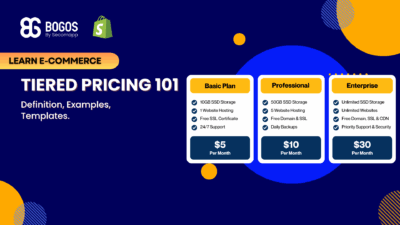
Tiered pricing is a strategy in which a product or service is offered in multiple levels or packages, each with its own price point. These levels can be structured based on various factors such as the number of units, range of features, usage amounts, delivery frequency, or specific service criteria.
This approach is versatile and widely applied across industries, including SaaS (Software as a Service), Service-based businesses, and e-commerce brands, often combining models (such as bundling combined with volume discounts) to create the most compelling offer structure.
To me, tiered pricing is the most effective psychological pricing anchor. By strategically presenting options, you not only cater to different budgets but also guide customers toward the purchase that offers the best margin for you. That is why at BOGOS, we don’t just offer discounts, we enable tiered strategies. From Volume Discounts that drive bulk buying to Tiered Bundles and Progressive Gifts that reward higher spending, our app is designed to operationalize this psychology.
In this article, we will dissect how top brands use tiered pricing to turn simple pricing tables into revenue-generating machines.
10 Tiered Pricing Examples
For E-commerce
#1. Hyve Nutrition
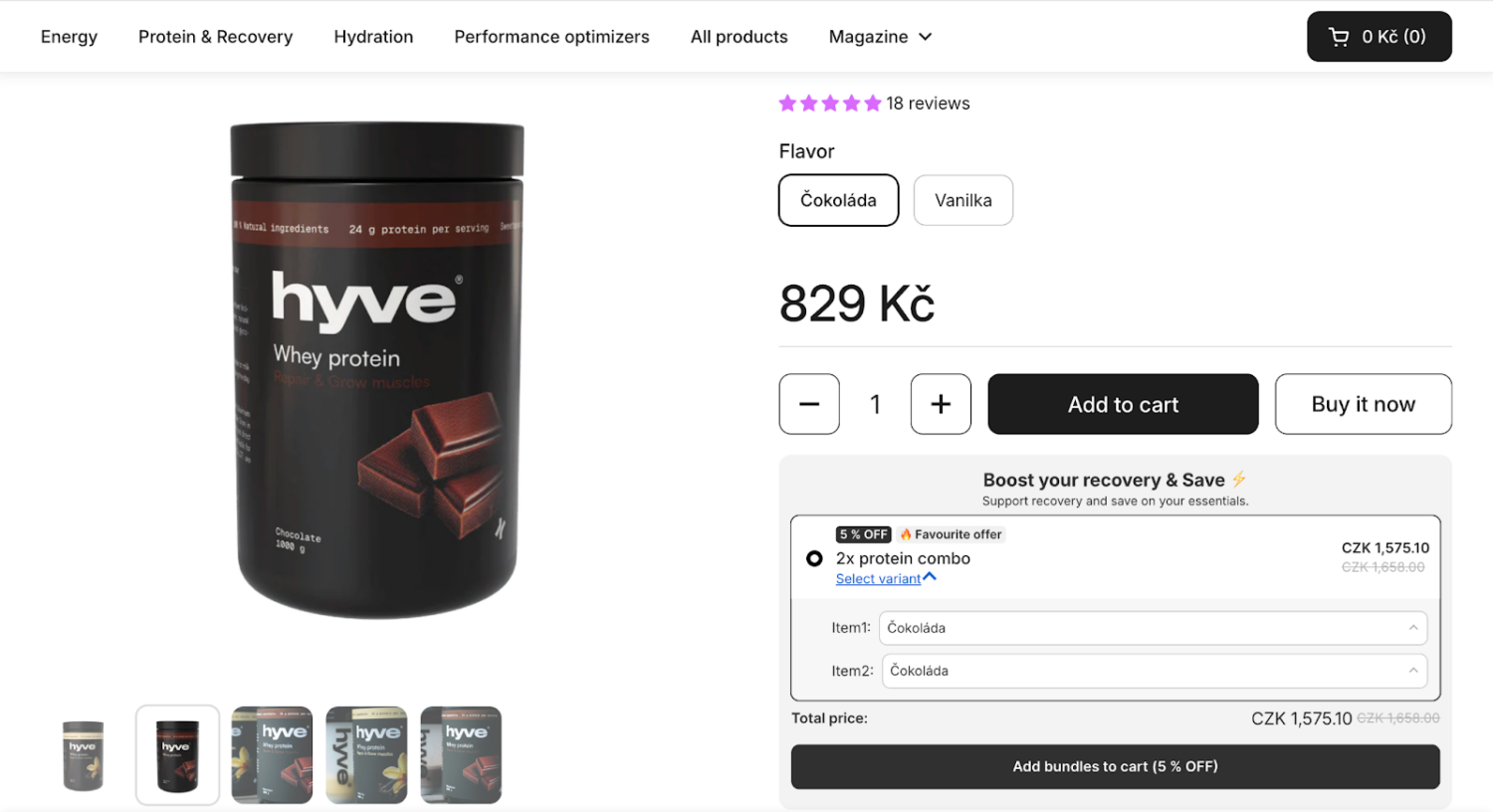
Hyve Nutrition, a Czech wellness brand and valued BOGOS client, targets fitness enthusiasts requiring daily nutrition. To maximize retention, they use a quantity-based tiered pricing model. Instead of relying solely on single-tub sales (829 CZK), they incentivize a 2-tub tier with a 5% discount (1,575.10 CZK) and use the classic “Buy More, Save More” approach for consumables.
The genius behind these numbers lies in “Unit Economics” and “Habit Formation.” For a supplement brand, selling a single tub is risky, since the customer might use it for a month and then stop buying. By incentivizing a 2-tub tier with a discount, Hyve isn’t just increasing AOV; it’s locking the customer into a 60-day usage cycle.
The discount given (5%) is carefully calculated: it is usually less than the cost of acquiring a new customer or the savings from shipping or a single package instead of two. The price gap is set just wide enough to make the single tub feel “expensive” per serving, forcing the rational brain to choose the multi-pack for better long-term value.
This strategy immediately improves cash flow and secures long-term product usage. However, the risk is a barrier to entry. New customers wary of committing to a flavor they haven’t tasted might hesitate to buy in bulk, meaning the discount must be visible enough to overcome the fear of “flavor fatigue.”
#2. ThermaBrush™
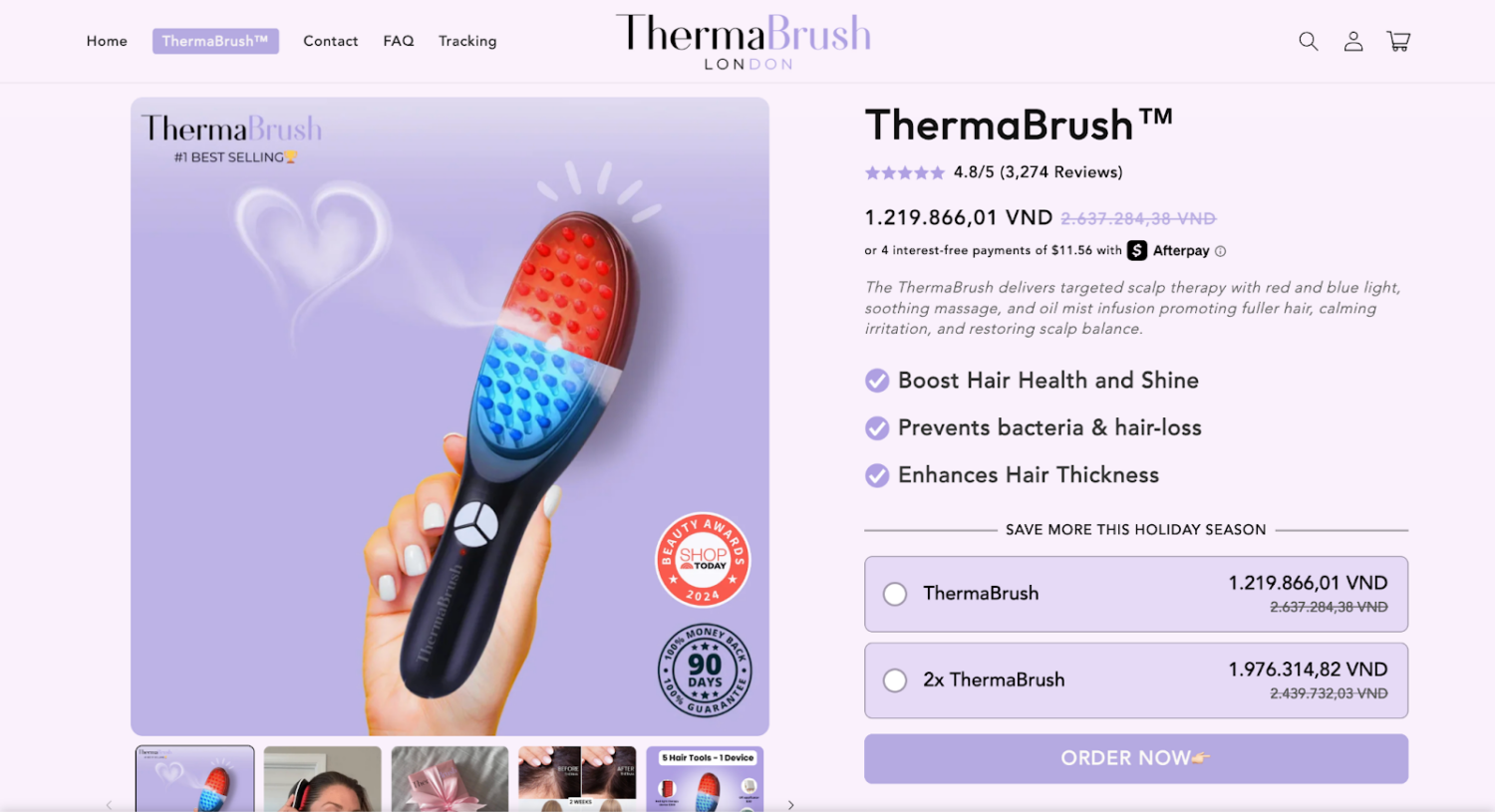
ThermaBrush™, a beauty-tech leader and valued BOGOS merchant, targets women seeking salon-quality hair at home. To drive volume on durable goods, they apply a strict Quantity-based tiered pricing model. A single brush retails for $46.25, but the 2x ThermaBrush costs $74.93. This structure significantly lowers the effective unit price to incentivize group buying rather than individual consumption.
Unlike consumables, selling two identical hair tools to one person is counterintuitive. ThermaBrush shifts the buying context from personal utility to “Social Connection” and “Gifting.” The 2-unit tier is strategically priced at roughly 1.6x (not 2x) the single unit. This deep discount effectively turns the customer into a recruiter, finding a friend or mother to split the cost. The math is brilliant: it nearly doubles AOV while halving the Customer Acquisition Cost, acquiring two users for the marketing price of one.
This model excels during gifting seasons (Mother’s Day, Christmas), using side-by-side price comparison to trigger impulse upgrades. However, the downside is exclusivity: solo buyers or price-sensitive customers with no one to share the deal with face a high financial barrier, which may alienate them if the single-unit price isn’t competitive enough.
#3. Retro Stage
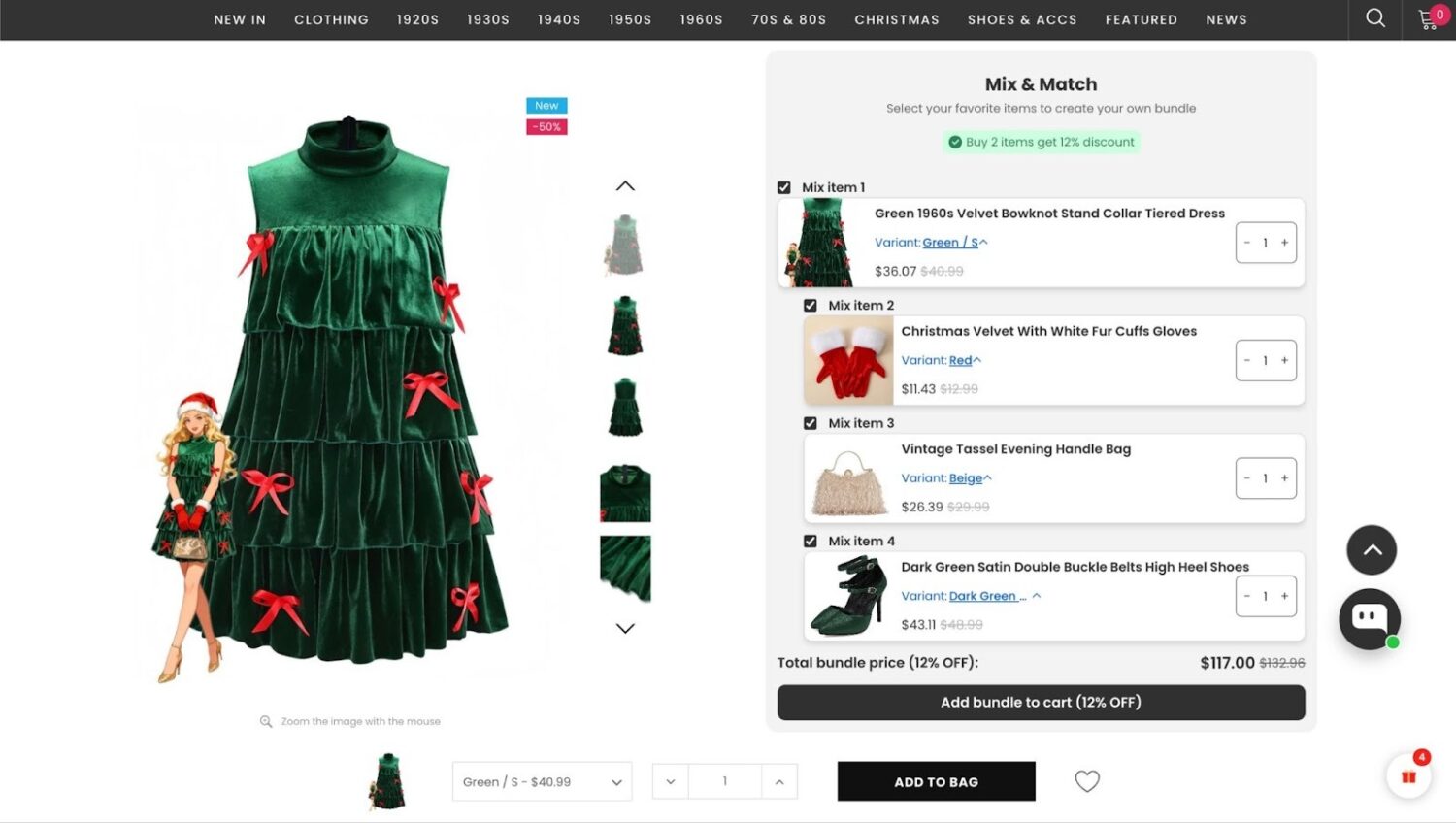
Retro Stage, a niche vintage fashion retailer and trusted BOGOS merchant, moves beyond selling standalone garments to selling “Total Looks.” To address the complexity of style preferences, they utilize a Dynamic Mix & Match Bundle combined with a tiered pricing model. Instead of rigid pre-packed sets, customers can “Build Their Own Bundle.”
The logic utilizes a simple quantity threshold: purchasing any combination of 2+ items (a Dress and Gloves) instantly unlocks a flat 12% discount across the entire cart. For instance, a customer starting with the Green 1960s Velvet Dress ($40.99) can simply add a second item, such as the White Fur Gloves ($12.99), to instantly trigger the 12% reduction on both products.
This strategy represents a masterclass in “Threshold Psychology” and “Margin Mix.” The “Buy 2” hurdle forces a mindset shift from buying a “product” to investing in an “outfit.” The specific 12% discount is calculated: it is an “odd number” that grabs attention better than a standard 10%, yet prevents the deep margin erosion of a 20% cut. Financially, the high markups on added accessories (like the $12.99 gloves) subsidize the discount applied to the expensive hero dress. Furthermore, the Mix & Match flexibility removes “Style Friction,” ensuring that subjective taste never blocks the upsell.
The primary benefit is moving slow-selling, low-ticket accessories by attaching them to high-demand hero products. However, the risk lies in margin dilution. Discounting a high-ticket item just to incentivize the sale of a cheap add-on can negatively impact overall profitability if the math isn’t carefully balanced against the Customer Acquisition Cost.
#4. Earth ‘n Air Creations
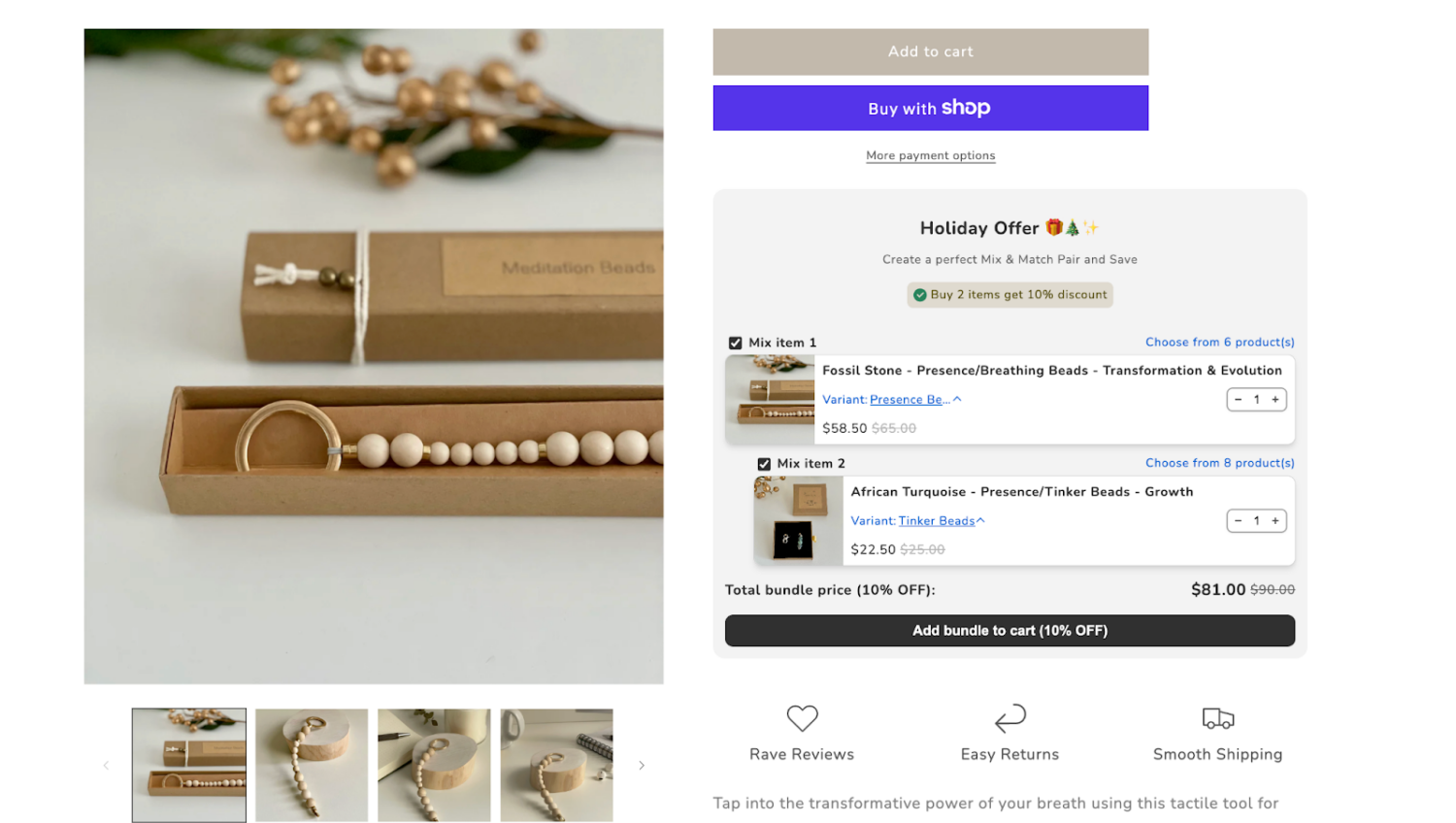
Earth ‘n Air Creations, a niche wellness jewelry brand and successful BOGOS merchant, creates mindfulness accessories like “Breathing Beads” to help users manage anxiety. To capitalize on the fashion trend of stacking multiple bracelets, they use a Dynamic Mix & Match Bundle combined with a tiered pricing model. While a single “Fossil Stone” bracelet costs around $65, the store incentivizes customers with a “Perfect Pair” offer: Buy 2 items and get $10 off ($81). This approach increases the average order value while giving customers a deal that feels genuinely rewarding.
This strategy leverages the consumer psychology of “Stacking” and “Personalized Energy.” In the wellness space, a single bracelet can feel aesthetically incomplete. By framing the discount around a “Pair,” the brand shifts the purchase motive from a singular functional need to an aesthetic want. Financially, the 10% discount is a calculated trade-off; since these are premium, high-margin accessories, sacrificing a small percentage of profit is well worth the immediate 25-30% lift in Average Order Value (AOV).
The key strength is Personalization; unlike rigid pre-packed sets, customers choose specific stones that resonate with their intentions, reducing cart abandonment. However, the downside is the Price Barrier. For a new customer, committing over $80 for a first purchase is a significant leap, and those testing the quality with a single item receive no benefit.
#5. Ocean Spray
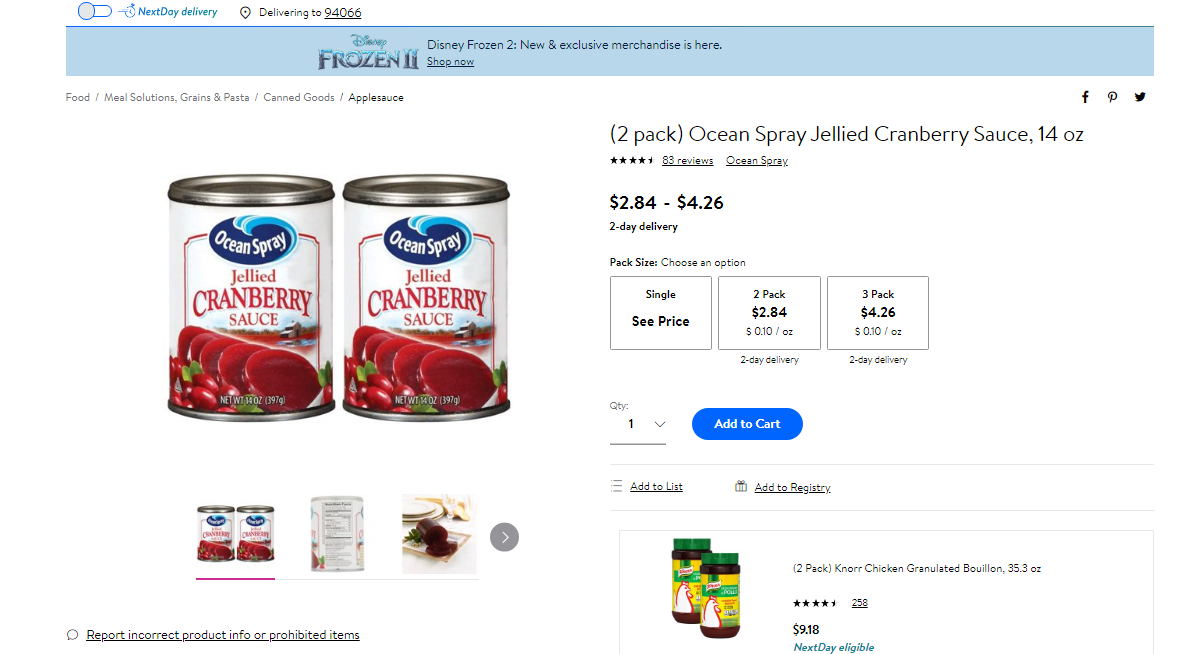
Ocean Spray, the household name for cranberry products, dominates retail shelves with a strict Quantity / Volume-based tiered pricing model. Recognizing that cranberry sauce is often a seasonal purchase, they pit single cans against value multipacks. For example, a single unit carries a premium price, whereas a 2-pack ($2.84) and a 3-pack ($4.26) offer a standardized, lower cost per unit to encourage bulk buying.
Ocean Spray knows that if a customer has three cans sitting in their pantry, they are effectively taken out of the market for competitors for months. The pricing is calibrated to apply a “Convenience Tax” on the single can, while the multipack represents the “true price.” Although the profit margin percentage on the bulk pack is lower, the increased sales velocity is crucial for maintaining dominant shelf placement in competitive retail environments.
The primary advantage is Competitive Blocking; filling the customer’s pantry prevents them from switching brands. However, this structure discourages Trial. New customers wanting to simply taste the product may be deterred if the single-unit price feels unreasonably high compared to the multipack.
For SAAS
#1. BOGOS
BOGOS is a top-rated promotional engine designed specifically for the Shopify ecosystem, empowering merchants to move beyond simple discounts by creating complex, high-converting offers such as free gifts, bundles, discounts, and upsells.
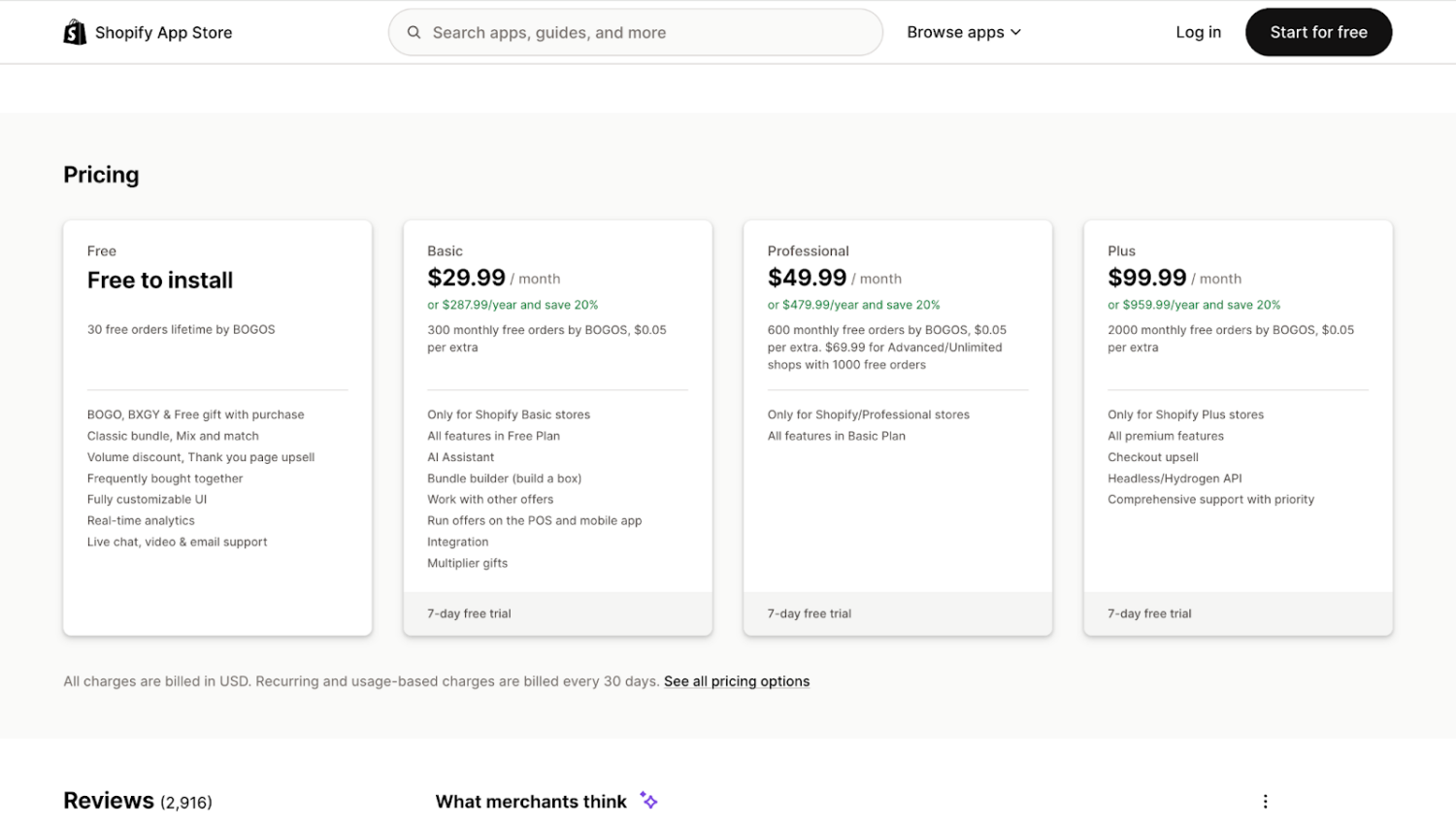
BOGOS uses a combined feature-based and usage-based pricing model. The tiered pricing structure includes:
Free plan: $0/month, offering 30 lifetime promo orders as a trial.
Basic: $29.99/month for 300 promo orders.
Professional: $49.99/month for 600 promo orders.
Plus: $99.99/month for 2,000 promo orders.
Crucially, these plans are gated not only by features but also by the merchant’s underlying Shopify subscription. For instance, the Plus plan is exclusive to Shopify Plus stores. Furthermore, if a merchant exceeds their plan’s order limit, the system applies a nominal overage fee of $0.05 per additional order rather than forcing an immediate upgrade.
By tying the BOGOS plan to the merchant’s specific Shopify plan, the app automatically segments customers based on their technical maturity and willingness to pay; a Shopify Plus merchant using Headless architecture specifically requires the API features in the $99.99 tier and has the budget to support it. Instead of shutting off the service when a merchant hits a limit during a viral sale, BOGOS allows the campaign to run uninterrupted, charging a negligible fee that is easily covered by the revenue generated. This ensures that the app’s revenue scales directly with the merchant’s success.
The primary advantage of this model is its Low Barrier to Entry and Scalability. The Free Plan and Basic plans allow small stores to validate the ROI with minimal risk, while the overage mechanism ensures merchants are never overpaying during slow months or artificially capped during peak seasons. However, new users may find it difficult to predict their monthly costs if they are unsure how many of their transactions will actually trigger the promotional rules, leading to initial hesitation.
#2. Shopify
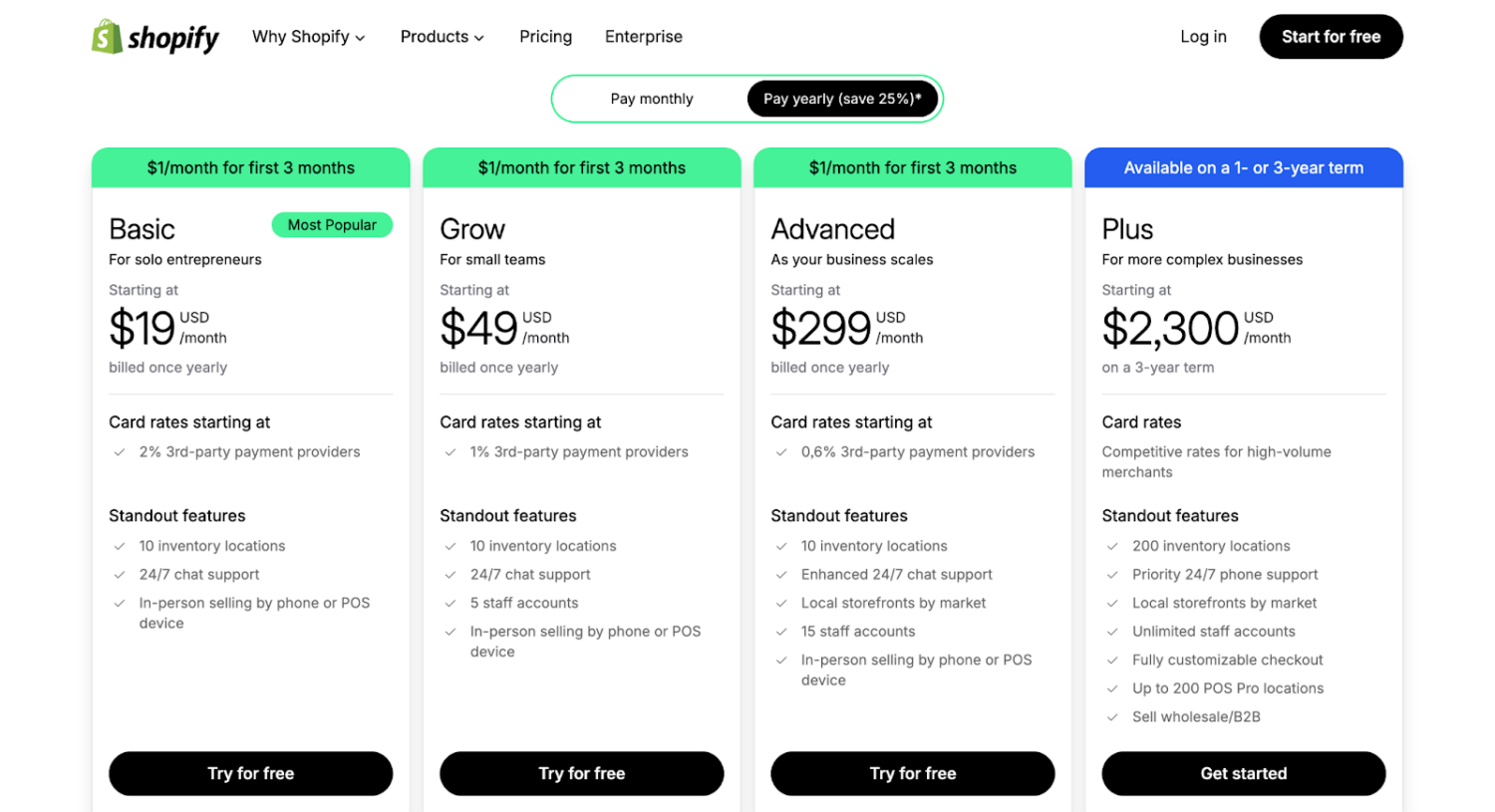
Shopify, the leading global commerce platform, supports everyone from solo entrepreneurs to Fortune 500 companies. To monetize this diverse base, they utilize a tiered pricing model combining Feature-based tiers (Basic at $19 to Plus at $2,300) with Usage-based transaction fees. Crucially, the structure is inverse: as the monthly subscription price rises, the transaction fee drops significantly (from 2.0% down to 0.6%).
Shopify creates a financial “Tipping Point” where, once a merchant hits a specific revenue threshold, the savings from the lower transaction fee (0.6%) mathematically outweigh the cost of jumping to the Advanced plan ($299). This aligns the platform’s revenue directly with merchant success: as stores scale, they pay higher fixed retainers but lower percentage taxes, making the upgrade the only logical financial choice.
The strength of this model is Perfect Alignment, creating a predictable revenue stream that grows alongside the merchant. However, the downside is the “Missing Middle.” The steep price gap between the $49 and $299 plans leaves mid-sized businesses in a difficult position, too big for basic features, yet not generating enough volume to justify a 6x price hike.
#3. Apple One
Apple One is the definitive Tiered Pricing Bundle model designed to address “Subscription Fatigue” within the Apple ecosystem. By aggregating services like Music, TV+, Arcade, and iCloud, Apple creates three distinct tiers: Individual ($19.95), Family ($25.95), and Premier ($37.95). Each step up doesn’t just increase storage (scaling from 50GB to 2TB); it unlocks additional services like News+ and Fitness+ while expanding access to up to five other people in the Family and Premier tiers.
A customer might happily pay $11 for Music, but hesitate to pay separately for “weaker” services like Arcade. By bundling them, Apple masks the cost, making the total package feel like a bargain. The true genius lies in the Family Tier. The price gap between Individual and Family is small (about +$6), yet it allows sharing with up to five people. Once a family shares a plan, churn drops dramatically because cancelling would disrupt the digital habits and data storage of six different people, effectively transforming a personal expense into an essential household utility.
The primary advantage is immense Customer Stickiness; it effectively cross-sells lesser-known products to millions of users by leveraging the popularity of “hero” services. However, the downside is that for single-service users, those who strictly want Music may feel forced to pay for features they never use, creating friction. Additionally, the value of the Premier tier fluctuates regionally, as services like News+ are not available in every market.
For Service
#1. Emirates Airlines
Emirates, a premier international airline, utilizes a Feature-based tiered pricing model focused strictly on flexibility and experience. For the same physical Economy seat, the airline splits the product into three distinct tiers: “Saver” (approx. $69.75), “Flex” ($104.79), and “Flex Plus” ($186.90). While the legroom remains identical, the “product” changes significantly: higher tiers unlock baggage allowance, refundability, seat selection, and higher mileage earnings.
This pricing structure segments customers based on “Time Sensitivity” and “Risk Aversion.” Leisure travelers, who plan months in advance, choose the “Saver” option; their price sensitivity allows Emirates to fill the plane and cover fuel costs. Conversely, business travelers often book last-minute and require the ability to change plans; they are forced into the “Flex Plus” tier. The massive price gap is based on willingness to pay, not cost. Emirates also leverages “Loss Aversion”, passengers pay the premium not just for perks, but to avoid the fear of losing their entire ticket value if they cannot fly.
The primary pro is maximizing revenue per seat by capturing the full consumer surplus from different segments. However, a significant downside is the potential for perceived unfairness; customers may feel frustrated discovering the person sitting next to them paid half the price for the exact same meal and service, which can damage brand trust if the tier distinctions aren’t clear.
#2. House cleaning services
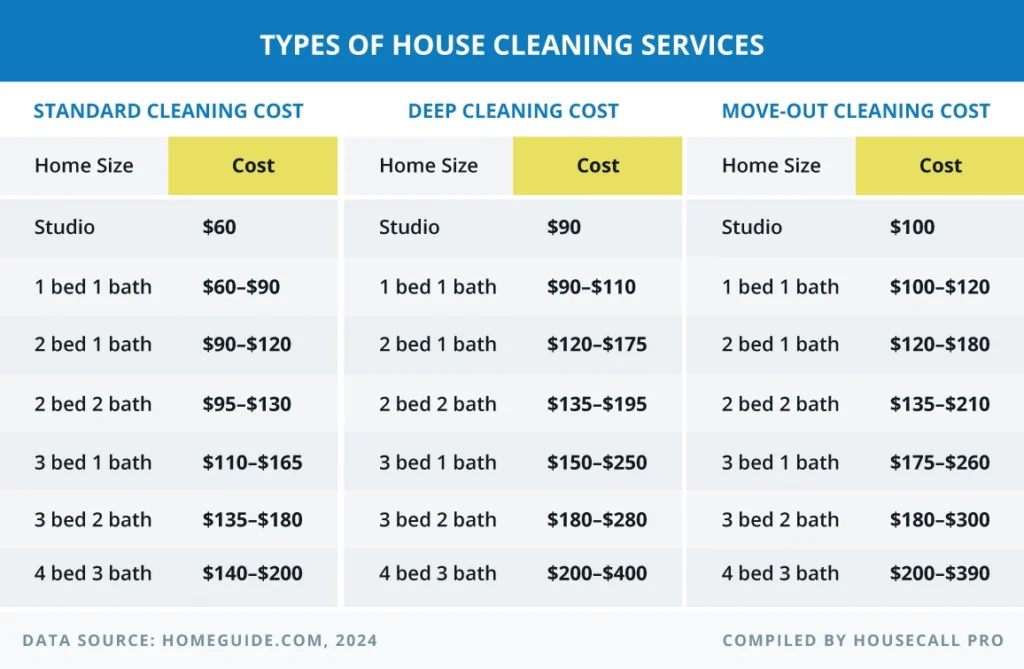
The residential cleaning industry typically employs a Matrix Hybrid Model that intersects Usage-based (Home Size) with Feature-based (Scope of Work). Pricing scales linearly: “Standard Cleaning” ranges from $60 for a studio to $200 for a large home, covering basic tasks. “Deep Cleaning” jumps to ($90 – $400), focusing on scrubbing and sanitizing. Finally, “Move-Out Cleaning” sits at the top tier ($100 – $390), promising a “ready-to-rent” restoration.
Strategically, this tiered pricing model acts as a defense mechanism against “Scope Creep”, the tendency for clients to expect more work than they paid for. By explicitly defining what is in “Standard” versus “Deep,” the pricing table manages expectations before the cleaner even arrives. The “Deep Clean” tier is often used as a mandatory high-margin entry point to bring a neglected home up to baseline, after which the customer is “down-sold” to the lower-priced “Standard” tier for recurring revenue. This ensures the business is compensated for the heavy initial labor while securing long-term subscription value.
This structure provides clear cost expectations and offers a natural upsell path. It ensures profitability on difficult jobs. However, the downside is the Rigidity vs. Reality conflict. A small studio apartment that has been neglected for years may require more labor than a well-maintained four-bedroom house, yet the fixed tiered pricing might not reflect that, leading to potential disputes over the final deliverable.
Types of Tiered Pricing Models
#1. Featured-Based
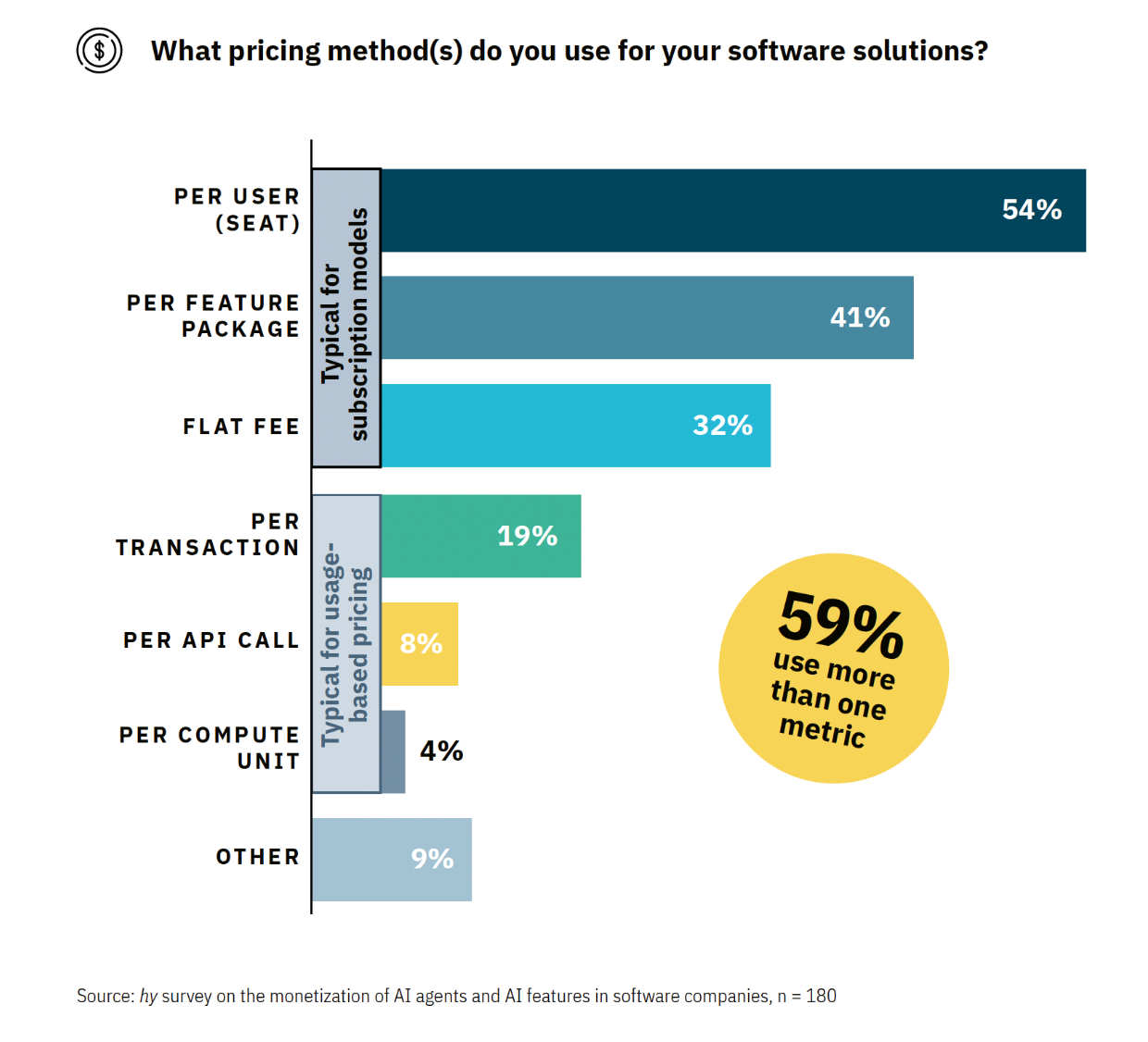
According to the HY Pricing 2026 SaaS & AI Pricing Report, 41% of providers now “price per feature package.” While this originated in software, it is a powerful strategy for E-commerce product segmentation.
In this tiered pricing model, the “tier” is defined by the quality, materials, or exclusivity of the SKU. You essentially offer a “Good” (Base Model), “Better” (Enhanced Materials), and “Best” (Premium/Limited Edition) version of the same core product.
This model is best suited for merchants selling electronics, appliances, or customizable goods. For example, a mattress brand sells the same size bed in “All-Foam” (Basic), “Hybrid” (Better), and “Cooling Tech + Massage” (Best). It works effectively when your customer base has diverse budgets and needs; it allows you to capture the mass market with the base model while extracting maximum margin from affluent customers who always want the “top-spec” version.
#2. Usage-Based
The OpenView reports highlight that 61% of companies use usage-based pricing. In the context of E-commerce, this translates to “Replenishment” or Subscription models. Instead of charging for “data,” you charge based on the frequency of consumption (Weekly vs. Monthly delivery) or the volume of consumables (Refill packs).
This tiered pricing model is the ideal strategy for Subscription Box businesses or brands selling high-frequency consumables like coffee pods, razor blades, or diapers. It aligns the price with the customer’s actual consumption habits. If you sell a product that runs out (like laundry detergent), using a “Subscribe & Save” usage model lowers the barrier to entry for new customers while securing long-term Customer Lifetime Value (CLV) from heavy users.
#3. Per-User-Based
While traditionally a B2B software model, “Per-User” pricing in E-commerce applies strictly to B2B Wholesale or Digital Products. Here, the price scales linearly based on the number of people who will use the product (e.g., buying uniform sets for a team or licensing digital assets for a marketing department).
This tiered pricing model is tailored for B2B e-commerce stores selling office supplies, corporate gifting, or digital downloads (like fonts or presets). For instance, selling a digital training course to a company that pays per employee access. It is highly effective for merchants targeting corporate accounts, allowing you to scale the deal size proportionally to the client’s organization size without manual negotiation.
#4. Quantity/ Volume-Based
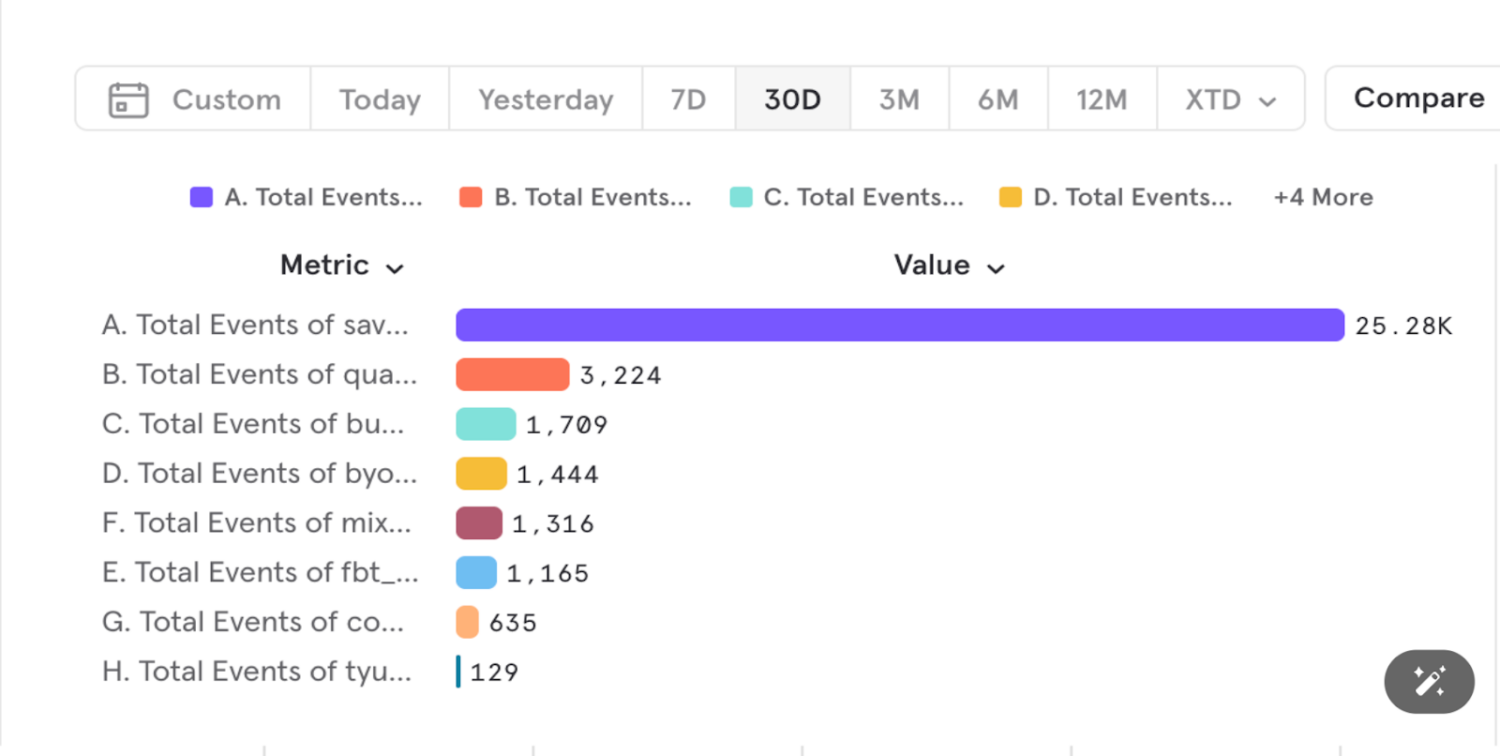
Based on BOGOS’s internal data from the last 30 days, “Quantity Break Pricing” is the second most used promotion type, with over 3,224 active events. This is the bread and butter of E-commerce. The logic is simple: the more units a customer adds to their cart, the lower the price per unit becomes.
Quantity or volume-based tiered pricing gives customers lower unit prices as the number of units purchased increases. Each higher tier represents a larger quantity with discounted per-unit pricing, encouraging bulk purchases. This model motivates customers to buy more while ensuring the business secures higher overall revenue.
This is the go-to strategy for Supplements and Commodity goods. It is perfect for merchants whose primary goal is to increase Average Order Value (AOV) and clear inventory. If you sell low-margin items where shipping eats into your profits (like canned drinks or socks), this model is essential. It incentivizes customers to buy in bulk, consolidating shipping costs and significantly improving your unit economics.
#5. Tiered Pricing Bundles
Tiered bundles combine multiple products, services, or features into pre-defined packages. Each higher tier includes all the benefits of the lower tier plus additional value, such as extra features, services, or access. Bundling creates perceived value by offering a complete package to the needs of a specific customer segment.
Tiered bundles involve packaging distinct products into “Starter,” “Essential,” and “Ultimate” kits. Unlike volume pricing (more of the same), this involves cross-selling complementary items to create a “complete solution.”
This model works exceptionally well for Fashion (Complete the Look), Beauty (Skincare Routines), and Gifting brands. It is the best strategy for Inventory Liquidity, moving slow-selling accessories by attaching them to high-demand “hero” products. Use this when your customers often face “decision fatigue” or don’t know which products work well together; the bundle simplifies the choice and increases the perceived value of the purchase.
Conclusion
Tiered pricing is a flexible strategy that allows businesses to cater to diverse customer needs while maximizing revenue. By structuring tiers based on features, usage, users, or quantity, companies can incentivize upgrades, encourage bulk purchases, and offer value-aligned packages. Clear communication of tier benefits is critical to ensure customer understanding and satisfaction.
FAQ
#1. What is the main benefit of tiered pricing?
It allows companies to target multiple customer segments, maximize revenue, and encourage upgrades or larger purchases.
#3. How does feature-based pricing differ from usage-based pricing?
Feature-based pricing charges based on the set of features unlocked, while usage-based pricing charges customers based on actual consumption (e.g., data, API calls).