Charlie Ngo is an eCommerce expert with 7 years of experience in the marketing field, specializing in SaaS and digital growth. A graduate in Marketing Communication, Charlie currently serves as the Marketing Manager of the BOGOS Shopify App, where he leads strategic initiatives to drive user acquisition, engagement, and brand positioning.
Summary
Section 1: Defines pure bundling, examples, and where it fits best (digital goods, fixed kits, curated sets).
Section 2: Defines mixed bundling, shows common types (kits, mix-and-match, Buy X Get Y), and when to use it to lift AOV while keeping single SKUs.
Section 3: Compares pure vs mixed bundling and concludes mixed bundling usually wins on flexibility, revenue, and customer experience, but needs tighter operational control on Shopify.
Many merchants assume that more on-site features will automatically lead to bigger carts, yet strategy always outweighs tools. You can stack as many bundle widgets as you like on a Shopify store, and if the structure is wrong, visitors will still buy one thing and leave.
Our own BOGOS customers rely on bundling as a key promotion strategy to scale AOV, so when we built the app, we focused on making real bundles, free gifts, and multi-buy offers that bring real value to customers.
In this blog post, you will see clear, real-world examples of pure bundling vs mixed bundling and when each one fits. You will also understand how each model shapes shopper behaviour and what that means for your AOV and revenue.
1. What is pure bundling?
Pure bundling is a bundle pricing strategy where customers can only buy a predefined bundle. The items inside are not available individually within that offer. If you want product A, you have to accept B, C, and D in the same package, at one price.
The strategic idea behind pure bundling is simple: by aggregating several products into one “take-it-or-leave-it” offer, you smooth out differences in how customers value each item and often raise average order value (AOV) and revenue per customer without adding operational complexity.
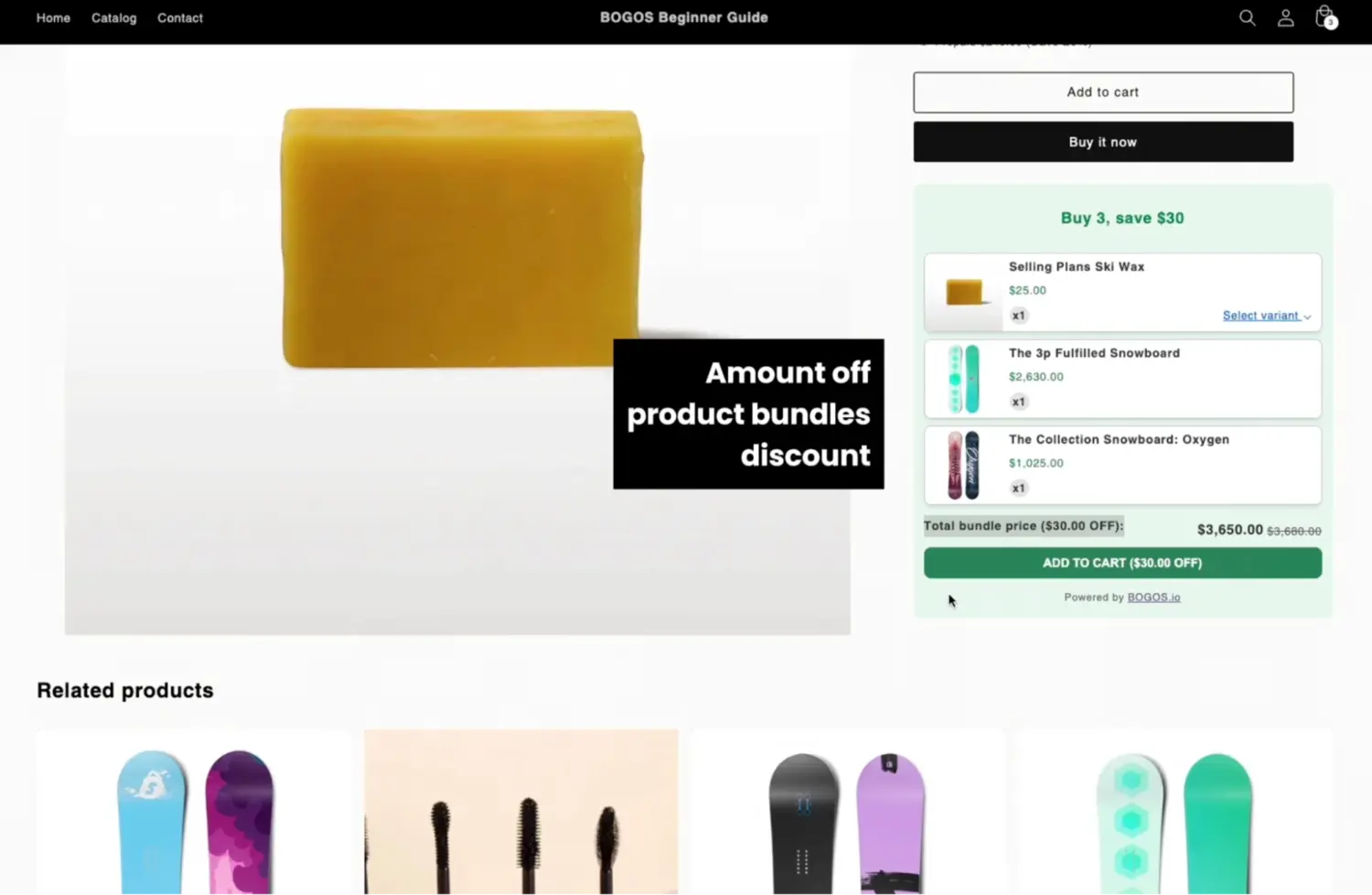
On Shopify, pure bundling is closest to the Classic Bundle in BOGOS. You pick a fixed set of products, choose a discount type (percent, amount off, fixed price, or free gift), and BOGOS shows them as one clear bundle on the product page. Shoppers see one ready-made combo with a single price, which fits the “take-it-or-leave-it” nature of pure bundling.
From our lens, pure bundling is a deliberate trade-off:
You gain higher AOV, cleaner merchandising, and simpler fulfillment.
You lose some flexibility for shoppers who only wanted a single item.
That trade-off is why pure bundling tends to work best in specific scenarios rather than as your default merchandising pattern.
Examples of pure bundling
1. Cable TV channel packages – DISH “America’s Top 120”
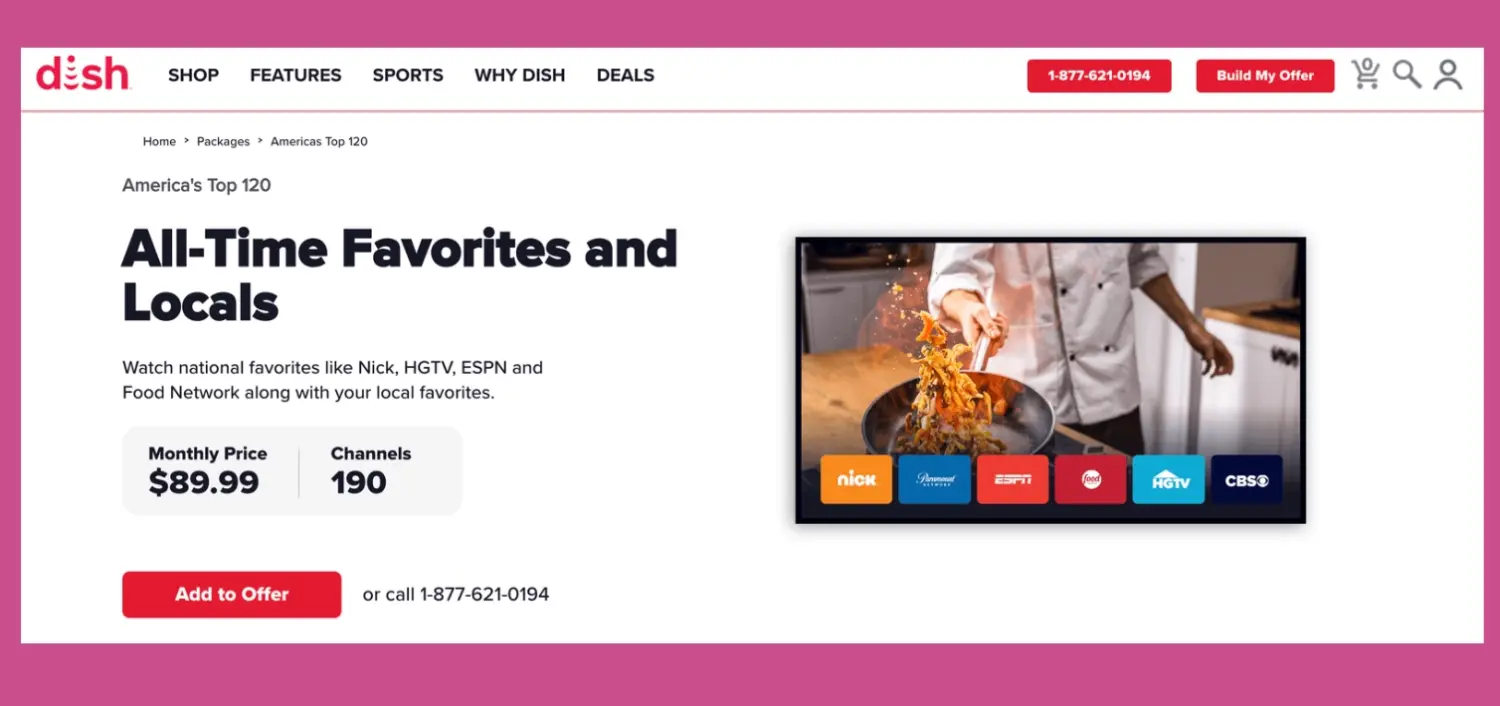
Cable TV is one of the clearest real-world examples of pure bundling. In DISH’sAmerica’s Top 120 plan, customers pay a single monthly price for around 190 channels, including Nick, HGTV, ESPN, Food Network, and local networks, with no option to remove individual channels or buy them separately inside that package.
2. Subscription snack boxes – Universal Yums
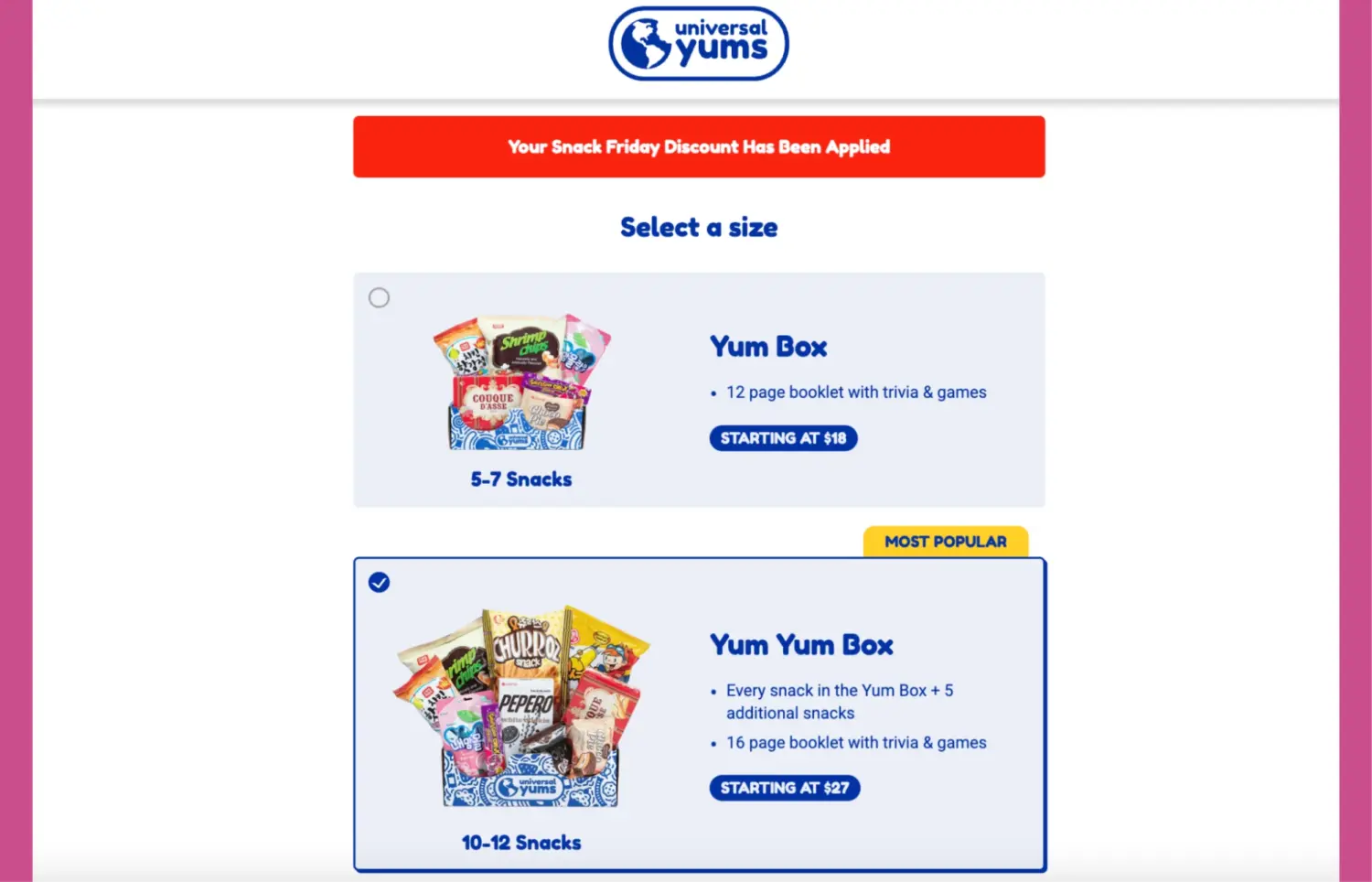
Universal Yums is a clean example of pure bundling: each month, customers receive a fixed curation of snacks from one country, and they can’t pick or swap individual items. On the pricing page, the only choice is box size (Yum Box: 5–7 snacks, Yum Yum Box: 10–12 snacks, Super Yum Box: 15-18 snacks), not which snacks go in.
When to use pure bundling?
1. Digital goods with near-zero marginal cost
For software, media, and other digital products, the cost of delivering one more file, stream, or module is almost zero. That makes pure bundling extremely attractive.
Think of:
E-books and digital course libraries
SaaS feature packs or plug-in bundles
Template, preset, or design asset packs
2. Operational efficiency with one pre-packed SKU
Pure bundling is also an operations lever. A pre-packed, non-customizable kit moves through your warehouse far more cleanly than endless mix-and-match combinations.
Faster picking and packing because staff handle a single SKU with fixed contents
Fewer fulfillment errors and returns tied to the wrong items in the box
Clearer inventory planning, since you forecast demand for a small number of bundles instead of hundreds of permutations
3. Limited, exclusive, or premium curated sets
Pure bundling is perfect when what you sell is not just products, but exclusivity, scarcity, or expert curation. In those cases, shoppers are less interested in micro-optimizing the cart and more interested in owning “the set.”
Typical use cases:
Limited-edition holiday sets with shades or scents only available in the box
Obviously, pure bundling works best when you’re selling fixed experiences, digital libraries, or pre-packed kits where simplicity and perceived value matter more than granular choice.
For most brands with large physical catalogs and very different customer needs, relying only on pure bundling will absolutely frustrate shoppers who just want one specific item. In those cases, we usually recommend mixed bundling as a more flexible way to raise AOV and revenue per visitor without blocking individual purchases. Let’s see what it is.
2. What is mixed bundling?
Mixed bundling is a pricing strategy where shoppers can choose either:
Buy the bundle at a discounted price, or
Buy each item separately at its regular price.
The rule of thumb is simple: bundle price < sum of individual prices; otherwise, there’s no reason to pick the bundle.
Empirically, mixed bundling isn’t just “more flexible”; it can materially outperform pure bundling. In a dynamic study of the handheld videogame market (Nintendo consoles + games), Derdenger and Kumar found that mixed bundling increased both hardware and software revenues, while pure bundling actually reduced sales of both, with mixed bundling dominating pure bundling and pure components on revenue.
For brands, that’s the key insight: mixed bundling lets you keep individual SKUs available, segment value-seeking buyers into higher-value baskets, and grow AOV and revenue per visitor without the downside of an “all-or-nothing” offer.
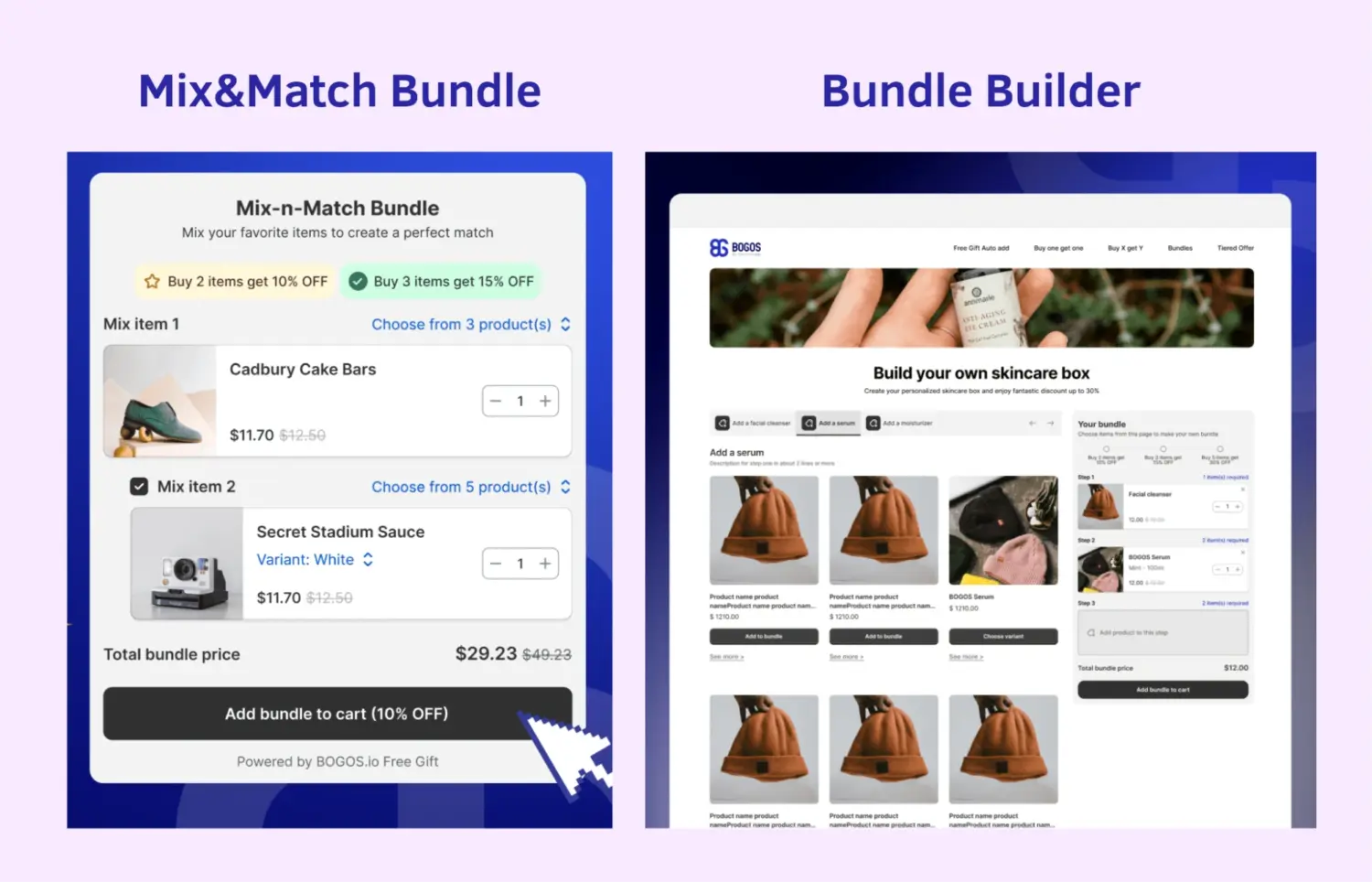
On BOGOS, mixed bundling shows up clearly in Mix-n-Match and Bundle Builder. Mix & Match lets shoppers pick items from a set of SKUs and unlock a discount once they add enough pieces, while each SKU is still sold on its own. Bundle Builder gives them a dedicated “build your own box” page where they assemble a bundle from your catalog at a better price than buying everything separately.
Types of mixed bundling (Synonyms)
In practice, mixed bundling rarely shows up under that name. In real stores, you see it as kits, mix and match deals, or Buy X get Y offers. Below are the main patterns and the terms they show up under.
1. Kits and value sets
Concept: You sell each item as its own SKU, but you also offer a ready-made kit that combines them into one bundle with a clearer value message or better price than buying everything separately.
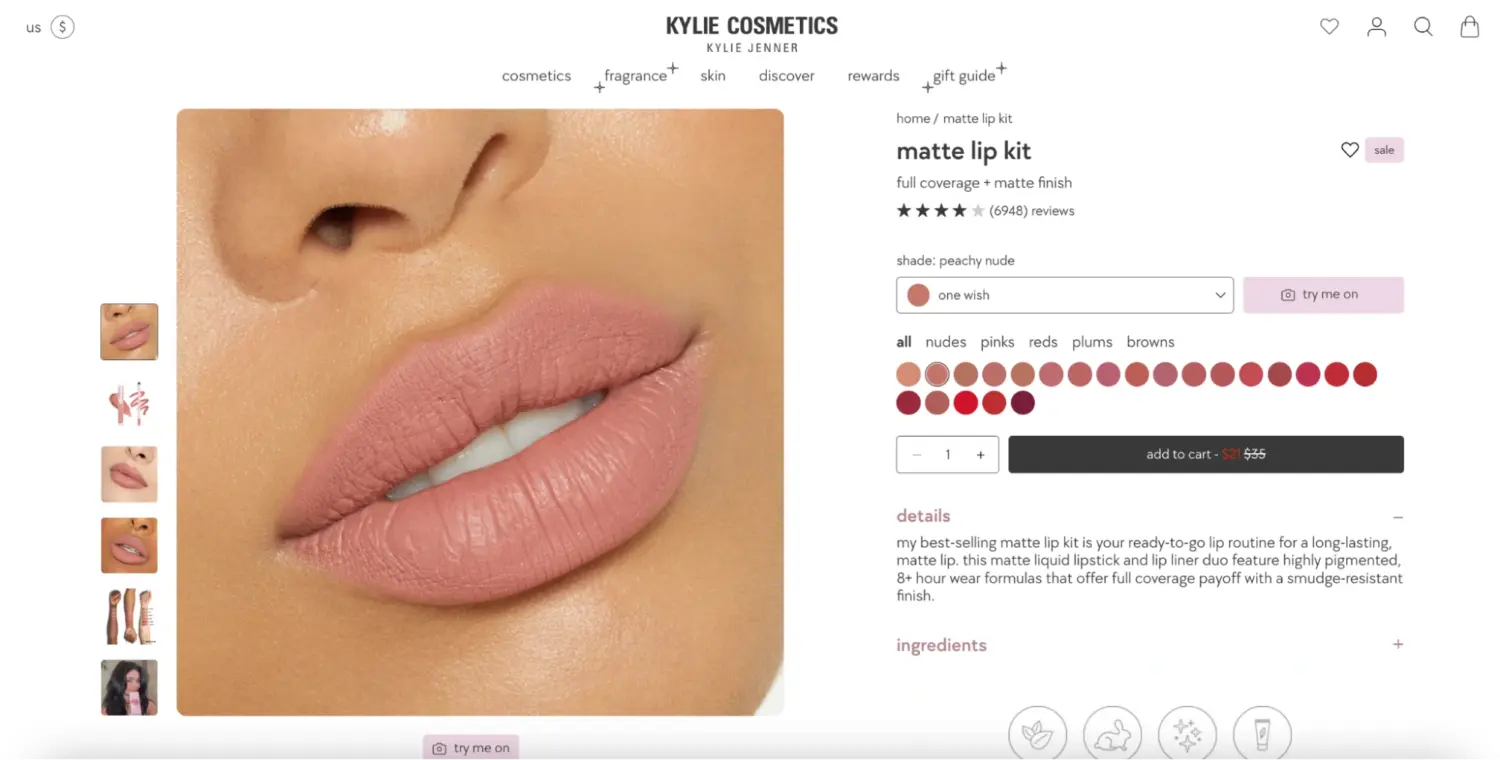
For example, on the product page, the Matte Lip Kit is presented as a duo, a matte liquid lipstick plus a matching lip liner in one set for $21 (sale price). At the same time, Kylie sells the matte liquid lipstick and the lip liner as separate products elsewhere on the site, each with its own page and price.
Customers can:
Buy only the lipstick or only the liner as single SKUs.
Or buy the kit that combines both at a more attractive bundle price.
That coexistence of standalone SKUs and a discounted kit for the same items is exactly what mixed bundling looks like in a “value set” format.
2. Mix and match multi-buy offers
Concept: Any item can be bought alone at the regular price, yet customers who add enough units from the same group unlock a multi-buy deal, so the discount only appears once they effectively “build a bundle” themselves.
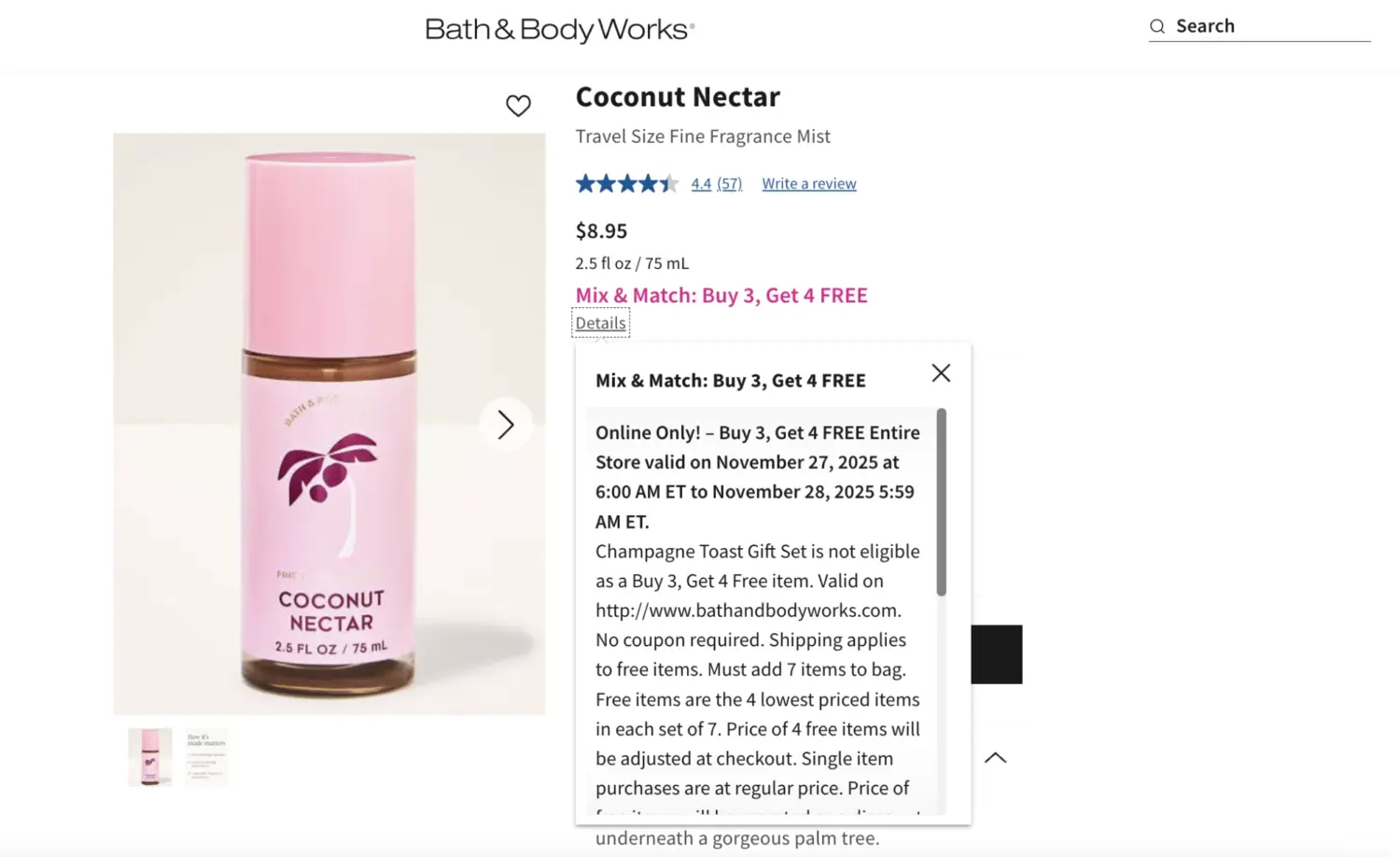
In the image above, you see that the travel-size Coconut Nectar mist has a regular unit price of $8.95 on its product page. Right under the title, Bath & Body Works highlights a promo line “Mix & Match: Buy 3, Get 4 FREE”, with details that you must add 7 eligible minis to the cart, then the 4 lowest-priced items become free, while any single purchase stays at the regular price.
Customers can:
Buy one Coconut Nectar mist at the standard price.
Or build a custom bundle of 7 minis across the range to trigger the “buy 3, get 4 free” deal.
The product is still sold individually, but pricing strongly encourages shoppers to group items into a larger basket, which is mixed bundling in a mix-and-match multi-buy style.
3. Buy X Get Y and gift-with-purchase
Concept: A specific product or spend threshold stays at its normal price, and crossing that trigger unlocks an extra item for free or at a discount, using a follower product that is also sold elsewhere in the catalog as a standalone SKU.
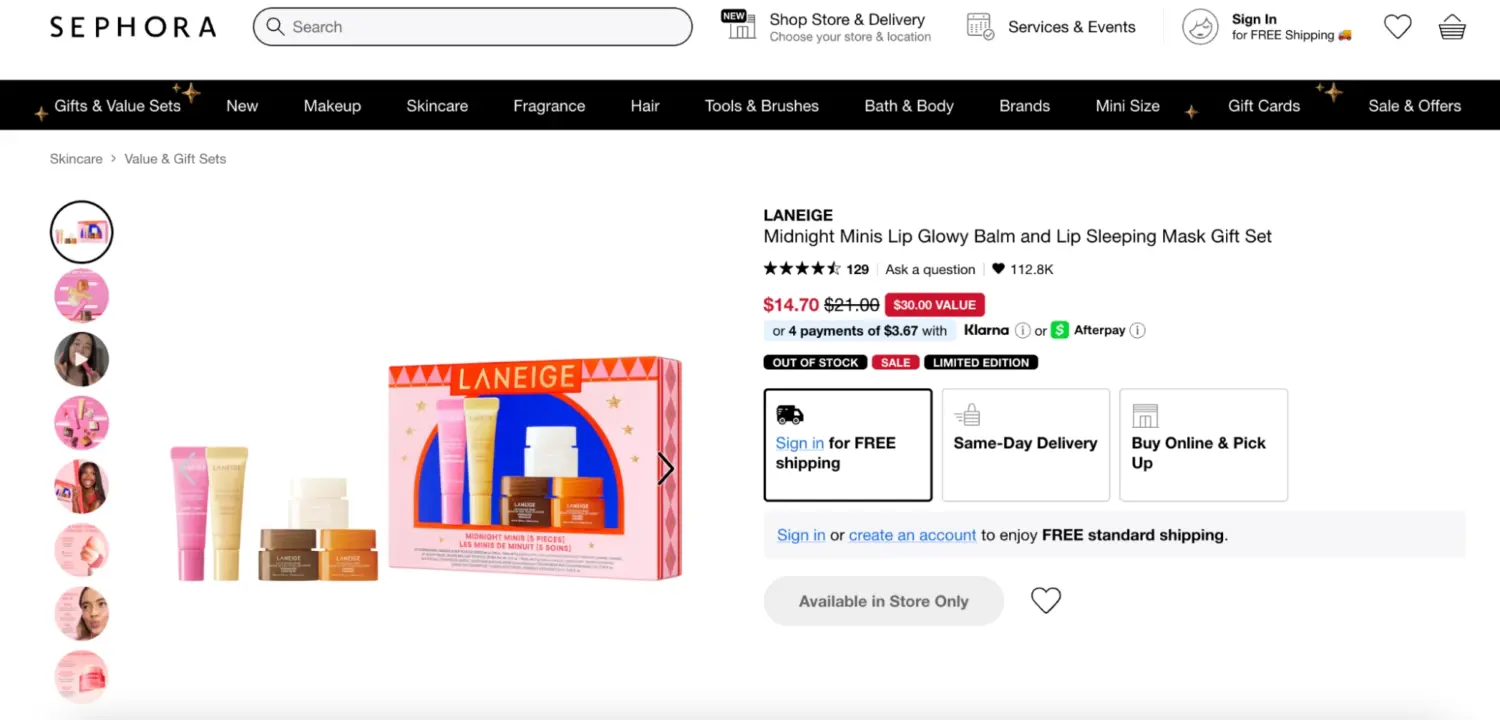
The Laneige Midnight Minis Lip Glowy Balm and Lip Sleeping Mask Gift Set at Sephora is a five-piece mini set with a “$30 value” tag, but a selling price of around $14.7 when on promotion. At the same time, Lip Sleeping Mask and Lip Glowy Balm are sold separately by Sephora and Laneige in both full-size and mini formats, each with its own page and price.
Customers can:
Choose individual masks or balms in the exact flavor or size they want.
Or pick the gift set that bundles several variants together for less than the combined individual value.
Here, the set and the standalone SKUs live side by side, and the bundle price sits below the sum of the parts, which makes this a clear mixed-bundling pattern in the form of a holiday gift set or value box.
When to use mixed bundling?
1. Retail and physical goods with flexible combinations
For fashion, beauty, home, and accessories, customers naturally mix products to build a look or routine. Mixed bundling lets you encourage those combinations while keeping every SKU buyable on its own.
Use it for:
Skincare routines where cleanser, toner, serum, and moisturizer are sold separately but also offered as a “complete routine” set.
Outfit bundles such as “top + jeans + belt” where each item has its own PDP and size options.
Home and lifestyle sets like “duvet + pillows” or “candle + diffuser”
2. When you need to monetize diverse customer segments
In any store, you have at least 2 groups: specific buyers who come for one SKU, and value seekers who will happily add more if the deal seems to be attractive. Mixed bundling lets both segments coexist on the same catalog and traffic.
Use it for:
Hero products were adding a second or third item unlocks a “bundle and save” deal.
Multi-buy offers like “Buy 2, save 10%” or “Buy 3, get 1 free” while keeping each SKU purchasable on its own.
Attached add-ons such as “Add the matching conditioner for 20% off” or “Add a case and screen protector at a kit price.”
Here, the bundle is an option, not a requirement. Bargain hunters self-select into bigger carts, precise buyers still get their single item, and you lift AOV and revenue per visitor instead of forcing everyone into the same package.
3. Pure bundling vs. mixed bundling: What’s the difference?
Criteria
Pure bundling
Mixed bundling
Customer choice
Low – customers must buy the whole bundle or nothing.
High – customers can choose a bundle or individual items.
Revenue potential
Risk of losing customers who only want one item.
Maximized – serves both value-seekers and selective shoppers.
AOV
High (forced to buy multiple items).
High (driven by upsell and cross-sell incentives).
Inventory management
Simple – one pre-packed bundle SKU.
More complex – must keep bundle and individual SKUs in sync.
Customer experience
Can cause frustration if bundle contains unwanted items.
Positive – customers feel in control of their decision.
Best use cases
Limited editions, digital goods, curated gift sets.
Fashion, Beauty, F&B, everyday retail, and inventory clearance.
In short, mixed bundling outperforms pure bundling on:
Flexibility and segmentation – you can serve more customer types with one pricing structure.
Revenue and AOV potential – bundles become an upgrade path, not a barrier.
Customer experience – less “I had to buy things I don’t need,” more “I chose the smarter deal.”
The downside is operational. Mixed bundling is harder to run, especially on Shopify: you need clean logic to sync bundle discounts with individual SKUs, keep inventory accurate, and protect margins. That almost always means using a dedicated bundling or promotion app and aligning closely with your ops team.
4. Final thought
We hope this breakdown has given you a solid, nuanced picture of when pure bundling makes sense and when mixed bundling is the smarter play. Whether you choose one, the other, or a mix of both should depend on your goals, your margins, and how your customers actually like to shop. As long as every bundle has a clear role and a measurable impact on AOV and revenue, you’re on the right track.
5. FAQs
What is mixed bundling?
Mixed bundling is a pricing strategy where customers can either buy items separately at their regular prices or buy them together as a bundle at a discount. It lets you target both shoppers who want just one product and value seekers who are happy to buy more if the deal is good.
What are the cons of bundling?
Bundling can confuse customers if the offer is not clear, which may lower conversions. It can also hurt profit if discounts are too deep, make inventory planning harder, and sometimes push people to buy items they don’t really want. These lead to returns or lower satisfaction.
What is mixed leading bundling?
Mixed leader bundling is when you sell a popular “leader” product both on its own and in a bundle with other items at a discount. The leader attracts customers, and the bundle encourages them to add extra products, but they still have the option to buy only the leader if they prefer.
What is the main difference between pure bundling and mixed bundling?
Pure bundling only lets customers buy a fixed bundle, never the individual items in that offer. Mixed bundling lets customers choose: they can buy the bundle at a better price or buy each item separately at its regular price. Same products, very different levels of control and segmentation.