Allan Vu is a Digital Marketing expert and the driving force behind BOGOS’s blog content. With a deep understanding of eCommerce and Shopify promotions, he is passionate about helping merchants unlock the full potential of their stores.
At BOGOS, Allan creates valuable, practical content focused on strategies like Free Gifts, Buy X Get Y, product bundles, and upsell offers to empower Shopify sellers to grow their businesses effectively.
Known for his clear, insightful writing, Allan is dedicated to delivering actionable advice that makes a real difference for BOGOS’s readers.
A Gift with Purchase (GWP) promotion stands as one of the fastest ways to increase AOV on Shopify. But a poorly designed one does the opposite: it attracts buyers who only want the freebie, erodes your margin, and ends without increasing long-term revenue.
In this article, we’ll break down the two decisions that make or break your GWP offer’s profitability: the gift selection and the conditions setup. If you get both decisions right, then you spend less to move more. If you get either one wrong, then the promotion quietly eats into your margin every time it runs.
1. 4 Common Mistakes When Creating Gift with Purchase Offers That Hurt Your Bottom Line
Gift with purchase is one of the most classic promotional campaigns for scaling GMV and increasing AOV. When done right, it encourages customers to spend more, helps move inventory without discounting, and creates a better shopping experience that brings them back. However, a poorly designed offer not only underperforms, but it can also bleed profit on every qualifying order.
Below are four common situations that lead to that negative outcome:
Mistake 1 – Using a percentage discount as the gift: Some merchants treat GWP like a discount coupon instead of offering a real product as the gift. The problem is that a discount cuts directly into your margin. When customers add more items to their cart, the discount grows with it, which can shrink your profit even faster.
Mistake 2 – Picking a gift that no one actually wants: A free item that does not connect to what the customer is buying creates little motivation to spend more. Customers simply do not increase their cart value for a gift they find unnecessary.
Mistake 3 – Setting the threshold too low: A threshold below your current AOV means customers who were already going to spend that amount can claim the gift without adding anything extra to their cart. This ends up increasing your cost per order without generating additional revenue.
Mistake 4 – Setting the threshold too high: Push the threshold too far above your AOV, and most customers see it as unattainable. Consequently, the offer rarely triggers and fails to encourage larger purchases.
The good news is that all four of these are preventable. The next section will walk you through exactly how to make that call.
2. How to Choose a Gift That Attracts the Right Customers and Drives Their Attention
A random gift rarely brings results. The right gift should match your brand’s growth stage and product category, and something that can catch customers’ attention, that motivates them to add to their cart while still keeping your margin healthy.
To help you choose wisely, here are five gift types that work in practice.
A Gift Directly Related To The Hero Product
This is a product that is directly relevant to the main product customers are already interested in to complete a routine or adds a specific benefit to the total order. In this way, customers will see the gift as something they would actually use, which makes them more willing to add extra items to reach the threshold.
Example: A technology retail brand gives away a phone case with 50% off when buying a smartphone
>>> This strategy tends to work best in the following situations:
Factor
Detail
Categories
Electronics, Beauty, Home Appliances
Growth stage
Brands with a hero product that drives a number of organic traffic
Business objective
Maximize AOV
💡Tip: If your products come in multiple variants, use a gift slider that allows customers to choose their preferred gift instead of offering a fixed one.
An Exclusive Gift from A Specific Campaign
This is an exclusive gift that is not available for regular sale. The fact that customers cannot buy it anywhere else is exactly what makes it work. When the gift feels genuinely scarce, the question in the customer’s mind shifts from “is this worth spending more?” to “will I regret missing this?” and that is a much stronger motivator.
Example: A skincare brand launching a new moisturizer line offers an exclusive travel-size kit, available only with qualifying orders during the launch window.
>>> This strategy tends to work best in the following situations:
Factor
Detail
Categories
Fashion, Skincare, FMCG
Growth stage
Brands in the scaling-up phase or launching a new product category or collection
Business objective
Explore a new market penetration and steer traffic
A Branded Merchandise Gift
This is a physical item, commonly known as a tote bag, mug, notebook, or assesories which are printed with your brand’s logo. It is low-cost to produce but carries a strong emotional or aesthetic connection to your brand identity.
Example: A coffee brand gifts a branded ceramic mug with orders over $60. A streetwear label includes a logo tote with every jacket purchase.
Why it works: Branded merchandise earns attention well beyond the transaction. A customer who carries your tote or uses your mug daily becomes a passive brand signal in the real world – something a discount code can never replicate. For established brands with a recognizable identity, this is the gift type that builds the longest-lasting return.
>>> This strategy tends to work best in the following situations:
Factor
Detail
Categories
Any business type
Growth stage
Established brands with a stable identity and a loyal customer base
Business objective
Increase brand advocacy
💡 Tip: Making the gift unpurchasable is a smart way to make it more precious and add more exclusivity
A Sample Or Trial-Sized Product From Another Category
This is a smaller version of a product from a different category in your range, with a high replenishment rate. The biggest barrier to a cross-category purchase is uncertainty: customers hesitate to pay for something they have never tried. A sample removes that barrier entirely. Instead of a marketing message asking them to take a risk, you let the product make the case itself.
Example: A supplement brand includes a trial-size protein bar with every protein powder order to introduce customers to a new flavor line.
>>> This strategy tends to work best in the following situations:
Factor
Detail
Categories
Cosmetics/Skincare, Food & Beverage, Supplements
Growth stage
Brands focused on retention optimization and increasing repurchase frequency
Business objective
Increase repurchase frequency and cross-sell
A Digital Asset Or Value-Added Service
This is a non-physical gift: an e-book, online course, preset pack, extended warranty, or premium support tier. Once created, it costs nearly zero to deliver to each additional customer. This makes it the only gift type where scaling the promotion does not scale your costs, whether you fulfill 50 orders or 5,000. For stores where margin protection is the top priority, that predictability is the point.
Example: A smart home brand gifts a 12-month extended warranty with orders above $200. A photography brand includes a Lightroom preset pack with every camera accessory purchase.
>>> This strategy tends to work best in the following situations:
Factor
Detail
Categories
Smart home tech, Healthcare, Mother & Baby
Growth stage
Brands where profit margin protection is the top priority
Business objective
Maximize profit margins
3. How to Set Conditions That Push Customers to Spend More
If your gift determines the motivation, your conditions determine whether that motivation translates into a higher cart. Here are three key takeaways that help customers spend more.
Set The Threshold 20-30% Higher Than Your AOV
Your current AOV is the baseline, not the target. If the threshold sits at or below AOV, customers can unlock the gift without changing their behavior. In that case, you absorb the gift cost but generate no incremental revenue.
Setting the threshold 20-30% above AOV creates a small but effective stretch. It encourages customers to add one more item to qualify for the gift while still keeping the target achievable.
Set it at 20% above when your customers are price-sensitive, or you are running GWP for the first time and want a threshold most buyers can hit.
Set it at 30% above when your catalog has several mid-price products that pair naturally.
Use Tiered Rewards Instead Of A Single Threshold
A single threshold is the simplest structure that works well for most stores. However, it creates only one target: customers either reach it or they do not. A tiered structure, on the other hand, introduces multiple spending targets.
For example: spend $50 to unlock Gift A, spend $80 to unlock Gift B.
Each tier gives customers a new incentive to add more items, which pulls more orders into higher cart ranges and makes it a stronger AOV lever than a single cutoff. That makes tiered rewards the right choice when you have a wide product range and during seasonal holidays when customers are willing to spend more.
Set A Specific Threshold For A Specific Product Collection
Instead of applying a spend threshold to every cart, you can trigger the GWP only when the cart includes products from a specific collection. This approach gives you greater control over which orders qualify for the gift.
This becomes especially important when your catalog has uneven margins across categories. Without a collection trigger, the gift may activate on low-margin orders where the promotion does not make financial sense.
Use a collection trigger when:
You want to protect the GWP from low-margin SKUs
You want to drive volume toward a specific product line or new launch
Use a sitewide threshold when:
Your catalog has relatively consistent margins across categories
You are running a sitewide campaign or seasonal event
4. Real-World GWP Examples That Get the Gift and Conditions Right
Here are three examples that show how gift type and condition design work together in practice. Each maps to a different business category and objective from the framework above.
PTC Auto: Anchor The Related Gift To The Winning Product
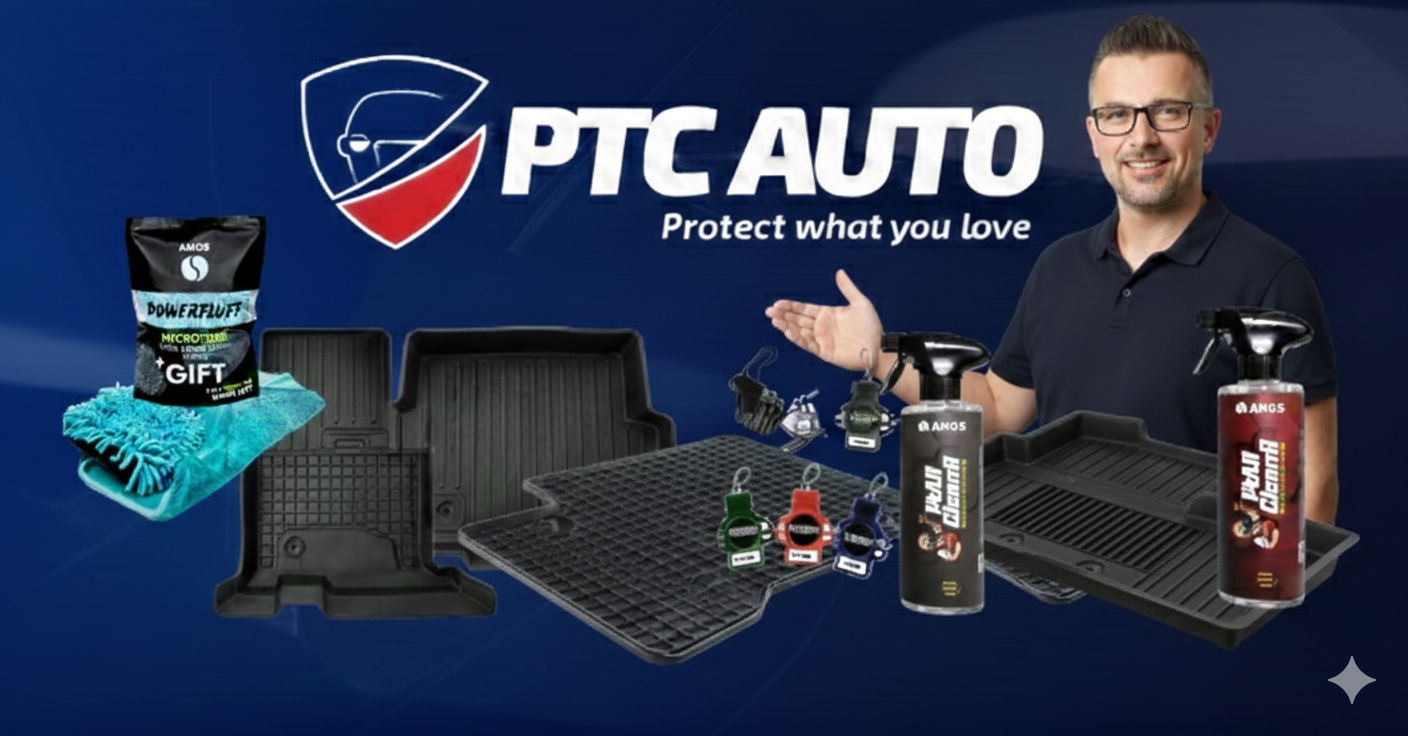
PTC Auto built a GWP offer around their top-selling microfiber towel. Any customer who added the towel to their cart automatically received a microfiber towel detergent for free – a product priced at nearly 50% of the main item.
The gift is not just related to the purchase – it is required for the product to work properly over time. Customers immediately recognize that the detergent is something they would need to buy anyway, which makes the gift feel like genuine savings rather than a promotional trick. The high perceived value of the gift relative to its actual cost also means the offer looks more generous than it is expensive to run.
The result:
Generated $10,502 across 162 orders in just over one month
Strong attach rate on the hero product, driven by a gift that customers actually needed
Klower Pandor: Exclusive Merchandise Gift Tied To A Specific Collection
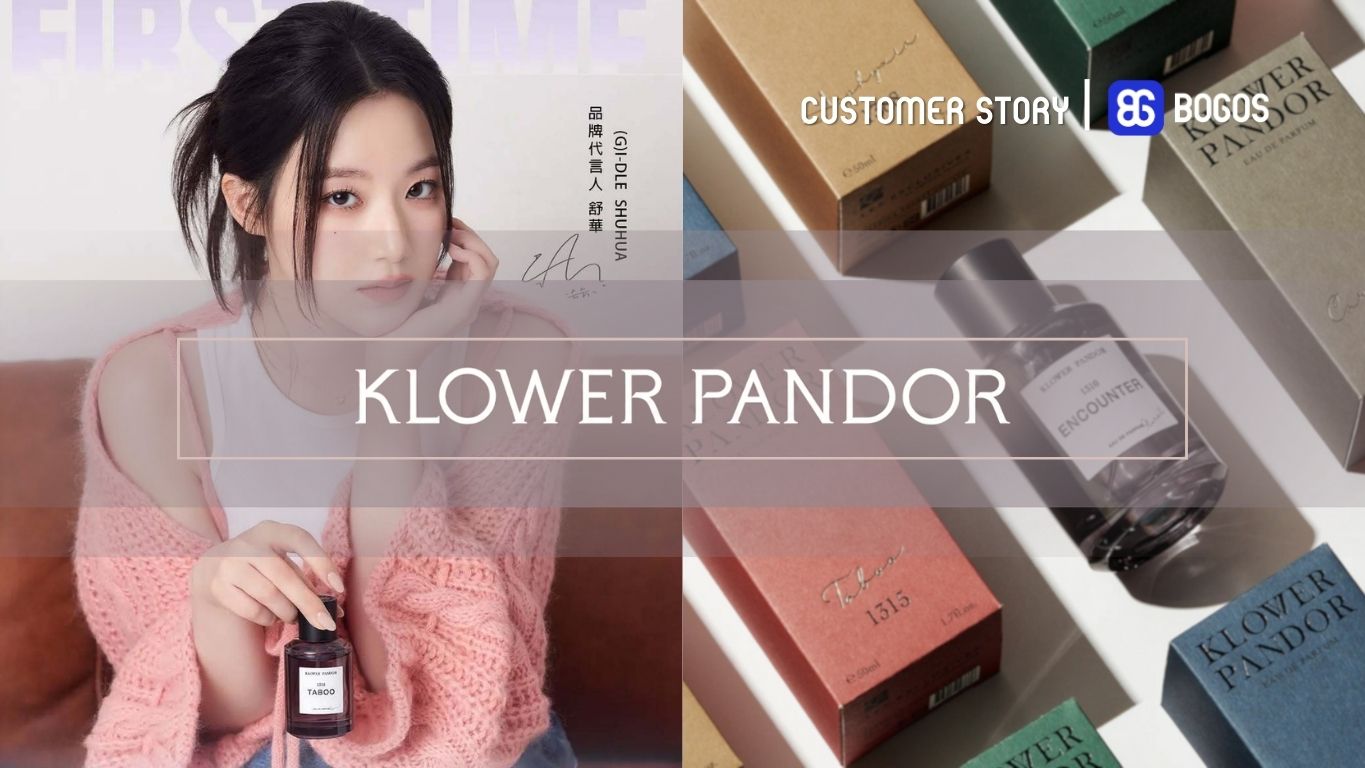
Klower Pandor ran a GWP campaign where customers who purchased any item from their First Time collection received an exclusive standee featuring the brand’s ambassador, which is not available anywhere else.
Tying the gift to a specific collection gave the campaign two jobs at once: rewarding purchase and steering attention toward a defined product line. The ambassador standee added a strong emotional pull for existing fans of the brand while keeping the gift cost low.
Face to Future: Sample Gift For A Sitewide Spend Threshold
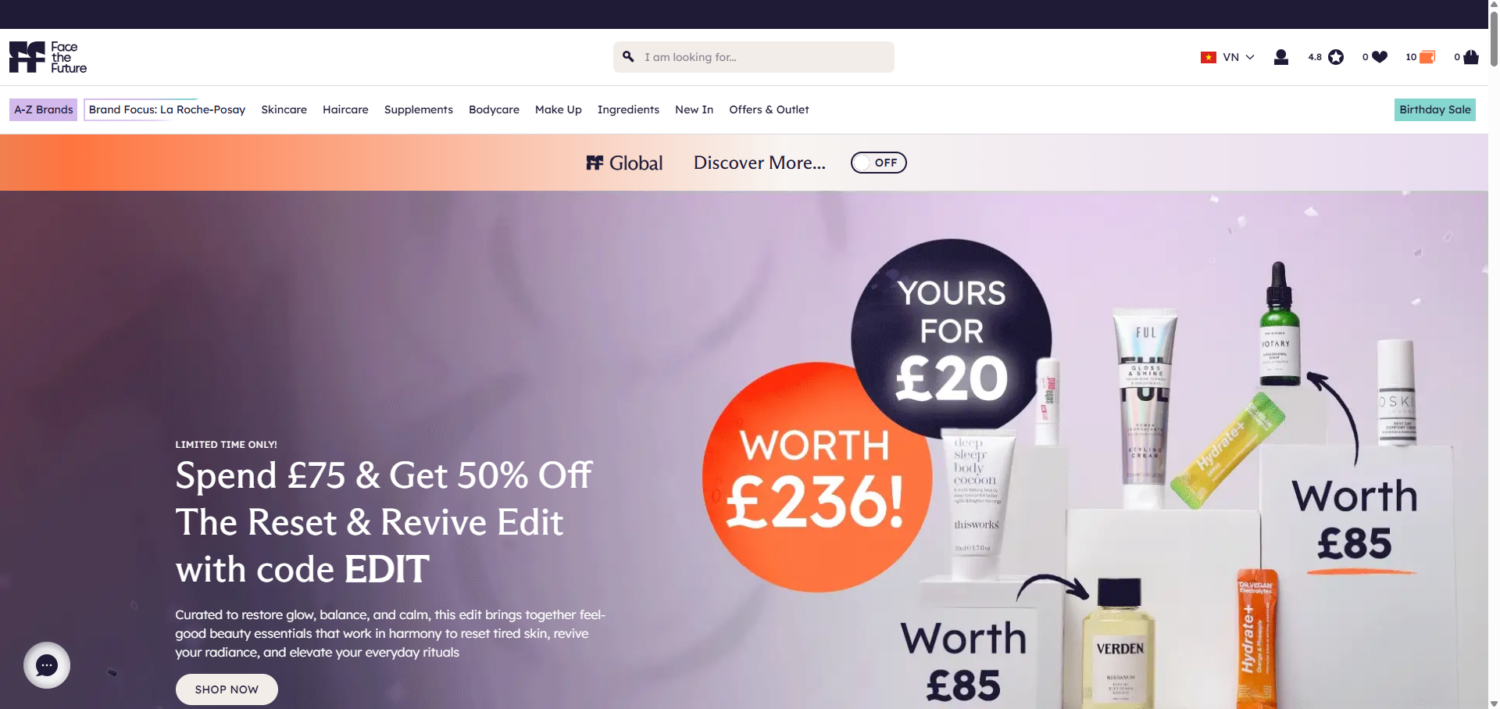
Face to Future offered customers a choice of one free trial product from a curated shortlist of three options when their cart exceeded £125. The gift was not fixed. Customers could select whichever sample felt most relevant to them.
Giving customers a choice does two things: it increases the perceived value of the gift because customers get something they actually wanna try, and it reduces the chance the gift goes unused. The sample format also served a longer-term purpose, which introduced customers to new product categories they had not tried, at zero purchase risk, to drive potential repurchase in the future.
The result: AOV increased 116%, from £70 to £151
Best Practices to Promote Your GWP Offer
Running a GWP is not just about the gift and the threshold. How you deliver and present the offer at the execution stage determines whether customers actually engage with it. Here are three practices that separate a GWP that converts from one that goes unnoticed.
Auto-add the gift to the cart the moment conditions are met: The gift should appear in the cart automatically as soon as a customer qualifies, without hunting for a product page or manual add. Every extra step between qualifying and receiving the gift is a point where customers drop off.
💡 Tip: Use an app like BOGOS to handle this automatically. When the cart hits the threshold, the gift is automatically added
Make the offer visible at key touchpoints of the buying journey: Customers who only discover the GWP at checkout have already decided what to buy. Surfacing the offer early, like on the product page, in the cart drawer, and via a sticky bar, may trigger them to take action faster.
Write an offer title that a customer can read in two seconds: “Spend $60, get a free vitamin C serum” takes two seconds to understand, while the “Special Promotion” tells the customer nothing. Your offer title has one job: communicate what to do and what they get, in a single line.
Conclusion
At the end of the day, a gift that nobody wants is just a cost with no return, while a well-chosen GWP is one of the most efficient ways to grow your average order value without touching your prices. When you match the right gift to your brand’s growth stage and back it with a threshold that stretches without pushing customers away, the offer practically sells itself.