Charlie Ngo is an eCommerce expert with 7 years of experience in the marketing field, specializing in SaaS and digital growth. A graduate in Marketing Communication, Charlie currently serves as the Marketing Manager of the BOGOS Shopify App, where he leads strategic initiatives to drive user acquisition, engagement, and brand positioning.
Summary
Section 1: Explain why the competitive pricing intelligence is indispensable for protecting profit margins during BFCM.
Section 2: Showcase 6 approaches that many succesful Shopify leverage to stay profitable while driving massive traffic.
Section 3: Key takeaways to implement in your next BFCM campaign.
Black Friday Cyber Monday is the Super Bowl of eCommerce, the biggest revenue opportunity of the year. For Shopify merchants, it’s a golden chance to skyrocket sales. But here’s what most BFCM guides won’t tell you:the repeated tactics every year, such as slashing prices deeper or spending more on flashy ads, are a race to the bottom that kills your profit margins.
After 11+ years helping thousands of Shopify brands run BFCM campaigns, I’ve learned that competitive pricing intelligence outperforms old-school advice. In this post, I’m going to cover six proven strategies to drive BFCM conversions while protecting profitability.
1. Why Competitive Pricing Intelligence Is Essential During BFCM
Staying profitable during Black Friday and Cyber Monday is critical to your business’s long-term health, especially in today’s uncertain economy. But it’s not just about making money; it’s about protecting your brand value for the future.
Here’s why competitive pricing intelligence plays an essential role during this high-traffic period:
It prevents “bargain hunter” behavior: Relying solely on heavy discounts trains customers to only buy when they see sales. According to CMSWire, a leading online publication and community for professionals focused on digital customer experience, customers who receive a “medium” discount actually have a 20–25% higher future lifetime value than those who get deep discounts.
It protects your brand value: Price is often a proxy for quality in consumers’ minds. When your premium products are constantly discounted, customers assume they’re cheaply made. This brand devaluation is the long-term risk of aggressive discounting, and many brands never recover from it.
It enables sustainable growth: Competitive pricing intelligence helps you stay competitive without racing to the bottom. You can offer compelling value while maintaining the healthy margins needed for better customer service, quality products, and long-term business investment.
Knowing why smart pricing matters is one thing, but execution is everything. The six tactics below show you exactly how to structure your BFCM offers to drive conversions while protecting your margins.
2. 6 Proven Tactics to Protect Margins During BFCM
There are many practical methods you can use to protect your margins. Here are all of our tips and realistic examples from top-performing brands on how to stay profitable during this BFCM season, which are derived from the competitive pricing intelligence.
2.1. Discount to Attract Traffic, Then Upsell High-Margin Products
During traffic surges like BFCM, discounts still play an important role and drive conversions. However, if discounting is your only strategy, you’re leaving money on the table and killing your margins. The smart approach is to discount your best-sellers to drive traffic, then upsell higher-margin products.
👉 Here’s how to do it:
Step 1: Hook with discounts on best-sellers
In high-volume shopping moments like BFCM, testing unproven items is a waste of opportunity. Instead, taking advantage of hero products with proven conversion rates becomes a wise move to drive clicks.
The next question becomes: what discount percentage attracts attention without destroying margins? As you may know, a discount below 20% easily gets ignored in the noise of BFCM, while anything above 30% risks eroding your margin at higher sales volumes. So, the sweet spot is a range from 20% to 30%.
Step 2: Upsell high-margin items
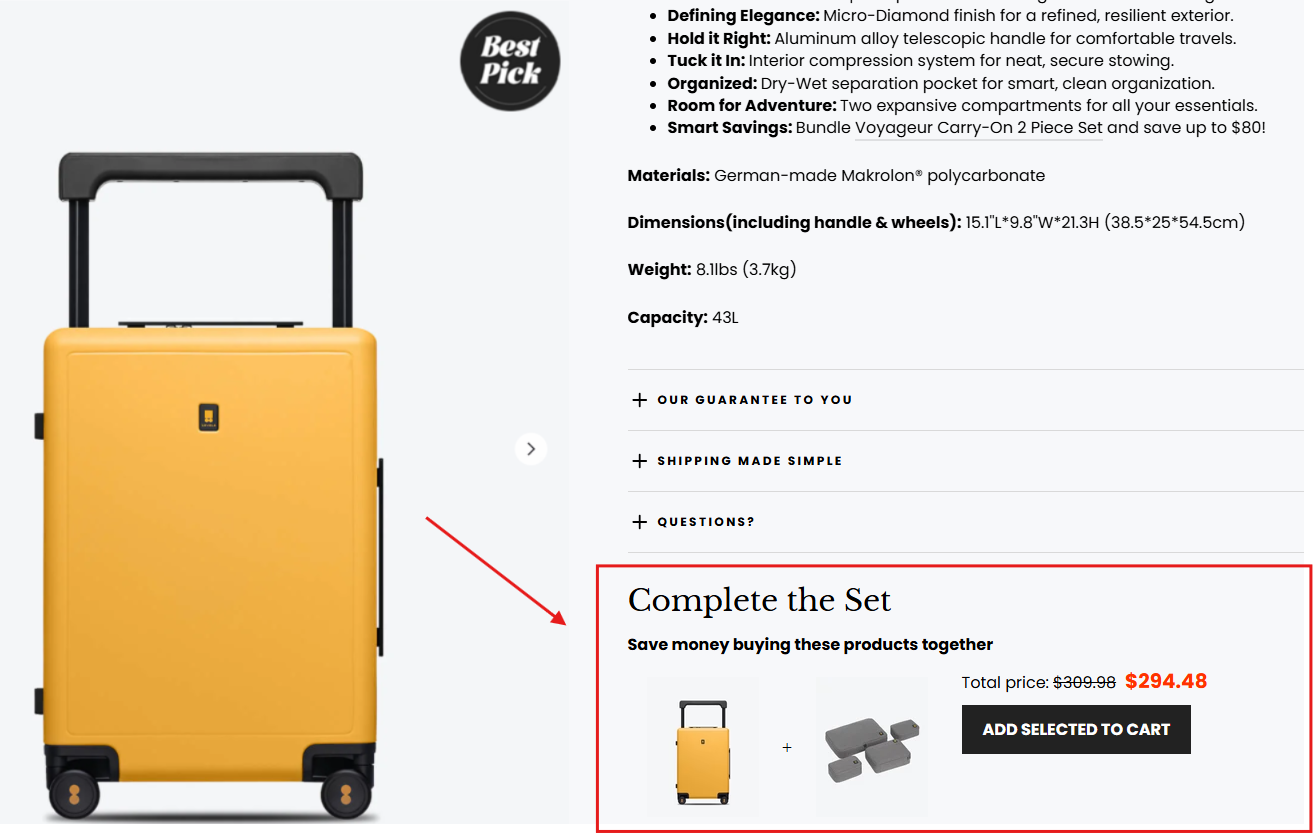
Once the customer is hooked with the discounts, it’s time for you to focus on profit recovery. This is where you recommend high-margin add-ons at key touchpoints like the product page or cart drawer. Don’t upsell random items. Instead, suggest complementary products that solve hidden problems customers didn’t recognize they had until they saw the pairing.
The key is selecting products whose prices, when added to your main item, reach or exceed your free shipping threshold, which will be explained in the next step.
Step 3: Add a free shipping threshold
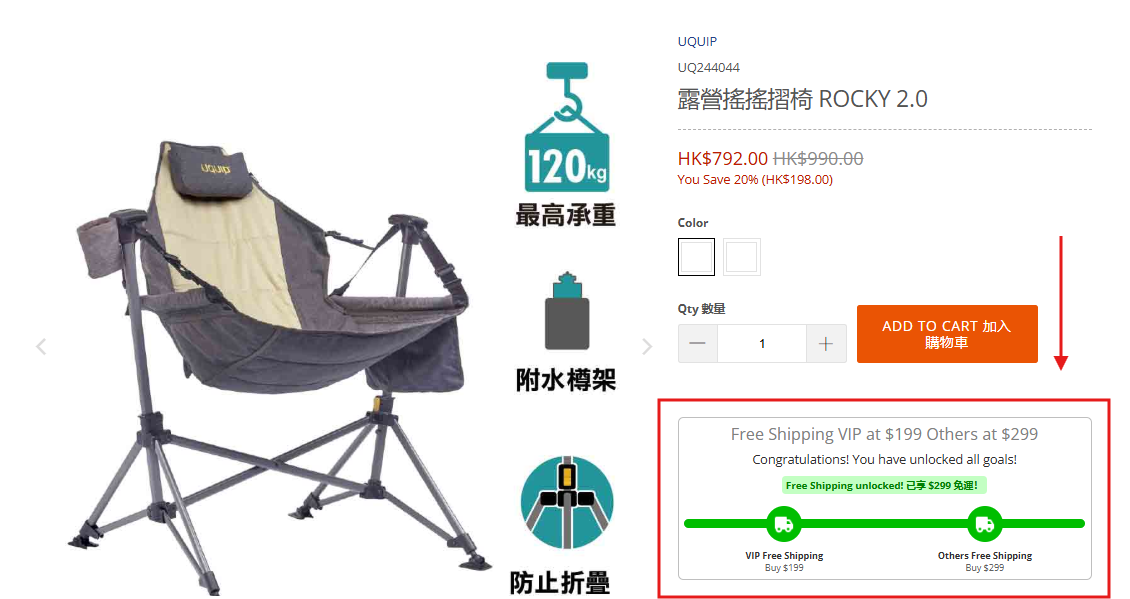
Beyond discounts, 68% of customers cite free shipping as the biggest driver of a positive shopping experience. To capitalize on this, you must calculate your threshold thoughtfully. It should be set above the price of your discounted main item. In other words, the customer must buy at least one main item plus one high-margin add-on.
This strategic gap motivates an increase in AOV, ensuring that the profit from the extra item effectively covers the discount cost you gave in Step 1.
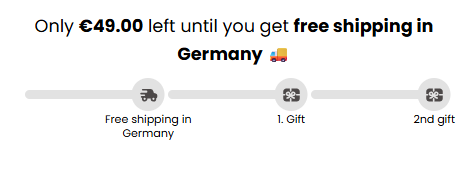
Pro tip: Use BOGOS's progress bar feature to visualize your free shipping threshold and motivate customers to buy more.
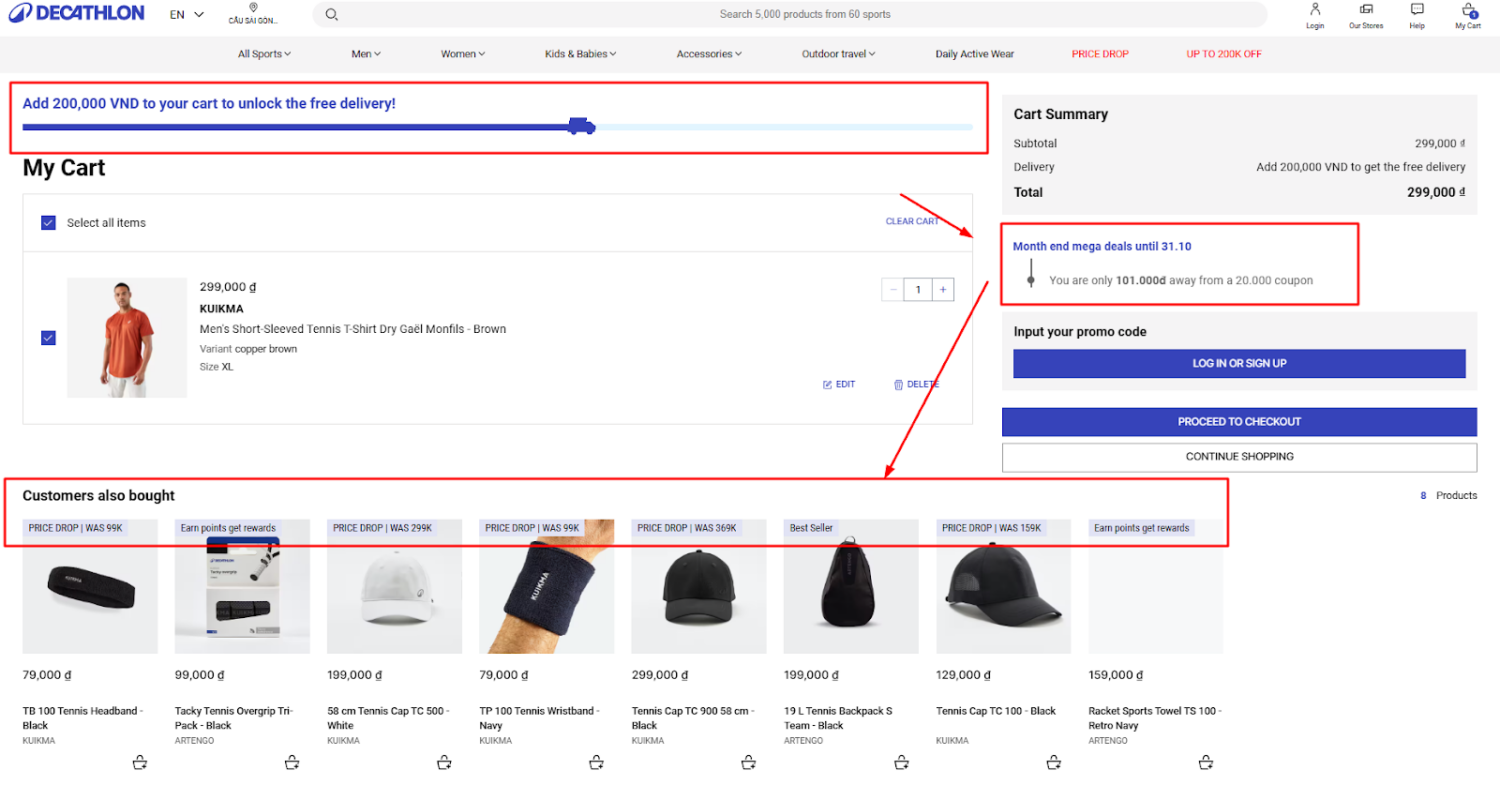
Decathlon, a leading outdoor sports retailer, executed this strategy during its BFCM campaign.
First, they discounted their best-selling performance shirts to act as a traffic magnet. Then, they upsold related accessories like running caps and headbands. Because these items were low-priced yet essential to complete the professional running outfit, they required minimal financial consideration from the customer, making the purchase decision effortless.
Most importantly, Decathlon set their free shipping threshold above the price of any single average-priced item. To unlock free shipping, a customer had to buy at least two add-ons or combine two main items plus one add-on. This structure naturally increased the AOV, ensuring that the profit from the extra items fully covered the initial discount.
2.2. Use a Branded Gift Instead of Over-Discounting
When overusing discounts, customers start waiting for sales instead of paying full price. This devalues your brand over time. A smarter strategy? Replace percentage discounts with branded gifts. This protects your margin while delivering both functional and emotional value to customers.
👉 Here’s how to execute this:
Step 1: Create a low-cost, high-value gift
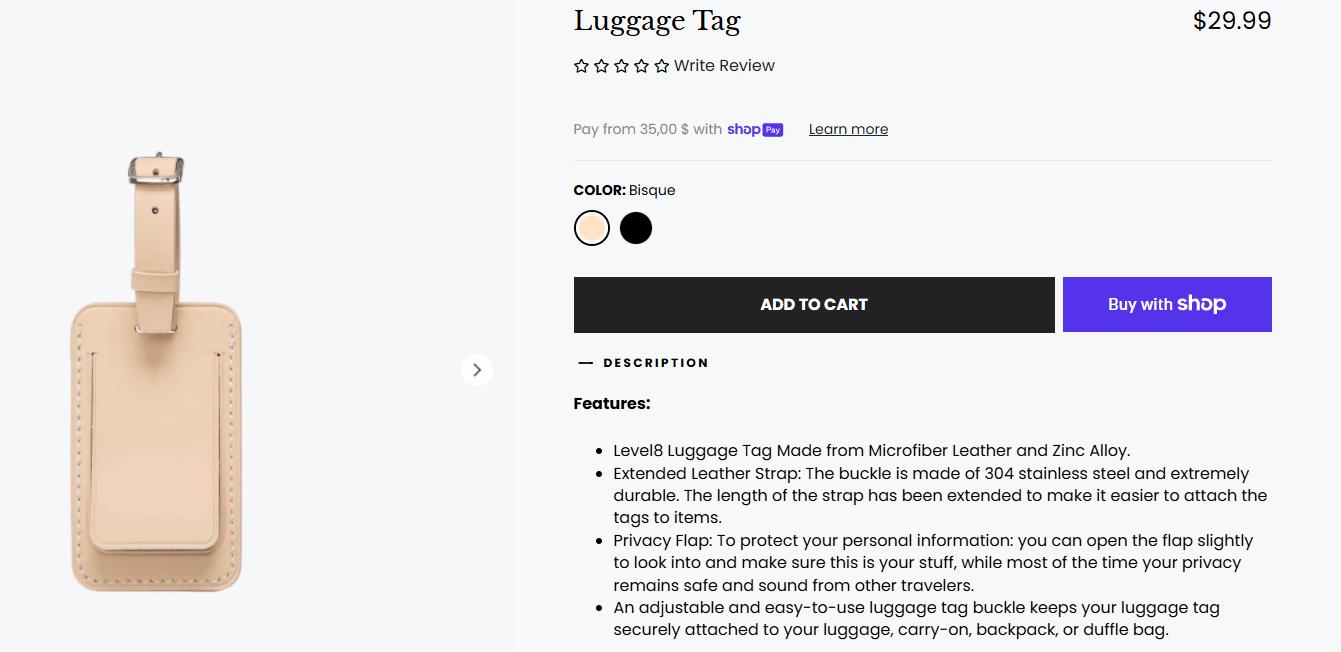
The secret here is to choose a gift that feels both functional and emotional to the customer but costs you little to produce. The economy is shifting toward emotional consumption, especially among Gen Z and younger Millennials. This is where customized gifts with personalized messages that relate to your brand image create a strong emotional connection.
However, emotion alone isn’t enough. The gift must also be functional. It needs to serve a real purpose in their daily life.
Step 2: Make it feel exclusive
To make the gift feel more special, remove it from your public catalog. When customers realize this item isn’t available for purchase, it creates genuine exclusivity. Take it further by offering customized, campaign-exclusive versions that feel like true limited editions.
Moreover, this tactic taps into collector psychology among customers who actively seek exclusive items to complete their personal collection. This approach works particularly well in categories tied to pop culture, nostalgia, or limited-edition releases.
Step 3: Automate the gift addition
Do not require customers to add the gift manually or enter a code, which may create unexpected friction that causes them to drop off. Instead, set your cart to automatically add the gift the moment the threshold is reached. This instant gratification creates a surprised moment that reinforces the purchase decision and reduces cart abandonment.
💡 Example:
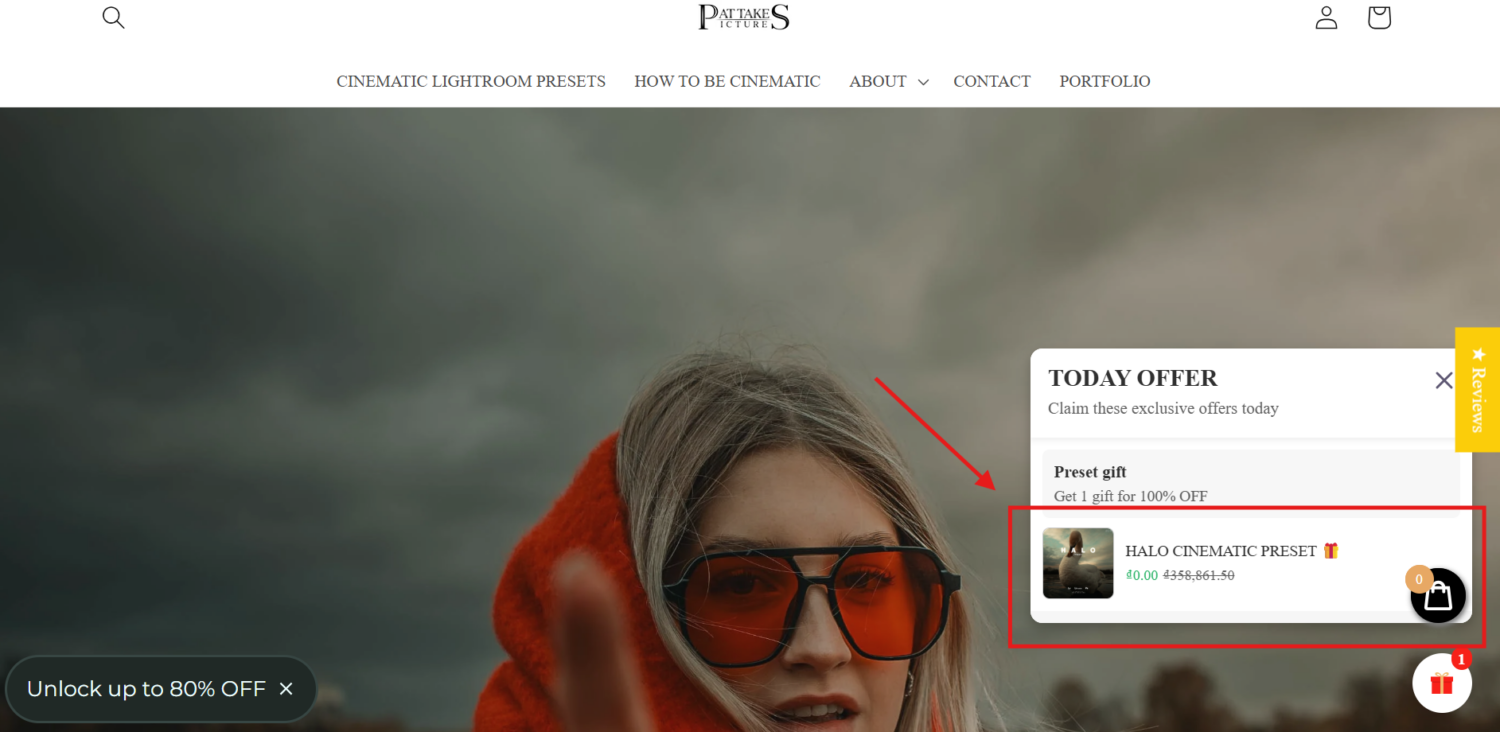
Pattakespictures, a UK photography brand, took full advantage of this approach by using an exclusive digital asset preset as a hidden reward.
Because it was a digital download, it cost the brand zero to distribute, yet to photographers, it held a perceived value of £20–£50. When customers reached the £75 threshold, the preset automatically appeared in the cart with a celebratory message.
Percentage discounts seem simple, but here’s the trap: the higher the cart value, the more margin you lose. For example, a 25% off sitewide offer costs you $25 on a $100 order and $250 on a $1,000 order.
A smarter approach is to cap your discount at a fixed amount. You still advertise an attractive percentage to hook attention, but you control exactly how much margin you’re giving away on large orders. Even better, the cap protects your profitability without customers feeling restricted.
👉 Here’s how to implement discount caps effectively:
Step 1: Set your percentage discount
Start with a percentage that looks attractive but doesn’t destroy margins. For most Shopify stores, 20-30% strikes the right balance: high enough to grab attention during competitive sale periods, but not so much that you hurt your profits.
Choose the higher end (35-50%) if you’re running a flash sale and need urgency. Go conservative (15-20%) if it’s an extended promotion where volume will compound over time.
Step 2: Calculate and apply your cap
The key consideration here is setting a maximum discount amount based on your store’s margin analysis, such as a cap of up to $50.
You can verify this tactic will work by running the math on your top 10% of orders:
✅ If your cap still leaves you with healthy margins on those large carts, you’re safe.
❌ If not, lower the cap until the numbers work.
Step 3: Position it as a reward, not a restriction
About 95% of purchasing decisions are subconscious and driven by emotion. If shoppers feel restricted, they hesitate; if they feel like they are winning, they convert.
Therefore, avoid phrasing like “Discount capped at $50,” which sounds like a penalty. Instead, flip the script to “Save 30% up to $50!” This simple change turns a financial restriction into a psychological goal. It motivates customers to build their cart to “unlock” the full savings, making the offer feel like a bonus they’ve earned, not a discount you’re limiting.
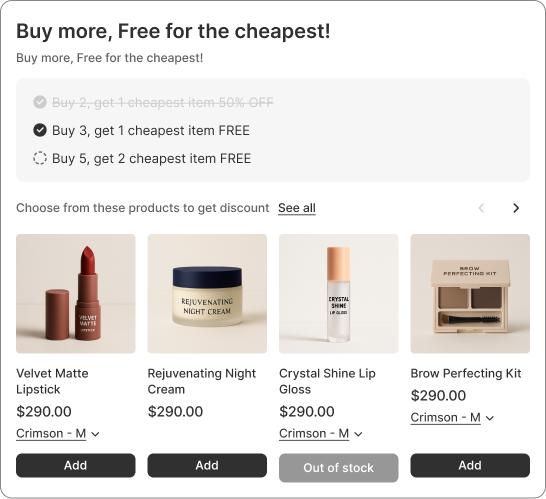
2.4. Discount the Cheapest Item in Multi-Product Offers
Buy X Get Y offers are BFCM favorites, but traditional implementations can devastate margins when customers buy the cheapest item and then select the most expensive gift. I highly recommend a more exclusive approach which applies the discount to the cheapest item in multi-product purchases.
👉 Here’s your step-by-step:
Step 1: Strategize your product selection
Don’t apply this strategy across your entire catalog. Instead, curate a specific collection of complementary products that act as natural add-ons. Crucially, these items should be similarly priced.
Therefore, the “cheapest item” still holds significant value to the customer, making the deal feel premium. This also allows you to control the discount value more easily and prevents customers from “gaming” the system by adding a much cheaper item just to reach the threshold.
Step 2: Motivate larger purchase with tiered offers
Once your collection is ready, structure the offer to incentivize higher volume. A highly recommended approach is to layer your rewards: start with Free Shipping as a baseline incentive, then unlock the discount on the cheapest item only when the customer reaches a higher spend threshold.
Before launching, calculate a realistic cart scenario to verify your offer selection. You can take a typical combination of products, subtract your Cost of Goods Sold (COGS), and apply the discount to the cheapest item.
Step 3: Wisely choose the threshold
Choose how many items customers must buy to unlock the reward. Calculate this threshold to push your AOV meaningfully above its current average. It’s typically 25-40% higher and don’t forget to tailor the structure to your industry’s margins.
For instance, high-margin categories like Fashion or Cosmetics, a “Buy 2 Get 1 Free” structure works well to drive volume. However, if you sell tighter-margin goods like Electronics or Hardware, consider “Buy 3 Get 1 Free.”
Pro tip: Create your discount on the cheapest item when using BOGOS free plan
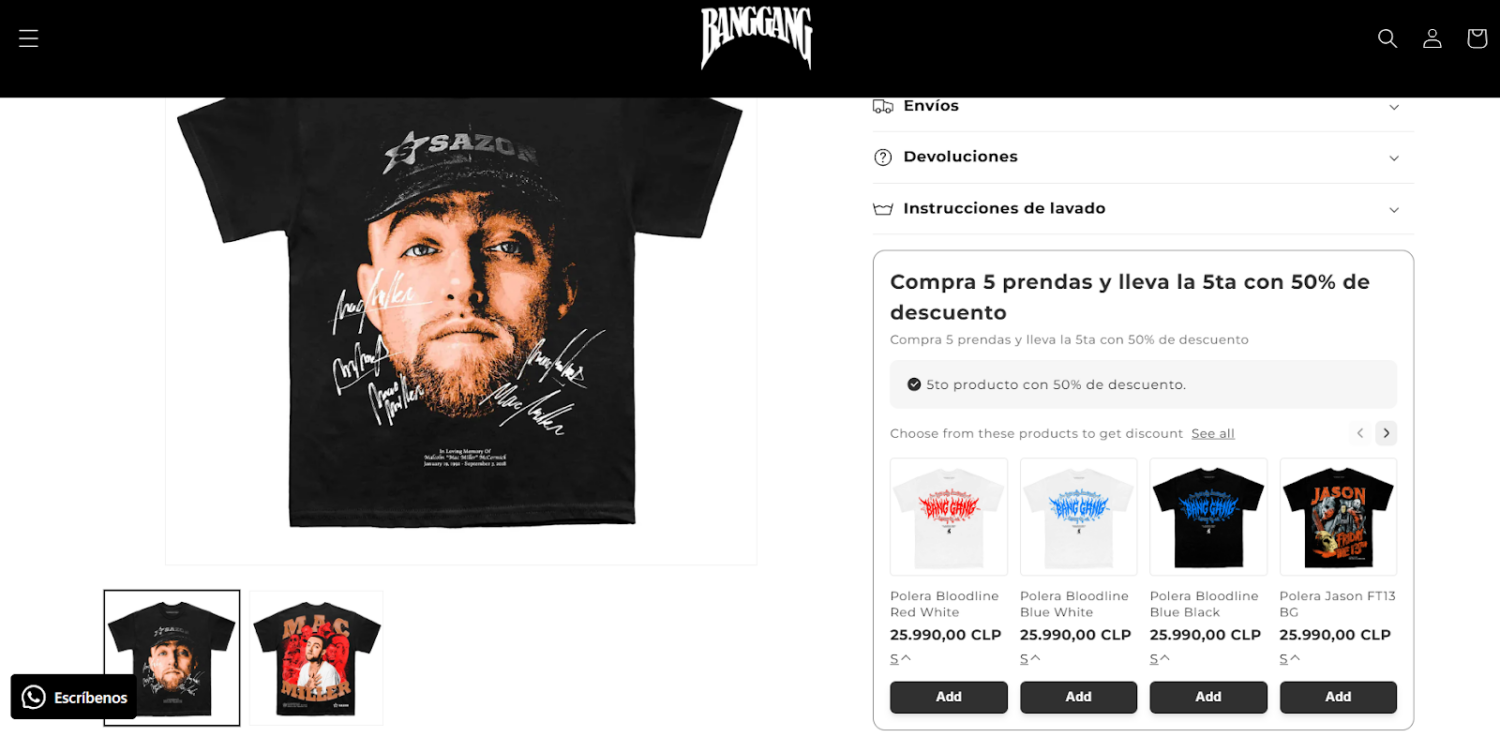
Streetwear brand Bang Gang, a BOGOS customer, created a specific collection where all t-shirts are priced around 23,990 ~ 25,990 CLP and built an offer around it: Buy 5 items, get 50% off the 5th one.
This worked because they understood their customer. Streetwear buyers build outfits, not single purchases. Five pieces feel natural for a week’s rotation, so the threshold felt natural rather than forced.
Using BOGOS’s cheapest item discount feature, their product selector automatically showed qualifying items and applied the discount at the cart drawer.
This structure drove an increase in Average Order Value (AOV) while ensuring the discount remains profitable by only slashing the price of the lowest-cost item rather than giving it away for free.
2.5. Cart Value Tiers with Non-Percentage Discounts
Running percentage discounts site-wide is costly because the more your customers spend, the more money you lose. Alternatively, you can motivate shoppers by creating tiered offers using fixed dollar amounts or gifts.
👉 Follow these steps:
Step 1: Design strategic spending goals
Don’t pick random numbers for your tiers. Analyze your current Average Order Value (AOV) and set your first tier slightly above it, typically 15–20% higher.
This “stretch goal” is psychologically reachable for the customer but significantly boosts your revenue per transaction.
Step 2: Switch to fixed-value rewards
Avoid percentage discounts here. Instead, offer Fixed-Amount Discounts or Exclusive Free Gifts. Fixed amounts give you absolute control over your margin. Whether a customer spends $150 or $300 to reach a tier, your cost for the reward remains exactly the same.
Step 3: Show real-time progress toward each tier
Tiers only work if customers know they exist. Add a progress bar that updates in real-time as customers shop, clearly showing how close they are to the next reward. This visual cue creates a “completionist” mindset. It turns the shopping experience into a game, creating a sense of momentum that naturally motivates customers to add more items without feeling sold to.
Pro tip: Learn how to build tiered offers in BOGOS with the step-by-step tutorial below.
💡 Example:
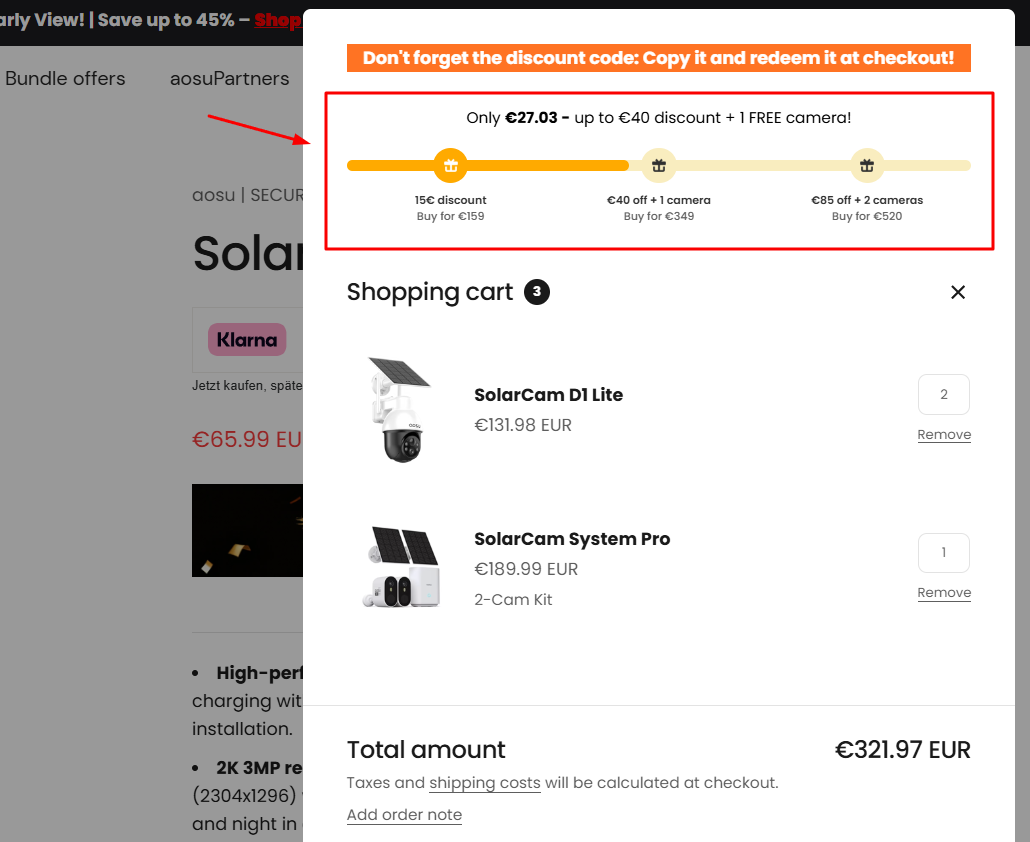
Aosu Life, a German smart home brand, utilized this strategy by building a four-tier structure created by BOGOS that mixed fixed cash discounts with complementary gifts.
This worked because they treated the shopping journey like a ladder. Instead of a single “take it or leave it” offer, they placed the progress bar at the cart drawer – a key touchpoint. This constant visibility ensured customers always knew exactly how much more they needed to spend.
By combining high-value tech accessories as gifts with fixed dollar-off incentives, they successfully drove customers to higher spending tiers while keeping their discount costs under control.
2.6. “Build Your Own Bundle”: Mix Best-Sellers with Slow-Movers
Heavily discounting your best-sellers during BFCM can be a margin trap. Since these “hero” items already have high search volume, applying a flat 20-30% discount simply eats into your profit without necessarily driving more volume.
Another approach is to use the strong margins of your best-sellers to absorb the cost of clearing out “dead” stock. Even better, you can make this buying journey more engaging by using a bundle builder that lets customers mix and match their own rewards.
👉 Let me walk you through this:
Step 1: Choose your best-sellers and low-moving items First, pick the top-selling products that attract your customers the most. Next, identify slow-moving inventory that is currently just costing you money in storage fees.
Step 2: Create a “Combo Selection” offer Instead of forcing customers to buy a pre-packed kit, allow them to select their preferred item from a specific list. This personalization subtly increases the perceived value of the deal, both financially and emotionally. It ensures the bundle feels like a customized reward rather than a “clearance dump.”
Step 3: Price the bundle to protect the main item This is the key to margin protection. Market the offer as a fixed bundle price rather than showing individual discounts. This allows you to maintain the full retail price of your hero product on paper, while the “discount” effectively comes from the low-cost inventory you needed to clear anyway.
Step 4: Encourage bulk buys for higher margins
To maximize profit, encourage customers to buy multiple bundles by offering a small extra incentive (e.g., “Buy 2 bundles, save an extra 5%”). While you are giving a small discount, the savings on shipping and fulfillment costs for a single package will outweigh the discount value, actually increasing your net profit per unit.
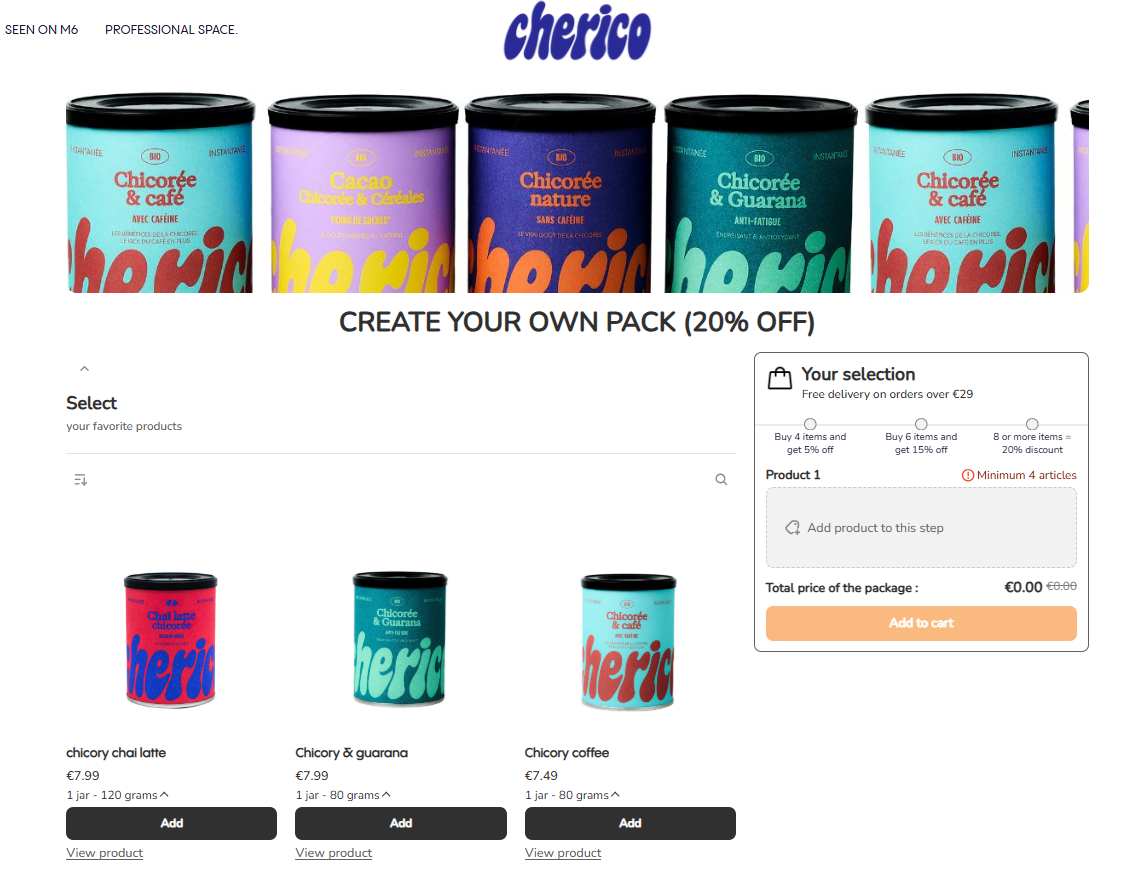
Pro tip: Use BOGOS bundle builder to make this tactic apply this tactic in a few clicks.
💡 Example:
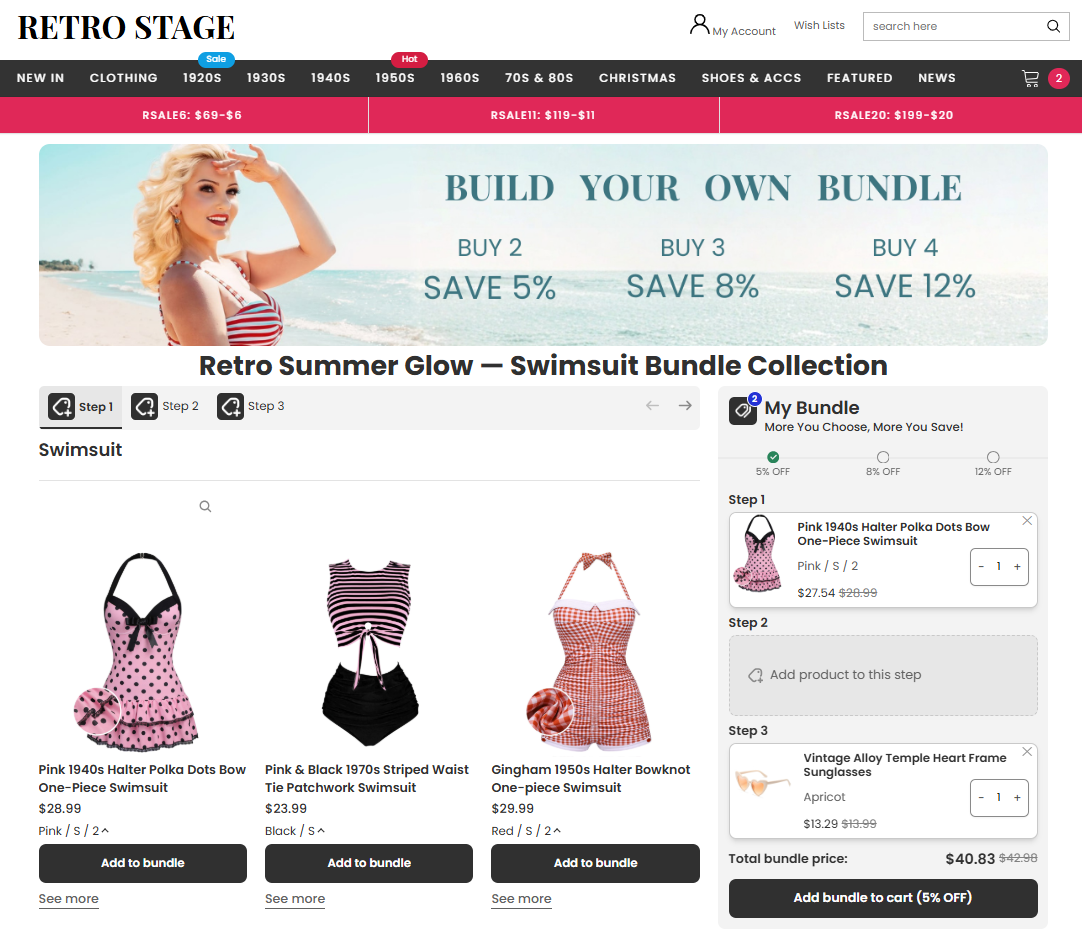
Retro Stage, a vintage fashion brand, utilized the Bundle Builder feature powered by BOGOS to drive volume while protecting seasonal margins. Instead of forcing pre-packed pairs, they grouped their “hook” swimsuits with accessories, allowing customers to pair them into matching outfits through a personalized step-by-step flow.
Furthermore, their tiered offer structure, “Buy 2 Save 5%, Buy 3 Save 8%, and Buy 4 Save 12%” acted as a psychological trigger that naturally motivates customers to add more items to their cart.
These slight discount percentages were a well-thought-out choice. They offset the cost of the promotion through operational efficiency, such as shipping and packaging costs. It ensures that while shoppers feel rewarded for buying more, Retro Stage’s profit margin still stays protected.
3. Key Takeaway: How to Run Sales Without Losing Money
After analyzing how successful brands run BFCM, one pattern becomes clear: You don’t need the biggest discount to win BFCM. You just need to structure your offers smarter.
Here are the 5 simple rules to remember when building your BFCM offers:
Calculate your profit on a single order first: Never launch a sale without checking the profit on a single order. Whether you are using “Discount the cheapest item” or “Capping the discount value,” make sure that even in the worst-case scenario, you are still making money on the transaction.
Discount the cheapest item in multi-buys: In offers like “Buy 2 Get 1 Free”, you lose money if a customer buys cheap items to get an expensive one for free. To fix this, ensure the discount applies to the cheapest item.
Stop using % discounts on big orders: Percentage discounts can be dangerous because they increase as the customer spends more. Instead, switch to fixed amount discounts (like “$20 off”) or free gifts. This ensures that when a customer spends a lot of money, your cost stays the same, and you keep more of the profit.
Make customers “bundle” to unlock deals: Don’t just give discounts on single items. Instead, use offers like “Buy 2 Get 1 Free” or let them build their own bundle. This forces customers to add more items to their cart to get the reward.
Use free shipping as a trigger: Unexpected shipping fees are often one of the primary reasons for cart abandonment. You can turn this friction into a powerful motivator by setting a specific spending goal to unlock free shipping. This trick encourages them to spend more, which helps cover your costs.
Setting up these offers manually can be complicated, but BOGOS makes it easy to go live with every single one of these strategies in just a few clicks.
You can start experimenting right now with BOGOS’ free plan to see how it works for your store. Then, unlock all our powerful advanced features with a 7-day free trial.
Conclusion
Winning Black Friday Cyber Monday isn’t about offering the deepest discount; it’s about running a smarter promotion that attracts customers and protects your profit. The six tactics above aren’t theories; they’re real strategies used by successful Shopify brands that understand one core truth: revenue without profit is just costly busywork.