Allan Vu is a Digital Marketing expert and the driving force behind BOGOS’s blog content. With a deep understanding of eCommerce and Shopify promotions, he is passionate about helping merchants unlock the full potential of their stores.
At BOGOS, Allan creates valuable, practical content focused on strategies like Free Gifts, Buy X Get Y, product bundles, and upsell offers to empower Shopify sellers to grow their businesses effectively.
Known for his clear, insightful writing, Allan is dedicated to delivering actionable advice that makes a real difference for BOGOS’s readers.
If you’ve tried Buy X Get Y before and turned it off because it felt complicated, hard to set up, or just underwhelming, you were probably triggering it at the wrong moment with the wrong structure. Shopify Buy X Get Y performs best when tied to a specific goal, such as raising AOV, clearing dead stock, driving product trials, or building bundle habits.
This article takes the most common merchant pain points and turns them into a clear use case framework organized by business goals. Match your current situation to the right scenario, and you’ll have a much smoother path to execution. Let’s get started!
1. Use Case: Clearing Out Slow-Moving or Dead Inventory
Buy X, Get Y works well for dead inventory because it lets you protect the price of products customers already want. Instead of discounting slow-moving items, you use them as extra value that helps close the sale. The key idea is simple: the popular product stays at full price, while the older stock becomes the reward.
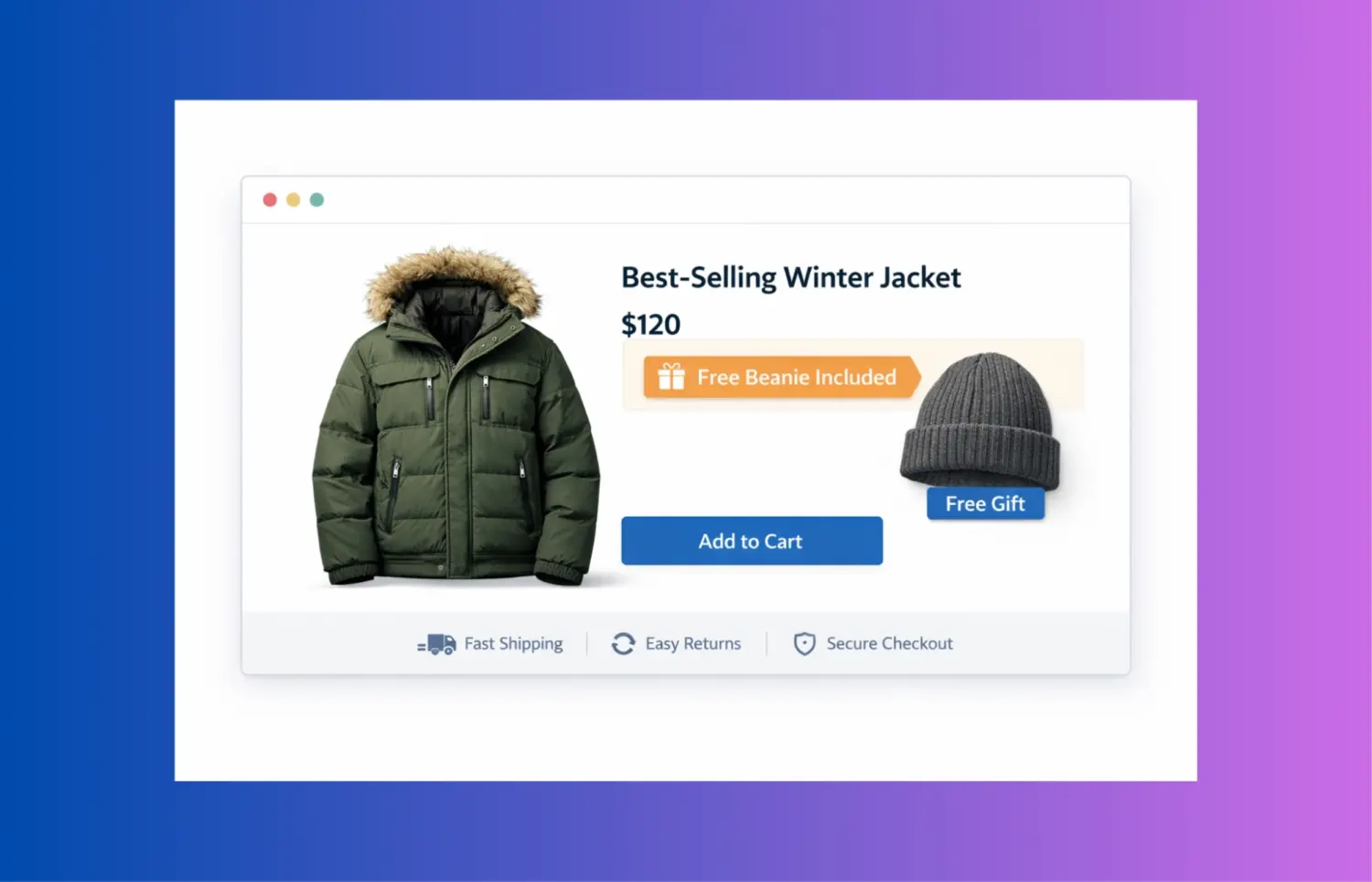
To apply this strategy, start by choosing 1 or 2 high-demand products as Buy X and keep them at full price. Then select a gift that is still useful and fits your brand, even if it comes from last season. For example, a store might offer a free beanie from last year’s collection when someone buys a best-selling winter jacket. The gift naturally complements the main product, so it feels intentional rather than random.
Many stores miss an easy win at the execution stage. The offer should run automatically so the gift appears in the cart without requiring a code. It is also important to set a limit per order. This helps control costs and prevents customers from stacking multiple gifts in the same purchase.
2. Use Case: Pushing Up Average Order Value (AOV)
Buy X Get Y is strong for increasing AOV because you can set “X” as a minimum cart spend, which gives shoppers a clear target and pushes them to add one more item to qualify for a free gift.
You should set a slightly higher spend threshold than what customers would normally check out with, then “pay them back” with an extra gift that feels valuable. The rule of thumb is to start your threshold around 15 to 25% above your current AOV, then tune it up or down based on how often customers hit it.
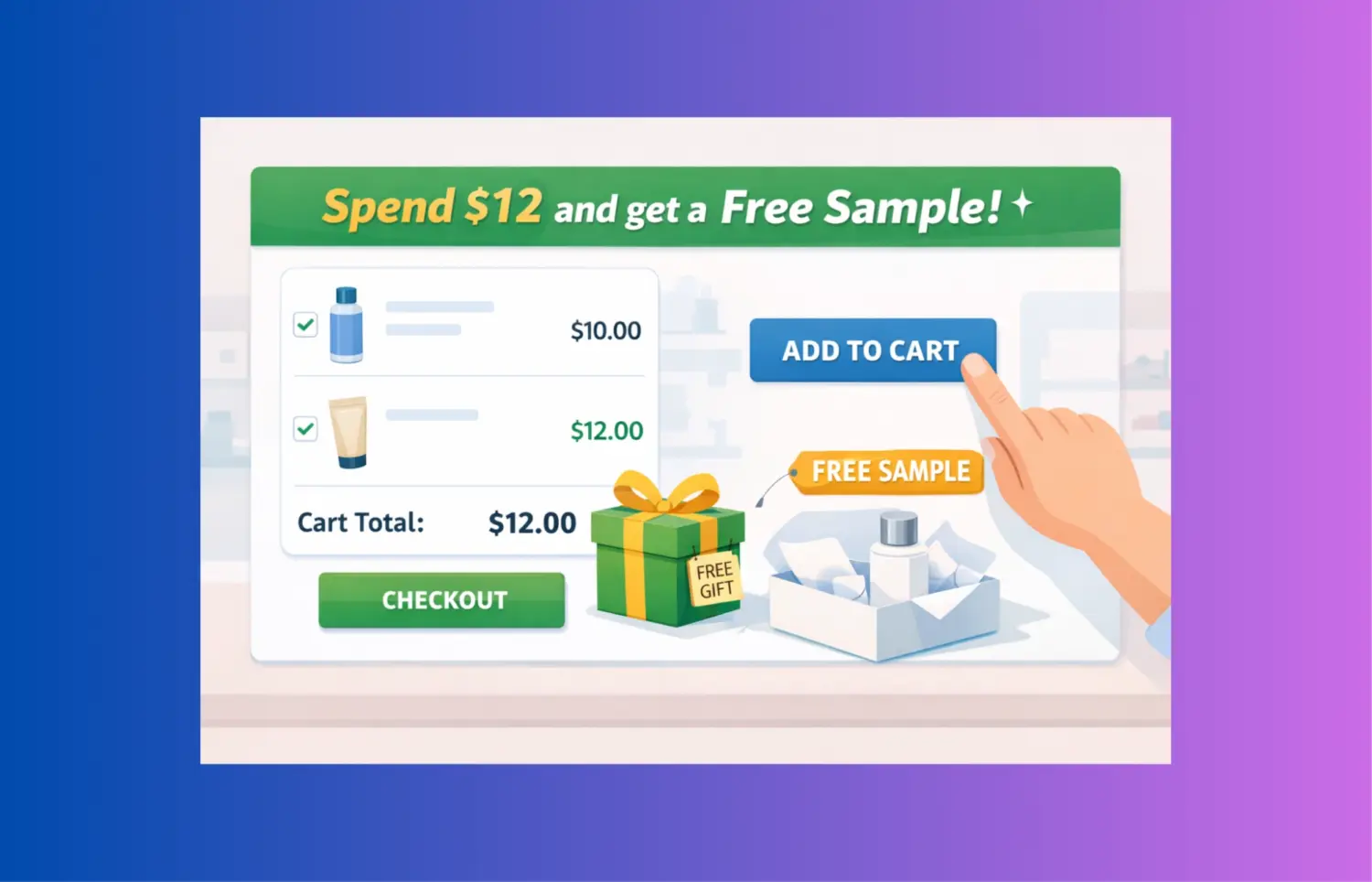
For example, if many customers naturally buy a $10 item, test “Spend $12, get a free sample” so they only need a small add-on to unlock the gift.
3. Use Case: Launching New Products & Driving Product Trial
Buy X Get Y works well for new product launches because it removes one of the biggest barriers at the start: hesitation to pay for something unfamiliar. When a sample is attached to a product the customer already trusts, the new item reaches them without requiring a separate buying decision.
This strategy is highly effective for businesses selling consumables or routine-based products, such as cosmetics, skincare, supplements, or specialty foods. In these industries, customers often stick to what they know, making it hard to drive adoption for new formulations.
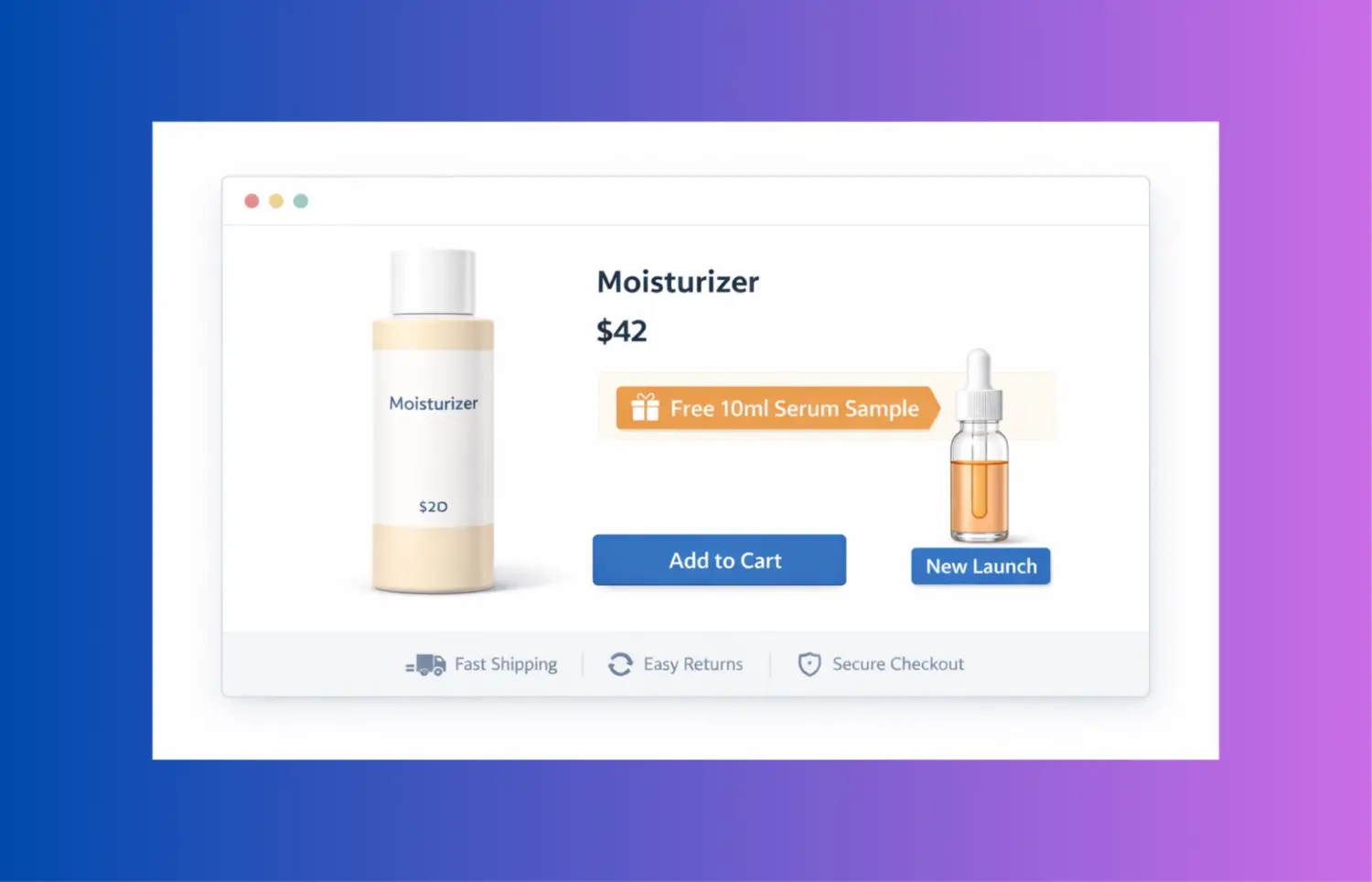
For example, a beauty brand might offer a free 10ml sample of a newly launched vitamin C serum when a customer purchases their best-selling daily moisturizer. Because both products fit naturally into the same routine, the sample feels relevant and lowers the barrier to trying something new.
This “Try Me” approach is also an excellent fit for brands with high-margin flagship products that can easily absorb the cost of a small sample. By letting the hero product carry the weight of the transaction, you preserve the price integrity of the new collection while turning product discovery into a low-risk, high-reward experience for the shopper.
4. Use Case: Boosting Cross-Sells & Product Category Adoption
Buy X Get Y helps increase cross-sells because customers often hesitate to add complementary items to their cart. When the second product appears as a reward or a discounted Get Y, the decision becomes much easier.
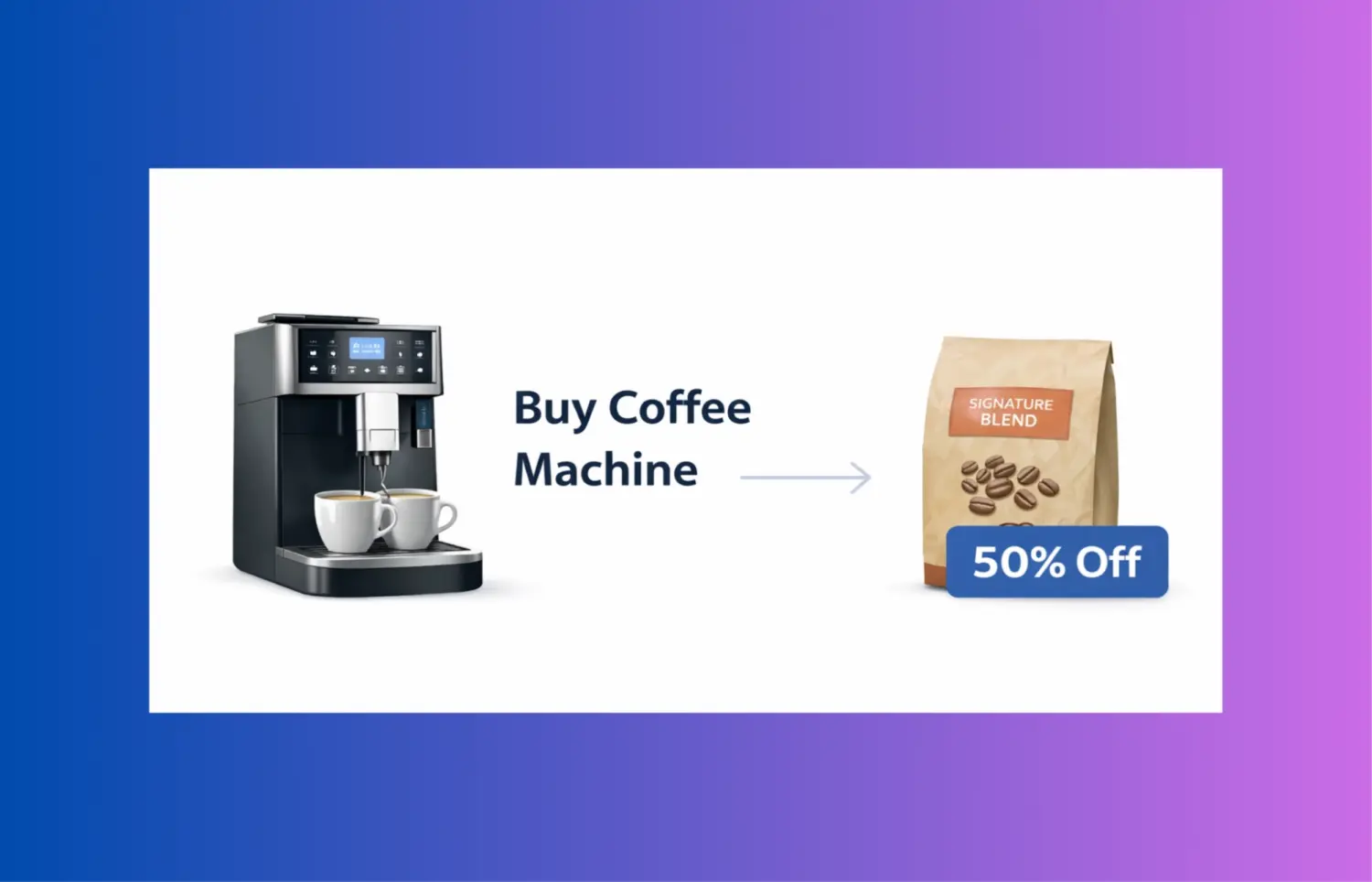
The key is choosing a pairing that improves the main product experience. For example, buy a coffee machine and get signature coffee beans at 50 percent off, or buy running shoes and receive a pair of performance socks. When products naturally work together, cross-sell feels useful rather than forced.
Another detail worth considering is the type of reward. In many cases, offering the complementary item at 50% off performs better than giving it away completely free. A discounted price still signals that the product has real value. At the same time, it encourages customers to return later and purchase it at full price once they see the benefit.
5. Use Case: Accelerating the Repurchase Cycle (For Consumables)
Buy X Get Y works especially well for consumable products such as supplements, skincare, or food items. Customers already know they will need these products again in the future. The real question is whether they buy one unit today or stock up for the next few months.
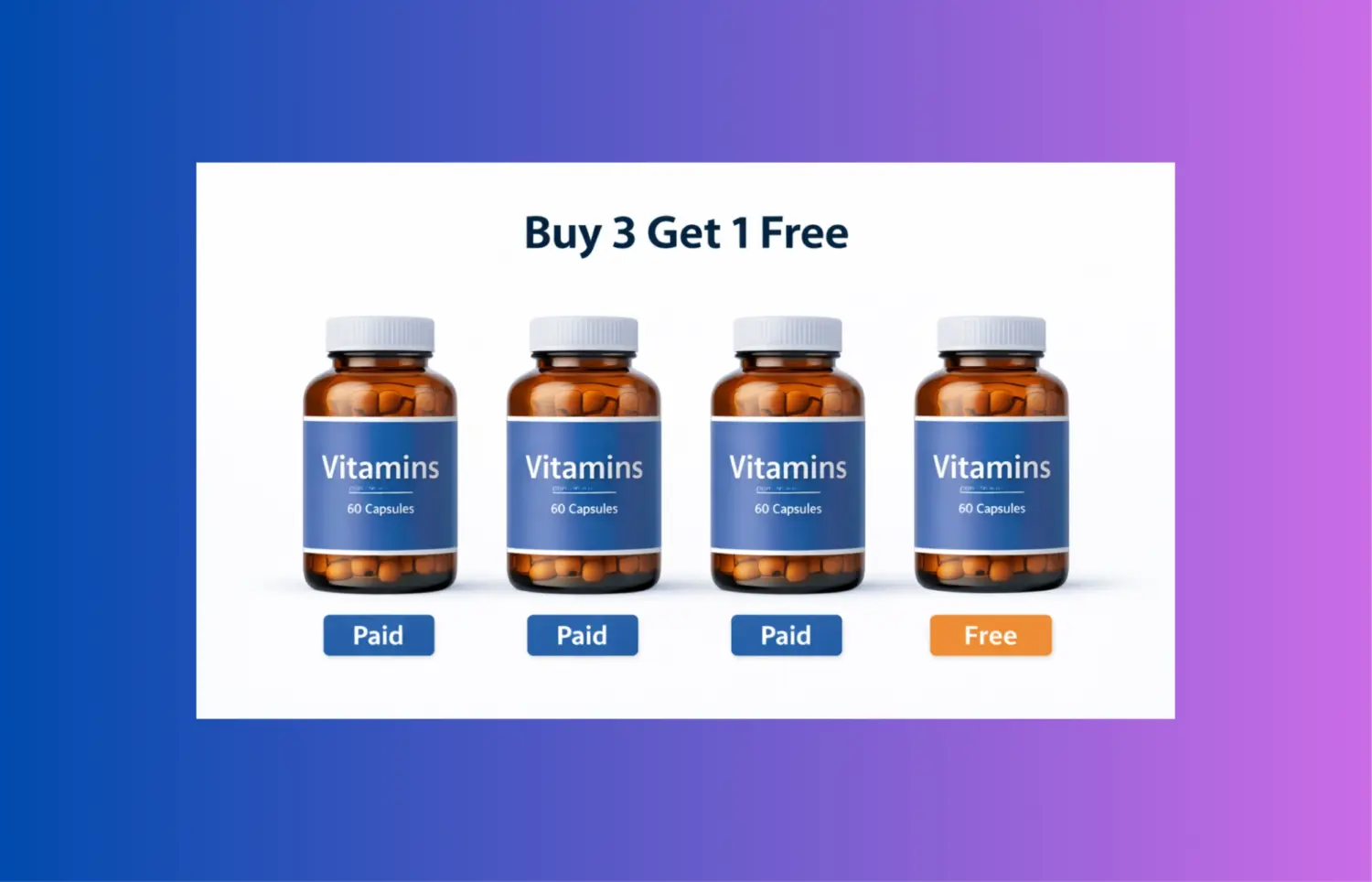
Volume BOGO promotions encourage customers to buy ahead. For example, buy three boxes of vitamins and get one free. This makes buying more at once feel like a smart decision instead of something unnecessary.
This strategy also creates a competitive advantage. When customers already have several months of supply at home, they are unlikely to buy from another brand during that time. Even if competitors run ads or promotions, there is no immediate need for the customer to purchase again.
From a margin perspective, the math is usually manageable. A buy-3-get-1-free offer equals roughly a 25% discount across four units. In return, you receive the revenue upfront and avoid the cost of handling multiple smaller orders later.
6. Use Case: Protecting Brand Equity During Mega Sales (BFCM)
During major sales events like BFCM, many brands rely on deep discounts to stay competitive. However, heavy price cuts can quickly erode brand perception, especially for products positioned as premium or high-quality. A gift with purchase is often a safer alternative. Customers still receive extra value, but the main product’s listed price remains unchanged.
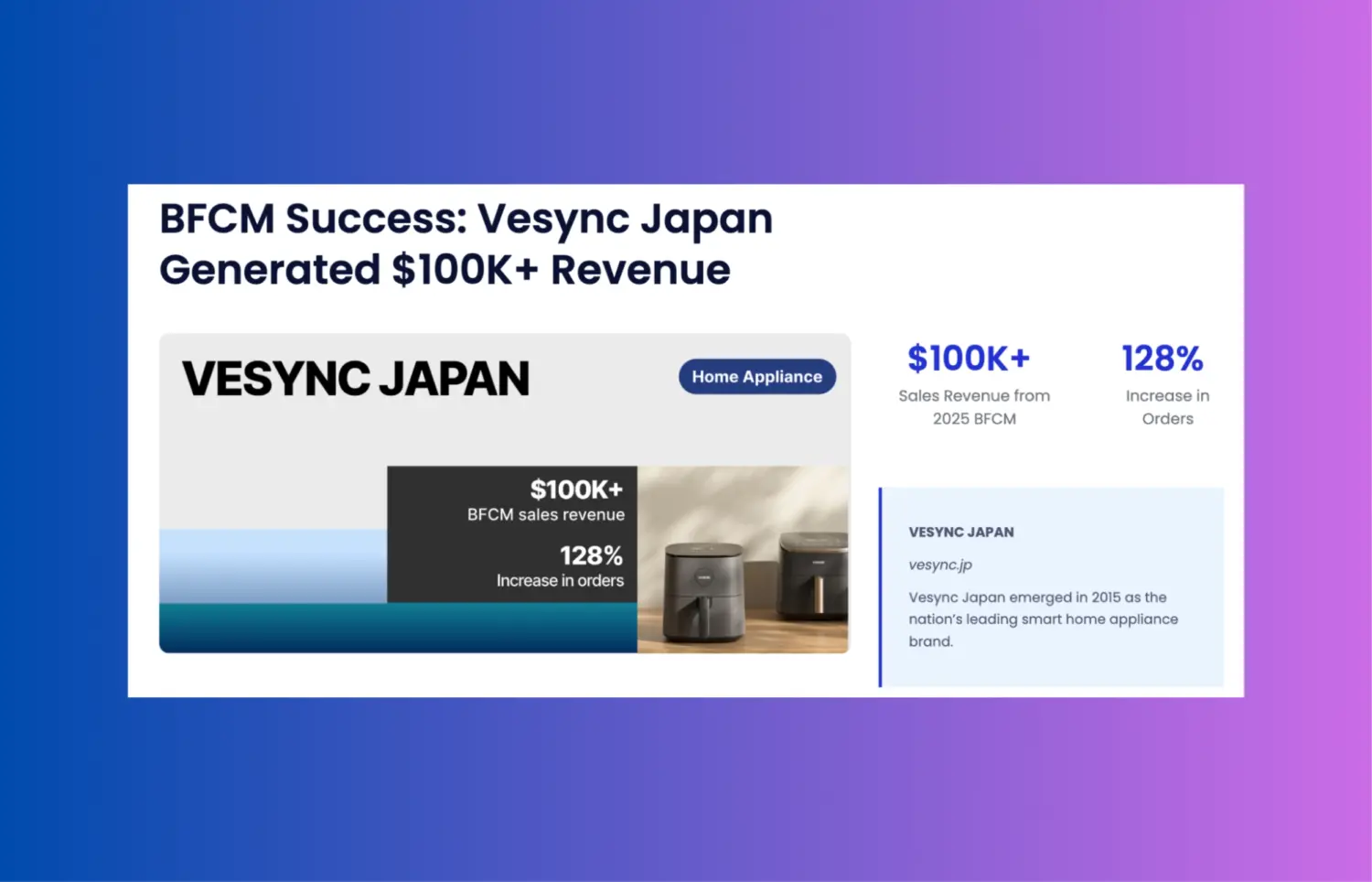
A good example comes from Vesync Japan during BFCM 2025. Instead of running deeper discounts, the brand used a spend-based gift offer powered by the BOGOS app. Customers who spent $300 received a free Levoit Classic 36-inch Tower Fan, valued at about $110. This created strong perceived value while keeping product prices unchanged. The campaign generated over $102K in gift-offer revenue, a 150% increase overprevious months, while total orders grew by 128%.
7. When Buy X Get Y Is Not a Good Idea
7.1 Low Margin Products
According to Shopify’s benchmarks, a net profit margin of around 5% is considered low, 10% is average, and 20% is high. If your product sits at or below 10%, BXGY leaves little room to cover the cost of the free unit and fulfillment.
A useful rule of thumb: Buy 1 Get 1 Free is only positive on product cost when your gross margin is above 50%, before shipping and packaging. If the item has a low margin but you still want to use it in a BXGY campaign, make it the gift rather than the trigger. Pair it with a higher-margin product, such as Buy X, so the order can absorb the cost.
7.2 Complex Product Configuration
If your product requires the customer to choose sizing, materials, personalization, or technical specs before buying, adding a gift mechanic on top creates cognitive overload rather than motivation. Custom furniture, made-to-order apparel, and configurable tech accessories are examples where customers are already doing heavy mental work, and a BXGY condition simply adds another layer of decisions before checkout.
7.3 Already High Natural AOV
If your customers are already spending at or above your ideal threshold without any nudge, BXGY tends to reward purchases that would have happened anyway. This means you are reducing margins on transactions you did not influence, essentially giving money away with no incremental return. A rough signal to watch: if less than 20% of eligible orders actually needed the promotion to reach that cart size, the offer is likely subsidizing existing behavior rather than changing it.
7.4 Limited Inventory
Running BXGY when gift stock is tight creates a specific risk: customers qualify, add items to their cart, and then hit a checkout error because the gift is out of stock. Resources on gift-with-purchase operations consistently flag this as one of the most common causes of cart abandonment during promotions.
If inventory is limited, cap the number of redemptions from the start and add “while supplies last” messaging so customers understand the constraint before they build their cart around the offer.
Final Thought
There is no shortage of ways to run promotions on Shopify, but few mechanics are as flexible or as underestimated as Buy X Get Y. We think the stores that get the most out of it are simply the ones who stop asking “what discount should I offer” and start asking “what behavior do I actually want to change.” That shift in thinking changes everything.
FAQs
Is Buy X Get Y better than a sitewide discount for clearing dead stock?
Yes. A sitewide discount lowers the perceived value of your entire catalog. Using dead stock as a free gift (Get Y) attached to a best-seller (Buy X) moves the inventory while protecting the premium pricing of your core products.
Can Buy X Get Y protect brand equity during major sales events like BFCM?
Yes. For premium brands, running a “high-value gift with purchase” campaign (like a free leather luggage tag on a $500 order) feels like a curated reward, whereas deep percentage discounts make the brand look cheap.
Can I run multiple “Spend to Get” tiers at the same time on Shopify?
Yes, but doing this natively in Shopify can create conflicting discount rules. To run tiered rewards smoothly (e.g., spend $75 for freeship, $100 for a tote, $150 for a perfume set), a specialized app like BOGOS is recommended to ensure the correct tier applies automatically.
Does Shopify automatically add the “Get Y” item to the customer’s cart?
No. By default, Shopify’s native discount system marks the “Y” item as free, but the customer still has to manually find and add it to their cart. To auto-add the gift and remove friction, merchants use third-party apps like BOGOS.