
PTC Auto: Turned a Long Repurchase Gap into Consistent Revenue
Added Revenue
Monthly Orders
Unlike the FMCG or cosmetics industry, where customers make frequent purchases, the automotive aftermarket industry operates on a completely different rhythm. Shoppers do not buy car accessories every week; they typically return only when something breaks or wears out. This creates a critical question for any brand in this space: how do you maximize each transaction to compensate for long gaps between purchases?
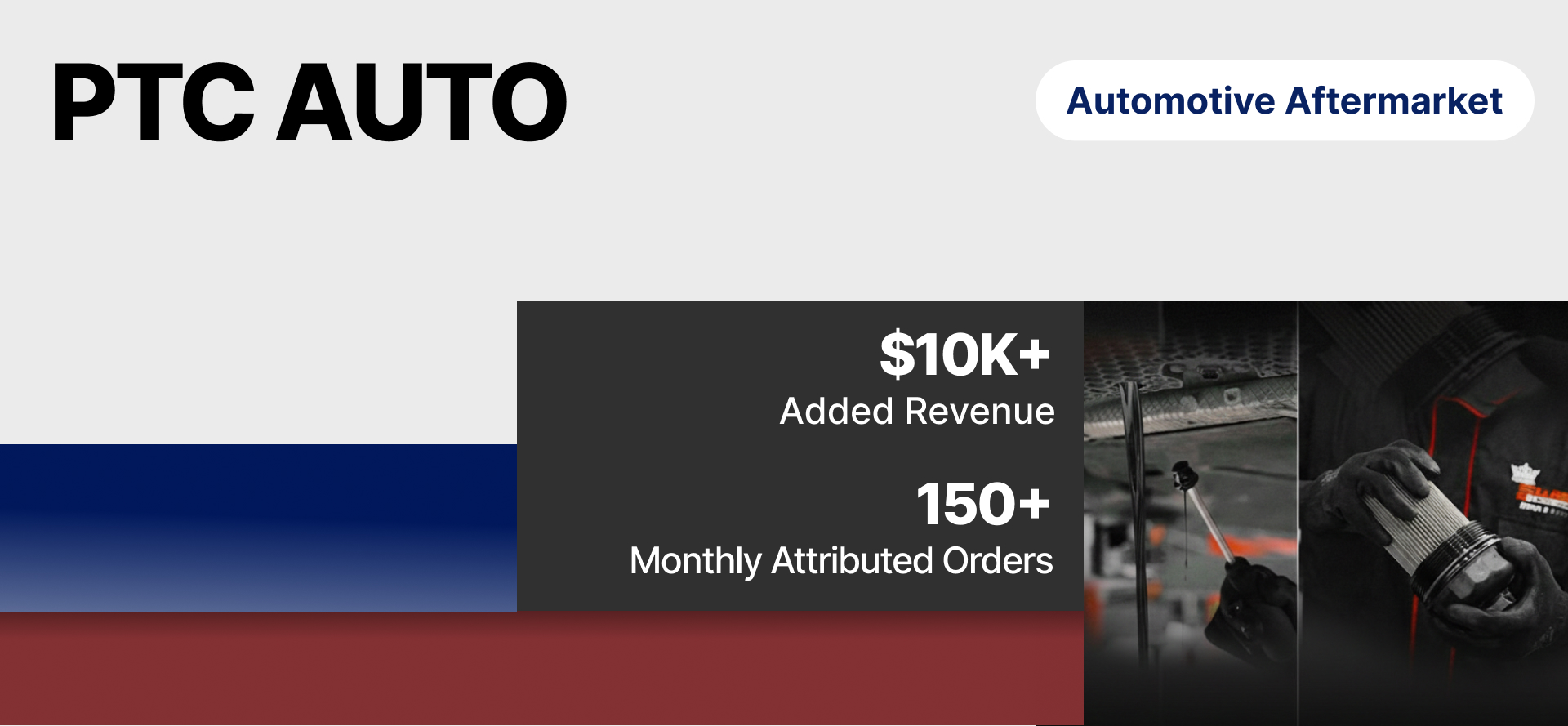
PTC Auto, a Romanian car accessories retailer, found its answer. By using the BOGOS app to promote a new category of short repurchase cycle products, they generated 49,500 RON ($10,500) in attributed sales across 162 orders in only one month.
Let’s dive into their journey through an exclusive conversation with Adrian Cirjaliu, the brand owner.
About PTC Auto: A Trusted Companion for Every Journey
PTC Auto is an automotive aftermarket accessories retailer based in Romania, serving car owners across 8 European countries. Their mission is simple: “We serve our customers with passion every day and help them choose the most suitable products for their cars.”
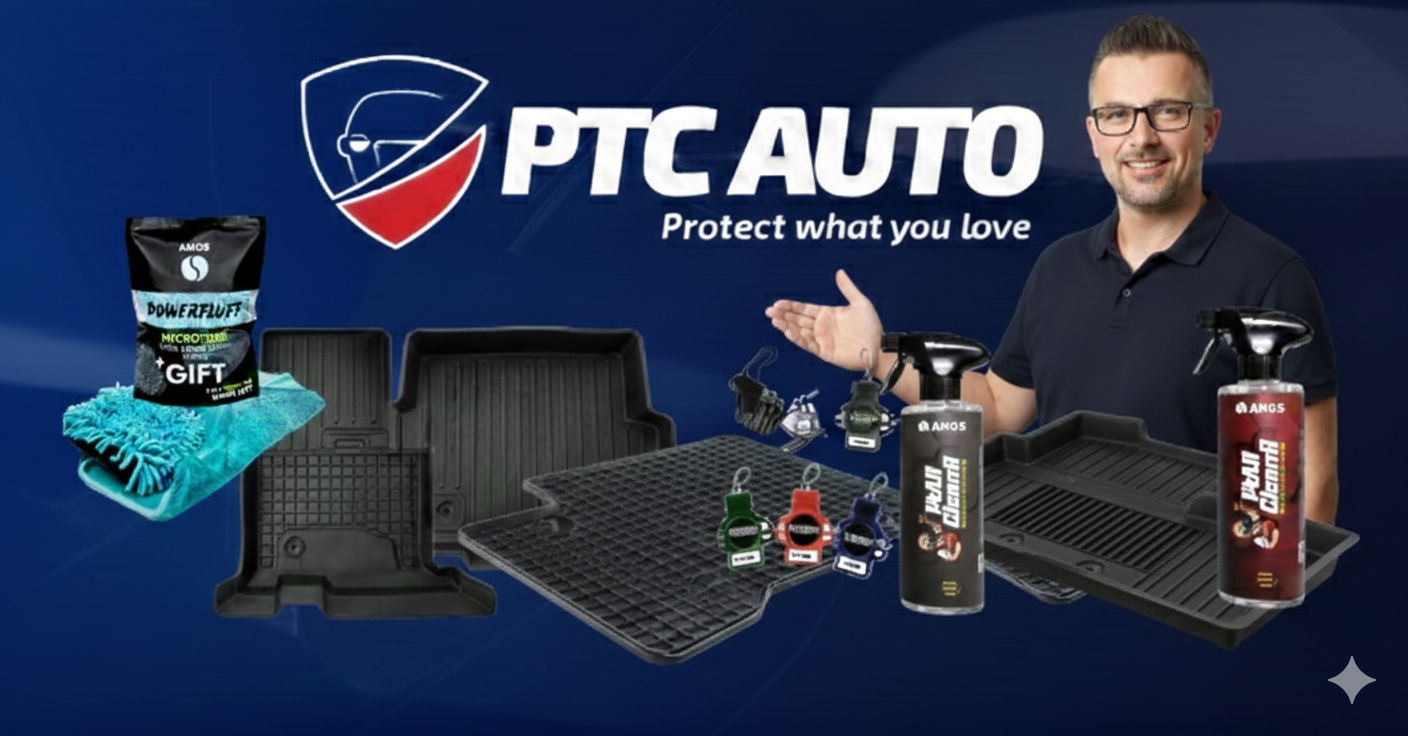
For years, the brand has built its solid reputation on car accessories, with the top best-selling items including car mats and luggage trays. When it comes to long-term growth, this success brought along a hidden challenge.
The Challenge: When Best-Sellers Take Years to Repurchase
PTC Auto’s core products, like car mats and luggage trays, are built to last. That durability is great for customers, but problematic for business growth. A customer who buys a car mat today may not need another one for years. Relying solely on these long repurchase cycle products turned out to be an unsustainable pattern: operational costs keep rising, while monthly recurring revenue remains flat.
PTC Auto needed a business strategy that could both acquire new customers and create more frequent buying opportunities for existing ones 👇
- For existing customers, the brand needed products that bring them back more frequently.
- For new customers, they needed affordable items with shorter life cycles, products that lower the barrier to first purchase, and encourage easy spending.
That’s exactly why PTC Auto introduced consumables such as foam cleansers, microfiber towels, and car fragrances. These items run out and require regular replacement, creating natural repeat purchase opportunities. However, simply adding new products to the catalog was not enough. To drive real behavior change, PTC Auto built a complete promotional ecosystem powered by the BOGOS app.
The Solutions: Expand Product Categories and Promote Them Strategically
PTC Auto understood that basically adding new products to the catalog was only the first step. To truly shift customer behavior from one-time buyers of car mats to repeat purchasers of consumables, they needed promotions that give customers compelling reasons to try them.
Everything is explained step by step below.
Strategy 1: Discounts on the Cheapest Products
Volume discounts work particularly well for products with high consumption rates. The reason is simple: customers use these items quickly, and they are easy to store at home. This combination makes buying in bulk feel like a practical decision rather than a stretch upsell.
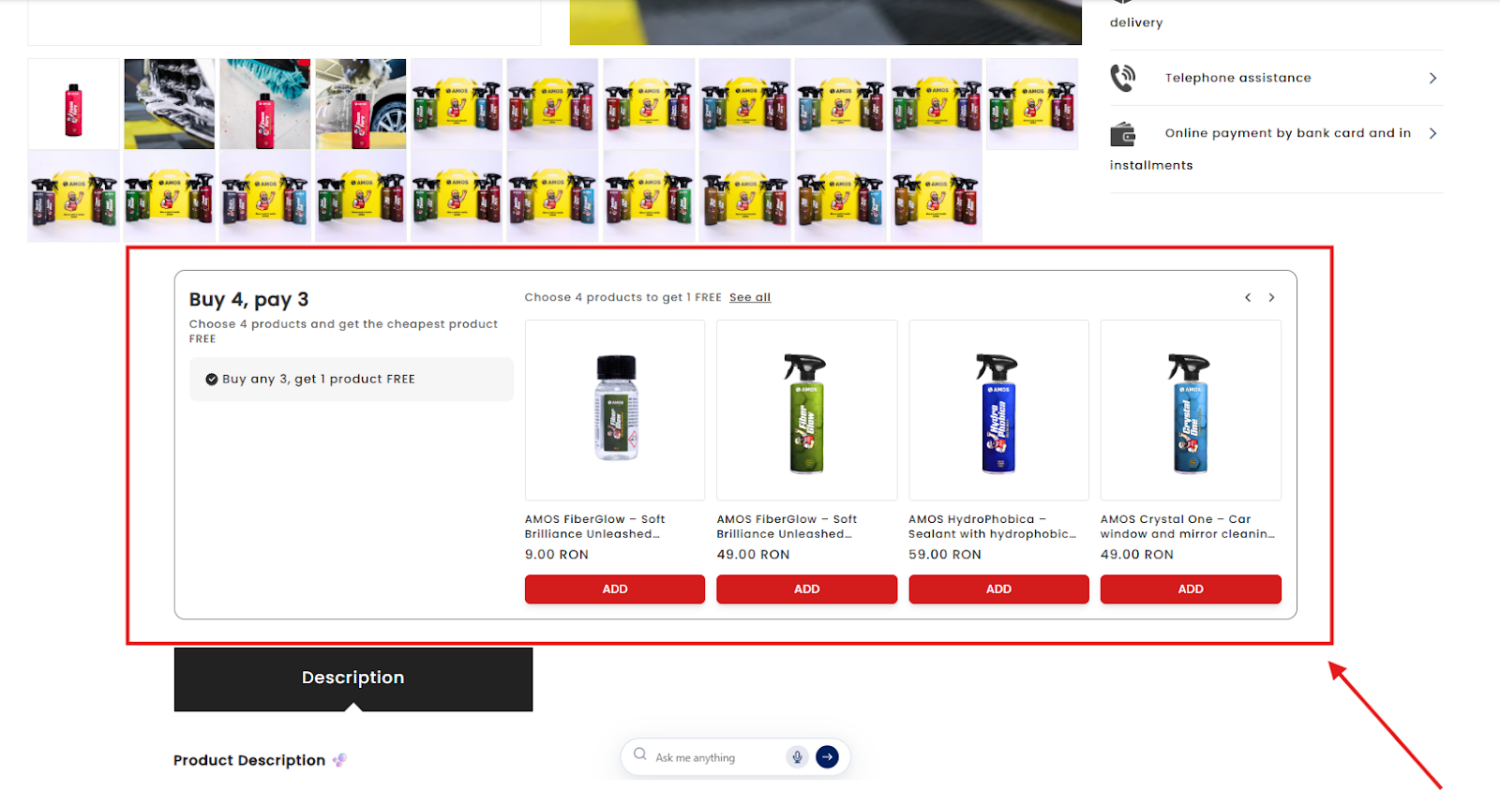
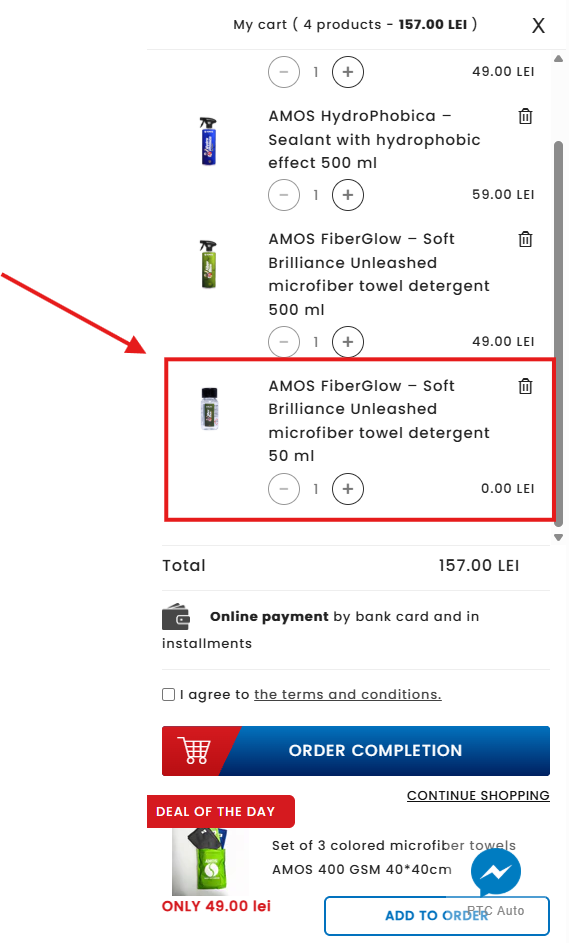
PTC Auto took this strategy further by using the BOGOS feature to automatically apply the discount to the cheapest item in the cart. This means when customers buy 4 products, they pay for only 3, and the free item is always the lowest-priced one.
Now, let’s look at how PTC Auto selected products for this offer. They grouped cleansing foams (49-59 RON / ~$10-$13), window cleaner (99 RON / ~$21), and towel cleaner (9 RON / ~$2) into a single promotion. These products were chosen carefully for three reasons:
- Related use case: All of them are car detailing essentials that work together in the same cleaning routine: foam for the exterior, spray for the windows, and detergent for the towels.
- Accessible price range: They sit within an affordable price range, making it easy for customers to add to cart without hesitation.
- High consumption rate: All of them run out quickly and need regular replacement.
By grouping these, PTC Auto created a win-win situation. Customers feel they are making a smart purchase with a good price, while the business increases order value and ensures future demand stays with them instead of competitors.
👉 Learn how to create a discount offer on the cheapest just like PTC Auto did
Strategy 2: Mix & Match Bundles
PTC Auto used mix-and-match bundles for their diffuser product. When customers buy one AMOS Mini Light Gray diffuser together with a set of 7 spare perfume refills, they receive a 16.3% discount on their total order.
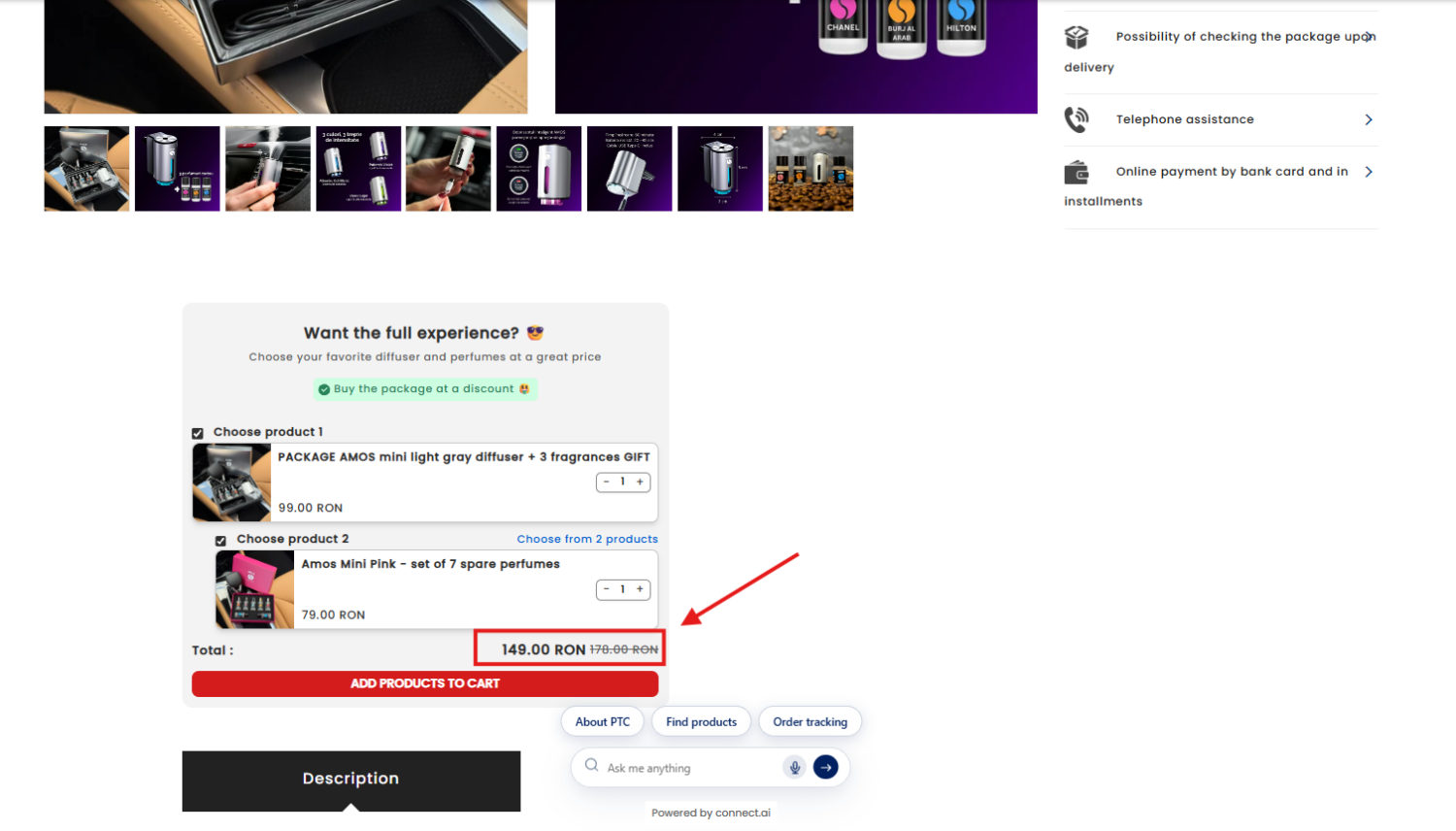
Now, I’ll break down how this selection of bundle type is a smart move:
- Flexibility over forced choices: Traditional bundles require customers to buy a fixed set of products, whether they want every item or not. Mix and match lets shoppers choose only what they actually prefer while still earning a reward, especially in terms of fragrance items, where each customer has personal taste.
- Balanced discount percentage: At 16.3%, the discount is attractive enough to motivate customers to complete the bundle, yet controlled enough to keep profit margins healthy.
Strategy 3: Gift Offers That Promote Two New Categories at Once
PTC Auto created a gift offer for its microfiber towel category. When customers buy any microfiber towel priced between 99-149 RON (~$21-$32), they receive a FREE bottle of Soft Brilliance Unleashed microfiber towel detergent worth 49 RON (~$10).
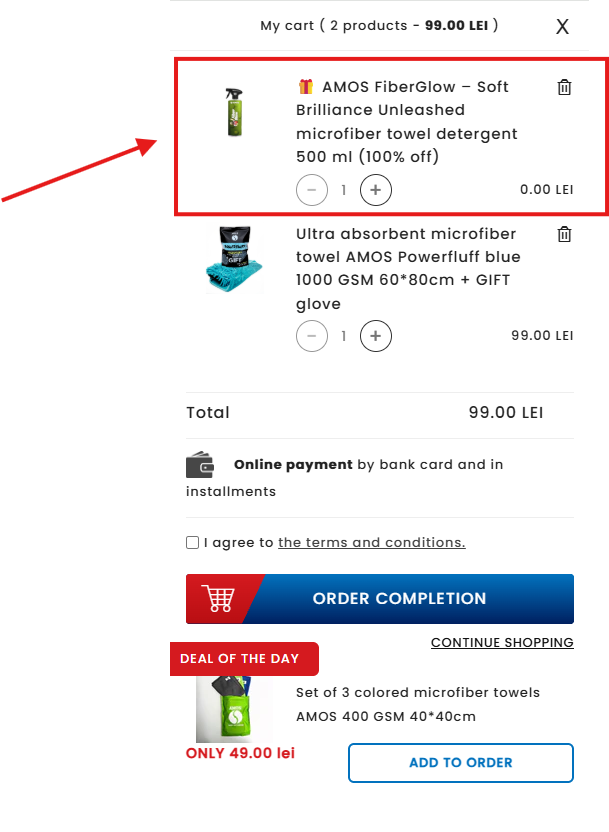
Here’s the strategic thinking behind this smart pairing:
- Make the main item more attractive to purchase: The microfiber towel becomes a more compelling buy when it comes with a functional gift that is perfectly paired and feels like receiving a 50% bonus.
- Introduce a new category through product sampling: The free detergent serves as a sample that elegantly introduces customers to a different product line. Once they try it and see the results, they are likely to come back and repurchase in the future.
Strategy 4: Frequently Bought Together for Complete Solutions
Last but not least, PTC Auto created a Frequently Bought Together offer that highlights a complete car care solution, including: a foam fury concentrated pre-cleaner, an inside glow interior care spray, a window cleaning gel, a mini diffuser, a set of 3 blue microfiber towels, a set of 3 colored microfiber towels, and a trash and storage bin. Plus, the bundle includes free shipping.
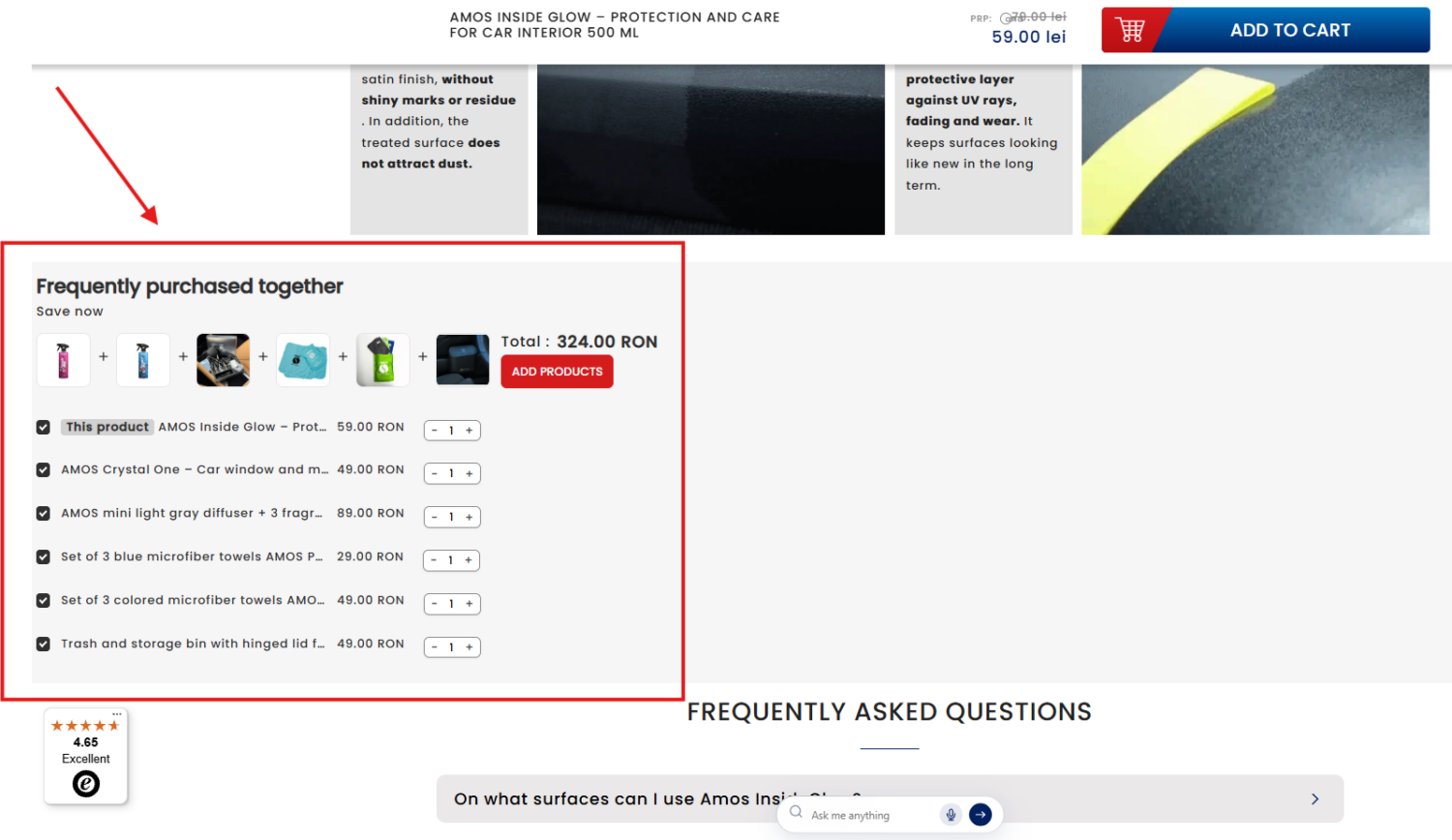
This approach solves a real problem for customers. Many car owners want to take better care of their vehicles, but do not know where to start or lack some items that they never thought of. This complete FBT offer removes all unexpected friction and makes it more appealing with free shipping.
How PTC Auto Promoted Their Offers
Creating great promotions is only half the work. Making them visible is equally important. PTC Auto focused on three key tactics.
- Announcement bar: Feature key promotional campaigns through a stunning banner that stands on the top of the homepage
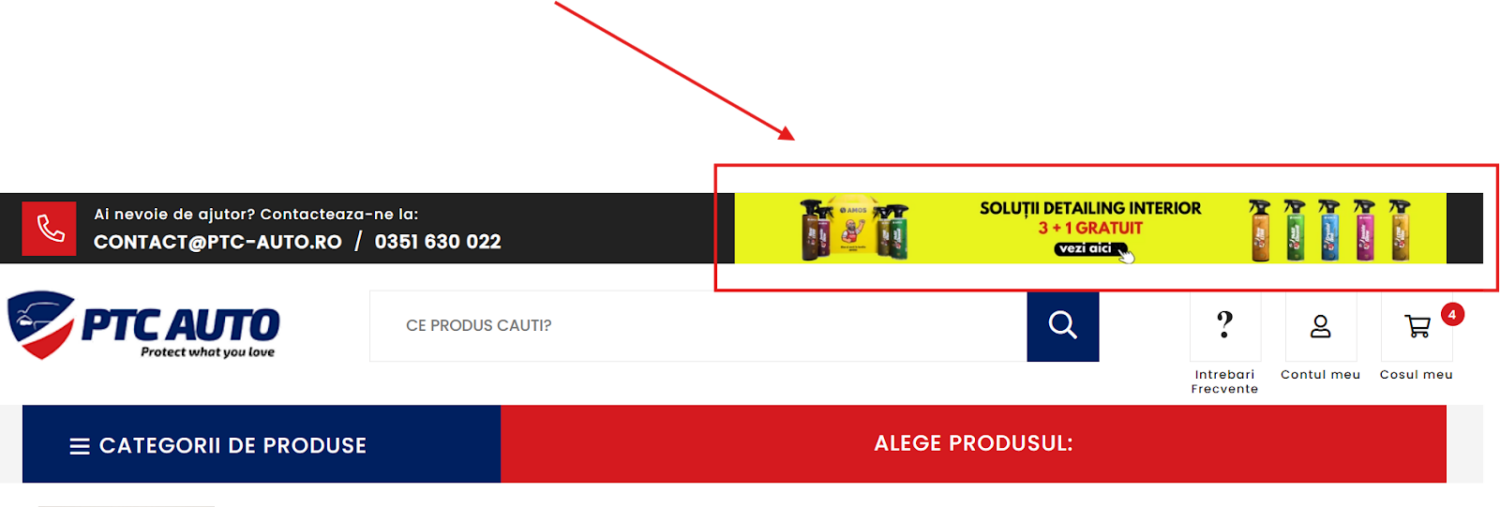
- Gift thumbnail: In terms of gift offer, PTC Auto took advantage of BOGOS’ Gift Thumbnail feature to amplify shopper urgency with a countdown timer, which adds a sense of scarcity and driving FOMO.
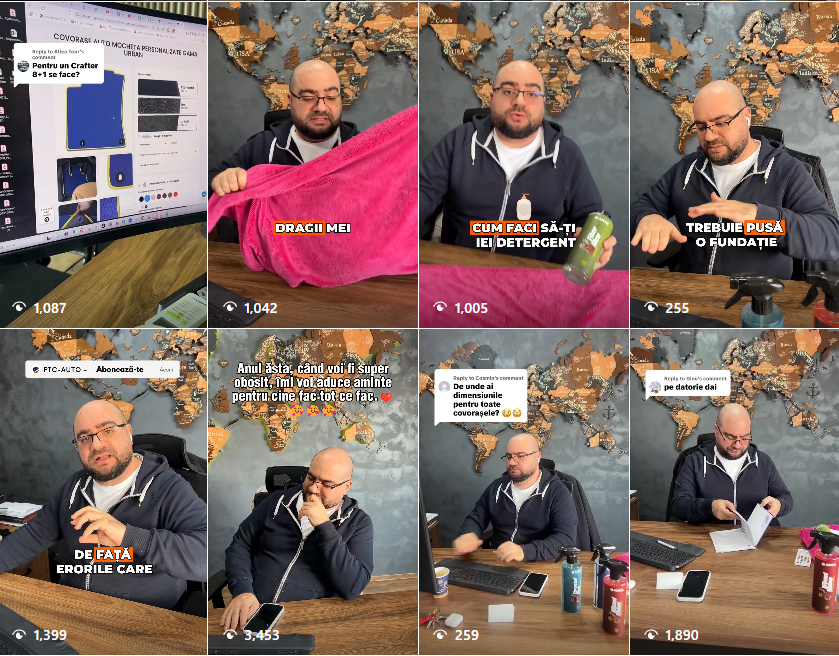
- Social media advertising: Omnichannel is a must-have in this digital landscape. Besides the website, PTC Auto also promoted its offers through social channels with a focus on running ad campaigns and uploading short videos.
The Results: Consistent Revenue from Promotions
PTC Auto demonstrated that a thoroughly structured approach to promotions can deliver real results for any category. By expanding into consumable product categories and promoting them strategically with BOGOS, they generated 49,535 RON (~$10,502) across 162 orders in more than one month.
Beyond the numbers, PTC Auto highlighted the human side of their success:
“What I really appreciate about BOGOS is the level of personalization they offer and their outstanding customer support,” shared the PTC Auto team.
“Every interaction feels tailored, which shows how much they value their customers. The support team is always responsive, helpful, and genuinely invested in solving problems quickly.”
This feedback illustrates an important truth: sustainable growth is not only about revenue figures. It is also about the experience behind the tools you use. When an app makes merchants feel supported and valued, that confidence translates into better execution, stronger campaigns, and ultimately, better results.
Key Takeaways for Shopify Merchants
PTC Auto’s success offers practical lessons for any Shopify store selling consumable or complementary products.
- Apply volume discounts to consumables with related use cases: Group products that work together in the same routine, as PTC Auto did with foam, window cleaner, and towel detergent. When items complement each other and run out quickly, buying in bulk feels like a smart choice, not an upsell.
- Use mix and match bundles for products with personal preferences: Not every customer wants a pre-set bundle. Mix and match lets shoppers feel in control while still encouraging larger orders. This works especially well for fragrance, color variants, or any product where taste differs.
- Turn gift offers into a dual-promotion strategy: Pair a new main product with a new gift product. The gift makes the main item more attractive to purchase, while also introducing customers to a completely different product line, so they may repurchase later.
- Build complete solution bundles: Think about what your customer is trying to accomplish, not just what single product they need. A ready-made bundle simplifies the buying decision, especially for customers who do not know where to start.
Wrapping Up
PTC Auto’s story shows that brands with long repurchase cycle products can achieve sustainable revenue growth. The key is twofold: expand into consumable product categories, then promote them strategically as a system.
The key insight is clear: promotions perform best when designed as a system, not as isolated tactics. Each type of offer has a clear purpose: volume discounts encourage bulk buying, mix and match bundles offer flexibility, gift offers promote two categories at once, and complete solution bundles remove buying friction. Together, they form a promotional ecosystem that improves your customers’ buying journeys.
Featured Case Study
BFCM Success: Vesync Japan Generated $100K+ Revenue
Sales Revenue from 2025 BFCM
Increase in Orders
How Optimum Achieved 8X Growth in 1 Year with BOGOS
Increase in Growth After 1 Year
Monthly Sales by BOGOS
How LEVEL8 Increased Sales by 200% in Three Months with BOGOS
Increased Sales
Attributed Revenue

Win customer satisfaction
with free gifts