Charlie Ngo is an eCommerce expert with 7 years of experience in the marketing field, specializing in SaaS and digital growth. A graduate in Marketing Communication, Charlie currently serves as the Marketing Manager of the BOGOS Shopify App, where he leads strategic initiatives to drive user acquisition, engagement, and brand positioning.
Running a promotion sounds simple: select a discount, launch the campaign, and watch sales go up. But many Shopify merchants discover a harsh reality: the promotion drove traffic, yet conversions underperformed.
The missing piece? A clear connection between your promotion and your business objective. Instead of listing generic promotion ideas, I’ll show you how to match specific offer types to your current business objective. The key question before every campaign should not be “what discount should I run?” but rather “what objective am I trying to achieve, and which offer structure solves it most efficiently?”
1. Common Shopify Business Objectives
Every promotion targets a different stage of the business goal. The first step is identifying which metric needs the most attention, then selecting an offer that directly addresses that issue while allocating budget and effort accordingly. Without this alignment, you risk sacrificing resources to fix the wrong problem. Below are the core business objectives that Shopify merchants typically focus on.
1.1. Increase Conversion Rate
Conversion rate sits at the heart of any eCommerce business. This metric measures how effectively your store turns visitors into buyers. When this number is low, you are essentially leaving money on the table: spending on ads without seeing a return on that investment.
Here is a perspective worth considering: a small 1% increase in conversion rate can often be more profitable than a 20% lift in traffic. This is precisely why optimizing your store’s ability to close sales should always take priority over scaling your ad spend.
1.2. Increase Average Order Value (AOV)
Maximizing AOV is the process of encouraging customers to spend more during every checkout. This is a critical lever for profitability because your fixed costs, including customer acquisition, packaging, and shipping, remain relatively constant whether a customer buys one item or three.
By incentivizing shoppers to add more to their carts, you grow your profit margin per transaction without adding extra expense. Consequently, AOV is one of the most direct ways to improve your bottom line without spending more on marketing.
1.3. Clearing Inventory
For most retailers, clearing inventory is a vital operational move that happens throughout the year. Unsold and slow-moving stock actively costs you money through storage fees, and it ties up capital that could be reinvested in high-demand products that sell faster. That said, moving older stock even at a reduced margin is an essential strategy for recovering capital and keeping your business competitive with a fresh and relevant product catalog.
1.4. Maximize Performance During Seasonal Campaigns
In today’s competitive landscape, holiday events and Black Friday represent the biggest revenue opportunities of the year. While these periods bring massive traffic volume, they also place intense pressure on margins due to rising ad costs and heavy competition. The goal during these peak windows is to capture maximum revenue from the surge in visitors while carefully defending your profit margins.
2. 3-Step Decision Framework For Your Promotion Selection
Choosing a promotion shouldn’t be a guessing game. It is about finding a goal for your business and finding the best way to achieve it. Research from Deloitte shows that successful store owners are 2x more likely to use data to make their decisions. The three-step guideline below will ensure your next promotion is built on a solid foundation.
1️⃣ Step 1: Pick one main goal aligned with your current business objective
The first step is to identify which single metric needs the most attention, such as how many people buy from you or how much each person spends. Why? Trying to fix everything at once usually leads to fixing nothing. McKinsey & Company found that top retailers are moving away from “good feeling” sales to data-driven ones. By looking at what worked in the past, one major retailer was able to increase their profit from sales by 3% to 5% simply by focusing on one clear goal at a time.
2️⃣ Step 2: Identify where customers drop off
Next, you need to find the friction point that makes people drop off. This is crucial because you need to know if the problem is your price or the extra costs. Statista reports that nearly 50% of shoppers leave because of “hidden costs” like shipping that appear at the very end. If you offer a product discount to someone who is actually upset about shipping fees, you are wasting your money on the wrong fix.
3️⃣ Step 3: Find the sweet spot between your goal and their needs
The most successful promotions are a perfect balance between what your store needs and what your shoppers want. If you focus only on your business goals, you might choose an offer that fails to motivate customers. If you focus only on the customer’s desire for a discount, you might give away too much of your profit.
The goal is to find the simplest offer that removes customer hesitation while protecting your margins. In the next section, we break down which offer types work best for each objective and how to execute them.
3. Select Offers Designed for Your Store Goals
With your strategy in place, you can now select the best offer types that support the objective you identified in your analytics. Each section below covers a different business goal, explains why certain offers work, and shows you exactly how to execute them.
3.1. Increase Conversion Rate
Customers often browse your store, add items to their cart, but drop off at checkout. While there are many reasons for this, the most common ones are a gap between perceived value and expectation, or simply a lack of urgency to complete the purchase.
The offers below are designed to close that gap and give customers a clear reason to buy now.
Offer 1: Gift with Minimum Purchase
This is one of the most effective offers for improving conversion rate because the perceived value is immediately clear. You can start with a gift that creates positive emotion and makes customers feel rewarded for their purchase. Furthermore, it serves as an elegant way to introduce customers to other products in your catalog, acting as a “sample” that paves the way for future repurchases.
️🎯 Real-world example: Nela Gems
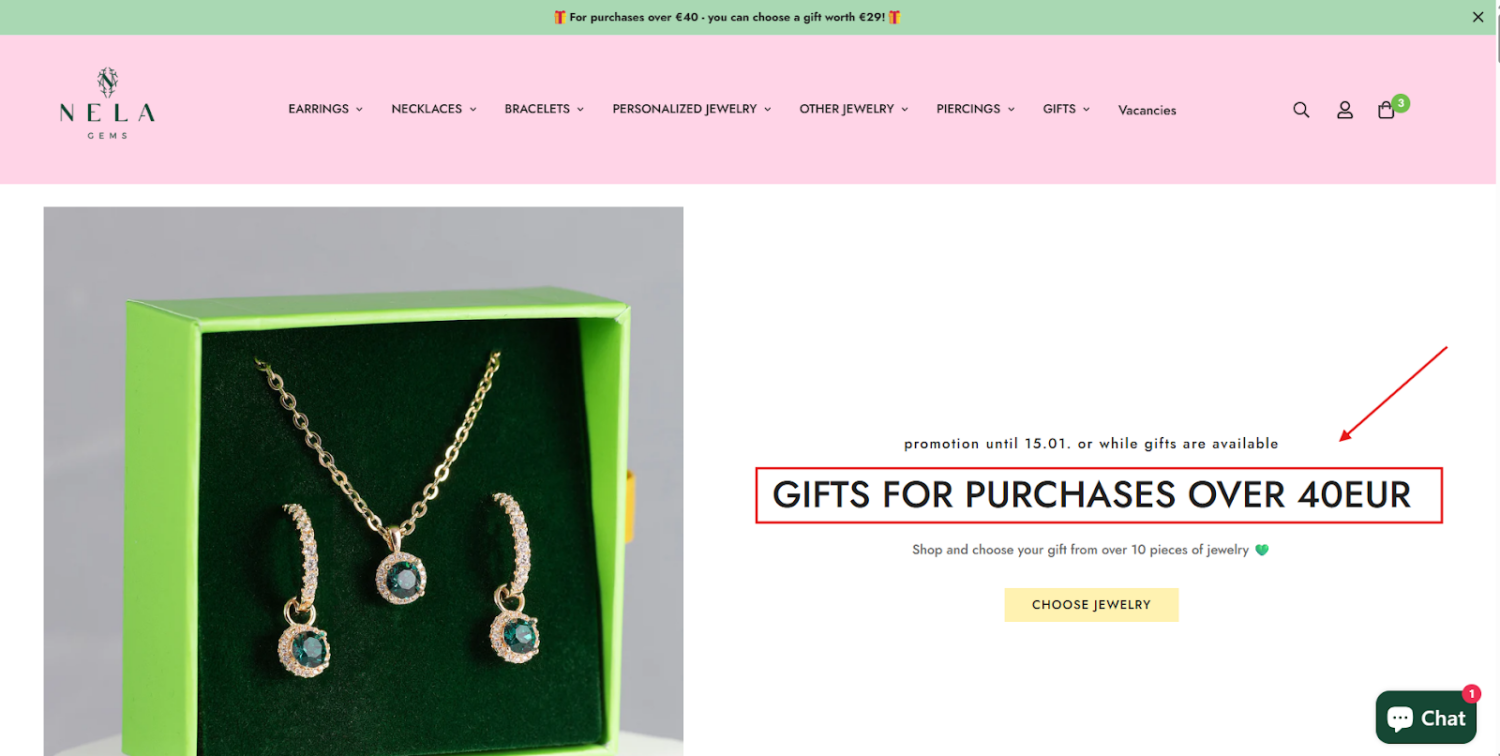
To see the power of this approach, consider the jewelry brand Nela Gems. They structured their gift offer around a $40 minimum purchase threshold. With an AOV of $34 at the time, this threshold was set just 17% higher – well within the sweet spot that encourages customers to add one more item without feeling like a stretch.
When it comes to a healthy profit margin, their product catalog ranges from €18 to €39, meaning customers typically need to purchase at least two medium-to-high-priced items or three lower-priced pieces to qualify. This structure naturally encourages higher AOV orders.
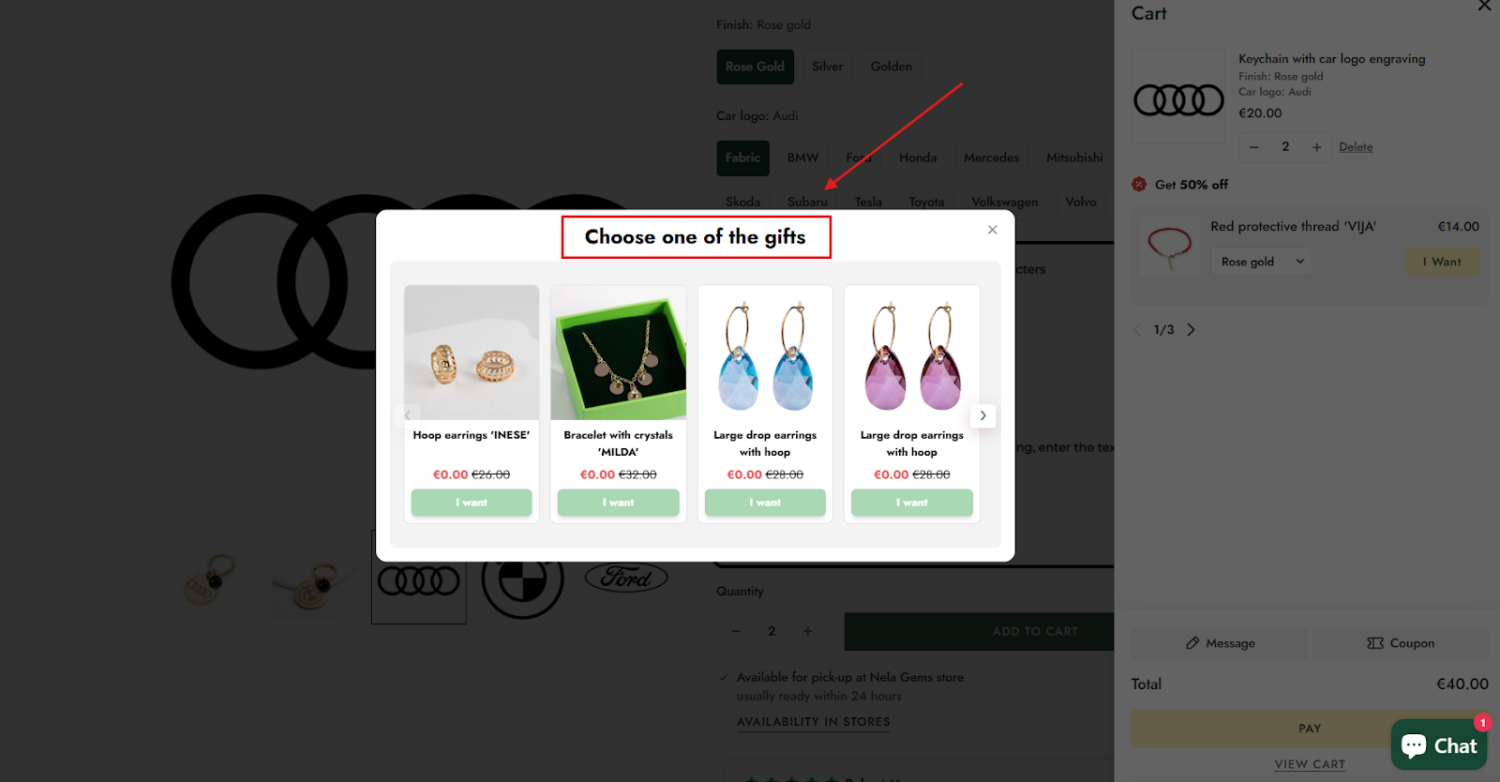
For the gift selection, Nela Gems offered a variety of products: earrings, necklaces, and rings – all items actively sold in their store at mid-to-high prices. This made the gift more valuable rather than like leftover inventory.
What makes this approach particularly smart is how it aligns with jewelry shopping behavior. Customers in this category often prefer to buy multiple pieces in a single order to save on shipping costs. By bundling a gift alongside a free shipping voucher at an attainable threshold, Nela Gems addressed the psychological barrier of shipping fees while increasing perceived value at the same time.
Offer 2: Free Shipping Threshold
Shipping costs remain the number one reason for cart abandonment. According to Shopify data, 80% of online shoppers are willing to meet a minimum purchase threshold to avoid shipping charges. When customers add items to reach that threshold, they feel like they are gaining value rather than paying an extra fee.
This psychological shift turns a potential friction point into a motivation to buy more.
️🎯 Real-world example: Skin Cupid
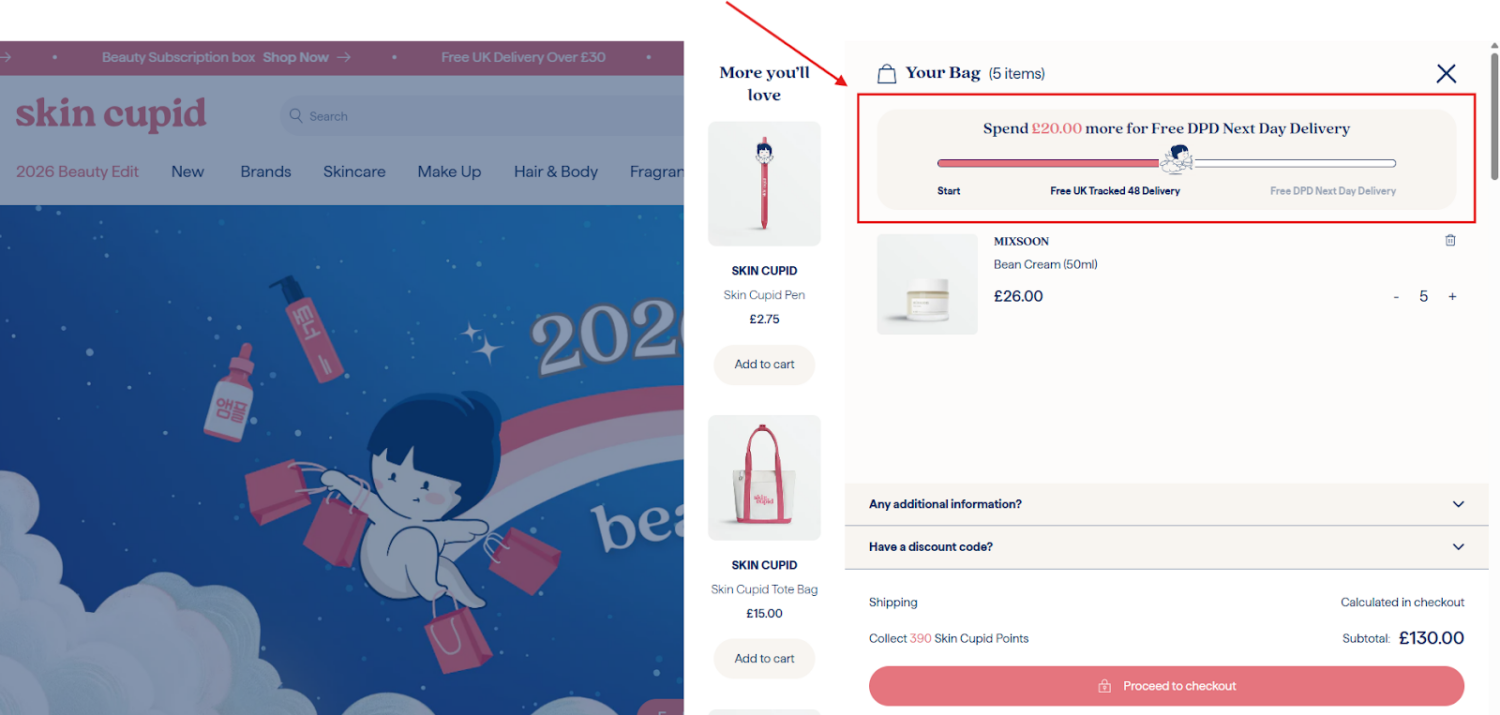
Skin Cupid, a UK-based cosmetics brand, structured their free shipping offer around a €30 minimum for free UK delivery. Since nearly all of their individual products are priced below this threshold, customers naturally need to purchase at least two items to qualify. This structure increases AOV per order while keeping packaging, shipping, and operational costs the same.
What makes their approach stand out is how they layered the offer with tiered shipping incentives and displayed it through a stunning progress bar:
Tier 1: Free UK Tracked 48 Delivery on orders above €30 (Delivery within about 2 working days)
Tier 2: Free DPD Next Day Delivery on orders above €150 (Fast delivery on the next working day)
This tiered structure taps into skincare shopping behavior: customers rely on daily routines where multiple products run out around the same time. For skincare enthusiasts, even missing one day of their moisturizer feels uncomfortable.
By making faster shipping the reward for higher spend, customers who need products urgently are willing to add one or two extra items they will use anyway in exchange for free next-day delivery.
Offer 3: Rewards for First-time Purchase
First-time customers represent your biggest conversion challenge. Because a new visitor has no history with your brand, they often feel a high level of “purchase risk” – the fear that the product won’t be worth the price. A first-time reward lowers this barrier and directly improves your conversion rate.
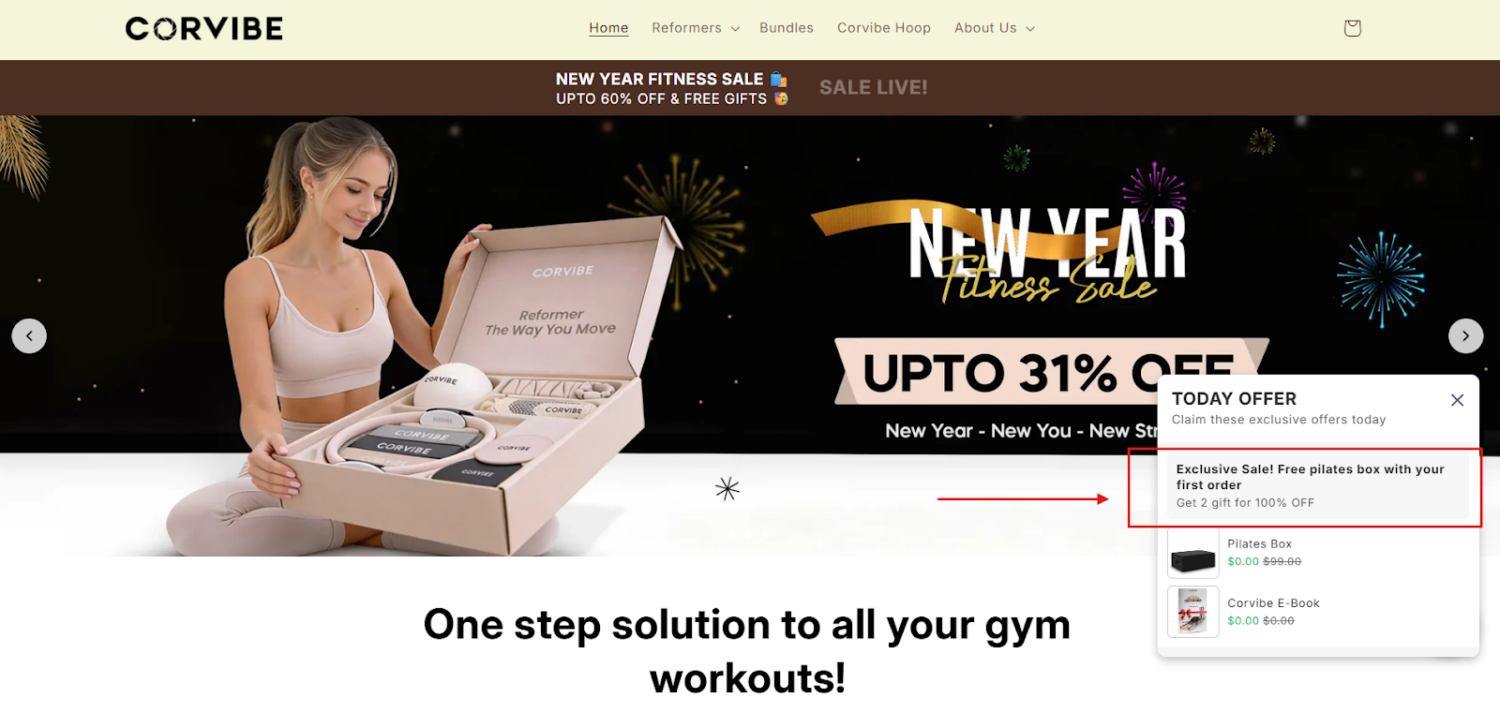
️🎯 Real-world example: Corvibe
Corvibe sells a niche product: pilates machines. Unlike everyday essentials, this is not a casual purchase. Customers take time to evaluate, compare, and hesitate before committing to a large spend. This naturally leads to lower conversion rates.
To overcome this barrier, Corvibe structured a compelling first-time buyer offer: a 46% discount paired with two branded gifts of a Pilates box and an exclusive Pilates ebook. These gifts deliver both functional and emotional value, helping customers feel they are getting more than just a machine for their money.
By stacking tangible savings with meaningful extras, Corvibe reduces the psychological weight of a costly purchase. Customers who were on the fence now have a clear reason to act, turning hesitation into conversion.
3.2. Increase Average Order Value
To increase AOV, focus on offers that motivate customers to add more items to the same order. The goal is to make adding one more product feel like a natural, rewarding decision rather than a sales push.
Offer 1: Tiered Offers
Tiered offers create a “gamification” effect where customers actively search for items to add to reach the next discount level. This taps into the psychological drive to reach goals and feel like a winner.
The following example shows how tiered rewards can drive customers through multiple spending levels:
️🎯 Real-world example: INOAR
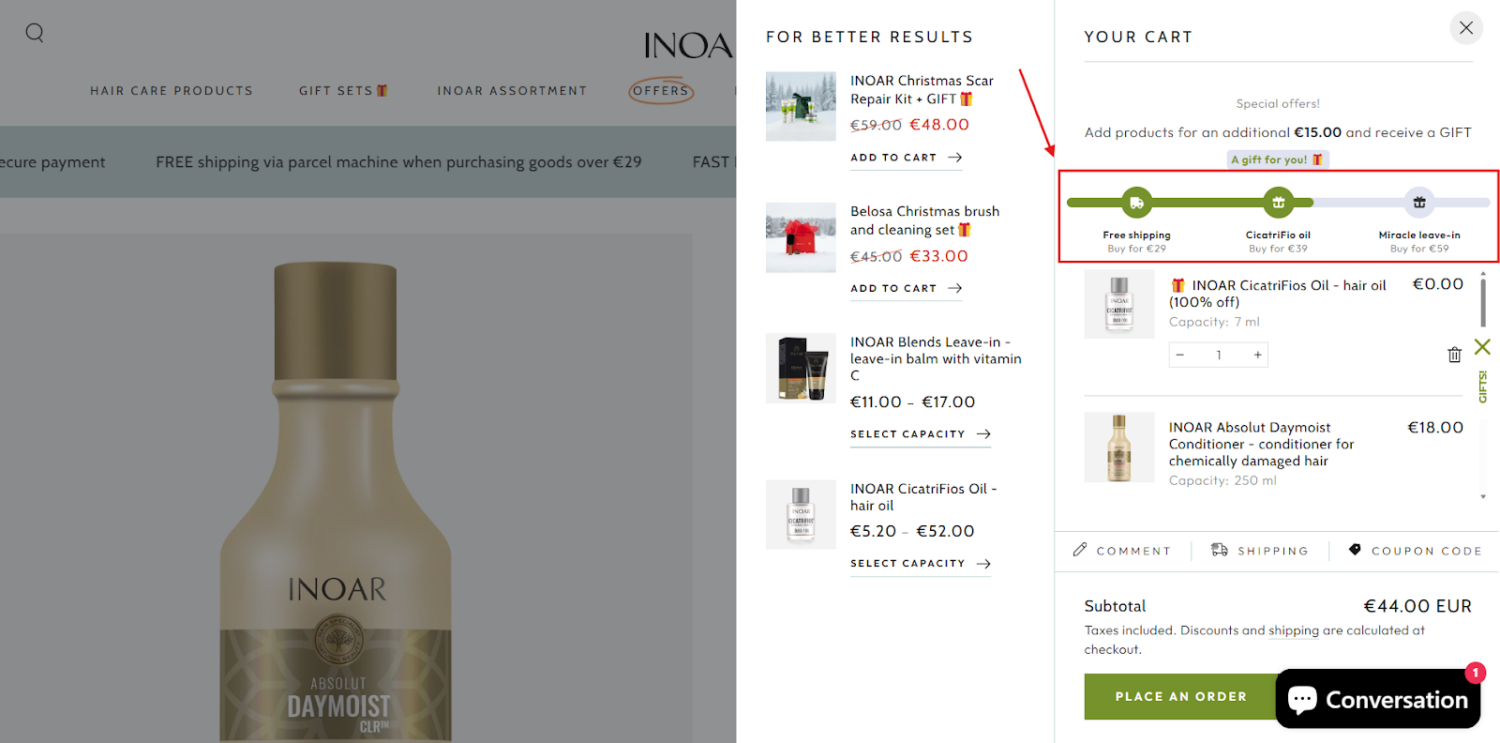
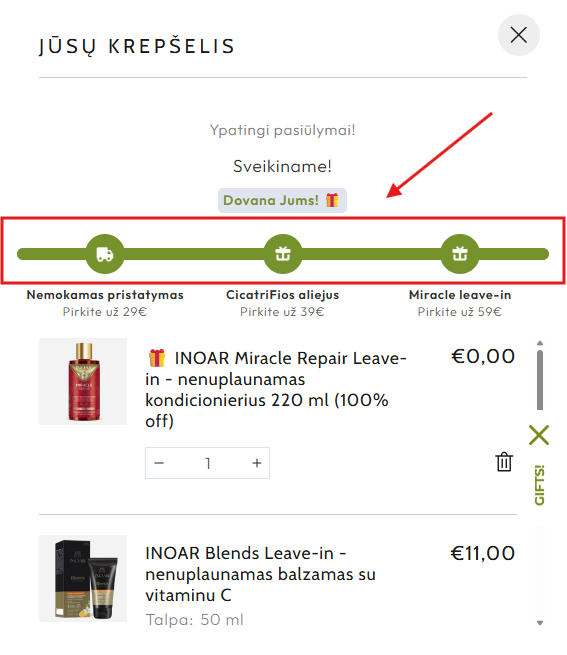
INOAR, a vegan haircare brand, built a three-tier reward structure around its product catalog, which starts at €12:
Tier 1: Free shipping on orders over €29
Tier 2: Free 7ml hair oil on orders over €39
Tier 3: Free Miracle Repair Leave-in Conditioner (220ml) on orders over €59
Each tier targets specific customer behaviors:
Tier 1 requires customers to purchase at least two individual products or one combo set to qualify for free shipping. This satisfies the customer’s desire to avoid shipping fees while naturally increasing AOV.
Tier 2 sits just €10 above Tier 1, making it feel effortless to add one small product and unlock the next reward. The gap is intentionally narrow to encourage customers to stretch slightly rather than stop at free shipping.
Tier 3 jumps to €59, nearly 50% higher than Tier 2, which pushes customers toward purchasing a full hair skincare routine, including shampoo, conditioner, and hair oil combo. Or customers choose larger product sizes if purchasing individually. This structure works well for haircare, where using complementary products (shampoo, conditioner, and oil together) delivers better results than using them individually.
The gift selection strengthens this strategy by emphasizing functional value. Options such as free shipping, hair oil, and conditioner deliver immediate perceived benefits. More importantly, the hair oil and conditioner act as trial products which allow customers to experience at no cost, see the results, and are encouraged to return for another order.
💡 Pro tip: INOAR displays each reward tier in the cart drawer using a progress bar feature by BOGOS. This keeps customers aware of how close they are to the next level and motivates them to add just one more item.
Offer 2: Product Bundles
Product bundling is one of the most popular ways to increase Average Order Value (AOV) because it eliminates “choice overload.” Instead of forcing the customer to hunt for individual items, you curate a complete solution for them. This is the logic that fuels Amazon’s success, where 35% of all purchases are driven by their “frequently bought together” recommendations.
As we enter 2026, customer preferences are shifting toward bundles that deliver greater value than standard discounts – driven by AI-powered precision, as highlighted in Shopify’s 2025 Global Holiday Retail Report.
️🎯 Real-world example: Rapoo
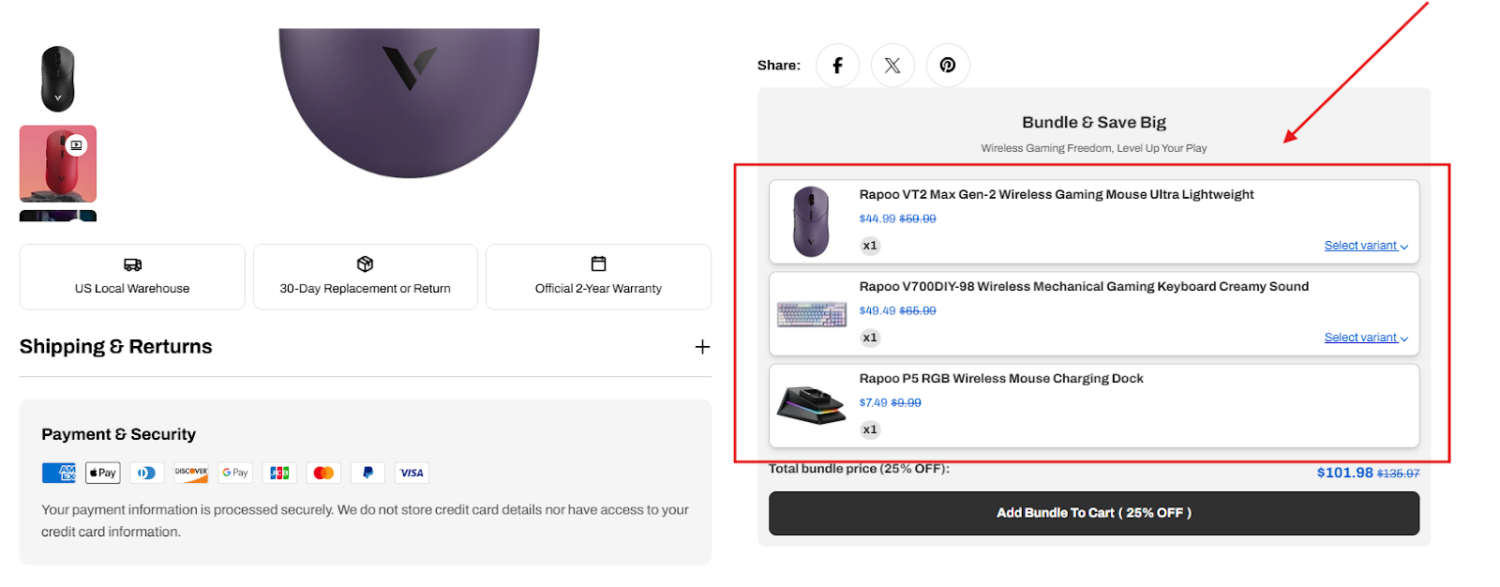
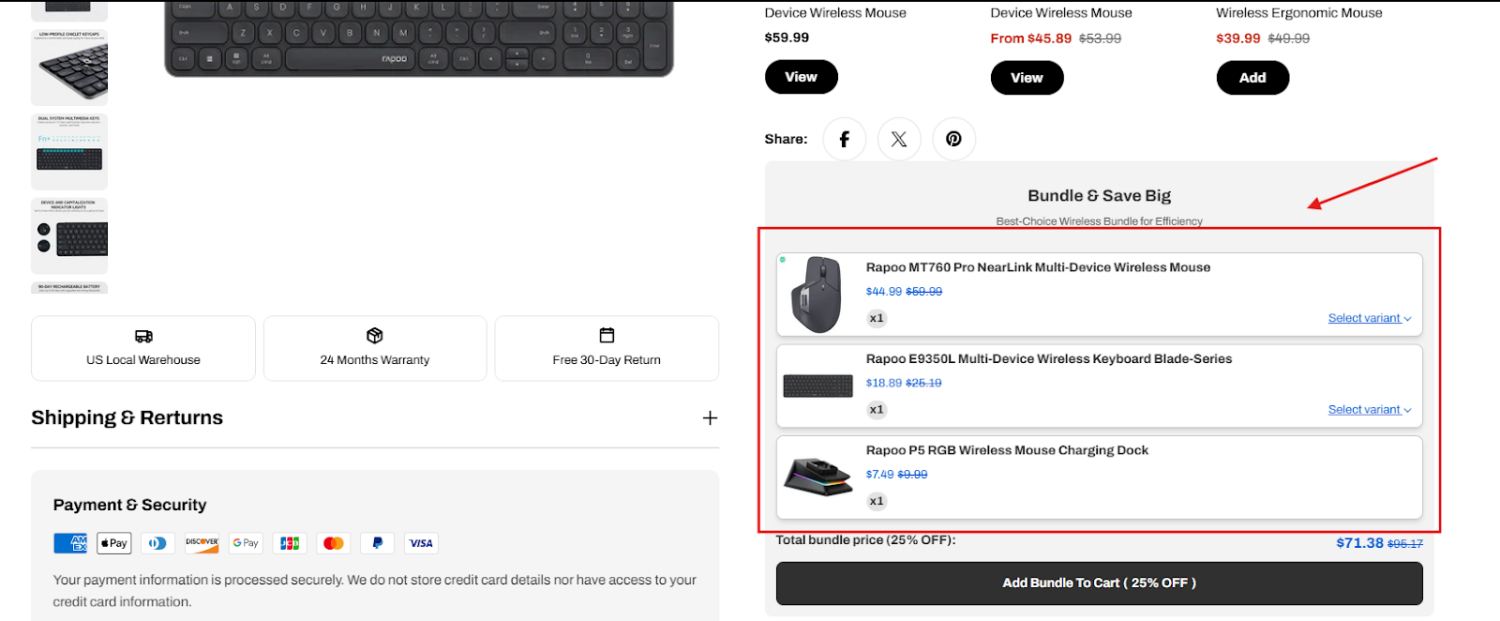
Rapoo, an electronics brand, demonstrates how to structure bundles around two key factors: functionality and aesthetics.
On the functional side, Rapoo groups high-intent items such as a mouse, keyboard, and wireless charging dock into a single “PC Desk Setup” combo. This approach solves a practical problem for the customer: they get a fully compatible workstation in a single click. Moreover, by pairing items with similar price points, the total cost feels balanced rather than overwhelming.
Beyond functionality, Rapoo taps into the emotional side of shopping by coordinating bundles by color touch. By organizing bundles around a visual theme, they cater to different customer personalities and design preferences.
Crucially, Rapoo applies a 25% discount to these bundles. In eCommerce, 25% often hits the sweet spot, which is deep enough to feel attractive when customers compare prices, but still keeps the profit margins healthy.
For example, they offer vibrant, colorful themes for shoppers who want a stylish setup, alongside minimalist “Black Edition” pairings for those who prefer a professional, clean look.
Offer 3: Frequently Bought Together
Much like strategic bundling, the Frequently Bought Together strategy leverages the power of product grouping to create a frictionless shopping experience. By suggesting complementary items that naturally pair with what they desire, you enable customers to assemble a complete routine or set in a single click.
However, the true effectiveness of this strategy lies in strategic placement. These upsell suggestions perform best at high-intent touchpoints, such as the product page or checkout, where customers are closest to making a purchase decision. To maximize conversions, offer multiple add-on options so customers can flexibly choose the item that best fits their needs rather than feeling locked into a narrow recommendation.
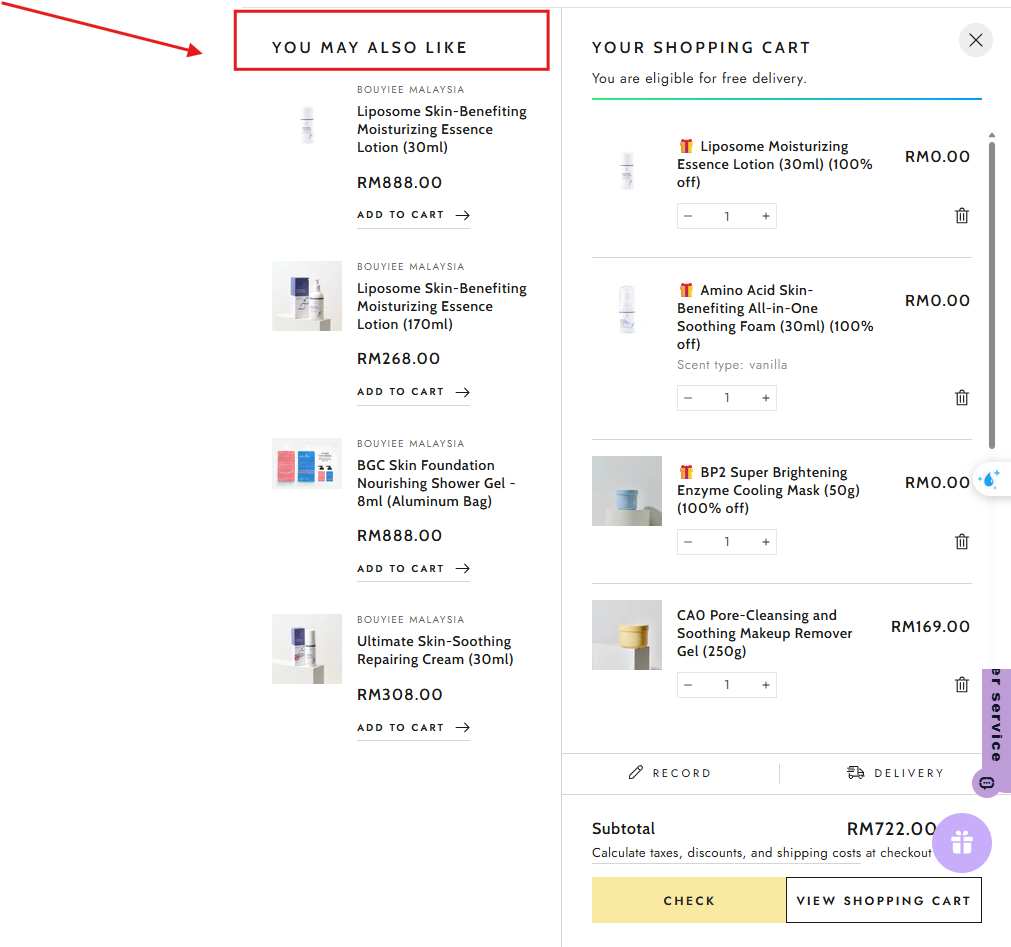
An example of this execution is from a Malaysian skincare brand, Bouyiee.
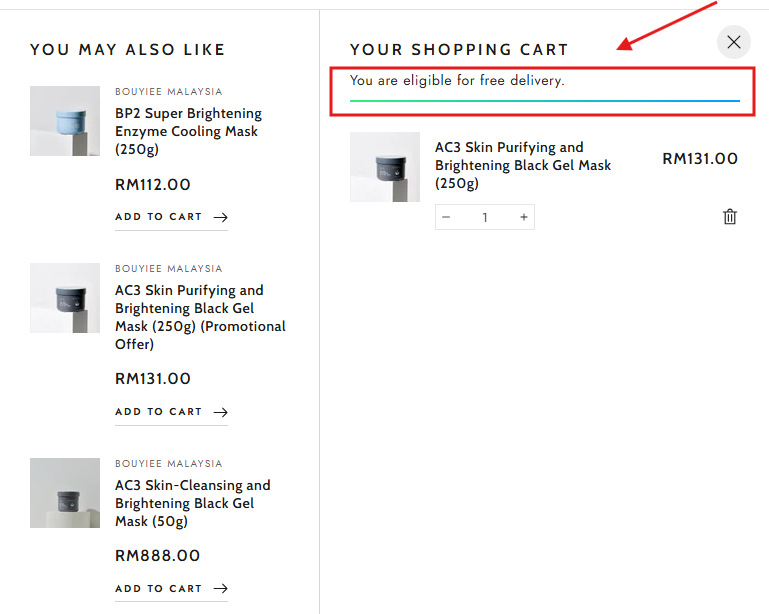
Bouyiee places their FBT offers directly in the cart drawer. In the eCommerce buying journey, this is known as the “moment of highest intent.” By showcasing upsells exactly when a customer is reviewing their order and preparing to pay, Bouyiee capitalizes on the momentum of the purchase. More importantly, the suggested items are always directly related to the product already added. This makes the upsell feel like a helpful recommendation rather than aggressive selling.
Another pro tip from this smart strategy is that they don’t just show a product; they pair the suggestion with a dynamic progress bar. This visual tool shows customers exactly how much more they need to spend to unlock a free shipping voucher.
3.3. Clear Inventory
To clear inventory effectively, focus on offers that create a sense of urgency and make bulk purchases feel rewarding.
Offer 1: Buy One Get One The Same
A BOGO offer is a powerful tool for clearing inventory quickly. While this offer is mathematically similar to a 50% discount, it is far more effective for your business because it moves twice as many units in a single transaction. Furthermore, the psychology of “Free” is much more compelling to a shopper than a standard price reduction.
In fact, consumer research shows that 66% of shoppers rank BOGO deals as their favorite type of promotion. Because it creates such a high sense of value, this strategy remains a retail staple that works reliably across almost every product category.
️🎯 Real-world example: Superdulces
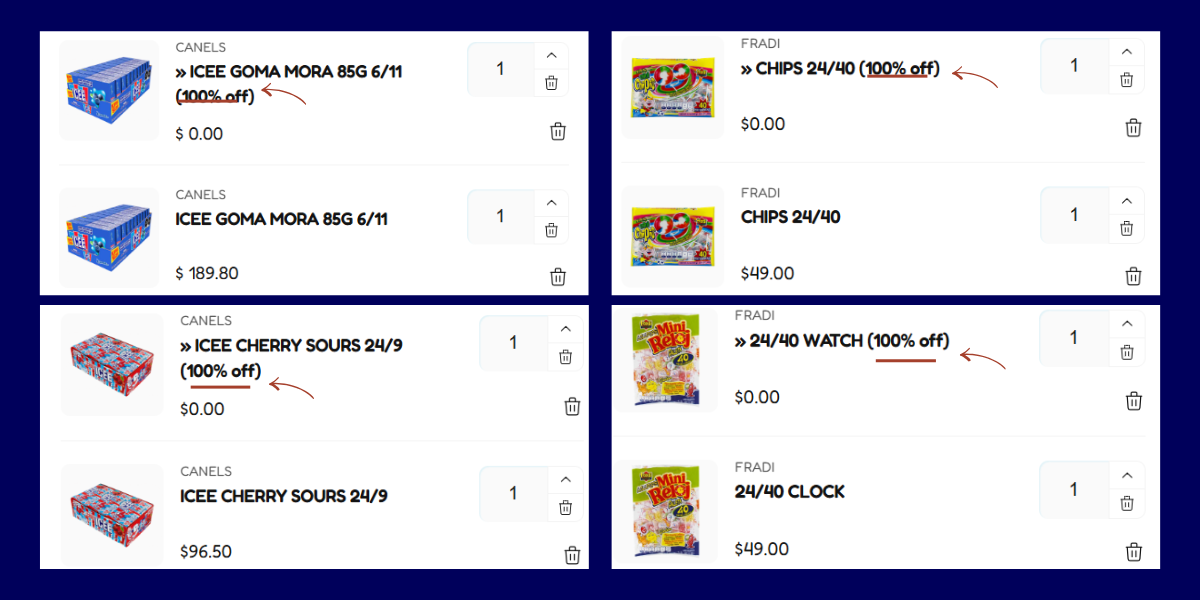
For food and beverage businesses like Superdulces, products expire quickly. This makes BOGO offers a smart way to manage its stock. When it comes to seasonal campaigns, such as Valentine’s Day, the store experiences a surge in visitors. They leverage this high traffic to move everyday items, including sweets and cakes that need to sell fast.
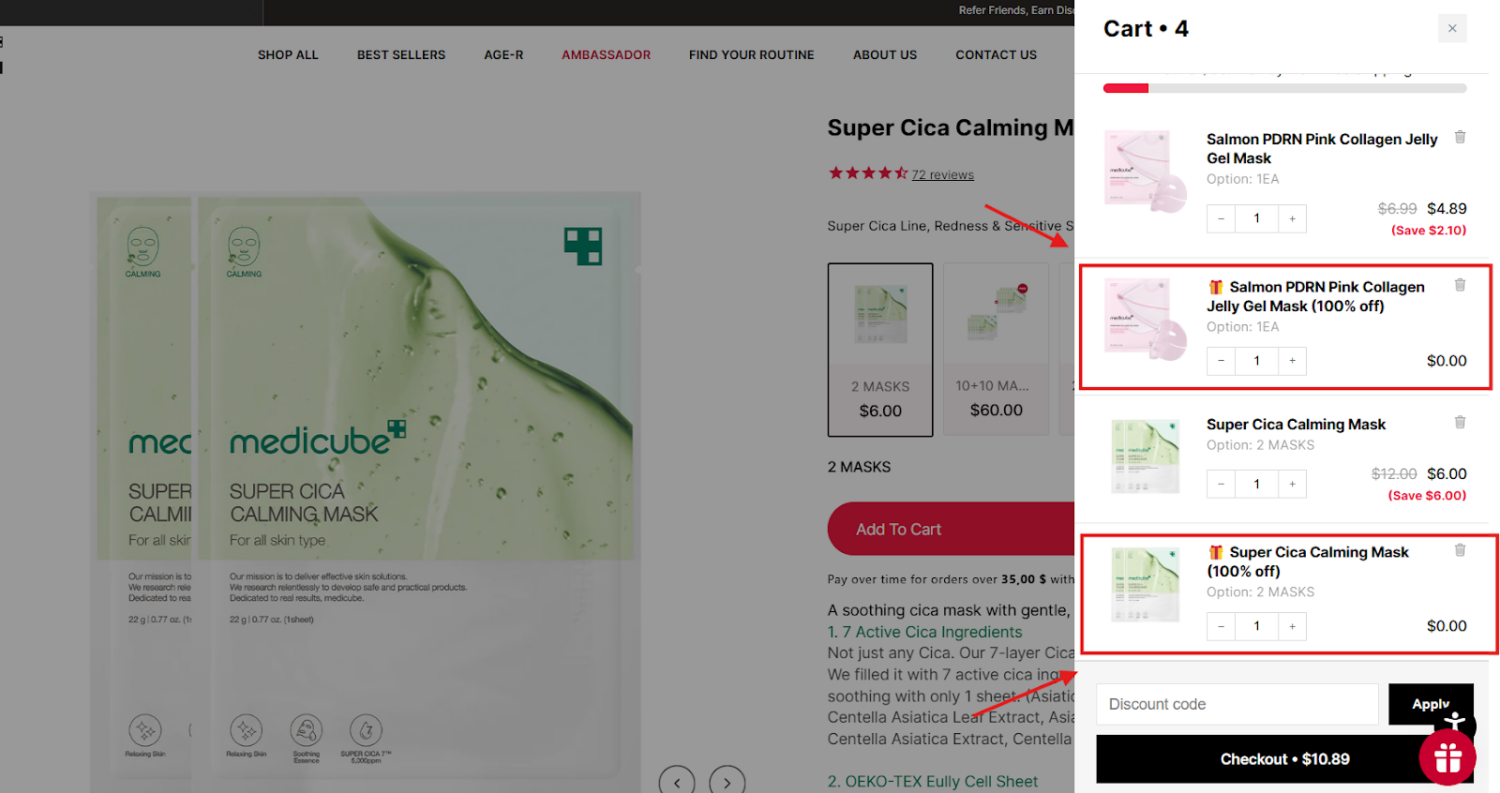
This offer type also works effectively for cosmetics brands, where expiration dates play a critical role in inventory management. Take Medicube as an example. With a large stock of masks to move, BOGO offers became the fastest way to clear the warehouse.
Unlike serums or creams that take from 3 to 4 months to use up, a mask is consumed in just a few days. This makes customers far more willing to buy one and get a free item. It’s because they see value in doubling up, and expiration no longer becomes a barrier to purchase.
To maximize the impact, both Superdulces and Medicube use BOGOS’s auto-add gift feature to automatically add the free item to their customers’ carts. This removes friction from the buying process and creates an instant reward moment when customers feel the value immediately without needing to hunt for the free item or enter a code.
Want to set up BOGO offers that clear inventory fast while delighting your customers? Install BOGOS today and start creating your first offer in minutes.
Offer 2: Volume Discount
Volume discount is a strategy where customers receive increasing discounts based on the quantity they purchase. Unlike a simple quantity break on a single product, volume discounts can apply across multiple products.
This approach works particularly well for consumable or repeat-use products, where buying more at once feels like a smart decision rather than an upsell. Below is how one supplement brand structured its volume discount.
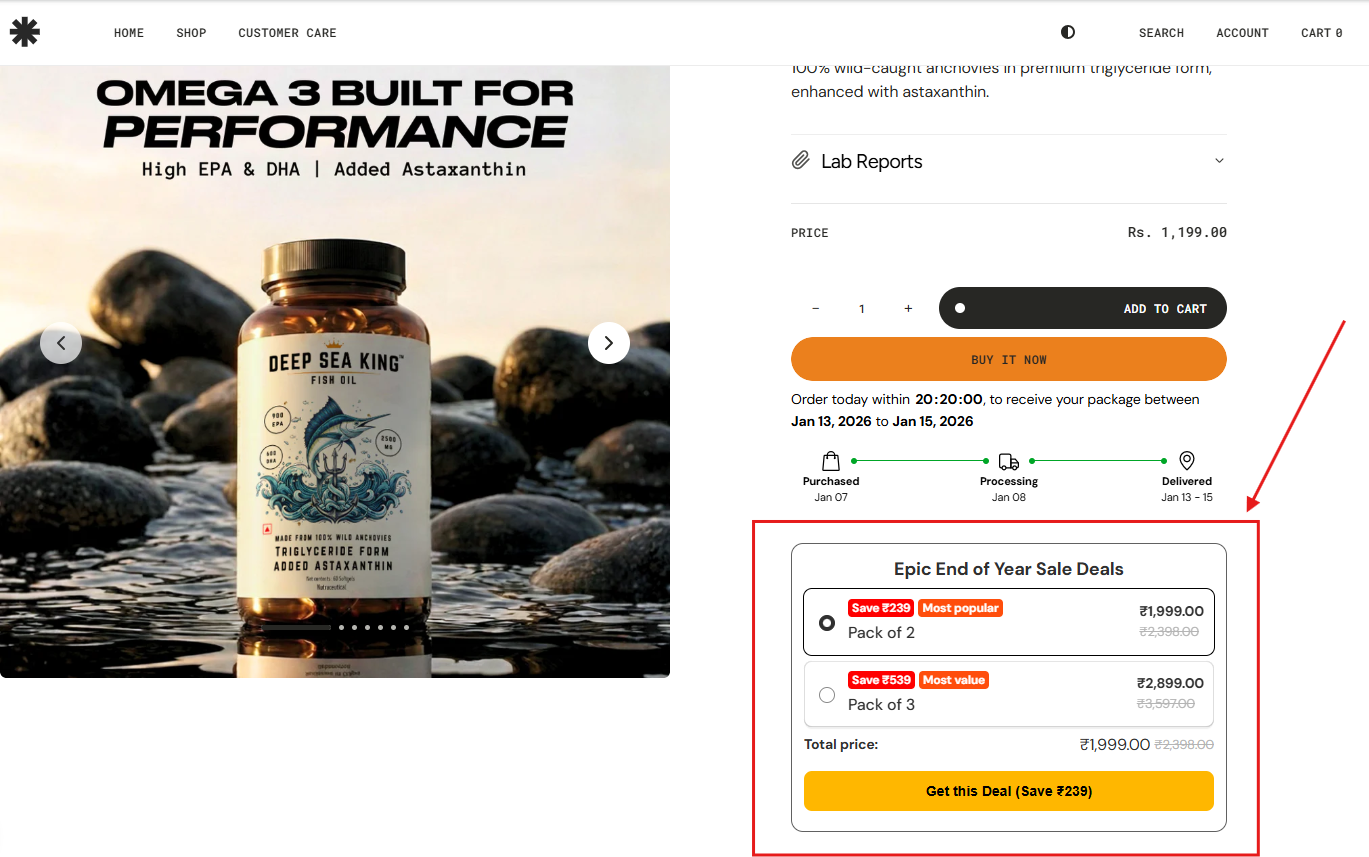
Chamber of Gods, a supplement brand, uses a simple two-tier volume discount that makes it easy for customers to justify adding one more item:
Tier 1: Buy 2, Save 16%
Tier 2: Buy 3, Save ~20%
The key to this structure is the low barrier between tiers. Moving from two items to three feels like a small, effortless step—not a major commitment. Meanwhile, the discount range of 16–20% hits the sweet spot: large enough to feel rewarding, but controlled enough to protect profit margins.
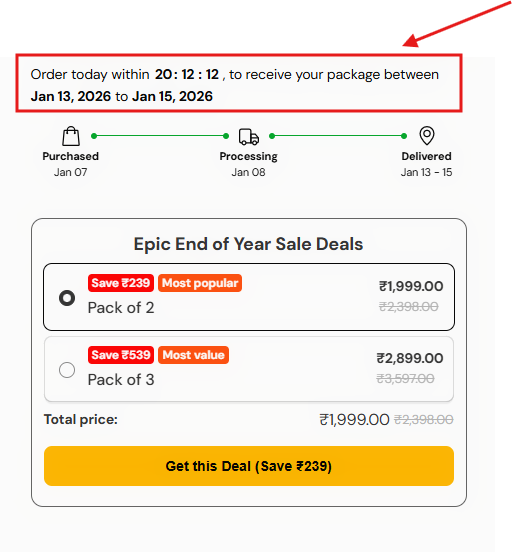
To amplify urgency, Chamber of Gods pairs this offer with a time-sensitive delivery promise: “Order today within [countdown] to receive your package between Jan 13–15, 2026.” This tactic works exceptionally well in the supplement category, where customers rely on consistent daily usage and cannot afford to run out. The countdown creates a compelling reason to act now rather than delay the purchase.
3.4. Maximize Performance During Seasonal Campaigns
Peak seasons like Black Friday and the holidays are the most expensive times to run an online store. Because every brand is competing for attention, advertising costs (CPM) often double or even triple. The objective during these periods is to maximize revenue per visitor while protecting profitability.
Offer 1: “Last Chance” Flash Sale
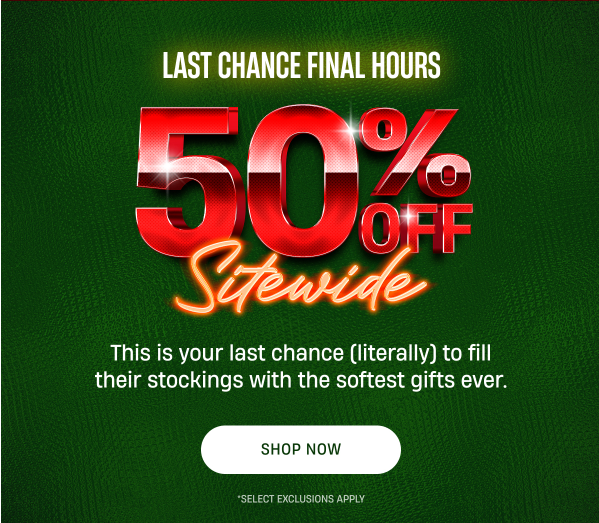
For industries with seasonal or holiday-driven products, such as fashion and food & beverage, “Last Chance to Buy” flash sales are a highly effective tactic for clearing inventory. The combination of time pressure and the fear of missing out creates urgency that pushes customers to act immediately rather than delay their decision.
To execute effectively, keep flash sales short, which is ideally set from 24 to 48 hours to create genuine urgency. For maximum impact, set discounts at a minimum of 30% to make the deal feel irresistible.
Offer 2: Seasonal Gift With Minimum Purchase
Gift with purchase remains one of the most versatile offers in eCommerce and for good reason. It works across nearly every business objective because the mechanics are simple and the perceived value is immediate. During seasonal campaigns, this offer becomes even more powerful.
For execution details and a real-world example, refer to the Nela Gems case study, which demonstrates how a jewelry brand used this strategy to generate 391 orders and $23,043 in revenue during December alone.
Offer 3: Build A Bundle Offer
Holiday events are the ultimate gift-giving occasions, making “Build a Bundle” offers a highly effective way to capture customer spend. By letting shoppers group multiple items into a single set, you transform your store from a list of individual products into a destination for high-value gifts.
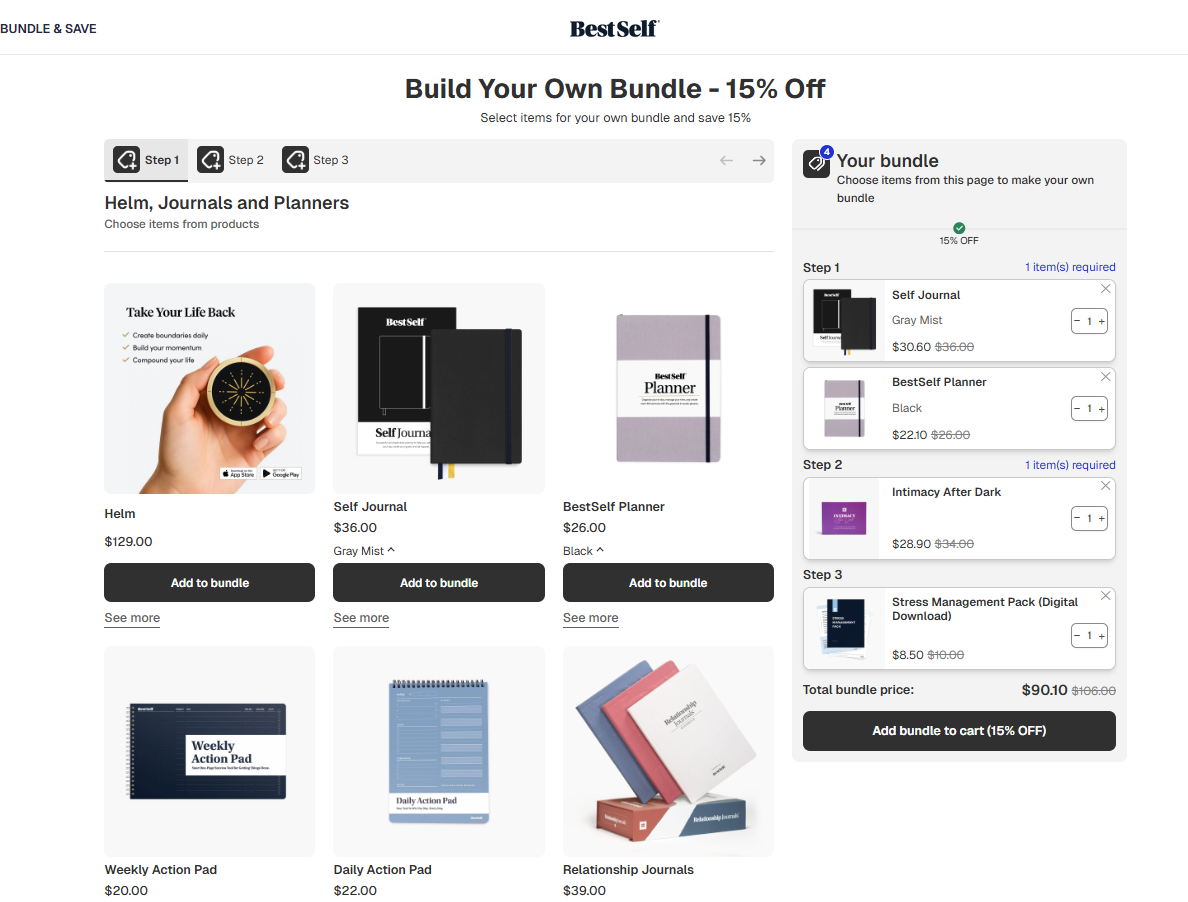
Best Self, a brand specializing in journals, planners, and productivity tools, times its New Year campaign to align with the fresh start mindset. During this peak season, they offer a 15% discount through a Build Your Own Bundle promotion, motivating customers to create a complete toolkit to write down their 2026 goals and plans.
What makes this approach effective is how Best Self leverages customer psychology to increase AOV without forcing a stretch.
Summary and Key Takeaways
Choosing the right offer starts with understanding your current business challenge. The table below maps each business objective to the offer types that solve it most effectively.
Business Objective
Best Offer Types
Increase Conversion Rate
Gift with Minimum Purchase Free Shipping Threshold First-Time Purchase Reward
Increase AOV
Tiered Offers Product Bundles Frequently Bought Together
Clear Inventory
Buy One Get One Volume Discount
Maximize Seasonal Performance
“Last Chance” Flash Sale Gift with Purchase Build A Bundle
Core Principles to Remember
Start with your data, not your discount. Check your Shopify Analytics to identify where customers drop off, then choose an offer that addresses that specific friction point.
Set thresholds slightly above your current AOV. A threshold 15–20% higher than your average order encourages customers to add one more item without feeling like a stretch.
Use fixed-value rewards over percentages when possible. “Get a free gift at $50” costs you the same regardless of cart size, while “Save 20%” can spiral on large orders.
Automate everything. Automatic rewards convert better than discount codes. Every manual step loses customers.
Protect yourself from deep discounts. For discounts above 30%, mark items as “Final Sale” to avoid return-related losses.
Display progress visually. A progress bar in the cart drawer keeps customers aware of how close they are to the next reward, and motivates them to add just one more item.