
How to Make Your Offers Work in Different Markets: 6 Localization Rules
How to Make Your Offers Work in Different Markets: 6 Localization Rules

Allan Vu
Digital Marketing Specialist

When expanding into new markets, many merchants choose sales promotions to build the first touchpoint with foreign customers, but end up failing to convert.
In this edition of our “Expert Interview” series, the BOGOS team has interviewed Mr. Minh Nguyen Hoang, Business Director of Transcy, the leading Shopify app for language & currency localization trusted by 25k+ world-class companies & organizations, to discuss this phenomenon.

The Trust Gap: Why International Shoppers Abandon Your Offers
His answer was clear: Offers fail in foreign markets because they lose trust and localization.
“Imagine a shopper in Japan seeing ‘Spend $100, get a free gift.’ They have to mentally convert that to ¥15,000—but is ¥15,000 a reasonable threshold for a free gift in their market? They don’t know. That uncertainty creates doubt. And doubt kills conversion.”, Mr.Minh explains further.
The data confirms this. In 2024, about 48% of global online shoppers abandoned their carts due to unexpected extra costs, while 17% cited concerns about website trustworthiness (Oberlo).
When a foreign shopper sees a promotion displayed in the wrong currency, an offer type that doesn’t resonate locally, or awkward Google Translate-style copy, they don’t just feel confused—they see hidden conversion fees, unclear duties, and confusing terms.
The offer now becomes a warning sign instead of an incentive!
6 Rules for Localizing Your Offers for Trust
So, how do merchants bridge this trust gap?
“Localization is key, but it isn’t about making your store multilingual. It’s about making international shoppers feel like you’ve built the experience specifically for them. When done right, it eliminates doubt before it forms.”
Minh Nguyen Hoang, Transcy Bussiness Director
Building on this, Mr. Minh shared six practical localization rules that make what works in your home country now effectively convert abroad.
Rule 1: Adapt Offer Types to Each Market
Not all promotional mechanics resonate universally. The offer structure that drives conversions in one market can confuse or alienate shoppers in another.
For example, in the United States, promotions prioritize customer benefits—discounts, exclusive deals, and time-limited offers that drive immediate interest. In contrast, Japanese shoppers expect detailed product information before being swayed by “free” offers (The Digital X).
This means a “Buy One, Get One Free” campaign that performs brilliantly in the US might fall flat in Japan, where gift with purchase or super bundling works better. This deeply aligns with the Japanese cultural significance of gift-giving and a consumer mindset that appreciates quality, value, and gestures of gratitude.
Tips from BOGOS users:
- Spend time researching each market’s promotional preferences first.
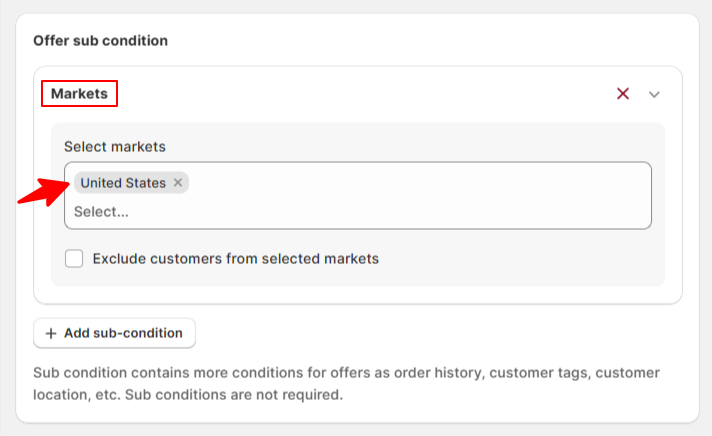
- Tailor offers for each market using the “Market” subcondition. For example, BOGO offers are available for US shoppers.
- Using BOGOS and Transcy integration to auto-translate offer content with cultural context for your store.
Rule 2: Eliminate Math Anxiety with Native Currency
To dismantle skepticism, you must first eliminate the most common cognitive friction point at checkout: manual currency calculation.
If a customer sees a discount, a bundle savings total, or the required spend threshold displayed only in a foreign currency, they will question the final cost and the true value of the savings. The data proves it: 33% of shoppers abandon carts when shown USD-only pricing, and 92% prefer to pay in their local currency (CheckoutChamp).
The solution is immediate, real-time clarity. You must ensure all offer elements instantly display the cart value, the offer threshold, and the resulting savings calculated in the customer’s accurate local currency.
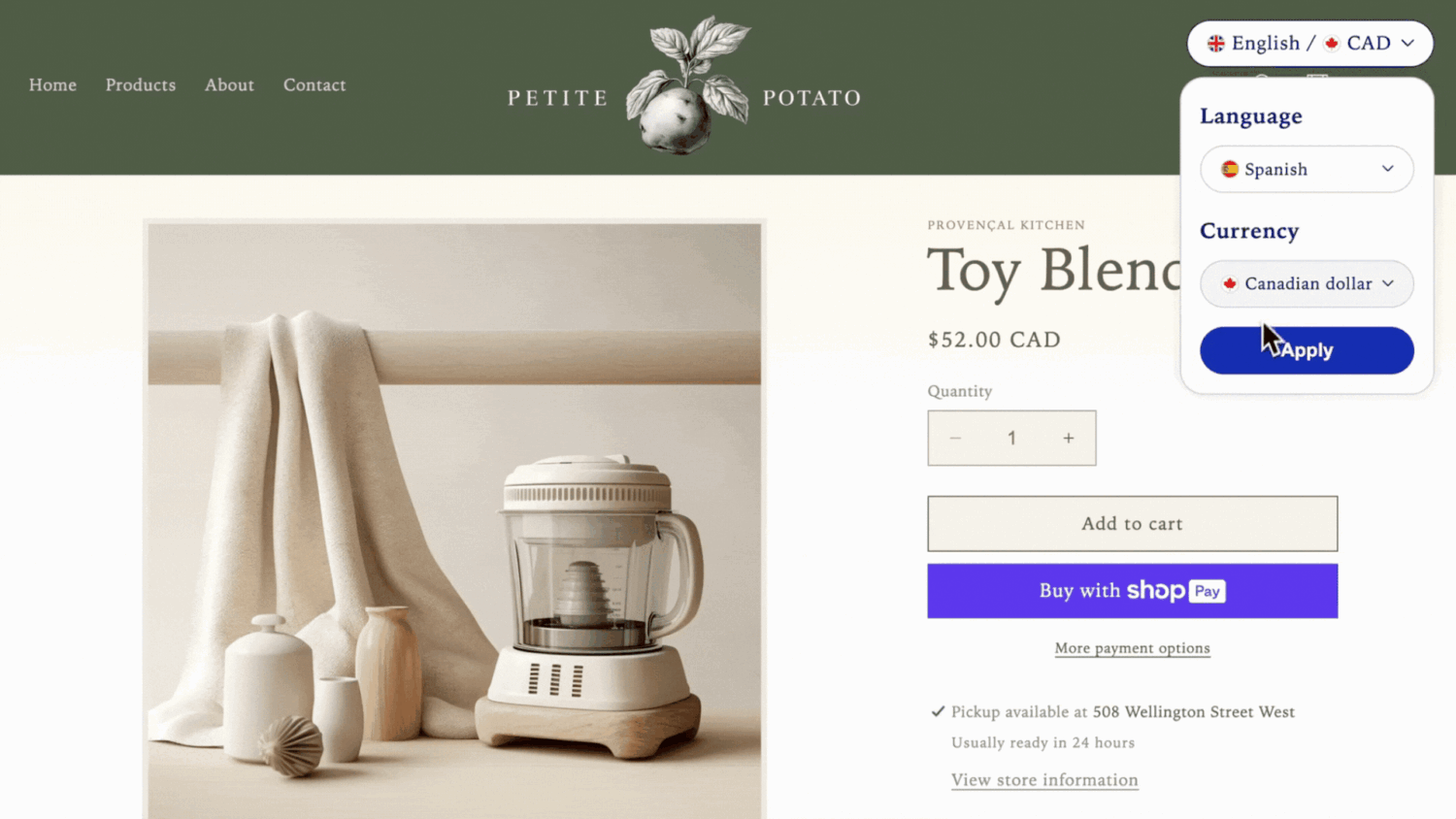
Tips from Transcy users: By using the Transcy currency converter to localize these real-time numbers, you remove the cognitive barrier, allowing shoppers to instantly grasp their savings and confidently proceed toward conversion.
Rule 3: Adapt Offer Thresholds to Local Purchasing Power
However, displaying the correct currency or language isn’t enough.
A global threshold like “spend $100” carries vastly different economic weight across markets—what’s attainable in one country may be prohibitive in another. Therefore, an unrealistic goal will make shoppers abandon their carts!
The solution that Mr. Minh highly recommends is utilizing Purchasing Power Parity (PPP), as companies adjusting pricing based on PPP saw 4.7 times higher conversion rates in emerging markets (Getmonetizely). This helps you initially calibrate thresholds to local economic reality without extensive market research.
For instance, $100 USD = ¥707 CNY by direct conversion, but set it at ¥500-600. This feels more achievable to Chinese shoppers based on the local economic context.
Tips from BOGOS users:
- Set market-specific thresholds using PPP data, not Shopify’s auto-exchange rate.

- Use Transcy to ensure threshold messaging displays in local currency and languages.
- Adjust thresholds based on your real performance. Remember to lower by 10-15% if a market shows high abandonment; raise slightly if conversion is strong, but margins are tight.
Rule 4: Localize Offer Micro-copy and Persuasive Language
Moving from numerical clarity to linguistic appeal: promotional microcopy like “Limited Time Offer!” or “Deal of the Day” carries a tone that literal translation fails to capture, often sounding robotic.
In fact, 40% of consumers from 29 researched countries never buy from websites that aren’t in their native language and local context (CSA Research). That’s why effective localization requires cultural adaptation.
Black Friday, for instance, holds little traditional significance in Japan (Joyn Tokyo). While major retailers like Amazon now run Black Friday sales there, they invest heavily by running week-long sales with discounts.

Mr. Minh advises: “If you can’t invest in week-long campaigns with point systems and gamification, simply use culturally native terms like ‘ウィンターセール’ (Winter Sale) or align with established local shopping events like Golden Week.”
Tips from Transcy users: Test promotional copy variations to identify what resonates in each market.
Rule 5: Localize Visual Design and Imagery
The same promotional offer requires different banner designs across markets based on cultural aesthetics and consumer expectations.
H&M provides a clear example: their Chinese promotional banners emphasized Lunar New Year Sales with vibrant colors and Asian models, while the US version promoted special collections with minimalist layouts and local models. Both promoted sales, but the visual approach differed dramatically.
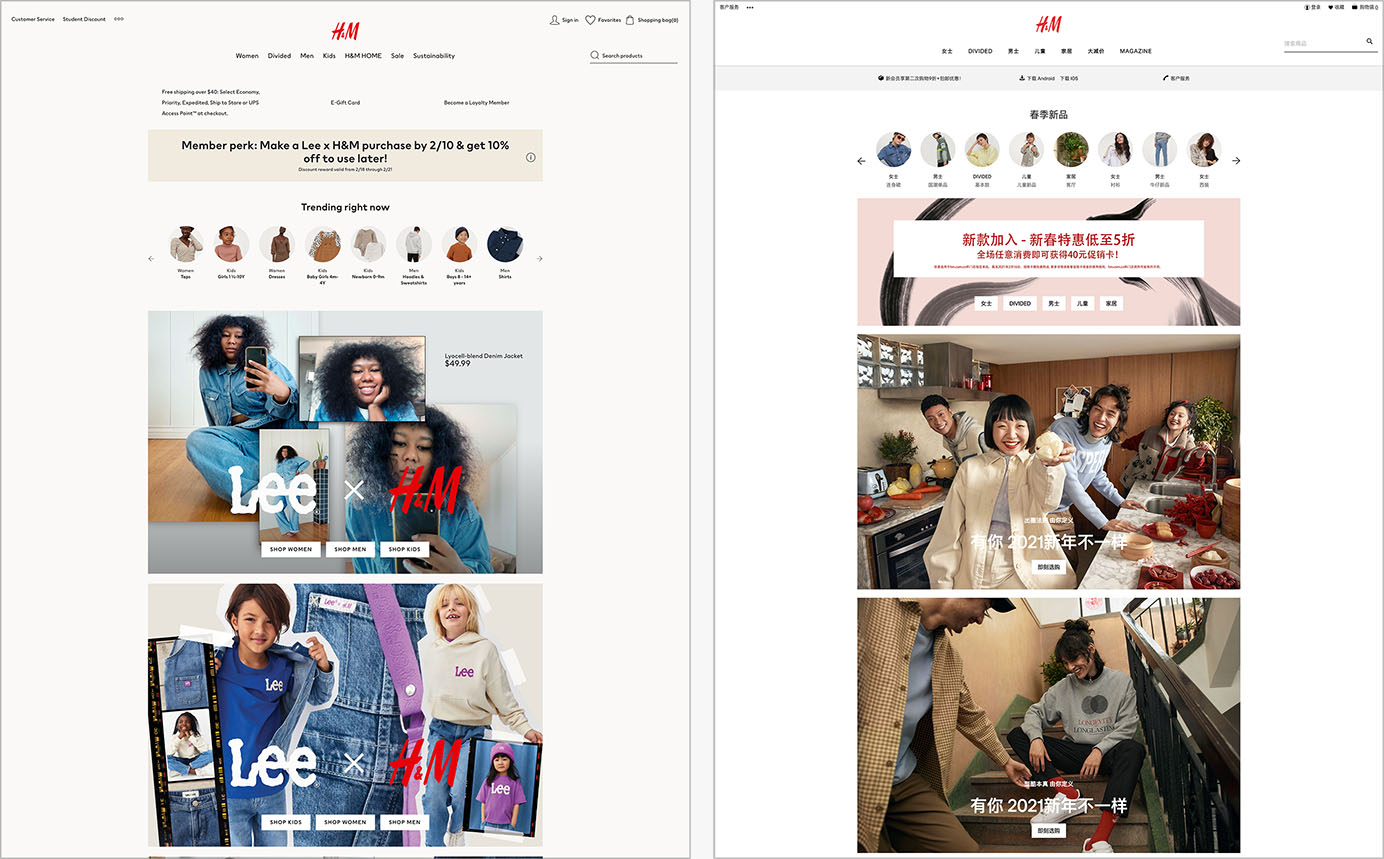
The US (left) and Chinese (right) versions of H&M
Tips from BOGOS users: While changing models for every market can be costly, you can just take easy steps like:
- Design style: French (elegant, soft colors, “Offre Exclusive”), German (bold savings “50€ sparen,” specs visible, TÜV badge), US/UK (high contrast, “50% OFF”)
- Seasonal relevance: A “Winter Sale” banner with snow imagery works in New York’s December but fails in Sydney’s summer or Dubai’s year-round heat.
- Color choices: Rich jewel tones (Middle East), muted naturals (Scandinavia)
Rule 6: Translate Fine Print (T&Cs) to Build Legal Trust
The final, and perhaps most critical, step in building trust is ensuring legal transparency.
International shoppers are highly vigilant about hidden conditions, duties, and return policies. If the fine print is unavailable or unclear, they perceive high legal and financial risk, which serves as the final barrier to conversion.
For example, it has been shown that many shoppers are likely to abandon their carts when the return process is perceived as unfavorable (Analyzify).

This isn’t just customer service; it’s a matter of compliance.
In regions like the EU, the Consumer Rights Directive mandates that contracts and terms of service must be available in the language of the consumer’s country. Therefore, you must ensure that all offer-related fine print. Terms like “non-refundable,” “shipping cost excluded,” or complex clauses governing BOGO returns are clearly and accurately translated.
Tips from Transcy users: A fully localized offer means consistency from the flashiest banner to the smallest legal disclaimer. By utilizing Transcy to manage the localization of these critical policy documents, you prove your commitment to fairness and consumer rights, and secure the transaction.
Integrate Localization Deeply into Your Offers
Apply the six rules above, and you’ll quickly discover: you can’t execute them separately. That’s why streamlining offer localization requires your translation and promotion tools to work as one system.
On Shopify, translation apps normally can’t read or translate content generated by promotion apps. Your product page’s content and currency might be perfectly translated, but promotional widgets stay in English and $. That’s why Transcy is one of the very first integration partners of BOGOS.
Minh Nguyen Hoang, Transcy Bussiness Director
After you set up your offers in BOGOS, Transcy automatically syncs and translates all promotional content across your entire website—managed from one centralized dashboard.
“When translation and promotions sync automatically, you eliminate technical breakdowns and ensure every offer element displays correctly in every market,” Mr. Minh notes. “This separates merchants who try international sales from those who succeed.”
Conclusion
We’re deeply grateful to Mr. Minh Nguyen Hoang for sharing these six practical rules from years of helping merchants bridge the trust gap in international commerce.
As one of BOGOS’s very first integration partners, Transcy understands what many merchants learn the hard way: localization isn’t about translation—it’s about respect. When your offers speak customers’ language, honor their economic reality, and provide transparent terms, doubt transforms into trust. And trust is what drives conversion.
The six rules Mr. Minh outlined give you a clear roadmap from domestic success to international growth. They’re practical, proven, and achievable with the right tools working together.
The result: international customers who feel understood, and merchants who scale globally with confidence.