Ruby is a Marketing Executive and the driving force behind BOGOS’s content. With a deep understanding of eCommerce & Shopify sales promotions, Ruby is passionate about helping merchants optimize their offers & unlock the full potential of their businesses.
When merchants launch sales campaigns (such as gift with purchase, discounts, bundles, upsells,…), they typically optimize for desktop performance, perfecting the deals, designing banners, and testing purchase flows on large screens.
However, with mobile commerce now driving 78% of e-commerce traffic and 66% of all online orders, there’s a critical blind spot: those same promotions often fail to convert when shoppers encounter them on mobile devices.
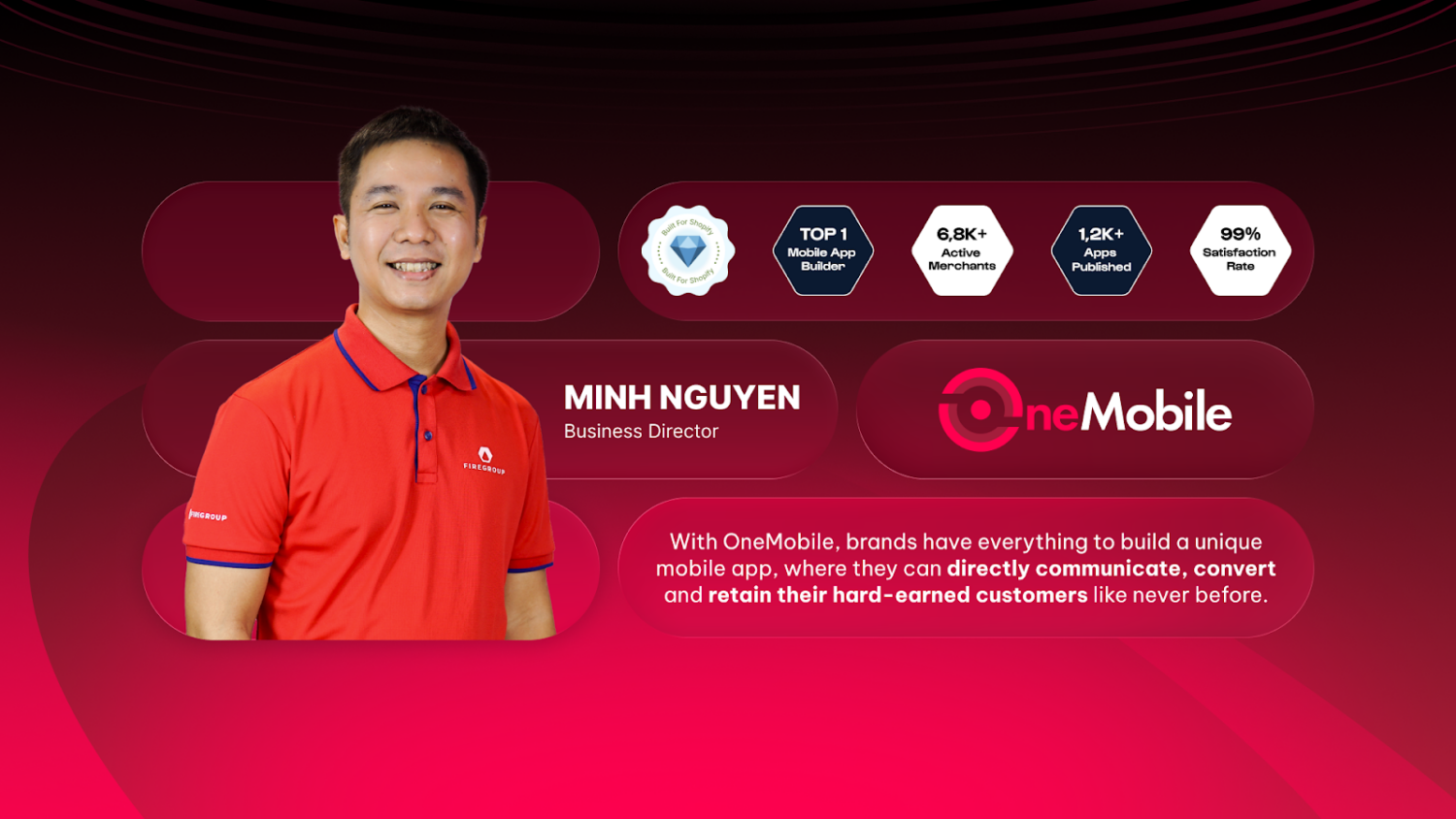
In this edition of our “Expert Interview” series, the BOGOS team interviewed Minh Nguyen, Director of OneMobile, a leading Shopify mobile app builder trusted by 6,800+ world-class brands with 1,200+ mobile apps successfully published, to break down 8 practical insights you can apply right away to solve this problem.
At the end, your next promotion won’t just look good on mobile but also convert, retain, and build a stronger brand long term.
1. Auto-add qualifying gifts or discounts
No matter how good your sales promotion is, if your customers have to pause, think, or take extra steps to apply it, they will likely drop off. That’s why sites that incorporate an auto-redeem function see higher redemption and conversion rates, since the discount is applied with no extra effort from the shopper.
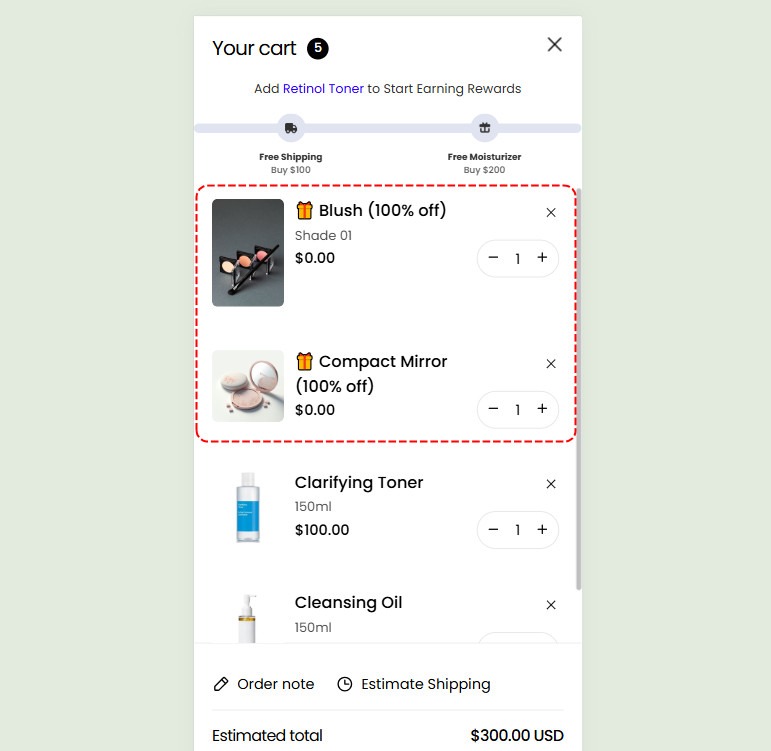
For instance, instead of making mobile users hunt for an “Apply Code” button, a brilliant move would be to auto-apply personalized gifts to your shopper’s cart instantly when they hit the qualifying purchase amount.
Automatically applying discounts and gifts will help your promotion’s mobile conversion
By removing extra taps and steps, you keep checkout quick and joyful – turning more browsers into buyers who appreciate the seamless savings.
Mr Minh emphasizes this point: “This is precisely why BOGOS and OneMobile have integrated. When merchants create auto-add gift offers in BOGOS, those promotions work seamlessly across all apps built with our OneMobile.”
2. Leverage app-exclusive offers to drive repeat sales
Sadly, most merchants fail to seize this opportunity. They run identical promotions across desktop, mobile web, and their app, giving customers no reason to choose the app first.
“App-exclusive offers solve this,” explains Mr Minh. “When your best deals are only available in the app, customers open the app first, not your website, not Google. You’ve shifted them from search-dependent discovery to direct, habitual engagement.”
Moreover, a customer who downloads your app for an exclusive offer can later be re-engaged via push notifications, browse in idle moments, and check out faster with saved payment details (without extra ad spend).
💡 Pro tip:
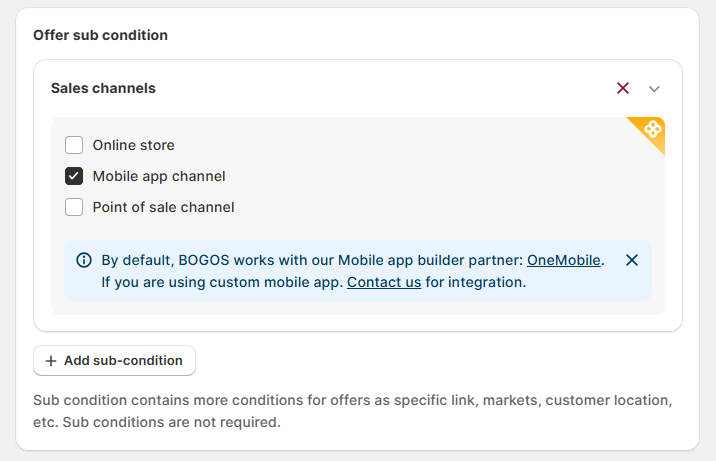
Use the “Sales channels” subcondition to restrict offers to mobile app purchases only.
Create a mobile app-only free gift with purchase using the “Sales channels” sub-conditions in BOGOS
Track app revenue separately to measure whether app customers show higher repeat purchase rates before expanding app-exclusive campaigns.
3. Switch to unobtrusive mobile banners
Let’s admit it. A full-screen pop-up on desktop devices is irritating enough, let alone on mobile screens, where it hides the entire shopping experience.
Not to mention that beyond annoying shoppers, these intrusive interstitials can also hurt your search performance, which Google has explicitly warned against on mobile.
Therefore, if you want to promote your offers, it’s best to use unobtrusive mobile banners that sit at the top of your customers’ mobile screens and take up only a small fraction of the screen space.
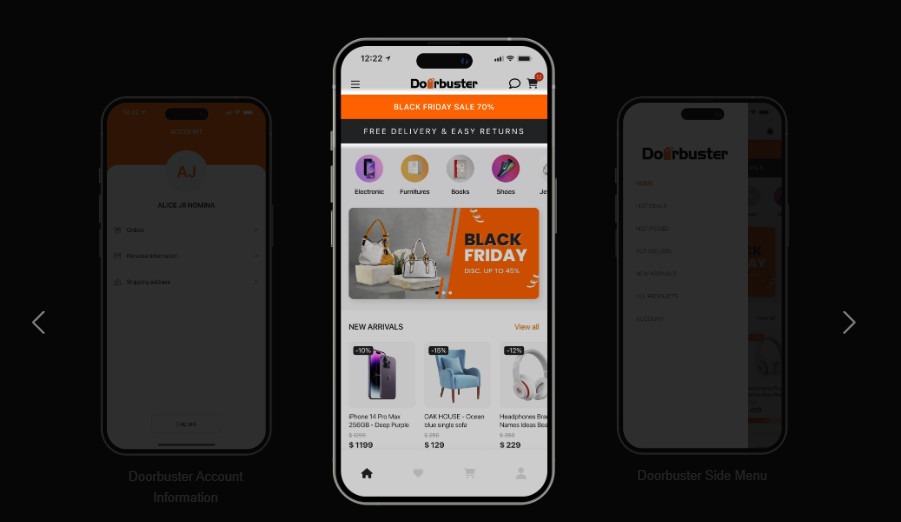
For example, you should use a sticky announcement bar instead of a full-screen pop-up
4. Keep your promotional messages above the fold and scannable
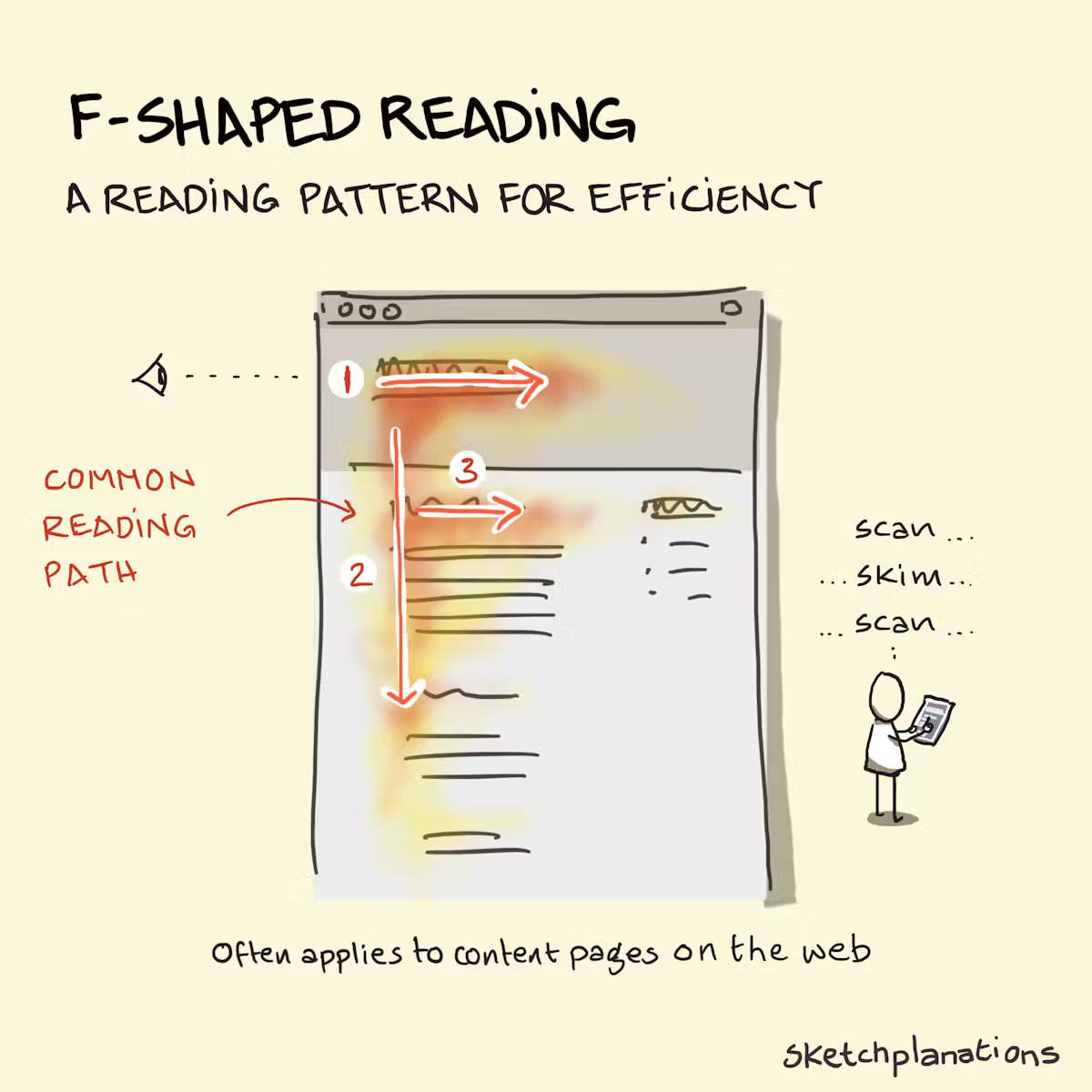
Mobile users scroll fast and scan in an F-shaped pattern*. If your promotion isn’t visible in those first scan lines, most shoppers will never notice it.
That’s why your key offer must appear the moment the app opens, placed in the top-left or top-center of the screen where users’ eyes land first. Free shipping thresholds, discounts, or gift offers should be visible on the homepage, product pages, and cart, without any scrolling.
Because users skim rather than read, clarity also matters. Use direct, benefit-first copy that can be understood at a glance. “Exclusive free gift over $99 order” performs better than “Special gift today” because it requires zero interpretation.
💡 Pro tip:
Highlight the core value (discount, gift, deadline) using contrast, larger font weight, or strategic color so it registers within seconds
Use bold keywords and relevant icons/emojis (such as 🚚 for free shipping) can help convey the promotion at a glance.
*For better visualization, here’s the F-shaped pattern we’re talking about:
That’s why your promotion message should be at (1)
5. Personalize offers based on mobile user behavior
Not all mobile shoppers behave the same way, and treating them as if they do is one of the fastest ways to waste a promotion.
Personalized offers use signals like browsing history, past purchases, geography, or app activity to deliver offers that actually matter to each shopper. Moreover, when combined with app-exclusive deals, this becomes far more effective.
At the end, Mr Minh shared with us a few high-impact personalization strategies Shopify merchants can implement:
Cart abandoners: Send a small incentive (free shipping, 10% off) to nudge them back.
Wishlist or “favorited” item browsers: Trigger a personalized banner like “Price dropped on your saved items.”
New app users: Offer a welcome gift or one-time discount to accelerate the first purchase.
Category loyalists: If someone constantly browses sneakers, surface “10% off new sneaker arrivals” on mobile.
Location-aware promos: Cold-weather customers see hot drink offers; urban customers see faster-delivery offers.
6. Design large touch targets for all promotional buttons
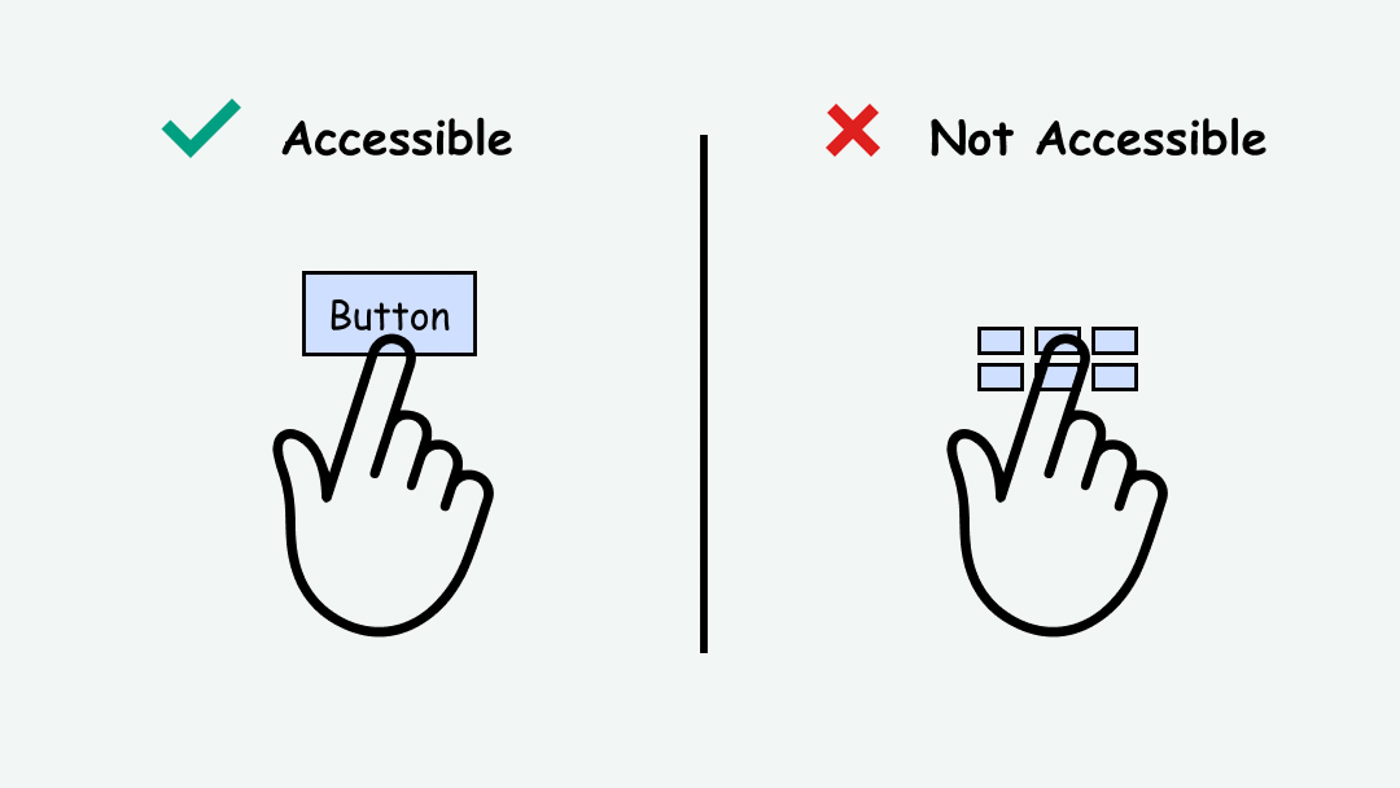
Nothing kills a mobile conversion like a hard-to-tap button. When you’re running promotions, ensure any CTA (call-to-action) buttons or links – “Apply Discount”, “Checkout Now”, “Get Offer” – are sized for fingers, not cursors.
Ensure that your CTA buttons are accessible on mobile screens
On touchscreens, bigger is better for tappable elements. Apple’s design guidelines recommend at least a 44×44 pixel area (roughly 7×7 mm) for touch targets, and Microsoft similarly suggests about 7mm minimum with some padding between interactive elements.
Aim for chunky, high-contrast buttons that span a thumb’s width. Also give them adequate spacing – no one should worry that tapping the promo code field might inadvertently hit the ‘Cancel’ link below it.
7. Adapt your promotions for devices with dark mode
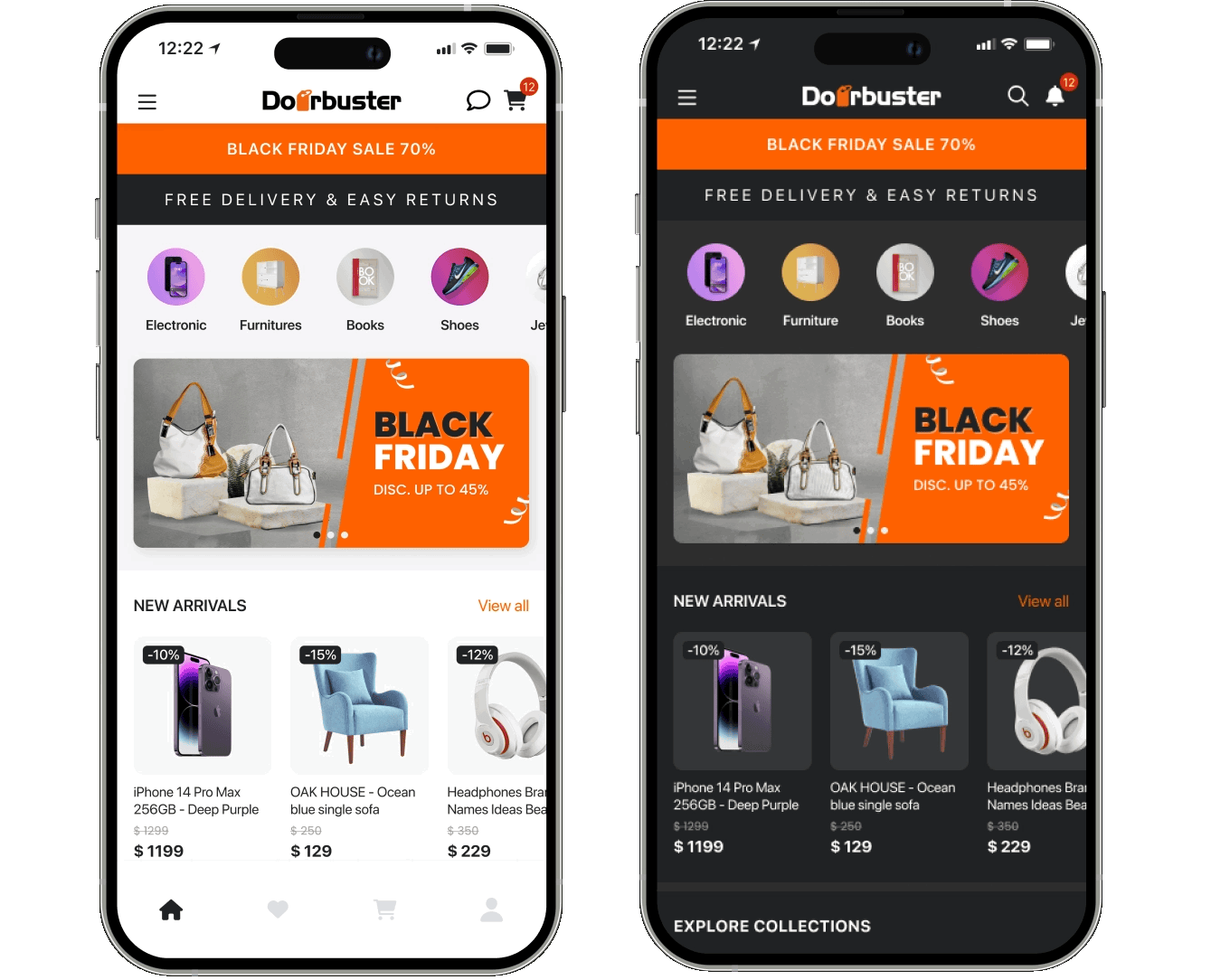
A growing number of consumers prefer dark mode on their phones to reduce glare and save battery. Your promotional content must look great in both light and dark themes. This means checking that banners, images, and text remain visible and attractive against a dark background.
Double-check to make sure your promotions are optimized for dark mode as well
For instance, if your site or app toggles to dark mode, that bright white “Sale!” banner might turn into an unwelcome flashlight, or worse, dark text could become illegible on a dark background.
💡 Pro tip: Pay attention to contrast: neon-green text might be clear on white but could vibrate harshly on black, so test color choices in dark mode and consider using softer off-whites for large text blocks to reduce eye strain.
8. Optimize your promotion for mobile checkout
Getting a user to tap “Checkout” with a promo in hand is only half the battle – you also need to streamline the checkout itself so the promotional win isn’t lost to abandonment. There are a few key ways to optimize the end-game of a mobile promotion:
Make promo value ultra-clear at the payment step
According to UX best practices, shopping carts should plainly show how the promotion affects the total (e.g., original price struck out, new total highlighted). This transparency not only delights the user (“Nice, I really saved $15!”) but also builds trust. It reassures them that the deal worked, preventing second-guessing.
Reduce friction by removing unnecessary taps
The final stretch should be as simple as possible. That means, as we mentioned above, if the user entered a coupon, don’t make them click an extra “Apply” button – apply it automatically upon entry or selection.
Similarly, avoid surprise logins or lengthy surveys during checkout. If you can, enable features like address auto-complete or skip non-essential fields entirely.
Support mobile wallets to increase promo conversion
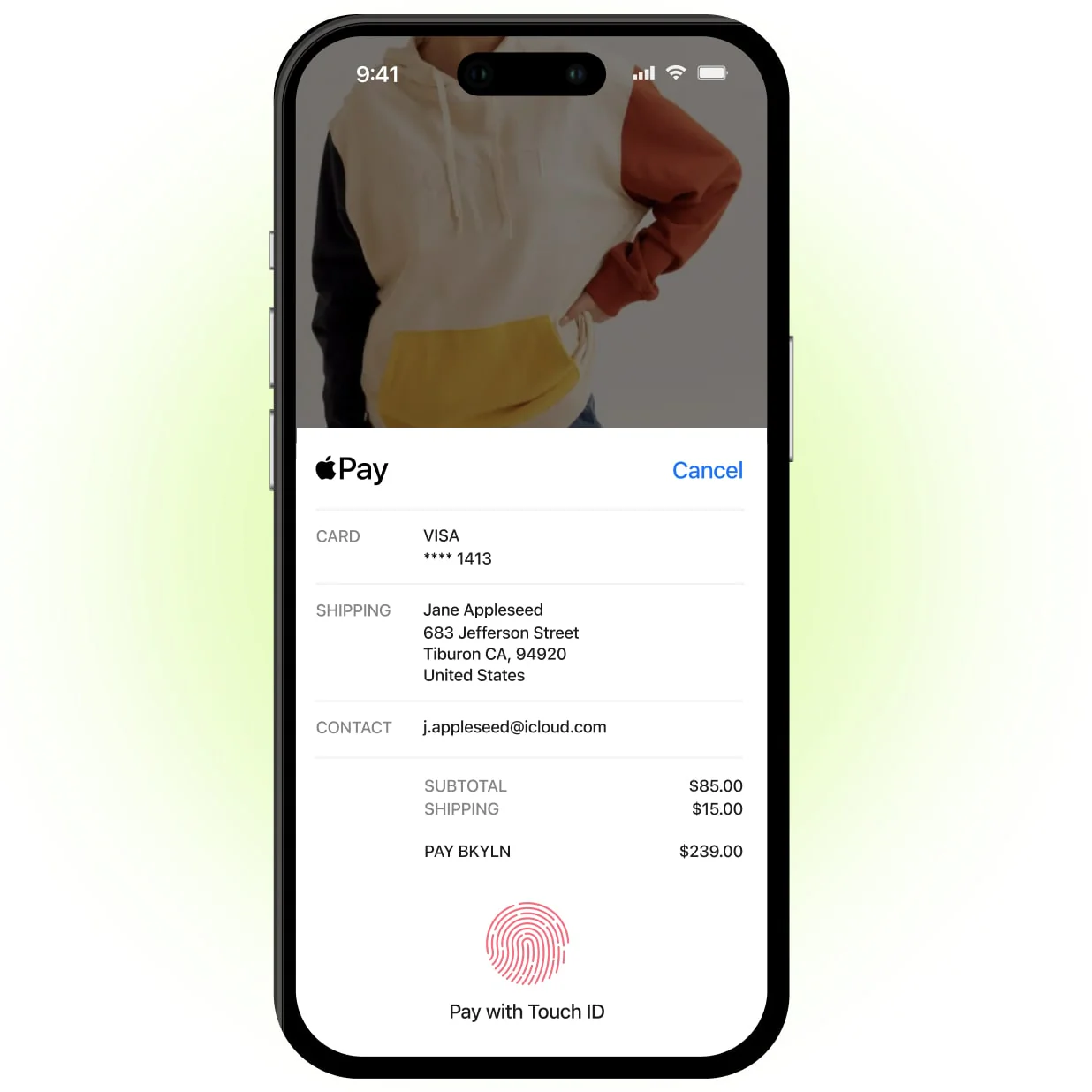
Offering Apple Pay, Google Pay, PayPal, etc., can significantly boost conversion at checkout. These wallet options auto-fill payment and shipping info, sparing users a tedious form entry on mobile. In fact, businesses that added Apple Pay saw up to a 58% increase in mobile conversion rates versus old-school credit card forms. (Source: Sports Fusion)
Accepting mobile wallets as a payment method can boost your conversions
Wrapping up!
As one of BOGOS’s trusted Shopify integration partners, OneMobile understands what many merchants overlook: the mobile app is the real retention engine.
When promotions are designed for mobile behavior, remove friction at every touchpoint, and leverage app-exclusive incentives, you transform one-time mobile browsers into repeat customers who bypass search engines and open your app directly.
Finally, we’re grateful to Minh Nguyen for sharing these eight practical rules from years of helping merchants optimize mobile app performance.
We hope that after reading this article, you’ll have a clear roadmap from generic to conversion-optimized offers, built for the way mobile shoppers actually behave!
And the very first step to making that happen? Explore both BOGOS and OneMobile to try the integration and turn the mobile app into a high-converting sales channel!